
"Texas Chainsaw Massacre" Soundtrack Lyrics
Movie • 2003
Track Listing
Laaz Rockit
Core-TEZ
Sworn Enemy
Lamb of God
Finger Eleven
Index Case
Morbid Angel
Fear Factory
Meshuggah
Shadows Fall
Motograter
40 Below Summer
Nothingface
Seether
Mushroomhead
Static X
SOiL
Hatebreed
Pantera
"The Texas Chainsaw Massacre (2003) — Songs & Original Score" – Album Guide to Tracks and Key Scenes
Overview
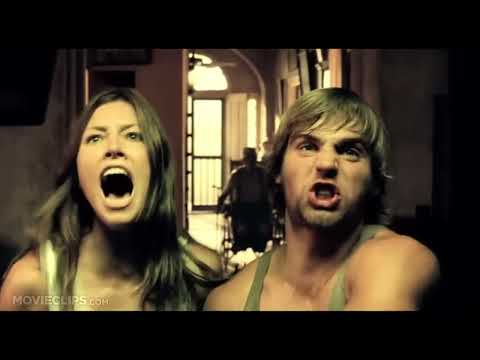
What happens when a sunny road song crashes into a slaughterhouse? Marcus Nispel’s 2003 remake opens with sing-along classic rock and ends in pure panic, and the soundtrack traces that slide: a blast of diegetic radio, a wall of post-9/11 nü-/industrial-metal on the companion album, and Steve Jablonsky’s debuting film score — all dread, scrape, and low-frequency threat.
The plot is familiar: five friends, a dusty Texas backroad, a sobbing hitchhiker, a wrong turn into the Hewitt house — Leatherface’s domain. Musically, the movie runs on two rails. First, a songs program aimed at the era’s heavier rock (the retail compilation), largely kept off the film itself except for strategic uses and marketing. Second, Jablonsky’s original score, which swaps melodic heroism for granular sound design, percussion pulses, and queasy drones that feel half sound-effect, half music.
Genres & phases — Classic-rock diegesis for naïveté and irony (“Sweet Home Alabama” in the van). Nü/industrial metal as the companion album’s identity (aggression as brand). Ambient-industrial score as narrative glue (claustrophobia; body horror). Put simply: sunshine → steel dust → blackout.
How It Was Made
Producer Michael Bay’s Platinum Dunes hired first-timer Steve Jablonsky to score, and he leaned into textural fright: bowed metals, processed low end, and short, motif-like stingers for the Hewitt house and Leatherface. The score album hit first (October 21, 2003), then the various-artists compilation (The Texas Chainsaw Massacre: The Album) followed on November 4, 2003 through Nitrus/DRT/Bulletproof with La-La Land involvement for the physical program.
Marketing leaned on evocative trailer music — notably a bespoke version of This Mortal Coil’s “Song to the Siren” palette (re-cut vocals) in ads — while the retail album stacked Pantera, Static-X, Meshuggah and more to court heavy-music audiences of the time.

Tracks & Scenes
Timestamps are approximate to the 98-minute theatrical cut. “Diegetic” = heard by the characters (e.g., on a radio). Score cues are from Steve Jablonsky’s album; many track titles double as scene labels in the film.
“Sweet Home Alabama” (Lynyrd Skynyrd)
- Where it plays:
- ~00:02 — In the van, windows down, everyone singing as they roll toward the border crossing and the fateful hitchhiker pickup. Diegetic car radio.
- Why it matters:
- Weaponized irony: carefree Southern rock before the film yanks the rug — a bright memory that curdles fast.
“Leatherface” (Steve Jablonsky)
- Where it plays:
- ~00:30 and reprisals. First real sight/sound of Leatherface inside the Hewitt house corridors: metallic groans, sub-bass pulses, and a short rising figure.
- Why it matters:
- Introduces the score’s signature: not a hummable theme, a physiological response — pressure and scrape.
“Erin and Kemper” → “Hewitt House”
- Where they play:
- ~00:22–00:28. Erin and Kemper approach the house; the palette thins to breathy textures, then tilts to metallic unease crossing the threshold.
- Why they matter:
- Two-step design: curiosity into trespass. The music tells you the house is a character.
“Kemper Gets Whacked / Jedidiah”
- Where it plays:
- ~00:33–00:36. The infamous hammer blow; the basement reveal. A brutal transient hit followed by suffocating lows and rattling fixtures.
- Why it matters:
- Sound as blunt force; then the score drops into “post-impact” rumble and sickly calm.
“Andy Loses a Leg” → “Hook Me Up”
- Where they play:
- ~00:50–00:58. The meat-hook tableau and failed rescue sequence. Strings scrape like wire; percussion ticks like hardware on tile.
- Why they matter:
- Jablonsky lets texture do the screaming so the picture can breathe (and appall).
“Morgan’s Wild Ride / Van Attack”
- Where it plays:
- ~01:05. Sheriff Hoyt’s stop goes sideways; it explodes into the van chaos and a gun going off where it shouldn’t. Pulses and distorted impacts chase the edit.
- Why it matters:
- Score as panic metabolizer — rhythmic but unstable, like breath you can’t slow down.
“Prairie House” → “Mercy Killing”
- Where they play:
- ~01:12–01:20. Erin reaches an isolated home, finds a survivor in agony, and faces an impossible choice. Low strings and thin, cold air around a fragile motif.
- Why they matter:
- The score’s rare, mournful space — a human pocket inside the machinery.
“Driving with a Corpse”
- Where it plays:
- ~00:12. After the hitchhiker’s shocking act, the group’s grim drive to the sheriff. A numb drone carries the scene like shock in audio form.
- Why it matters:
- Sets the film’s post-innocence tone — the music is now damage control.
Album-only heavy tracks (not prominent in-film)
- What they are:
- The retail compilation stacks early-2000s heavy hitters: Pantera (“Immortally Insane”), Static-X (“Deliver Me”), Meshuggah (“Rational Gaze”), Fear Factory (“Archetype”), Motograter (“Suffocate”), Seether (“Pig”), Mushroomhead (“43”), Shadows Fall (“Destroyer of Senses”), Soil (“Pride”), Hatebreed (“Below the Bottom”), 40 Below Summer (“Self-Medicate”), Morbid Angel (“Enshrined by Grace”), Index Case (“Listen”), Finger Eleven (“Stay in Shadow”) and more.
- How they relate:
- Used for marketing tie-ins, promos, home-video extras (e.g., the “Suffocate” video), and as the film’s retail identity; most do not play as narrative cues on screen.
Trailer music
- Where it appears:
- Theatrical trailers and TV spots used a re-voiced take on This Mortal Coil’s “Song to the Siren” vibe alongside sound-design jolts — not present in the final cut or albums.
- Why it matters:
- It sold the mood: elegiac dread before the industrial hammer drops.
Notes & Trivia
- Two official 2003 releases: Jablonsky’s original score (Oct 21) and the various-artists The Album (Nov 4).
- The retail CD for The Album carried Nitrus/DRT/Bulletproof branding; the score release is credited to New Line/La-La Land in listings.
- “Sweet Home Alabama” opens the movie diegetically — a bright needle-drop fans still cite as the film’s nastiest irony.
- Home-video extras heavily promoted Motograter’s “Suffocate,” which didn’t play as a story beat in the film itself.
- The trailers’ “Song to the Siren” vibe (re-cut vocals for advertising) never appears on either album.
Reception & Quotes
Reviewers were split on the score — admirers of pure texture vs. listeners wanting stronger melody — but agreed it fit the film’s merciless tone. The retail compilation landed well with metal fans of the day.
“Simplistic, dissonant ambience — effective on screen, divisive on album.” — Filmtracks on Jablonsky’s score
“Corporate metal fills many horror soundtracks — this film leaned into that market.” — Contemporary commentary on the companion album
Interesting Facts
- First blood for Jablonsky: This was Steve Jablonsky’s first big theatrical score before his run on The Island and Transformers.
- Marketing muscle: The metal compilation helped position the remake to a young heavy-music audience even if the songs weren’t used on screen.
- Trailer sleight-of-hand: The “Song to the Siren”-styled ad track primed viewers with grief before the film’s sonic brutality.
- End-credit tie-ins: The “Suffocate” video (Motograter) was packaged on home video; fans often assume it played in the narrative — it didn’t.
- Van sing-along, dark history: The opening needle-drop is so iconic it’s listed among the film’s noted continuity goofs in fan and database write-ups.
Technical Info
- Title: The Texas Chainsaw Massacre (2003) — Songs & Original Score
- Year: 2003 (film released Oct 17; score CD Oct 21; companion album Nov 4)
- Type: Film score (Steve Jablonsky) + various-artists companion compilation
- Composer: Steve Jablonsky
- Labels: Score — New Line/La-La Land (listing); Companion album — Nitrus Records / DRT / Bulletproof
- Selected notable placements: “Sweet Home Alabama” (opening van); Score cues: “Leatherface,” “Kemper Gets Whacked / Jedidiah,” “Andy Loses a Leg,” “Morgan’s Wild Ride / Van Attack,” “Mercy Killing.”
- Trailer music: Advertising used a “Song to the Siren”-style vocal arrangement; not on albums.
- Runtime (albums): Score ≈ 50 minutes; Companion album ≈ 63 minutes.
Questions & Answers
- Is the heavy metal compilation actually in the movie?
- Mostly no. It branded the release and appears in promos/home-video extras; on-screen narrative cues are largely Jablonsky’s score.
- What’s the song the friends sing at the start?
- “Sweet Home Alabama” by Lynyrd Skynyrd, playing on the van’s radio.
- Who composed the score, and what’s its style?
- Steve Jablonsky; the score is textural — sub-bass rumbles, bowed metal, and short motifs more than big melodies.
- Are there two different soundtrack albums?
- Yes. The original score (Jablonsky) and The Album (various artists). Different labels, different purposes.
- What music was in the trailers?
- A re-voiced take on the mood of This Mortal Coil’s “Song to the Siren,” plus sound-design hits — not on either album.
Key Contributors
| Subject | Relation | Object |
|---|---|---|
| Steve Jablonsky | composes | The Texas Chainsaw Massacre (2003) original score |
| Marcus Nispel | directs | Feature film; collaborates on sound palette |
| New Line Cinema | distributes | Film; issued score album listing |
| Nitrus / DRT / Bulletproof | release | The Texas Chainsaw Massacre: The Album (various artists) |
| Pantera; Static-X; Meshuggah; Fear Factory; Motograter; Seether | contribute | Tracks on companion album |
| Lynyrd Skynyrd | perform | “Sweet Home Alabama” (diegetic opening) |
Sources: AllMusic listings for the score and “The Album”; Wikipedia film entry (music section, release dates); MusicBrainz credits for the score; Blabbermouth and MovieMusic release notes for the companion album; Bloody-Disgusting item on Static-X’s placement; widely circulated trailer uploads for the 2003 film.
November, 27th 2025
A-Z Lyrics Universe
Cynthia Erivo Popular
Ariana Grande Horsepower
Post Malone Ain't No Love in Oklahoma
Luke Combs Good Riddance (Time of Your Life)
Green Day Bye Bye Bye
*NSYNC You're the One That I Wan
John Travolta & Olivia Newton-John I Always Wanted a Brother
Braelyn Rankins, Theo Somolu, Kelvin Harrison Jr. and Aaron Pierre The Power of Love
Frankie Goes to Hollywood Beyond
Auli’i Cravalho feat. Rachel House MORE ›