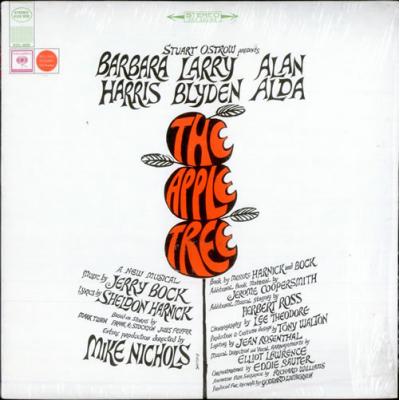
"The Apple Tree" Soundtrack Lyrics
Musical • 1993
Track Listing
"The Apple Tree (Original Broadway Cast Recording — 1993 CD era)" – Album Guide to Tracks and Key Scenes
Overview
What if “be careful what you wish for” came with three different melodies—and three different endings? The Apple Tree answers with a triptych: Eden, a semi-barbaric kingdom, and Hollywood fantasy, each scored with sly, singable theatre tunes by Jerry Bock and Sheldon Harnick.
First produced on Broadway in 1966, the show plays like three compact musicals sharing the same stars and a common theme. The cast album (originally on Columbia Masterworks) preserves Barbara Harris, Alan Alda, and Larry Blyden at their most playful—lush pit orchestra, witty lyrics, and quick gear shifts from romance to satire. Though the show is 1960s-vintage, a widely circulated early-’90s CD reissue put it back onto shelves and, later, streaming, where the crisp studio sound flatters its bright woodwinds and brass.
Genres & themes in phases: classic Broadway waltz and ballad — fragile intimacy in Eden; processional and mock-epic fanfares — fate vs. choice in “The Lady or the Tiger?”; cabaret-pop pastiche and big-band sparkle — fame and self-invention in Passionella. Translation: warm orchestration = sincerity exposed; pomp = love caught in a rigged arena; showbiz swing = glamour as armor.
How It Was Made
Composer Jerry Bock and lyricist Sheldon Harnick fashioned three playlets from Mark Twain’s “The Diaries of Adam and Eve,” Frank R. Stockton’s “The Lady, or the Tiger?,” and Jules Feiffer’s Passionella. Mike Nichols directed the original 1966 Broadway production; Lee Theodore choreographed; Tony Walton designed costumes. The album captures the original company with Elliot Lawrence conducting—studio-clean but stage-direct in energy.
In the early compact-disc era, Sony/Columbia reissued the original cast album (commonly listed under Sony Broadway SK 48209), helping a new generation hear Harris’s mercurial comic turns and Alda’s deft patter. Later, Encores! (2005) and a Roundabout Broadway revival (2006) renewed interest in the score and its storytelling craft.
Tracks & Scenes
Selected moments below (not a full tracklist). These describe how songs function in the show; timings vary by production and album.
“Here in Eden” (Adam & Eve)
- Where it plays:
- Early in Act I. Dawn in the garden: Adam names things with deadpan practicality; Eve arrives, curious and delighted. The staging keeps them in gentle orbit—she explores, he retreats—while the orchestra paints pastoral warmth.
- Why it matters:
- Introduces the show’s central dialectic: comfort vs. curiosity, sung as flirtation.
“Eve” (Eve)
- Where it plays:
- A private confession set to a lilting ballad. Eve studies Adam like a new invention and wonders if naming feelings counts as breaking a rule. Soft strings, harp arpeggios, spotlight tight.
- Why it matters:
- Harnick’s lyric turns self-awareness into romance—Eve’s agency arrives before the apple ever does.
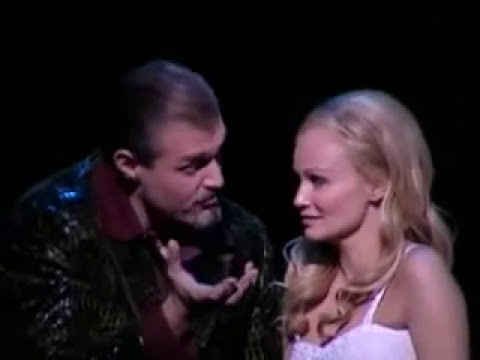
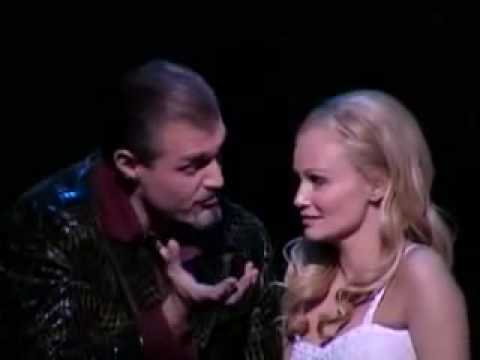
“The Apple Tree (Forbidden Fruit)” (Snake, Adam, Eve)
- Where it plays:
- The temptation scene as comic seduction: sly woodwinds, syncopated whispers, and a tango-ish sway as the Snake sells possibility. Eve’s curiosity lifts the harmony; Adam’s caution lags behind.
- Why it matters:
- Desire scored as sales pitch—funny, pointed, and very human.
“Beautiful, Beautiful World” (Eve & Ensemble)
- Where it plays:
- Post-apple montage. Eve names colors, shapes, and questions with ecstatic precision; the orchestration brightens as knowledge floods in. On stage, props and lighting cues blossom in quick reveals.
- Why it matters:
- Knowledge as joy—then consequence. The music grins before it bites.
“What Makes Me Love Him?” (Eve)
- Where it plays:
- Late in Act I. After storms and toil, Eve lists Adam’s flaws and, paradoxically, her devotion. A hush falls; the melody sits close to speech, the accompaniment tender and spare.
- Why it matters:
- One of Bock & Harnick’s great quiet songs—love as a choice, not a spell.
“I’ll Tell You a Truth” (Princess Barbara & Captain Sanjar)
- Where it plays:
- Opening of Act II’s mock-epic world. Pompous horns and march rhythms set a courtly scene; the lovers carve out sincerity in a society staged for spectacle. Guards align in geometric patterns; flags and fanfares play it straight.
- Why it matters:
- Sets up the gladiatorial “choice” game—the music’s grandeur underlines how small the lovers’ options are.
“Which Door?” (Company)
- Where it plays:
- The trial’s centerpiece. Chorus lines the arena; percussion ticks like fate while the Princess weighs which door saves her beloved (or spares her pride). Cutoffs are knife-clean; the final cadence courts ambiguity.
- Why it matters:
- Climactic dilemma sung as pageant—Bock turns suspense into rhythm.
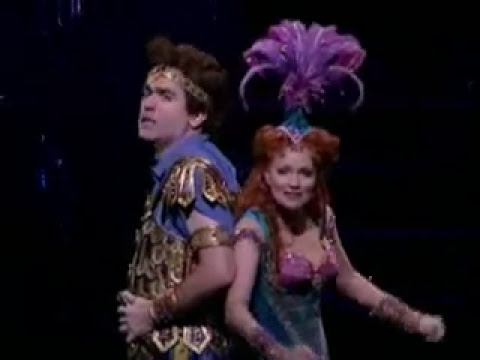
“Oh, to Be a Movie Star” (Ella)
- Where it plays:
- Act III’s opening wish. Chimney-sweep Ella dreams big; the orchestra flips to fizzy showbiz bounce, with reeds popping like camera flashes. A quick-change gag often lands the first laugh.
- Why it matters:
- Launches Passionella’s satire: fame as costume change, happiness as moving target.
“Gorgeous” (Passionella)
- Where it plays:
- Mid-Act III showstopper. Now transformed, Passionella catalogs her assets in a brassy, belt-happy number, chorus boys framing every rhyme like a photo spread. The button is calculated to bring the roof down.
- Why it matters:
- Parody that doubles as banger—Bock & Harnick walk and wink at the same time.
“You Are Not Real” (Ella & Flip)
- Where it plays:
- Late in Act III. Romance trips over image management; the orchestration thins and the tempo breathes. Visual gags drop away so the revelation lands.
- Why it matters:
- When the mask slips, the show goes tender—then hands us a humane ending.
Notes & Trivia
- Barbara Harris won the 1967 Tony Award for Best Actress in a Musical for the original production.
- The three acts were once jokingly grouped under a working title: “Come Back! Go Away! I Love You!”
- Early-’90s CD reissue (Sony Broadway) helped the album reach new listeners before digital streaming made it ubiquitous.
- Encores! (2005) and Roundabout (2006) revivals triggered fresh interest in standards like “What Makes Me Love Him?” and “Gorgeous.”
Reception & Quotes
Then and now, critics praise the craftsmanship and the vehicle-ready roles for a protean leading lady. Fans prize the album for its variety: folk-tender to brass-bright without leaving classic Broadway grammar.
“A female musical-comedy performer’s dream.” Variety, on the revival’s vehicle qualities
“Charm to burn—three times over.” Contemporary Broadway coverage, revival era
Availability: original 1966 LP (Columbia Masterworks), early-’90s Sony/Columbia CD, and current streaming editions (Apple Music, Spotify).
Interesting Facts
- Trio casting: The same principals play all three stories, turning the evening into a showcase of contrasts.
- Comic clarity: Orchestration leans on reeds and rhythm to keep jokes legible over the pit.
- Ambiguous cadence: “Which Door?” ends on a question mark—musically and morally.
- Songbook staples: “What Makes Me Love Him?” lives in audition books and recital programs to this day.
- Pipeline of rediscovery: Encores! concerts often precede major revivals—The Apple Tree followed that path.
Technical Info
- Title: The Apple Tree — Original Broadway Cast Recording
- Year: 1966 (original LP); 1992–1993 (CD reissue market); ongoing digital availability
- Type: Original Broadway cast album
- Music: Jerry Bock
- Lyrics: Sheldon Harnick
- Book: Jerry Bock, Sheldon Harnick, with Jerome Coopersmith
- Original production: Broadway (Shubert Theatre), opened Oct 18, 1966 — 463 performances
- Label history: Columbia Masterworks (LP); Sony Broadway/Sony/Columbia (CD reissue)
- Standout numbers: “What Makes Me Love Him?,” “Gorgeous,” “The Apple Tree (Forbidden Fruit),” “Which Door?,” “Oh, to Be a Movie Star”
- Later revivals: City Center Encores! (May 2005); Roundabout Broadway revival (Studio 54, 2006–2007)
- Streaming: Available on Apple Music and Spotify
Questions & Answers
- Why is this listed as “1993” in some places?
- Because of the early-’90s CD reissue window (often cataloged 1992–1993). The performances are the 1966 originals.
- Do the three acts connect musically?
- Yes—recurring motifs and reprise logic (especially around “apple/temptation” ideas) tie the evening together without repeating styles.
- Which single song best represents the album?
- “What Makes Me Love Him?”—intimate, emotionally precise, and timeless outside the show.
- Is there a separate “revival” cast album?
- No commercial full revival album is standard; the 1966 OBC remains the canonical recording for the score.
- Can I perform the show today?
- Yes—rights are licensed through Music Theatre International (MTI).
Key Contributors
| Subject | Relation | Object |
|---|---|---|
| Jerry Bock | composed music for | The Apple Tree |
| Sheldon Harnick | wrote lyrics for | The Apple Tree |
| Jerome Coopersmith | contributed book to | The Apple Tree |
| Mike Nichols | directed | Original Broadway production (1966) |
| Lee Theodore | choreographed | Original Broadway production |
| Tony Walton | designed costumes for | Original Broadway production |
| Barbara Harris | starred as | Eve/Barbara/Passionella |
| Alan Alda | starred as | Adam/Sanjar/Flip |
| Larry Blyden | starred as | Snake/Narrator & featured roles |
| Columbia Masterworks | released | Original 1966 LP |
| Sony Broadway | reissued | Early-’90s CD edition |
| City Center Encores! | presented | Concert revival (May 2005) |
| Roundabout Theatre Company | produced | Broadway revival (2006–2007) |
Sources: IBDB; Masterworks Broadway; MTI; Apple Music; Spotify; Discogs (CD reissue data); Encores! and Roundabout revival coverage; Variety review.
November, 27th 2025
A-Z Lyrics Universe
Cynthia Erivo Popular
Ariana Grande Horsepower
Post Malone Ain't No Love in Oklahoma
Luke Combs Good Riddance (Time of Your Life)
Green Day Bye Bye Bye
*NSYNC You're the One That I Wan
John Travolta & Olivia Newton-John I Always Wanted a Brother
Braelyn Rankins, Theo Somolu, Kelvin Harrison Jr. and Aaron Pierre The Power of Love
Frankie Goes to Hollywood Beyond
Auli’i Cravalho feat. Rachel House MORE ›