
"The Band Wagon" Soundtrack Lyrics
Musical • 1996
Track Listing
"The Band Wagon (Original Motion Picture Soundtrack — 1996 TCM/Rhino Edition)" – Album Guide to Tracks and Key Scenes
Overview
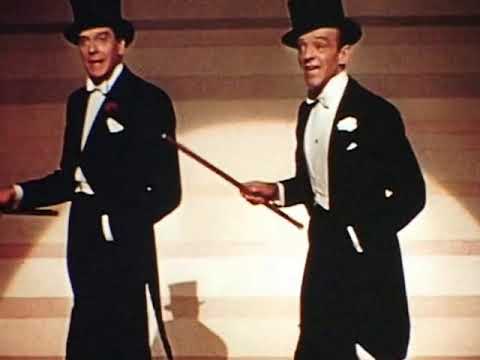
A paradox: how can a backstage satire feel like a love letter to show business? The Band Wagon answers by letting songs dance the plot. The 1996 Turner Classic Movies/Rhino reissue gathers and remasters the 1953 MGM film’s cues so you can hear the arc—Fred Astaire’s Tony Hunter stumbles, learns to collaborate, then saves the show—with orchestra and hoofbeats doing the talking.
Arthur Schwartz and Howard Dietz wrote a score that swings from urbane ballad to razzle-dazzle showstopper: “By Myself” sets the loner’s stakes; “A Shine on Your Shoes” turns a shoeshine stand into a life tune-up; “I Love Louisa” pops Bavarian bubbles; “Dancing in the Dark” whispers romance in Central Park; “That’s Entertainment!” becomes the creed. The 1996 CD (and current digital edition) expands the original LP with film mixes, orchestral underscoring, and bonus material, presenting the music as a complete dramatic journey rather than a highlights reel.
Genres & themes in phases: urbane torch — solitude and doubt; vaudeville swing — luck changes with rhythm; Bavarian oom-pah — ensemble joy; park nocturne — desire spoken softly; Broadway anthem — community and craft. Translation: reeds & muted brass = wit; brushed drums = charm; strings at hush = truth.
How It Was Made
The film (directed by Vincente Minnelli) adapts the 1931 Broadway revue into a meta-musical about fixing a musical. Scoring came from MGM’s golden-age team: Schwartz & Dietz’s songs arranged/orchestrated for the studio orchestra (with Conrad Salinger among the credited arrangers and Alexander Courage among orchestrators), and cues conducted on the album by Adolph Deutsch/MGM Studio Orchestra.
The 1996 album arrived via TCM/Rhino Movie Music and Warner Strategic Marketing as a remastered, expanded program, later mirrored on streaming. The mastering notes emphasize careful transfers from the best surviving sources, minimizing age-related noise while retaining color and “room.” It’s the film in audio close-up.

Tracks & Scenes
Not a full tracklist — the 1996 edition runs over two dozen cues. Below: key numbers with screen moments and why they matter.
“By Myself” (Fred Astaire)
- Where it plays:
- Opening beat: Tony Hunter faces career drift in a station concourse, deciding to go it alone. The staging isolates him in a crowd; the arrangement is sly and spare so the lyric lands like a vow.
- Why it matters:
- Character thesis in three minutes — the album’s emotional baseline.
“A Shine on Your Shoes” (Fred Astaire)
- Where it plays:
- An arcade-turned-dance floor. Tony’s chance encounter with a shoeshine man becomes a buoyant tap number—stalls as percussion, neon as partner. Diegetic/show-within-the-show energy, filmed as a moving urban valentine.
- Why it matters:
- Shows the film’s ethic: everyday spaces + rhythm = optimism.
“I Love Louisa” (Fred Astaire, Nanette Fabray & Company)
- Where it plays:
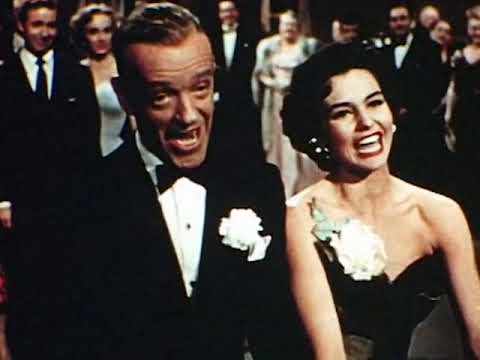
- Rehearsal hall explodes into Bavarian fantasia. Carousel motion, knee-slaps, and ensemble canons fold comedy into craft. The chorus accelerates, the button lands hard.
- Why it matters:
- Proof the company works as a company — the sound of a show beginning to gel.
“Dancing in the Dark” (Fred Astaire & Cyd Charisse)
- Where it plays:
- Twilight in Central Park. No vocal needed — strings breathe, woodwinds answer, and two dancers rewrite their partnership by listening with their feet. Long takes honor balance and trust.
- Why it matters:
- Romance distilled; the soundtrack version lets you hear the patience between steps.
“New Sun in the Sky” (Nanette Fabray)
- Where it plays:
- Onstage rehearsal-turned-performance, with Fabray’s bright belt riding crisp brass. A morning-after mood that announces better days for the show and for Tony.
- Why it matters:
- Refresh button — morale reset baked into melody.
“Triplets” (Fabray, Astaire, Jack Buchanan)
- Where it plays:
- Comedy specialty number with forced-perspective costuming. The trio “toddlers” wisecrack in counterpoint while the pit band nudges each punch line.
- Why it matters:
- Exhibits MGM craft: musical joke + cinematic trickery in sync.
“That’s Entertainment!” (Company)
- Where it plays:
- Rallying anthem late in the show’s rescue—writers, star, and troupe recommit to the lighter version of their musical. On disc, the chorus stacks feel like a curtain rising.
- Why it matters:
- Showbiz credo; the 1996 master gives the brass-and-chorus blend real sparkle.
Suite: “Girl Hunt Ballet” (Orchestra)
- Where it plays:
- Noir pastiche finale: a private-eye fever dream staged in bold colors. Saxophones slink, drums prowl, trumpets stab. The album suite presents the sequence as a mini-symphony of jazz gestures and chase rhythms.
- Why it matters:
- The Freed Unit at full imagination — choreography, design, and scoring fused.
Notes & Trivia
- The 1996 CD is a Turner Classic Movies/Rhino Movie Music release with Warner distribution, expanding the vintage MGM LP and adding film versions/underscoring.
- Credits on the expanded program highlight studio stalwarts: arrangements associated with Conrad Salinger; orchestration credits include Alexander Courage.
- Digital platforms mirror the 1996 expansion (often 28 tracks), making the full narrative arc easy to hear in sequence.
- The title song “Dancing in the Dark” originated in the 1931 Broadway revue The Band Wagon and reappears here as the film’s romantic apex.
Reception & Quotes
Critics routinely place the film among MGM’s finest; the soundtrack’s 1996 restoration helped a new generation hear why. The expanded program underscores how the score tells story—no filler, all function.
“Sophisticated backstage musical… maximum of music and song.” Classic guide consensus
“From ‘By Myself’ to ‘That’s Entertainment!,’ it plays like a blueprint for Broadway joy.” Modern reissue notes
Availability: the 1996 CD appears on Rhino/TCM imprints and streams in a U.S. “Original Motion Picture Soundtrack” configuration.
Interesting Facts
- Album arc: The 1996 sequence mirrors the movie’s “bad idea” out-of-town tryout turning into the right show.
- Dance you can hear: Tap passages in “Shine on Your Shoes” are mixed to feel physical—percussion as character.
- From revue to movie: Several numbers began life in the 1931 Broadway Band Wagon and were refitted for the film’s story.
- Suite thinking: The “Girl Hunt Ballet” plays as a continuous symphonic-jazz suite on the reissue, emphasizing Minnelli’s cinematic flow.
- Streaming boost: The 1996 masters anchor today’s digital editions; bonus cues make the film narrative clearer without the visuals.
Technical Info
- Title: The Band Wagon — Original Motion Picture Soundtrack (1996 Expanded Edition)
- Year: 1996 (expanded CD/digital); original film/LP 1953
- Type: Film soundtrack (expanded, remastered)
- Songs: Music by Arthur Schwartz; lyrics by Howard Dietz
- Key performances: Fred Astaire, Cyd Charisse, Nanette Fabray, Jack Buchanan; MGM Studio Orchestra
- Arr./Orch. highlights: Arrangements associated with Conrad Salinger; orchestrations include Alexander Courage
- Conducting/Studio credit: Adolph Deutsch; MGM Studio Orchestra
- Label: TCM Turner Classic Movies Music / Rhino Movie Music (Warner Strategic Marketing)
- Notable placements: “By Myself,” “A Shine on Your Shoes,” “I Love Louisa,” “Dancing in the Dark,” “That’s Entertainment!,” “Girl Hunt Ballet”
- Availability: 1996 CD (various territories) and current streaming editions (often 28 tracks)
Questions & Answers
- Why is the year 1996 associated with this soundtrack?
- That’s the date of the TCM/Rhino expanded, remastered release that restored film mixes and underscoring; it’s the basis for today’s digital editions.
- Is this a Broadway cast album?
- No — it’s the 1953 MGM film soundtrack. The 1931 stage Band Wagon was a revue that introduced several songs later used in the movie.
- What’s the definitive love theme?
- “Dancing in the Dark,” presented on the album as the park pas de deux with luminous orchestral detail.
- Does the reissue include the “Girl Hunt Ballet” music?
- Yes — the 1996 program features the suite so you can hear the noir pastiche flow without picture.
- Where can I stream this edition?
- On major platforms under “The Band Wagon — Original Motion Picture Soundtrack (US Release)” with the expanded 1996 track count.
Key Contributors
| Subject | Relation | Object |
|---|---|---|
| Arthur Schwartz | composed music for | The Band Wagon (film songs) |
| Howard Dietz | wrote lyrics for | The Band Wagon (film songs) |
| Adolph Deutsch | conducted | MGM Studio Orchestra recordings |
| Conrad Salinger | arranged | selected cues for MGM |
| Alexander Courage | orchestrated | selected film numbers |
| Fred Astaire | performed | vocals/dance on key tracks |
| Cyd Charisse | danced with | Fred Astaire in “Dancing in the Dark” and “Girl Hunt Ballet” |
| Vincente Minnelli | directed | the 1953 film |
| TCM / Rhino Movie Music | released | 1996 expanded/remastered soundtrack |
Sources: Discogs (1996 CD credits & release); Apple Music (digital tracklist overview); Spotify (1996 US expanded release); Amazon listing (Rhino 1996 issue); Wikipedia (film page; soundtrack; 1931 stage revue); TCM trailer page.
November, 27th 2025
A-Z Lyrics Universe
Cynthia Erivo Popular
Ariana Grande Horsepower
Post Malone Ain't No Love in Oklahoma
Luke Combs Good Riddance (Time of Your Life)
Green Day Bye Bye Bye
*NSYNC You're the One That I Wan
John Travolta & Olivia Newton-John I Always Wanted a Brother
Braelyn Rankins, Theo Somolu, Kelvin Harrison Jr. and Aaron Pierre The Power of Love
Frankie Goes to Hollywood Beyond
Auli’i Cravalho feat. Rachel House MORE ›