
"The Birth of a Nation" Soundtrack Lyrics
Movie • 2016
Track Listing
Nina Simone
Vic Mensa
Meek Mill, Pusha T
2 Chainz
Gucci Mane, Lil Wayne
Lecrae, Leon Bridges
Sir the Baptist
Georgia Ku
Trey Songz
Ne-Yo
Wale, Anthony Hamilton
Kamau
The Game, Marsha Ambrosius
Marko Penn, Janine
K. Michelle
Nas
Wiley College Choir
"The Birth of a Nation: Original Motion Picture Score (2016)" – Album Guide to Tracks and Key Scenes
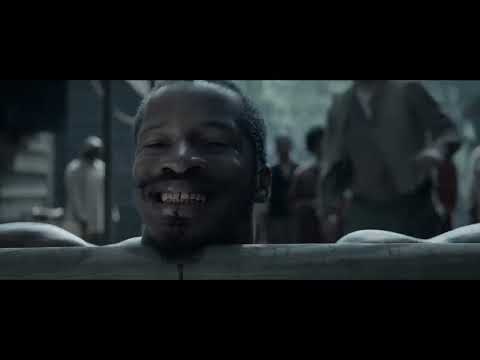
Overview
What does freedom sound like when the price is sacrifice? Henry Jackman’s score for Nate Parker’s The Birth of a Nation answers with a hushed, devotional intensity that swells into choral resolve. The film tracks Nat Turner’s 1831 slave rebellion; the music tracks a spiritual uprising — the sound of faith turning into action.
Across the film, Jackman avoids action clichés. Strings and lone piano lines hold tension like a breath, then a choir — sometimes adult voices, sometimes children — lifts the frame toward witness and mourning. Spirituals and a crucial licensed cut (“Strange Fruit,” in a Nina Simone performance) knit the drama to a longer history of Black resistance songs, while the end-credits spiritual “Couldn’t Hear Nobody Pray” lands as an epitaph and a benediction.
Genres & themes in phases: chamber strings & piano — private conviction; African percussion & earthy low drones — gathering courage; choral surges — collective purpose; spirituals — ancestral memory; Simone’s protest torch song — grief transmuted into truth-telling.
How It Was Made
Jackman joined late in post, scoring to a mostly locked cut. Despite budget stress, Parker pushed for a large, vocal-forward palette: orchestra, percussion rooted in African tradition, gospel colors, and children’s choir. Wiley College Choir contributed a cappella spirituals (notably “Couldn’t Hear Nobody Pray”) recorded specifically for the film’s atmosphere and key dramatic placements. The album was released by Atlantic Records; a separate “Inspired By” compilation gathered contemporary hip-hop and R&B responses to Turner’s story.
Tracks & Scenes
“Couldn’t Hear Nobody Pray” (Wiley College Choir)
- Where it plays:
- A cappella, over the climactic aftermath and into end credits (approx. 1:52:00–end; duration ~3–4 min). The voices emerge over the image of Turner’s fate, the frame fading toward black as footsteps and breath quiet. Non-diegetic; placed to guide the audience from shock to solemnity.
- Why it matters:
- A spiritual of isolation turned communal mourning — it reframes a state execution as martyrdom and funnels the story into memory and legacy.
“Strange Fruit” (Nina Simone)
- Where it plays:
- Used in the film and featured in marketing; most strikingly underscoring a late tableau of racial violence (around the third act; non-diegetic). Its somber piano and Simone’s grave delivery sit against images of bodies and consequence, the cut holding on faces longer than comfort allows.
- Why it matters:
- A 20th-century protest classic dropped into an 1831 narrative — the bridge makes the film’s violence speak to lynching’s afterlives and to the present.
“Turner Plantation (Score Version)” (Henry Jackman)
- Where it plays:
- Early reels as Nat’s world is established (around 00:05:00; ~90 sec). Quiet strings, piano, and guitar sketch a pastoral surface — a deceptive calm under the plantation’s order. Non-diegetic.
- Why it matters:
- Introduces Nat’s motif in an intimate register; the theme will later broaden with choir as conviction hardens.
“On to Jerusalem” (Score cue)
- Where it plays:
- During the uprising sequence (final act; ~6 min). Percussion, choir, and brass swell in waves as the insurgents move through fields and homesteads. Non-diegetic; editorially braided across multiple locations.
- Why it matters:
- Jackman steers away from bloodlust — the cue frames the violence as sacrificial, liturgical even, so the moral focus stays on the why, not the thrill.
“Run, Mary, Run” (Ensemble performance)
- Where it plays:
- Heard as a work/spiritual refrain in an early passage (roughly first act; under 2 min). Mixed voices rise against routine labor; semi-diegetic feeling even when presented non-diegetically.
- Why it matters:
- Signals how spirituals operate as coded resilience — a pre-uprising hum under daily subjugation.
“Swing Low, Sweet Chariot” (traditional; film performance credit)
- Where it plays:
- Briefly quoted as a spiritual color in the mid-film stretch (non-diegetic insert; <1 min). A familiar melody surfaces and recedes while the narrative pivots from endurance to planning.
- Why it matters:
- A shard of collective memory — a promise of crossing over that shadows the film’s march toward sacrifice.
Trailer note
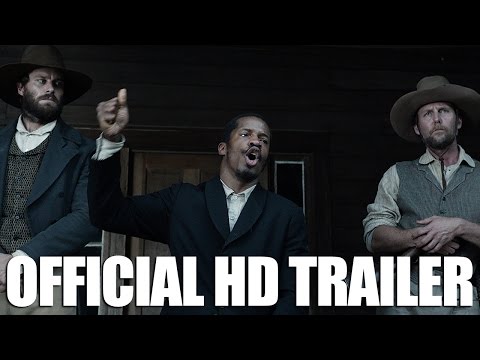
The official trailers lean on Jackman’s score textures — solemn strings and choir — with promotional cuts also highlighting Simone’s “Strange Fruit” to prime the film’s elegiac tone.
Notes & Trivia
- Jackman’s album includes Simone’s “Strange Fruit” alongside score cues — an uncommon, pointed choice for a score release.
- Wiley College Choir recorded spirituals for the production; the sessions took place in the campus chapel in late 2015.
- Children’s choir timbre (closing cue) was used to suggest legacy rather than triumphalism.
- An “Inspired By” companion album (hip-hop/R&B) arrived a week before the U.S. release, framing Turner’s story through contemporary voices.
Reception & Quotes
Critical response to the music was strong, even when the film’s overall reception was mixed. Reviewers repeatedly singled out the choral writing and the gravity of the sound.
“Jackman’s score is unusually varied… multiple musical traditions… to fine effect.” — The Hollywood Reporter
“The score pushes when it needs to subtly persuade.” — Rolling Stone
“Best music of Henry Jackman’s career to date.” — Movie Music UK
“At times overwrought.” — The Atlantic
Availability: The score album was released digitally by Atlantic Records on October 21, 2016. The “Inspired By” album released September 30, 2016.
Interesting Facts
- Choir as conscience: Jackman explicitly avoided action bombast; choir steers scenes toward witness, not revenge.
- Spirituals as structure: Brief inserts of traditional songs act like chapter headings — memory interrupting plot.
- Trailer strategy: Placing “Strange Fruit” in marketing reframed expectations from revenge thriller to historical lament.
- Two-album approach: Score + “Inspired By” let the film hold both period sound and present-tense commentary.
- Campus sessions: Wiley’s chapel acoustics give the spirituals their intimate, breath-close presence.
Technical Info
- Title: The Birth of a Nation: Original Motion Picture Score
- Year: 2016
- Type: Film score (with one licensed track)
- Composers: Henry Jackman
- Music supervision: (production & album release via Atlantic; film includes traditional spirituals and Simone recording)
- Selected notable placements: “Couldn’t Hear Nobody Pray” (end sequence/credits); “Strange Fruit” (late-film tableau; also in marketing)
- Release context: Film premiered Sundance 2016; U.S. theatrical Oct 7, 2016; score album Oct 21, 2016; “Inspired By” Sep 30, 2016
- Label/album status: Atlantic Records (digital release)
- Availability/Chart notes: Widely available on major DSPs (Apple Music, Spotify)
Questions & Answers
- Is the album mostly orchestral or song-driven?
- Mostly orchestral/choral by Henry Jackman; one key licensed song (“Strange Fruit”) appears alongside traditional spirituals in the film.
- What’s the difference between the score and the “Inspired By” album?
- The score underscores the film; the companion album features contemporary artists (hip-hop/R&B) responding to its themes.
- Who performs the spirituals we hear?
- Wiley College Choir recorded a cappella material used onscreen, most prominently “Couldn’t Hear Nobody Pray.”
- Why does the final act feel like a requiem?
- Jackman pushes choral writing and restrained brass/percussion to frame the uprising as sacrificial, not sensational.
- Is “Strange Fruit” actually in the movie or just the trailer?
- It’s heard within the film and also featured in promotion, amplifying the story’s connection to America’s history of lynching.
Key Contributors
| Entity | Relation |
|---|---|
| Henry Jackman (Person) | Composed the original score — contributed orchestral, choral, and percussion palette. |
| Nate Parker (Person) | Directed/wrote/starred — guided musical brief toward choir-forward dramaturgy. |
| Wiley College Choir (Organization) | Performed spirituals — recorded “Couldn’t Hear Nobody Pray” for end sequence. |
| Nina Simone (Person) | Performer of licensed “Strange Fruit” — used in film and marketing. |
| Atlantic Records (Organization) | Released the score album and the “Inspired By” compilation. |
| Fox Searchlight Pictures (Organization) | Distributed the film — marketing featured score textures and Simone’s song. |
| The Birth of a Nation (Work) | 2016 feature film — historical drama about Nat Turner’s 1831 rebellion. |
Sources: IMDb Soundtrack; Hollywood Reporter; Rolling Stone; Movie Music UK; Apple Music; Spotify; Filmmusicreporter; Pitchfork; AAIHS; Atlantic Records materials.
This film starts on October 7, and it tells the story of one of the bloodiest massacres of the black population in the newest US history after the Independence Day of 1776. It describes the rebellion, which was suppressed (as many other black rebellions, as out of 24 only 6 throughout the world were successful). During the event, slaves killed around 60 whites, but just within two days of August were slashed and sentenced to death. In the aftermath, up to 260 black slaves and citizens were killed in this city and in the neighborhoods. The country in general adopted many new discrimination rules that narrowed the circle of freedoms of black citizens and harshly widened already existing slavery borders. This event is outstanding because it was one of many huge ones that contributed into the abolition of the slavery in years later. It is definitely not as loud as the famous Sitting Strike, which generally led to abolition as one of the hugest droplets in an already over-the-edges cup of inter-color sufferance, but it is one of the bloodiest things, which definitely must be told to the public. There is a trend that might have been noticed by a reasonable and observant person – during the late years, there were many films about abolition, starting from fantastic Jango Unchained and Selma to this film. We hope that the story will encourage many more new stories to be told, as there are much more suppressed rebellions in the US nation and worldwide left unrevealed. As for the music, there are big names: Lil Wayne, Nina Simone, and Pusha T. The most part is in line with the story, like Black Moses, Forward, and Raise Hell with outstanding lyrics. Generally, we are impressed by lyrics and the way of feed of magnificent song of On My Own by Lecrae, Leon Bridges, sang by husky voice.November, 28th 2025
The Birth of a Nation on Rottentomatoes.com, Movie's IMDb page, Article on WikipediaA-Z Lyrics Universe
Cynthia Erivo Popular
Ariana Grande Horsepower
Post Malone Ain't No Love in Oklahoma
Luke Combs Good Riddance (Time of Your Life)
Green Day Bye Bye Bye
*NSYNC You're the One That I Wan
John Travolta & Olivia Newton-John I Always Wanted a Brother
Braelyn Rankins, Theo Somolu, Kelvin Harrison Jr. and Aaron Pierre The Power of Love
Frankie Goes to Hollywood Beyond
Auli’i Cravalho feat. Rachel House MORE ›