
"The Bourne Legacy" Soundtrack Lyrics
Movie • 2012
Track Listing
James Newton Howard
James Newton Howard
James Newton Howard
James Newton Howard
James Newton Howard
James Newton Howard
James Newton Howard
James Newton Howard
James Newton Howard
James Newton Howard
James Newton Howard
James Newton Howard
James Newton Howard
James Newton Howard
James Newton Howard
James Newton Howard
James Newton Howard
James Newton Howard
James Newton Howard
James Newton Howard
James Newton Howard
James Newton Howard
James Newton Howard
James Newton Howard
James Newton Howard
Moby
"The Bourne Legacy: Original Motion Picture Soundtrack (2012)" – Album Guide to Tracks and Key Scenes
Overview
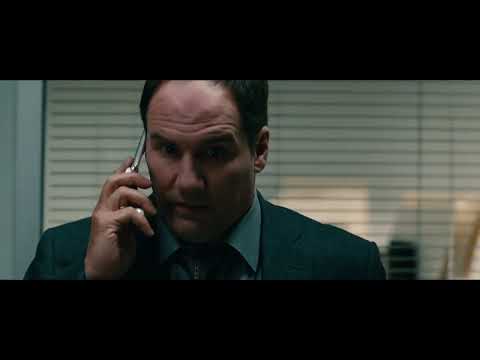
What does a franchise sound like when it swaps identities but keeps the pulse? The Bourne Legacy answers with James Newton Howard’s sleek, percussive architecture — a new brain housing old instincts. This fourth film shifts focus to Outcome agent Aaron Cross; the music shifts too, from John Powell’s kinetic motifs to Howard’s chillier electronics, kettle drums and serrated string ostinatos.
Howard’s score plays like systems initializing and shutting down — algorithms in combat boots. It’s deliberately machine-cool until emotion spikes: Manila’s lab panic, the wolf gambit in Alaska, the motorcycle gauntlet. And then, tradition: Moby returns with “Extreme Ways (Bourne’s Legacy),” a freshly recorded, orchestral-lifted version that seals the credits like a signature.
Genres & themes in phases: glitchy electronics & low brass — surveillance and control; martial percussion — pursuit logic; mournful strings — collateral cost; throbbing synths — pharmacology/Outcome; end-credits electronica with orchestra — legacy, continuity, ritual.
How It Was Made
Howard took over Bourne scoring duties from John Powell, recording at Abbey Road and releasing the album digitally via Back Lot Music (with a physical edition from Varèse Sarabande). For the credits, Moby re-cut “Extreme Ways” as “Bourne’s Legacy,” tracking parts at his home studio and at Sony Pictures with a 100-plus-piece orchestra; Howard and Joseph Trapanese assisted on the orchestral integration. The result stitches a franchise constant to a new sonic chassis.
Tracks & Scenes
“Legacy” (James Newton Howard)
- Where it plays:
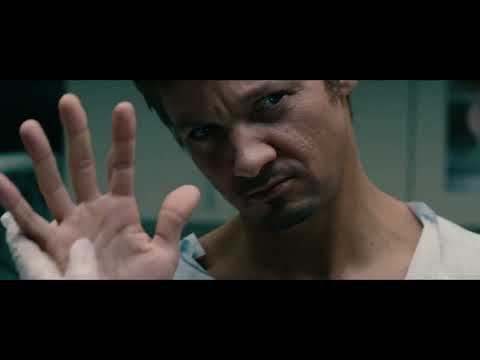
- Opening passages (first minutes). Sparse pulses and strings map Aaron Cross’s isolation training in Alaska — snowfields, meds, and metrics. Non-diegetic; ~2–3 minutes lay the film’s tempo.
- Why it matters:
- Establishes the score’s systems-first grammar: precise, minimal, always measuring.
“Wolves / Sick Ric” (James Newton Howard)
- Where it plays:
- Alaska survival stretch, culminating in the wolf decoy maneuver (first act). Percussion hammers like heart rate; strings scrape as Cross outthinks the tracker. Non-diegetic; ~2 minutes highlighted.
- Why it matters:
- Shows Howard’s action ethos — tension by subtraction, then a sudden, vicious snap.
“Program Shutdown” (James Newton Howard)
- Where it plays:
- “Outcome” gets wiped. Intercut boardroom orders and lab shock (first act pivot). Electronic beds with low brass pulses as the operation collapses. Non-diegetic; cue rides the montage.
- Why it matters:
- Cold administrative murder — the music feels procedural, not operatic, which is the horror.
“Manila Lab” (James Newton Howard)
- Where it plays:
- Dr. Marta Shearing’s workplace in Manila (mid-to-late second act). Rattling percussion and synth alarms as security tightens and escape routes narrow. Non-diegetic; several minutes through the sequence.
- Why it matters:
- Tilts the score toward techno-thriller: lab beeps turn into rhythm; breath turns into tempo.
“High Powered Rifle” (James Newton Howard)
- Where it plays:
- House assault and tactical counters (mid-film). Staccato string figures align with muzzle flashes and door clears. Non-diegetic; ~2–3 minutes threaded through the set-piece.
- Why it matters:
- Edits and accents lock — Howard writes in cuts and trigger pulls.
“NRAG” (James Newton Howard)
- Where it plays:
- Brief, nervy connective tissue around intelligence ops (“NRAG” tag scenes). Non-diegetic; under a minute, but it brands the bureaucratic menace.
- Why it matters:
- A motif for alphabet-soup paranoia — short, sharp, memorable.
“Cleaning This Gun (Come On In Boy)” (Rodney Atkins)
- Where it plays:
- Diegetic on a radio during the film’s early stateside stretch (first half). Country twang drifts under a quiet scene before the plot accelerates.
- Why it matters:
- Jolts the franchise soundworld — a domestic, everyday tune inside a world of black-ops calculus.
“Pods” / “Kongkkakji” (Jang Yoon-jeong; traditional/K-pop trot)
- Where it plays:
- Diegetic source in the Korea material (early-to-mid first act). Light trot ambience from TV/radio layers the Seoul locale between terse plot beats.
- Why it matters:
- Grounds the global chessboard — the background is cheerful, the orders are not.
“Patcha” (Mocha Girls)
- Where it plays:
- Diegetic club/street sound in Manila (late second act). Pop bounce spilling from storefronts as Cross and Shearing move through the city toward the chase.
- Why it matters:
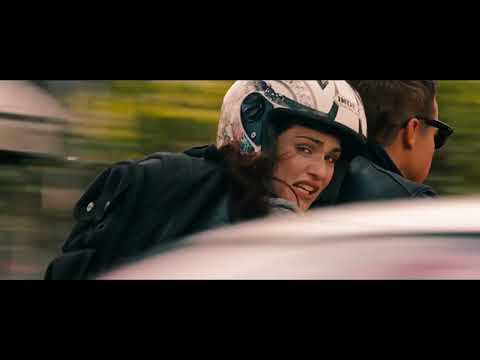
- Creates a lived-in Manila — bright local texture before the film slams into the motorbike run.
“Magsaysay Suite” → “Aftermath” (James Newton Howard)
- Where it plays:
- Cooldown after the chase (final stretch). Strings soften; synths exhale as the camera finds sea and sky. Non-diegetic; transitional cues into credits.
- Why it matters:
- Gives the film a breath before ritual returns.
“Extreme Ways (Bourne’s Legacy)” (Moby)
- Where it plays:
- End credits (runtime ~135 minutes; first credit roll). New 2012 version with orchestra; the franchise signature closes the story.
- Why it matters:
- Continuity as catharsis — the same song, re-skinned, like the film itself.
Trailer note
Universal’s trailers pivot between brooding strings and percussive builds, saving the Extreme Ways sting for the marketing out-flow. The first studio upload set the “never just one” tone.
Notes & Trivia
- First Bourne film not scored by John Powell; Howard recorded at Abbey Road and kept Powell’s rhythmic DNA in places.
- Moby’s 2012 version of “Extreme Ways” used a large orchestra tracked at Sony Pictures, with help from Howard and Joseph Trapanese.
- Two labels handled the album: Back Lot Music (digital) and Varèse Sarabande (CD).
- Country outlier: Rodney Atkins’ “Cleaning This Gun” appears diegetically — a rare Nashville color in this franchise.
- Localized source cues (Korea/Philippines) add place texture: Jang Yoon-jeong’s trot song and Mocha Girls’ pop cut are credited.
Reception & Quotes
Critics were split on the film and the music, but most agreed Howard preserved the “Bourne feel” while cooling the temperature.
“Relentlessly taut and atmospheric… chilly electronics, thundering drums, dissonant strings.” — AllMusic
“Efficiently maintains Bourne’s music, but doesn’t significantly progress it.” — Empire
“It just never quite all comes together.” — Movie Wave
“Competent… concentrates on respecting its predecessors.” — Filmtracks
Availability: Digital release August 7, 2012 (Back Lot Music); CD August 21, 2012 (Varèse Sarabande). The Moby single “Extreme Ways (Bourne’s Legacy)” also arrived digitally summer 2012.
Interesting Facts
- New hero, old ritual: Even without Jason, the end-credits tradition holds — same song, new arrangement.
- Studio split: Back Lot handled digital; Varèse, the CD — a common 2010s pattern for studio scores.
- Orchestral Moby: The “Bourne’s Legacy” single exists in vocal and purely orchestral versions.
- Runtime runway: At 135 minutes, the film gives the score room to cycle tension rather than blitz it.
- Place as sound: Manila and Seoul get diegetic pop that rubs against the score’s icy hardware.
Technical Info
- Title: The Bourne Legacy: Original Motion Picture Soundtrack
- Year: 2012
- Type: Film score + end-credits single
- Composer: James Newton Howard
- End-credits song: “Extreme Ways (Bourne’s Legacy)” — Moby
- Studios: Recorded at Abbey Road (score); additional “Extreme Ways” sessions at Sony Pictures
- Labels: Back Lot Music (digital), Varèse Sarabande (CD)
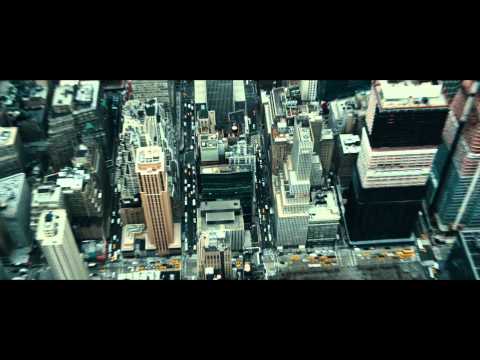
- Selected notable placements: “Program Shutdown” — Outcome wipe montage; “Manila Lab” — lab escape; “Wolves/Sick Ric” — Alaska wolf gambit; “Extreme Ways (Bourne’s Legacy)” — end credits.
- Release context: Film runtime 135 minutes; U.S. release August 10, 2012; album released August 7 (digital) / August 21 (CD).
Questions & Answers
- Who scored The Bourne Legacy and why the change from John Powell?
- James Newton Howard. Powell had moved away from live-action at the time; Howard kept the rhythmic DNA but shifted the texture colder.
- Is the end-credits song the same as the earlier films?
- Yes — it’s Moby’s “Extreme Ways,” but re-recorded as the 2012 “Bourne’s Legacy” version with added orchestra.
- What labels released the album?
- Back Lot Music issued the digital release; Varèse Sarabande handled the physical CD.
- Are there any licensed songs inside the film?
- Yes — notably Rodney Atkins’ “Cleaning This Gun,” Jang Yoon-jeong’s Korean trot cues, and Mocha Girls’ “Patcha” in the Manila stretch.
- Where was the score recorded?
- Abbey Road Studios (London) for the score; Sony Pictures Studios (Los Angeles) hosted the orchestra for Moby’s end-credits re-cut.
Key Contributors
| Entity | Relation |
|---|---|
| James Newton Howard (Person) | Composer — wrote and produced the original score; recorded at Abbey Road. |
| Moby (Person) | Performer/Writer — “Extreme Ways (Bourne’s Legacy)” for end credits. |
| Joseph Trapanese (Person) | Composer/arranger — assisted orchestral work on “Extreme Ways (Bourne’s Legacy).” |
| Back Lot Music (Organization) | Released the digital album (2012). |
| Varèse Sarabande (Organization) | Issued the physical CD (2012). |
| Universal Pictures (Organization) | Distributor of the film. |
| Abbey Road Studios / Sony Pictures Studios (Venues) | Recording locations — score (Abbey Road); end-credits orchestral sessions (Sony). |
| The Bourne Legacy (Work) | 2012 film directed by Tony Gilroy; runtime 135 minutes. |
Sources: Apple Music album page; Spotify album listing; Wikipedia (film & soundtrack); Discogs (album/single credits); AllMusic review; Filmtracks; Empire note; Movie-Wave review; Soundtrack.net/Soundtrakd song credits; Rodney Atkins site/news; Bourne wiki (supplemental context).
November, 28th 2025
'The Bourne Legacy': Movie profile on IMDb, Wikipedia pageA-Z Lyrics Universe
Cynthia Erivo Popular
Ariana Grande Horsepower
Post Malone Ain't No Love in Oklahoma
Luke Combs Good Riddance (Time of Your Life)
Green Day Bye Bye Bye
*NSYNC You're the One That I Wan
John Travolta & Olivia Newton-John I Always Wanted a Brother
Braelyn Rankins, Theo Somolu, Kelvin Harrison Jr. and Aaron Pierre The Power of Love
Frankie Goes to Hollywood Beyond
Auli’i Cravalho feat. Rachel House MORE ›