
"The Cable Guy" Soundtrack Lyrics
Movie • 1996
Track Listing
Jim Carrey
Jerry Cantrell
Primitive Radio Gods
Silverchair
$10,000 Gold Chain
David Hilder
Porno for Pyros
Cracker
Jim Carrey
Cypress Hill
Ruby
Filter
Toadies
Expanding Man
Jim Carrey
"The Cable Guy (Original Motion Picture Soundtrack)" – Album Guide to Tracks and Key Scenes
Overview
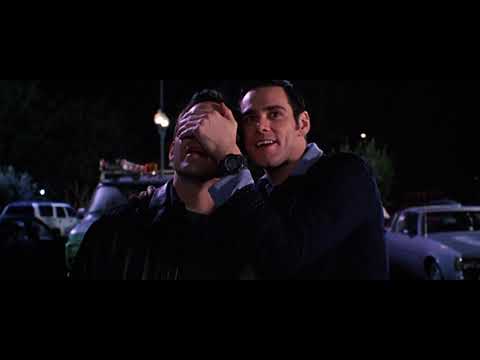
What happens when a “hangout comedy” keeps underscoring the hangout with menace? The Cable Guy answers with alt-rock sheen, industrial grind, and a karaoke sledgehammer. Ben Stiller’s black comedy follows Steven (Matthew Broderick) as he’s love-bombed and stalked by Chip (Jim Carrey), a TV-raised cable installer who wants a best friend forever. The soundtrack turns that cling into pulse: radio-dominating singles rub shoulders with John Ottman’s rubbery, cartoon-tinged score and a Jerry Cantrell closer that hits like a door slam.
The music works like a trap: needle-drops sell confidence, then curdle. Blog/alt rock and trip-hop-adjacent mood (“Standing Outside a Broken Phone Booth…”) play innocence and alienation; industrial crunch (Filter’s “Hey Man, Nice Shot”) punctures slapstick with threat; karaoke covers (“Somebody to Love,” “American Woman”) expose Chip’s inner stage monster. Ottman’s score stitches it together — upbeat TV-jingle DNA that keeps turning sinister in the corners.
Genres & themes in phases — 90s alt (goofy charm masking need), industrial (aggression, control), classic-rock karaoke (performative intimacy), cartoonish score (surface polish vs. inner mess) — mirror Chip’s shift from clingy to predatory.
How It Was Made
John Ottman composed and conducted the score, recorded with a studio orchestra and edited in lockstep with Stiller’s set-piece rhythms. Music supervision credits on the film include Jeanette Surga and Juliana Roberts, who cleared a very mid-90s set of bands (Primitive Radio Gods, Silverchair, Filter, Cypress Hill) alongside source cues and diegetic karaoke moments. The commercial album arrived via Sony’s Work Group imprint, while Ottman’s cues later surfaced on a specialty release paired with his Fantasy Island score.

Tracks & Scenes
Note: Time marks differ slightly by edition (theatrical/Blu-ray/streaming). Below are reliable placements and how they function on screen.
“Somebody to Love” (Jim Carrey — Jefferson Airplane cover)
- Where it plays:
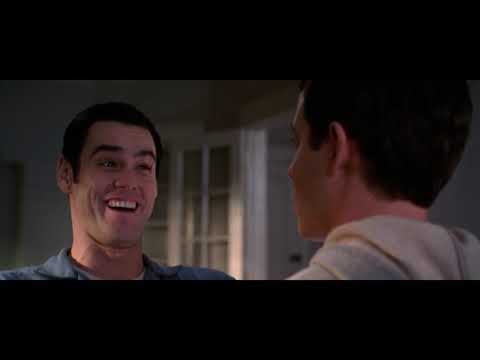
- Diegetic karaoke at Steven’s apartment party. Chip seizes the mic and belts a psychedelic, lisping power version as guests freeze, then can’t look away. Camera whips between gyrations, elderly guests, and Steven’s shrinking smile.
- Why it matters:
- The “love anthem” becomes a red-flag performance — funny, then too committed. It’s the movie’s tonal mission statement.
“Hey Man, Nice Shot” (Filter)
- Where it plays:
- Non-diegetic over the infamous neighborhood basketball scene. Chip big-dogs Steven’s friends — elbows, no-look blocks, and one savage dunk — while the mix lifts the chorus riff like a threat.
- Why it matters:
- Turns a pickup game into a power play. The track’s cold, churning groove re-labels Chip from needy to dangerous.
“Standing Outside a Broken Phone Booth with Money in My Hand” (Primitive Radio Gods)
- Where it plays:
- Quiet domestic beat: Steven and Robin reconnect on the couch, channel-surfing and talking bosses and boundaries. The tune’s sampled B.B. King refrain floats like a sigh over their maybe-reconciliation.
- Why it matters:
- Divorce-era malaise in one radio hit — the relationship sounds stalled, even when hope flickers.
“American Woman” (The Guess Who — older man karaoke)
- Where it plays:
- Diegetic karaoke cameo: an elderly crooner tears into the classic at the party, to the crowd’s delight. It’s a blink-and-grin counterpoint to Chip’s later domination of the mic.
- Why it matters:
- Comic texture — and a reminder the room could be normal fun, if Chip would let it.
“More Human than Human” (White Zombie)
- Where it plays:
- Non-album cue used during Steven’s workplace humiliation: the office computers auto-play the hair-plug video, and this industrial grind roars underneath.
- Why it matters:
- The lyric’s techno-predator vibe underlines Chip’s surveillance/control arc.
“Blind” (Silverchair)
- Where it plays:
- Needle-drop associated with the Medieval Times joust build. Editors weave it with Ottman’s pastiche of the Star Trek fight to push the duel from mock-combat to genuine hostility.
- Why it matters:
- Teen-grunge weight under a cosplay scuffle — that’s the joke, and the shiver.
“Leave Me Alone” (Jerry Cantrell)
- Where it plays:
- End credits and promotional single. After the satellite-dish climax, this lands like a final warning from a guy who won’t take one.
- Why it matters:
- Cantrell’s first solo single doubles as the film’s last word — possessiveness curdled into isolation.
“Satellite of Love” (Porno for Pyros)
- Where it plays:
- Album needle-drop that thematically mirrors Chip’s awe at the city’s central dish and the broadcast-obsession motif; used around the film’s TV-worship imagery.
- Why it matters:
- On-the-nose title; the movie never hides its television religion.
“End of the World Is Coming” (David Hilder)
- Where it plays:
- Early drive with Chip en route to the massive satellite array. Radio-like source texture that foreshadows the looming “worldwide” broadcast threat.
- Why it matters:
- Cheeky omen — apocalypse as FM wallpaper.
Score: “Final Joust” / “This Concludes Our Broadcast Day” (John Ottman)
- Where it plays:
- Satellite-dish climax and denouement. Ottman toggles from TV-logo pep to tragic swell as Chip kills the signal and free-falls from his cathedral of screens.
- Why it matters:
- His score is the film’s mask — smiling, then slipping. Perfect.
Notes & Trivia
- The commercial album (Work Group) pairs radio artists and one Ottman suite; later, a specialty CD bundled ~27 minutes of score with Fantasy Island.
- “More Human than Human” blasts in-film but isn’t on the OST — a 90s soundtrack staple: the missing banger.
- Jerry Cantrell’s “Leave Me Alone” was the lead single, reaching the U.S. Mainstream Rock Top 20 and getting a tie-in music video with film footage.
- Silverchair contributed a re-recorded version of “Blind” for the soundtrack cycle.
- The Medieval Times duel deliberately quotes Star Trek’s “Amok Time” fight — lirpas, rhythmic hits, the whole homage.
Reception & Quotes
On release, the movie split critics; the soundtrack fared better as a time-capsule slice of mid-90s alt radio with a genuinely great end-credits single.
“The soundtrack… a grab-bag, but Cantrell’s cut rocks as hard as any Alice in Chains track.” — AllMusic
“Stiller directs as if sketch comedy; the pop cues keep needling the tone.” — Variety
Availability: the 15-track OST (CD/digital) is widely available; Ottman’s score cues are collectible via a later compilation. Several in-film songs (e.g., White Zombie) are not on the album.
Interesting Facts
- First solo Cantrell: “Leave Me Alone” marked Jerry Cantrell’s first solo release, later remixed for a 2016 EP.
- One-hit radio rocket: Primitive Radio Gods’ single hit No. 1 on U.S. Alternative/AAA after the film boost.
- Not on the disc: White Zombie’s “More Human than Human” is used memorably but omitted from the OST.
- Karaoke continuum: “Somebody to Love” routinely lands on “best movie karaoke scenes” lists.
- Score as satire: Ottman laces TV-ID sparkle into horror-adjacent stingers — form equals theme.
Technical Info
- Title: The Cable Guy — Original Motion Picture Soundtrack
- Year: 1996 (film & OST ship date May 21, 1996)
- Type: Feature film; commercial OST (15 tracks) + later score compilation
- Composer: John Ottman
- Music supervision: Jeanette Surga; Juliana Roberts
- Selected notable placements: “Somebody to Love” (Jim Carrey); “Hey Man, Nice Shot” (Filter) — basketball; “Standing Outside a Broken Phone Booth…” (Primitive Radio Gods) — couch scene; “American Woman” (older man karaoke); “More Human than Human” (White Zombie) — office sabotage; “Blind” (Silverchair) — Medieval Times build; “Leave Me Alone” (Jerry Cantrell) — end credits.
- Label/album status: Work Group (Sony) CD/digital release; separate limited score pairing (The Cable Guy / Fantasy Island) for Ottman cues.
- Trailer Video ID: rhhI_qYOacw (first official trailer result)
Questions & Answers
- What song plays during the basketball scene?
- Filter’s “Hey Man, Nice Shot” — a non-diegetic blast that turns the pickup game mean.
- Which track closes the film over the credits?
- Jerry Cantrell’s “Leave Me Alone,” released as the OST’s lead single.
- What’s the slow, moody song under Steven and Robin’s couch scene?
- Primitive Radio Gods’ “Standing Outside a Broken Phone Booth with Money in My Hand.”
- Is White Zombie in the movie or just on the album?
- “More Human than Human” is used in-film but omitted from the OST.
- Can I get the actual score?
- Ottman’s score wasn’t a standalone wide release in ’96; it later appeared in a specialty compilation with Fantasy Island.
Key Contributors
| Entity | Role / Relation |
|---|---|
| John Ottman | Composer, conductor — original score; later issued on a paired score release |
| Jeanette Surga | Music Supervisor — clearances & placements |
| Juliana Roberts | Music Supervisor — clearances & placements |
| Jerry Cantrell | Artist — end-credits single “Leave Me Alone” |
| Primitive Radio Gods | Artists — “Standing Outside a Broken Phone Booth with Money in My Hand” |
| Filter | Artists — “Hey Man, Nice Shot” |
| Silverchair | Artists — “Blind” (re-recorded for the soundtrack cycle) |
| Jim Carrey | Performer — diegetic karaoke “Somebody to Love” |
| Work Group (Sony) | Label — released the commercial soundtrack album |
| Ben Stiller | Director — set dark-comedy tone; staged music-driven set pieces |
| Columbia Pictures | Studio/Distributor — U.S. release June 14, 1996 |
Sources: AllMusic; Variety; Wikipedia; SoundtrackINFO; Filmtracks; Amazon Music; Apple/Spotify listings; Entertainment Weekly; Sony Pictures trailer channel.
November, 28th 2025
A-Z Lyrics Universe
Cynthia Erivo Popular
Ariana Grande Horsepower
Post Malone Ain't No Love in Oklahoma
Luke Combs Good Riddance (Time of Your Life)
Green Day Bye Bye Bye
*NSYNC You're the One That I Wan
John Travolta & Olivia Newton-John I Always Wanted a Brother
Braelyn Rankins, Theo Somolu, Kelvin Harrison Jr. and Aaron Pierre The Power of Love
Frankie Goes to Hollywood Beyond
Auli’i Cravalho feat. Rachel House MORE ›