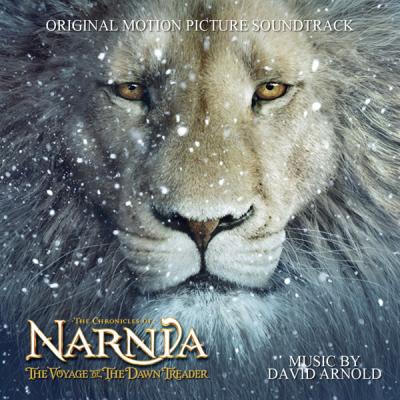
"The Chronicles of Narnia: The Voyage of the Dawn Treader" Soundtrack Lyrics
Movie • 2010
Track Listing
David Arnold
David Arnold
David Arnold
David Arnold
David Arnold
David Arnold
David Arnold
David Arnold
David Arnold
David Arnold
David Arnold
David Arnold
David Arnold
David Arnold
David Arnold
David Arnold
David Arnold
David Arnold
David Arnold
David Arnold
David Arnold
David Arnold
David Arnold
David Arnold
David Arnold
David Arnold
David Arnold
David Arnold
David Arnold
David Arnold
Carrie Underwood
Sreeram Chandra
Joe Mcelderry
Stan Walker
"The Chronicles of Narnia: The Voyage of the Dawn Treader (Original Motion Picture Soundtrack)" – Album Guide to Tracks and Key Scenes
Overview
How do you sail from someone else’s theme into your own sea song? With The Voyage of the Dawn Treader, composer David Arnold inherits Harry Gregson-Williams’ Narnian motifs, quotes them where lineage matters, then unfurls new banners — a ship theme that crests like sunlight on water and a noble, spry idea for Reepicheep. The film finds Lucy and Edmund swept back to Narnia with their cousin Eustace and Prince Caspian, chasing missing lords and their swords toward the world’s eastern edge. The score charts wonder → temptation → trial → release; when awe swells into action, the choir answers like wind in canvas.
The album is largely orchestral adventure (full orchestra + choir) with color from penny whistle, duduk, Irish fiddle and hand percussion. Arnold folds Gregson-Williams’ franchise leitmotifs into the bookends and key appearances (Aslan, royal titles), yet lets his own nautical identity dominate the middle voyage. End titles turn contemporary via “There’s a Place for Us,” the power-ballad closer that spun off multiple international versions.
Genres & themes in phases. Pastoral woodwinds (innocence/curiosity), swashbuckling brass (agency/quest), choral gravitas (temptation/cosmic stakes), and lyrical strings (home/letting go). The ship motif = hope; the “green mist” sonority = fear; Reepicheep’s figure = courage with a grin.
How It Was Made
Arnold scored with an ~87-piece orchestra and ~40-voice choir, recording in London with Nicholas Dodd conducting/orchestrating and Geoff Foster producing/engineering. He created fresh themes for the Dawn Treader and Reepicheep while selectively reprising Gregson-Williams’ series themes for continuity (opening/closing and Aslan beats). Recording sessions ran in September–October 2010. The OST landed in December 2010 on Sony Classical/Hollywood Records (territorial branding varies), while Carrie Underwood’s single “There’s a Place for Us” preceded the film as a lead song and later racked up international cover versions for localized releases.
Tracks & Scenes
Note: Time marks vary slightly by edition; entries align with the official track titles and on-screen function.
“Opening Titles”
- Where it plays:
- Bookend nods to the franchise: a dignified curtain-raiser that tips the hat to established Narnian material while hinting at new seas to come. Non-diegetic; ~1 minute.
- Why it matters:
- Signals continuity — and that a new captain is at the wheel.
“The Painting”
- Where it plays:
- Lucy, Edmund, and Eustace argue; the seascape painting swells, water bursts through the frame, and the room floods until the Dawn Treader hauls them aboard. Brass crests; strings surge into the ship motif.
- Why it matters:
- First full statement of Arnold’s nautical theme — arrival by miracle.
“High King and Queen of Narnia”
- Where it plays:
- Royal salutations on deck as Caspian greets Lucy and Edmund. Warm reprise of series identity with respectful quotes from earlier films.
- Why it matters:
- Bridges old and new, grounding this sequel inside the same myth.
“Land Ahoy” → “The Lone Island” → “Market Forces”
- Where it plays:
- Approach and arrival at Narrowhaven; the slave market erupts as Caspian’s crew fights to free captives. Percussion snaps; brass and snare work recall Arnold’s Bond energy.
- Why it matters:
- Action grammar established: maritime swagger flips to street-level grit.
“Lucy and the Invisible Mansion” → “Coriakin and the Map” → “Temptation of Lucy”
- Where it plays:
- On the Magician’s Island: Dufflepuds unseen, a manor revealed, a living star-map unfurled; Lucy reads a beauty spell and glimpses a life that erases her sister. Choir softens to a chill as the green mist pries at her fears.
- Why it matters:
- Temptation as sound design — sparkle that turns sideways.
“Aslan Appears”
- Where it plays:
- Quiet visitation after Lucy’s crisis. Strings and gentle choir resolve the moral dissonance without fanfare.
- Why it matters:
- The series’ spiritual anchor, stated simply.
“The Golden Cavern” → “Dragon’s Treasure” → “Dragon Attack”
- Where it plays:
- Eustace’s greed leads him to a cursed hoard; he wakes as a dragon. Later, the dragon defends the ship against a sea serpent. The writing shifts from eerie brass and low chorus to pounding ostinati and choral blasts.
- Why it matters:
- A full character arc in cues — shame, power, sacrifice.
“Under the Stars” (Reepicheep motif)
- Where it plays:
- Night watch on the open sea; Reepicheep speaks of the Utter East and the water of life. A tender, questing melody for the mouse knight.
- Why it matters:
- Hope in miniature — the film’s compass rose.
“Liliandil and Dark Island” → “The Calm Before the Storm” → “Into Battle”
- Where it plays:
- Star-maiden guidance, the ship swallowed by fog, then the climactic fight as fears manifest and the crew rally. The 11-minute set-piece “Into Battle” unleashes choir and galloping brass.
- Why it matters:
- The musical payoff: all motives crash, then clear.
“Sweet Water” → “Ship to Shore” → “Time to Go Home”
- Where it plays:
- At the world’s edge, farewells: Eustace restored; Reepicheep rows into the sunrise; Lucy and Edmund part from Aslan. Themes close like a benediction.
- Why it matters:
- Earned simplicity — the melody breathes out.
End-title song: “There’s a Place for Us” (Carrie Underwood)
- Where it plays:
- U.S. end credits. International prints swap in localized recordings (e.g., Joe McElderry, Sergey Lazarev, E.M.D., Sonohra, others); some territories feature additional local songs.
- Why it matters:
- Modern pop reflection on the film’s last image — longing pointed East.
Source/period needle-drops
- Where it plays:
- Eric Coates’ “Langham Place (Elegie) – London Again Suite” and big-band staples (“In the Mood”) appear in early England scenes and radio cues.
- Why it matters:
- Places the Pevensies in time — 1940s world before the wardrobe/painting takes over.
Notes & Trivia
- Arnold keeps Gregson-Williams’ Narnia DNA in ceremonial moments but gives the voyage its own sound — nautical brass, penny whistle, and a restless ostinato under sail.
- Reepicheep receives a jaunty, heartfelt theme that recurs in night-sky cues (“Under the Stars”) and calm-seas travel beats.
- The climactic “Into Battle” runs ~11 minutes on album — one of the series’ longest continuous action cues.
- Multiple localized end-credit versions of “There’s a Place for Us” were produced across Europe, Latin America and Asia; Australia additionally promoted Stan Walker’s “Stand Up.”
- Recording/mixing took place in London; Air Lyndhurst is credited among the music facilities.
Reception & Quotes
Critics greeted the score warmly, noting the way Arnold honors the series while stamping his own adventurous profile. The end-title single received a Golden Globe nomination.
“Arnold… incorporates [series] themes… and truly makes the score his own on the 11-minute ‘Into Battle.’” — Album coverage
“Full-bodied orchestral fantasy with choral lift; nautical identity that pays off in the finale.” — Film score review
Availability: the 30-track OST is widely streaming/digital and on CD; regional label credit appears as Sony Classical/Hollywood Records depending on storefront.
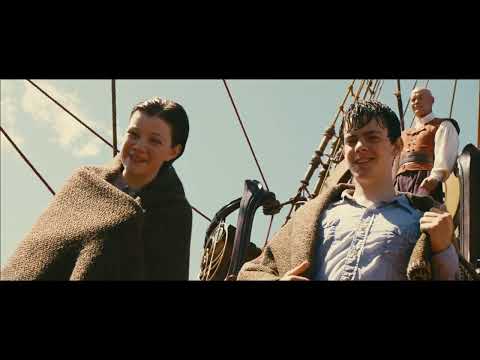
Interesting Facts
- Two legacies, one voyage: Gregson-Williams’ franchise themes frame the film; Arnold’s ship/Reepicheep themes steer the middle acts.
- Choir textures: A smaller mixed choir is used for menace (green mist); fuller choir crowns the battle and farewells.
- Percussion personality: Tapped snares and hand percussion lend “deck” rhythm to fight cues on land and sea.
- Localized credits: Besides Underwood’s U.S. version, localized “There’s a Place for Us” covers rolled out in the UK, Italy, the Netherlands, Russia, Scandinavia and more.
- Suite life: The album’s closing triptych (“Sweet Water”/“Ship to Shore”/“Time to Go Home”) functions as a coda suite to the quest.
Technical Info
- Title: The Chronicles of Narnia: The Voyage of the Dawn Treader — Original Motion Picture Soundtrack
- Year: 2010 (film & OST)
- Type: Feature film score + end-title song
- Composer: David Arnold (themes by Harry Gregson-Williams reprised in key moments)
- Conducting/Orchestration: Nicholas Dodd
- Key performers: Synergy Vocals & additional choirs; featured soloists on penny whistle, duduk, Irish fiddle, ethnic percussion
- Label/album status: Sony Classical / Hollywood Records (territorial), 30 tracks, ~72–76 minutes (editions vary)
- Lead single: “There’s a Place for Us” — Carrie Underwood (localized artists in international territories)
- Studios: Recorded/mixed in London (incl. Air Lyndhurst); sessions in Sept–Oct 2010
- Trailer Video ID: 9RL1ta8uIaU
Questions & Answers
- Does the score reuse themes from the first two films?
- Yes — Arnold quotes Gregson-Williams’ material (opening/closing, Aslan/royal identity) while introducing new ship and Reepicheep themes.
- What’s the big action cue everyone mentions?
- “Into Battle,” an ~11-minute finale that fuses choir, brass, and the ship theme during the Dark Island showdown.
- Which cue covers Lucy’s beauty-spell temptation?
- “Lucy and the Invisible Mansion” into “Temptation of Lucy,” with the green-mist sonority prying at her insecurity before Aslan intervenes.
- Is the end-credits song always Carrie Underwood?
- In the U.S., yes; many regions swapped in localized recordings (e.g., Joe McElderry, Sergey Lazarev, E.M.D., Sonohra).
- Where can I hear the Reepicheep theme at its most tender?
- “Under the Stars” — a quiet deck-at-night moment where his hope points the way east.
Key Contributors
| Entity | Role / Relation |
|---|---|
| David Arnold | Composer, producer — new thematic material (ship & Reepicheep); overall score |
| Nicholas Dodd | Conductor, orchestrator — led sessions and orchestral prep |
| Harry Gregson-Williams | Composer — originating franchise themes reprised in this film |
| Geoff Foster | Score producer/recording & mix engineer |
| Synergy Vocals & additional choirs | Choir/chorus — battle and benediction cues |
| Frank Ricotti; Jan Hendrickse; Dermot Crehan; Paul Clarvis; Mauricio Venegas; Byron Wallon | Featured soloists — ethnic percussion, winds, Irish fiddle, ram’s horn |
| Amy Driscoll | Music Supervisor — soundtrack clearances/album coordination |
| Air Lyndhurst Studios | Music recording/mix facility |
| Carrie Underwood | Artist — end-title “There’s a Place for Us” (U.S.) |
| Joe McElderry; E.M.D.; Sergey Lazarev; Sonohra; Victoria S; Xander de Buisonjé | Artists — localized end-credit versions for international markets |
| 20th Century Fox / Walden Media / Fox 2000 | Studios/Distributors — film release |
Sources: soundtrack label/retail pages; composer interviews/reviews; film credits databases; trailer channels; fan/press scene guides.
November, 28th 2025
A-Z Lyrics Universe
Cynthia Erivo Popular
Ariana Grande Horsepower
Post Malone Ain't No Love in Oklahoma
Luke Combs Good Riddance (Time of Your Life)
Green Day Bye Bye Bye
*NSYNC You're the One That I Wan
John Travolta & Olivia Newton-John I Always Wanted a Brother
Braelyn Rankins, Theo Somolu, Kelvin Harrison Jr. and Aaron Pierre The Power of Love
Frankie Goes to Hollywood Beyond
Auli’i Cravalho feat. Rachel House MORE ›