
"The Darkest Hour" Soundtrack Lyrics
Movie • 2012
Track Listing
Richard Vission, Static Revenger
Marselle
Tyler Bates
Tyler Bates
Tyler Bates
Tyler Bates
Tyler Bates
Tyler Bates
Tyler Bates
Tyler Bates
Tyler Bates
Tyler Bates
Tyler Bates
Tyler Bates
Tyler Bates
Tyler Bates
Tyler Bates
Tyler Bates
Tyler Bates
"The Darkest Hour (Original Motion Picture Soundtrack)" – Album Guide to Tracks and Key Scenes
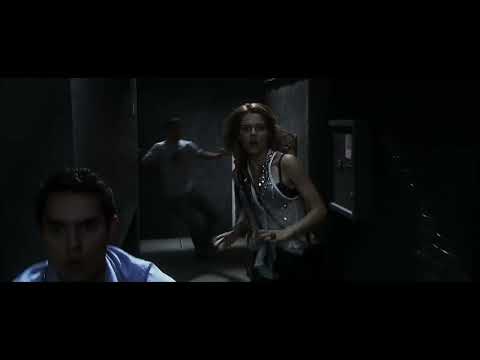
Overview
What does an invisible enemy sound like? In The Darkest Hour, the answer is twofold: a voltage-hum of electronic score and club-born songs that flip from party to panic. Set in Moscow and released across late 2011–2012, the film follows five survivors after a lights-out alien event; the music keeps the electricity alive even when the grid dies.
Composer Tyler Bates frames the invasion with modular synths, pulsing percussion, and cues titled like dispatches — “Night Club Attack,” “Metro Shred,” “Train Yard Battle.” Around that, the commercial album opens with two diegetic scene-setters: Richard Vission & Static Revenger’s floor-filler “I Like That” (feat. Luciana) and “Mockba (Moscow)” from Russian rap duo Marselle. Songs sketch the world; the score stalks the streets.
Genres & themes in phases. EDM/club pop (carefree surface; then shock), electronic thriller scoring (predation; pursuit), and bleak, percussive action writing (resourcefulness; last chances). Throbbing kick = nightlife; filtered synth = threat nearby; brittle strings = the city holding its breath.
How It Was Made
Score & sound. Bates leaned into synthetic colors — modular patches, vintage drum synths, and processed percussion — to blur with the film’s “electrical” creature sound design. The goal: keep rhythm and danger fused so chases feel charged even in silence-heavy scenes.
Song curation. The album (released digitally/physically with WaterTower/Summit partners) mixes in-world bangers with the score: the club hit “I Like That,” local flavor via “Mockba,” then a run of Bates cues that mirror major set-pieces. Anastasia Brown served as music supervisor, balancing on-screen source with post-attack mood.

Tracks & Scenes
Note: Timings differ slightly by cut/edition; entries align songs/cues to their on-screen function without listing the full album.
“I Like That” (Richard Vission & Static Revenger feat. Luciana)
- Where it plays:
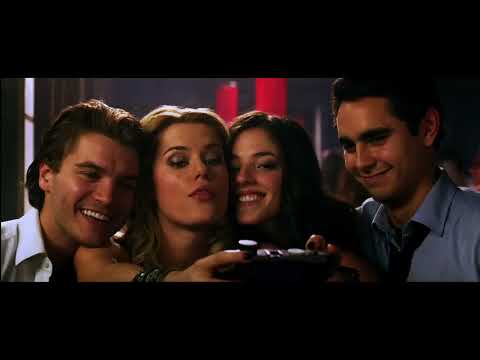
- Nightclub opener in Moscow — strobes, bottle service, and our leads meeting under a crush of bodies. Diegetic: it’s the room’s pulse as the alien phenomenon begins to flicker the lights.
- Why it matters:
- The film’s tonal bait-and-switch — pure pop pleasure seconds before everything shorts out.
“Mockba (Moscow)” (Marselle)
- Where it plays:
- Local-identity needle drop around the club/early Moscow beats; a swaggering nod to place and language that grounds the tourists-in-trouble setup.
- Why it matters:
- Roots the movie in its setting — not just any disaster, this one belongs to Moscow.
“Night Club Attack” (Tyler Bates)
- Where it plays:
- The first visible (invisible) strike. Glass dusts into the air; power surges; bodies vanish into sparks. Non-diegetic score locks to the strobe rhythm as panic overtakes the dance floor.
- Why it matters:
- States the score’s language — percussive, electric, and tightly synced to cuts.
“The Bridge Is Out” → “Crashed” (Tyler Bates)
- Where it plays:
- A failed escape across the river, then a sickening aftermath. The music drops to pulses and scraping textures as the city closes its exits.
- Why it matters:
- Converts spectacle into claustrophobia; the survivors realize how trapped they are.
“They’re Inside” → “Now What?” → “Moscow Streets” (Tyler Bates)
- Where it plays:
- Hide-and-seek through darkened storefronts and alleys; radio-chatter plans; scavenged tech. Low synths tick like timers; brief string spikes mark near-misses.
- Why it matters:
- Gives the middle act a heartbeat, pacing the group’s trial-and-error survival.
“Metro Shred” (Tyler Bates)
- Where it plays:
- Subway sequence — flickering fluorescents, map-checks, the sound of metal and current in a place built for both.
- Why it matters:
- Signature set-piece feel; the cue chews forward like rails under stress.
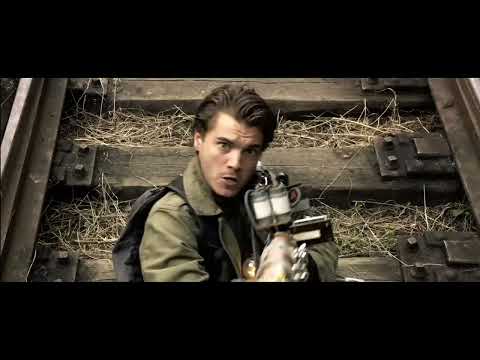
“Train Yard Battle” → “Fighting Back” (Tyler Bates)
- Where it plays:
- Final skirmish and improvised tech countermeasures. Percussion sharpens, themes compress; for once, the humans set the tempo.
- Why it matters:
- Payoff cues — same synth palette, but now in attack posture.
Notes & Trivia
- The soundtrack mixes two club tracks with Bates’s score; the rest of the program is original cues tied to specific set-pieces.
- “Night Club Attack,” “Metro Shred,” and “Train Yard Battle” are reliable scene maps — the album’s cue titles largely match what you see.
- Music supervision is credited to Anastasia Brown (with a large music-department bench on the film).
- Reviews at the time noted Bates’s largely electronic approach — oscillators and drum synths echoing the movie’s “electrical” aliens.
Reception & Quotes
While critics were cool on the film, score-watchers singled out the coherent electro-thriller palette and the way the night-club source pivoted into panic.
“Largely electronic… modular synthesizer experiments and propulsive rhythms… an extension of the eerie electrical sound design.” — Film score review
“Bates’s synth-and-percussion writing keeps momentum when the script goes dim.” — Album notes/retrospectives
Availability: the Original Motion Picture Soundtrack streams widely (Apple Music/Spotify) and includes both club tracks plus 16+ score cues; individual highlights (e.g., “Night Club Attack”) also appeared as single/EP previews.
Interesting Facts
- Diegetic switch: The opening banger doubles as sound design set-up; when the track cuts, the aliens feel louder.
- Local color: Russian-language “Mockba (Moscow)” plants the action in its host city before the world goes silent.
- Cue-as-roadmap: You can “watch” the movie by reading the cue list — unusually literal titles.
- Synth-forward: The score avoids big orchestral statements; it’s voltage, not violins.
- Short, sharp album: Under an hour, sequenced for pace — few cues over three minutes, lots of forward motion.
Technical Info
- Title: The Darkest Hour — Original Motion Picture Soundtrack
- Year: 2011 (U.S. release) / 2012 (broader rollout)
- Type: Score-led soundtrack with select diegetic songs
- Composer: Tyler Bates
- Music supervision: Anastasia Brown
- Selected notable placements: “I Like That” (opening club; diegetic), “Mockba (Moscow)” (early Moscow identity), “Night Club Attack,” “Metro Shred,” “Train Yard Battle,” “Fighting Back.”
- Label/album status: Widely available via Apple Music/Spotify; digital and CD releases feature identical core programs.
- Trailer Video ID: Nbns9vRejHg
Questions & Answers
- Who composed the score?
- Tyler Bates, using a synth-heavy palette that meshes with the film’s electrical creature design.
- Are there licensed songs in the movie?
- Yes — notably “I Like That” (feat. Luciana) and Marselle’s “Mockba (Moscow)” in the opening Moscow club passages.
- Does the album include both songs and score?
- It opens with the two songs, then transitions to Bates’s cues that track major sequences.
- What cue scores the first attack?
- “Night Club Attack,” which snaps from party vibe to panic and sets the score’s percussive language.
- Who handled music supervision?
- Anastasia Brown, coordinating the diegetic club cuts and the release’s song/score balance.
Key Contributors
| Entity | Role / Relation |
|---|---|
| Tyler Bates | Composer — electronic/synth-driven original score |
| Anastasia Brown | Music Supervisor — curated licensed tracks & clearances |
| Richard Vission & Static Revenger feat. Luciana | Artists — “I Like That” (diegetic club track) |
| Marselle | Artists — “Mockba (Moscow)” (Russian-language placement) |
| Summit Entertainment / 20th Century Fox | Distributors — U.S./International release |
| Chris Gorak | Director — integrated club source with electronic score |
Sources: album listings and credits; composer/score notes; film credits; soundtrack retailers and databases; official trailers.
November, 28th 2025
'The Darkest Hour' is a 2011 Russian-American science fiction thriller film directed by Chris Gorak and produced by Timur Bekmambetov: Learn more on Internet Movie Database and WikipediaA-Z Lyrics Universe
Cynthia Erivo Popular
Ariana Grande Horsepower
Post Malone Ain't No Love in Oklahoma
Luke Combs Good Riddance (Time of Your Life)
Green Day Bye Bye Bye
*NSYNC You're the One That I Wan
John Travolta & Olivia Newton-John I Always Wanted a Brother
Braelyn Rankins, Theo Somolu, Kelvin Harrison Jr. and Aaron Pierre The Power of Love
Frankie Goes to Hollywood Beyond
Auli’i Cravalho feat. Rachel House MORE ›