
"The Diary of a Teenage Girl" Soundtrack Lyrics
Movie • 2015
Track Listing
Dwight Twilley Band
Heart
Nico
Rose Garden
T. Rex
Labi Siffre
Barbara & The Browns
Mott The Hoople
The Stooges
Frankie Miller
Television
"The Diary of a Teenage Girl (Original Motion Picture Soundtrack)" – Album Guide to Tracks and Key Scenes
Overview
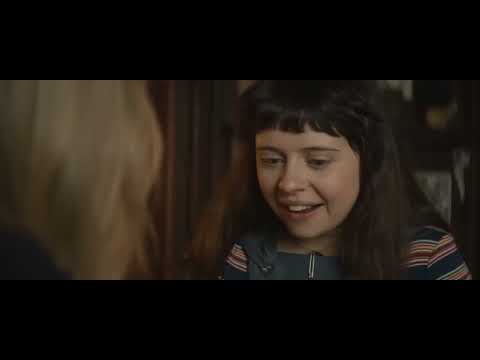
How do you score a teenager’s first rush of freedom — and the consequences that crash in after? The Diary of a Teenage Girl answers with a mixtape of 1970s glam, proto-punk, soft rock and tender original cues that swing between infatuation and fallout. The soundtrack follows Minnie Goetze (Bel Powley) through San Francisco’s hazy summer: first love, bad decisions, and the shaky exhilaration of growing up too fast.
As a listening experience, it’s a mood ring. Nico’s velvet melancholy and Television’s wiry guitars frame Minnie’s interior monologue; Mott the Hoople and T. Rex supply the swagger she tries on like a borrowed jacket; Heart’s “Dreamboat Annie” floats in like a daydream. Composer Nate Heller stitches it together with airy folk-pop cues (one featuring Amber Coffman) that feel like the doodles in Minnie’s sketchbook — intimate, confessional, and just a little magical.
Genres & themes, in phases: glam rock — bravado and self-invention; soft-rock balladry — nostalgia and longing; proto-punk — reckless agency; blue-eyed soul — messy family warmth; indie-folk score — Minnie’s private, reflective voice.
How It Was Made
Director Marielle Heller tapped her brother, composer Nate Heller, to craft the film’s original music, while veteran music supervisor Howard Paar cleared and sequenced the needle-drops to feel like the records Minnie would actually pull from a crate. Rhino handled the official soundtrack release (digital, CD, and vinyl). Two Heller pieces bookend a set of era-authentic selections, aligning score with source music so the film can drift seamlessly between Minnie’s headspace and the loud world around her.

Tracks & Scenes
“Looking for the Magic” (Dwight Twilley Band)
- Where it plays:
- Opening sequence. The camera and Minnie’s narration launch us straight into her swirl of desire and curiosity. It’s non-diegetic, setting a fizzy, conspiratorial tone as we meet her world and the people who will complicate it.
- Why it matters:
- Power-pop optimism becomes Minnie’s thesis statement: she’s looking — for love, for attention, for a self.
“Dreamsong” (Nate Heller feat. Amber Coffman)
- Where it plays:
- Early in the film, Minnie sketches while waiting for Monroe to come home. The cue breathes with her pencil strokes — soft vocals over acoustic guitar — and the world feels briefly safe.
- Why it matters:
- Establishes the sonic diary voice: vulnerable, private, and not yet distorted by adult noise.
“Crying Laughing Loving Lying” (Labi Siffre)
- Where it plays:
- Minnie receives a note from a classmate. The scene is small but electric; the song’s gentle candor underlines how tiny gestures can feel seismic at fifteen.
- Why it matters:
- It’s the soundtrack’s empathy engine — simple truths that keep the film from moralizing.
“Precious Star” (T. Rex)
- Where it plays:
- Mid-film, Minnie flaunts a hickey to needle Monroe. The cut struts in, non-diegetic — glitter and bite — while her bravado masks insecurity. The moment lands like a glam-rock eye roll.
- Why it matters:
- Glam as armor. Minnie tries on power even as she’s losing it.
“A Fool in Love” (Frankie Miller)
- Where it plays:
- Charlotte gets a check and throws a party; diegetic speakers thump while adult mess spills into the room. Minnie watches, absorbing more than anyone clocks.
- Why it matters:
- Shows generational rhyme: the grown-ups aren’t alright either. The cue lets the scene swing between rowdy and sad.
“Run to the Mountain” (Nate Heller)
- Where it plays:
- Bar scene with Minnie and her mother — a live band on stage, clearly diegetic. Also used in TV spots/trailers to sell the film’s bittersweet lift.
- Why it matters:
- Bridges marketing and movie: the same melody that teased audiences now scores Minnie choosing herself.
“The Beach” (Nate Heller & Reni Lane)
- Where it plays:
- End credits begin as Minnie, on the beach with her sister, exhales. After a summer of too-loud choices, the music steps back and lets the Pacific do the talking.
- Why it matters:
- Closes the diary with grace: reflection over spectacle.
“Dreamboat Annie” (Heart)
- Where it plays:
- Threaded through a dreamy stretch of the film; the song’s feather-light glide mirrors Minnie’s idealized fantasies and the movie’s hand-drawn animations.
- Why it matters:
- Soft-rock reverie that’s gorgeous and a little delusional — exactly how Minnie wants life to feel.
Trailer music
- What you hear:
- Marketing spots prominently used Nate Heller’s “Run to the Mountain”; online trailers also leaned on the film’s folk-pop palette to foreground Minnie’s voice.
- Why it matters:
- It aligned promotion with the movie’s actual musical language — no bait-and-switch.
Notes & Trivia
- “Dreamsong” made the Academy’s Original Song longlist the year of release.
- Howard Paar won the Guild of Music Supervisors Award for his work — a big nod for a sub-$5M indie.
- Rhino’s official album includes two Nate Heller tracks that act like prologue/epilogue for the story arc.
- Animated overlays in the film were developed alongside music choices so certain cues could “bleed” into Minnie’s illustrations.
- Mott the Hoople and Television put a spikier edge against the otherwise warm, folk-leaning score — a deliberate tonal clash.
Reception & Quotes
Critics embraced the soundtrack’s honesty and period feel — not as mixtape nostalgia but as character writing. Reviewers repeatedly singled out the blend of scrappy glam and gentle score as essential to the film’s candor.
“Scaldingly honest… a coming-of-age comedy that refuses to scold.” — The Guardian
“Genuine, poignant and hilarious.” — IndieWire
“Boldly unconventional and refreshingly honest.” — Critics’ consensus
“You’ve never seen anything quite like it.” — Industry Q&A coverage
Availability: Official soundtrack via Rhino (digital/CD/vinyl). Streaming playlists mirror the album; a few marketing/TV-spot edits circulate separately.
Interesting Facts
- Composer & director are siblings: Nate Heller’s cues were tailored to Marielle Heller’s diary-page visual language.
- Vinyl art pedigree: The vinyl package features illustrations tied to the film’s animation team and graphic-novel roots.
- Diegetic pivots: Several cues slide from background to in-world sound (and back), mirroring Minnie’s blurry boundaries.
- Glam with teeth: T. Rex and Mott the Hoople cues add shine to scenes that are actually about manipulation.
- Soft-rock as siren song: “Dreamboat Annie” isn’t just pretty — it’s narratively sly, sweetening moments Minnie shouldn’t romanticize.
Technical Info
- Title: The Diary of a Teenage Girl (Original Motion Picture Soundtrack)
- Year: 2015
- Type: Film soundtrack (songs + original score selections)
- Composer: Nate Heller
- Music supervision: Howard Paar (award: GMS — Film Under $5M)
- Selected notable placements: “Looking for the Magic” (opening), “Dreamsong” (Minnie sketching), “Precious Star” (hickey gambit), “A Fool in Love” (Charlotte’s party), “Run to the Mountain” (bar, also in TV spots), “The Beach” (end credits)
- Release context: US theatrical release August 7, 2015; soundtrack issued by Rhino around the same window; vinyl edition followed.
- Label/album status: Rhino Records official release (digital/CD/vinyl); streaming availability widely supported.
- Awards/notes: “Dreamsong” longlisted for Oscar; soundtrack/supervision honored by GMS.
Questions & Answers
- Is the soundtrack mostly period songs or original score?
- Both. It mixes 1970s cuts (Heart, Television, Mott the Hoople, T. Rex, etc.) with Nate Heller’s intimate cues that voice Minnie’s inner life.
- Which song opens the film?
- Dwight Twilley Band’s “Looking for the Magic” kicks off the story with fizzy, searching energy.
- What’s the song Minnie sketches to?
- “Dreamsong” (Nate Heller feat. Amber Coffman) — a quiet, folky breath that functions like a diary entry set to music.
- Which cues are diegetic?
- “Run to the Mountain” appears live in a bar; several party scenes use source music on-screen. Others (like “Precious Star”) are non-diegetic mood setters.
- Was the music recognized by awards?
- Yes — Howard Paar won the Guild of Music Supervisors Award (Film Under $5M), and “Dreamsong” made the Academy’s Original Song longlist.
Key Contributors
| Entity | Relation | Entity |
|---|---|---|
| Marielle Heller | directed | The Diary of a Teenage Girl (film) |
| Nate Heller | composed score for | The Diary of a Teenage Girl (film) |
| Howard Paar | music-supervised | The Diary of a Teenage Girl (film) |
| Rhino Records | released | Original Motion Picture Soundtrack |
| Bel Powley | portrays | Minnie Goetze |
| Alexander Skarsgård | portrays | Monroe |
| Kristen Wiig | portrays | Charlotte |
| Phoebe Gloeckner | wrote | source graphic novel |
| Television / T. Rex / Mott the Hoople / Heart | performed songs featured in | the film & album |
| San Francisco (1970s) | setting for | film narrative & musical tone |
Sources: Rhino Records; AllMusic; Film Music Reporter; WhatSong; IMDb; Academy of Motion Picture Arts & Sciences; Variety; The Guardian; IndieWire; TIME; 4:3 (Four Three Film).
Neat short track to this prize-winner movie contains only 13 songs, quite accurately create the atmosphere of this extraordinary film, rife with moments "on the verge", reflecting the inner world of charming, but unpretty teenager. Nate Heller, sound producer, has placed songs in the story that everyone in the world passes in a lifetime in its own way, to make a feeling of this motion picture as of the English style, despite the fact that it released in the United States. Next Plane To London – charming composition in "Beatles" style and Precious Star by T.Rex, similar in style to ABBA, and even nostalgic Crying Laughing Loving Lying by Labi Siffre – they all give a unique mood that prevailed in the summer of 1969 on this super famous Love Festival at WoodStock (listen to the "Summer Of 69" by Brian Adams to catch a bitty pieces of its mood). Light, performed mostly in the best disco styles ( Roll Away The Stone ) and early pop ( See No Evil ), complemented by a multi-instrumental composition like A Fool In Love . Do you want to understand better what kind of music your grandparents were listening? It is a representative samples. Enjoy.November, 28th 2025
"The Diary of a Teenage Girl": IMDb, WikipediaA-Z Lyrics Universe
Cynthia Erivo Popular
Ariana Grande Horsepower
Post Malone Ain't No Love in Oklahoma
Luke Combs Good Riddance (Time of Your Life)
Green Day Bye Bye Bye
*NSYNC You're the One That I Wan
John Travolta & Olivia Newton-John I Always Wanted a Brother
Braelyn Rankins, Theo Somolu, Kelvin Harrison Jr. and Aaron Pierre The Power of Love
Frankie Goes to Hollywood Beyond
Auli’i Cravalho feat. Rachel House MORE ›