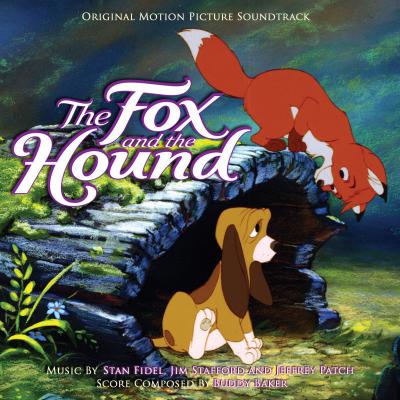
"The Fox and The Hound" Soundtrack Lyrics
Movie • 1981
Track Listing
Pearl Bailey
Pearl Bailey
Jack Albertson
Pearl Bailey
Jeanette Nolan
"The Fox and the Hound (Original Motion Picture Soundtrack)" – Album Guide to Tracks and Key Scenes
Overview
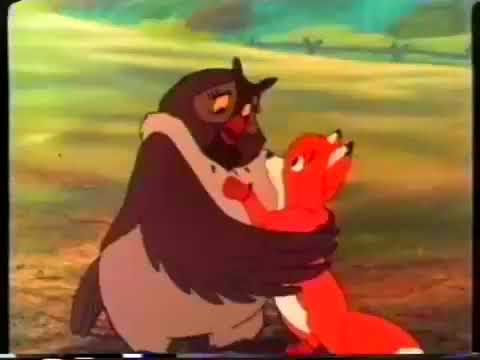
How do you score a friendship that the world insists cannot last? Disney’s The Fox and the Hound answers softly — folk accents, gentle strings, and an orchestral hush that lets the heart do the talking.
Buddy Baker’s score supports Tod and Copper without turning them into theme-park mascots. You hear banjo, fiddle, and harmonica coloring rural mornings; woodwinds and strings cushion moments of fear and responsibility. Songs are sparing but purposeful: Big Mama’s warm vocals nudge the boys toward wisdom, while Widow Tweed’s “goodbye” breaks with lullaby grace rather than melodrama. It’s a soundtrack that believes small feelings are the big ones.
Genres & themes in phases: folk-country touches — innocence and play; classic Disney orchestral lyricism — empathy, moral weight; gospel/jazz inflections via Pearl Bailey — mentorship and community; spoken-lament ballad — loss and letting go.
How It Was Made
The film’s instrumental score was composed and conducted by Buddy Baker, with orchestration by Walter Sheets. Baker’s palette leans Americana — plucked strings, reeds, and warm brass — folded into Disney’s symphonic house sound. Songs came from several writers: “Best of Friends” (music by Richard Johnston, lyrics by Stan Fidel) anchors Tod and Copper’s bond; Jim Stafford penned the playful/pointed numbers sung by Big Mama; and Jeffrey Patch contributed lyrics to the farewell piece performed by Jeanette Nolan as Widow Tweed.
On record, the soundtrack arrived in 1981 on Disney’s label, carrying a handful of songs plus selections from Baker’s score. Later reissues and territory-specific editions kept the material available for families discovering the film on home video.
Tracks & Scenes
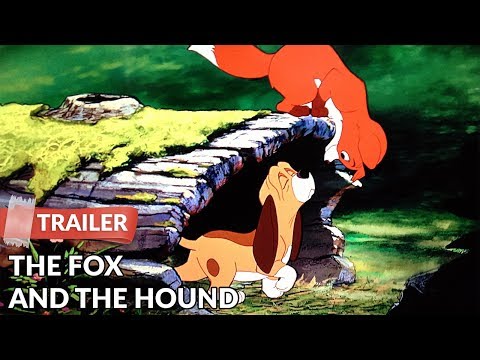
“Best of Friends” (Pearl Bailey as Big Mama; music Richard Johnston, lyrics Stan Fidel)
- Where it plays:
- Early in the film (~00:15:00–00:20:00), as young Tod and young Copper tumble through fields and creeks. Big Mama observes and sings from the treetops; the number weaves through their games, ending as dusk settles. Diegetic-via-narrator style: her voice is “in-world” yet story-omniscient.
- Why it matters:
- States the thesis — friendship without boundaries — while hinting at the world that will intrude. Bailey’s warmth gives the film its moral narrator.
“Lack of Education” (Pearl Bailey as Big Mama; written by Jim Stafford)
- Where it plays:
- Midway (~00:35:00), Big Mama tries to warn Tod that Copper is being trained to hunt. The staging cuts between branches and fence posts as she, Dinky, and Boomer demonstrate the hard lesson in comic, musical asides. Non-diegetic song that the animals “perform” within scene logic.
- Why it matters:
- Gentle reality check. The tune reframes childhood fun as a lesson about roles imposed by adults and instincts.
“A Huntin’ Man” (Jack Albertson as Amos Slade; written by Jim Stafford)
- Where it plays:
- After winter training (~00:47:00), Amos drives home with Chief and Copper. He sings about the life of a hunter — a jovial baritone over wagon-and-road imagery, punctuated by canine reactions. Fully diegetic: Amos is literally singing in the scene.
- Why it matters:
- Positions Copper’s path against Tod’s — a cheerful, human anthem that doubles as ideology.
“Appreciate the Lady” (Pearl Bailey as Big Mama; written by Jim Stafford)
- Where it plays:
- Forest courtship montage (~01:02:00). After Tod’s clumsy attempts to impress Vixey, Big Mama coaches him with a wink and melody. We cut between riverbanks, reeds, and shy glances as Tod relaxes into sincerity. Non-diegetic performance guiding on-screen behavior.
- Why it matters:
- Softens the film’s second act and lets romance breathe, while still tracking Tod’s growth into the wild.
“Goodbye May Seem Forever” (Jeanette Nolan as Widow Tweed; music associated with Richard Rich, lyrics by Jeffrey Patch)
- Where it plays:
- The emotional pivot (~00:53:00). Tweed drives Tod to the woods at dawn, voice quavering over a near-spoken melody as she leaves him to be safe. The song floats over minimal orchestration and long shots of the road and trees. Non-diegetic narration-lament.
- Why it matters:
- One of Disney’s quietest heartbreaks — the soundtrack carries the scene, honest and unadorned.
Score cue — “Main Title / Forest” (Buddy Baker)
- Where it plays:
- Opening logos into the misty woodland dawn (00:00:00–00:02:00). Flute and strings sketch a gentle canopy; low brass hints at danger that finds baby Tod.
- Why it matters:
- Establishes the film’s pastoral frame and Baker’s Americana-inflected orchestral voice.
Score texture — “Chase & Rescue” (Baker; composite of on-screen chase cues)
- Where it plays:
- Late-film bear sequence (~01:12:00–01:18:00). Percussive ostinatos and brass surges track Copper, Tod, and Amos as the bear attacks; strings tighten, then resolve as Tod saves Copper.
- Why it matters:
- Classic Disney action scoring — kinetic but lyrical — culminating in a moral turn that ends the feud.
Notes & Trivia
- Buddy Baker composed and conducted the instrumental score; Walter Sheets handled orchestration.
- “Best of Friends” pairs Richard Johnston’s melody with Stan Fidel’s lyrics — sung in-character by Pearl Bailey’s Big Mama.
- Jim Stafford wrote the film’s playful lesson-songs, including “Lack of Education” and “A Huntin’ Man.”
- Widow Tweed’s farewell number uses Jeffrey Patch’s lyrics and a near-spoken delivery by Jeanette Nolan.
- The soundtrack first appeared in 1981 on Disney’s own label, alongside dialogue/score selections typical of the era.
Reception & Quotes
Across decades, listeners single out the tenderness of the songs — especially “Best of Friends” — and the unshowy beauty of Baker’s pastoral score.
“‘Best of Friends’… warm vocals and melancholy foreshadowing.” TIME, Disney Songs list
“Baker’s final Disney score… banjo, fiddle, harmonica create time and place.” The Great Disney Movie Ride (blog)
“Hackneyed score creeps in…” FilmFreakCentral (retrospective)
Availability: The original 1981 album (Disneyland/Disney label) presents the songs with score highlights; later home-video cycles kept the music in print/streaming.
Interesting Facts
- Less is more: Few songs, carefully placed — the score carries most emotion.
- Diegetic swing: Amos actually sings “A Huntin’ Man” on-screen, a rare human-sung Disney moment in this era.
- Narrator-as-singer: Pearl Bailey’s Big Mama both comments on and shapes the story through song.
- The goodbye’s style: “Goodbye May Seem Forever” is closer to spoken-song than ballad, intensifying the scene’s realism.
- Americana fabric: Plucked strings and harmonica place the drama in a specific rural sound-world.
Technical Info
- Title: The Fox and the Hound (Original Motion Picture Soundtrack)
- Year: 1981
- Type: Film soundtrack — orchestral score with character songs
- Composer (score): Buddy Baker (orchestrations by Walter Sheets)
- Songwriters: Richard Johnston & Stan Fidel (“Best of Friends”); Jim Stafford (“Lack of Education,” “A Huntin’ Man,” “Appreciate the Lady”); Jeffrey Patch (lyrics for “Goodbye May Seem Forever”)
- Performers (featured): Pearl Bailey (Big Mama); Jack Albertson (Amos Slade); Jeanette Nolan (Widow Tweed)
- Label/album status: Disneyland/Disney (Walt Disney) — 1981 album with songs and score selections; various later reissues/streams
- Release context: US theatrical — July 10, 1981; soundtrack released the same year
- Selected notable placements: “Best of Friends” (childhood montage); “Goodbye May Seem Forever” (abandonment scene); “A Huntin’ Man” (return from season); “Appreciate the Lady” (Tod & Vixey courtship)
Key Contributors
| Entity | Relation | Notes |
|---|---|---|
| Buddy Baker | Composer & Conductor → The Fox and the Hound (score) | Americana-tinged orchestral writing |
| Walter Sheets | Orchestrator → Score | Disney studio veteran |
| Richard Johnston & Stan Fidel | Songwriters → “Best of Friends” | Signature friendship song |
| Jim Stafford | Songwriter → “Lack of Education,” “A Huntin’ Man,” “Appreciate the Lady” | Playful/pointed lyric voice |
| Jeffrey Patch | Lyricist → “Goodbye May Seem Forever” | Farewell lament for Widow Tweed |
| Pearl Bailey | Performer → Big Mama (songs) | Vocal narrator/mentor |
| Jeanette Nolan | Performer → Widow Tweed | Spoken-song farewell |
| Jack Albertson | Performer → Amos Slade | On-screen diegetic singer |
| Walt Disney Productions | Studio → Film | Original 1981 release |
| Disneyland / Walt Disney Records | Record Label → Album | 1981 album issue |
Questions & Answers
- Who composed the score?
- Buddy Baker composed and conducted the orchestral score, with orchestrations by Walter Sheets.
- Which song defines Tod and Copper’s bond?
- “Best of Friends,” written by Richard Johnston (music) and Stan Fidel (lyrics), sung by Pearl Bailey as Big Mama.
- Are the songs mostly diegetic?
- Mixed. “A Huntin’ Man” is sung on-screen by Amos; Big Mama’s numbers function as story-commentary that the characters “hear” only metaphorically.
- Where is the tear-jerker cue?
- “Goodbye May Seem Forever,” performed by Jeanette Nolan as Widow Tweed during the forest drop-off scene.
- Is the original album still accessible?
- Yes — Disney’s releases and later digital platforms keep the songs and highlights available.
Sources: Wikipedia (film & credits); Disney Wiki (songs & singers); TIME (song ranking); FilmFreakCentral (retrospective); The Great Disney Movie Ride (blog); Walt Disney/Disneyland Records discography notes; YouTube trailer (for figures).
Old charming cartoon of good old Disney, which is more than 20 years at the moment. Since that time, Disney has significantly improved visual graphics, stories and budgets of their films and began to shoot not only animated works, as here, but full-bodied movies and even TV shows. Hannah Montana is an example of how commercially successful creation can lead to a real promotion of the singer in life. Without detracting from the story, say that the animals are generally a good weakness of Disney. And certainly, no one knows as them about how to shoot various films about animals. And animal-like monsters, such as “The Beauty And The Beast”. Whatever Disney does, it almost invariably turns out to be a very successful piece. Especially after they bought a Pixar studio started by Steve Jobs. It was a big commercial success, eventually. Whatever happen, they take good movies. And goodness is so rare in our world. The plot is simple – everything is based first on the lack of information, and then – on an inter-species friendship, as both main heroes are animal children who are kind by default. Then they began to grow and became staler because the outside world. And they also have found the information that they are natural enemies. Although it is so, in fact, only in their heads. This assertion is supported with nothing real. And here they are at war, standing on opposite sides of the barricades. And one is persecuted, and the second is the pursuer. In general, this plot is about antagonism and its causes. Music here does not possess the power, as we find in the later works of Disney. For example, the main voices belong to Pearl Bailey and Jeanette Nolan. One from them is a voice of dog (hound). Best of Friends, Appreciate the Lady and Goodbye May Seem Forever are top soundings here.November, 28th 2025
'The Fox and The Hound': IMDb, WikipediaA-Z Lyrics Universe
Cynthia Erivo Popular
Ariana Grande Horsepower
Post Malone Ain't No Love in Oklahoma
Luke Combs Good Riddance (Time of Your Life)
Green Day Bye Bye Bye
*NSYNC You're the One That I Wan
John Travolta & Olivia Newton-John I Always Wanted a Brother
Braelyn Rankins, Theo Somolu, Kelvin Harrison Jr. and Aaron Pierre The Power of Love
Frankie Goes to Hollywood Beyond
Auli’i Cravalho feat. Rachel House MORE ›