
"The Full Monty" Soundtrack Lyrics
Movie • 1997
Track Listing
David Lindup
Hot Chocolate
Jones, Tom
M People
Harley, Steve
Anne Dudley
Anne Dudley
Pickett, Wilson
Glitter, Gary
Summer, Donna
Sister Sledge
Cara, Irene
Loss, Joe
David Yazbek
"The Full Monty (Music From the Motion Picture Soundtrack)" – Album Guide to Tracks and Key Scenes
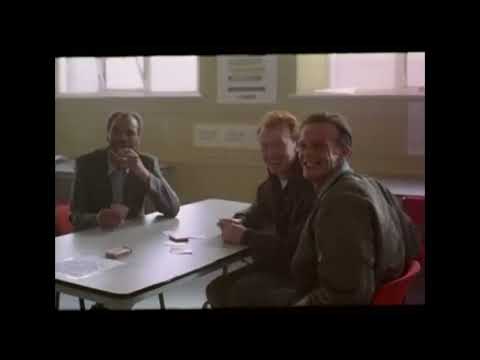
Overview
How do you turn redundancy and recession into a pop sing-along without cheating the pain? The Full Monty does it by leaning on a killer crate of soul, disco, and Brit-pop while Anne Dudley’s lean score stitches the jokes to the stakes. The album is a jukebox parade — Hot Chocolate, Donna Summer, M People, Tom Jones — but in the film those tunes are story beats, not wallpaper.
Gaz (Robert Carlyle) and his out-of-work mates scheme a zero-budget strip act; the music becomes their courage. Disco struts sell bravado; Northern soul and chart bangers sell community — and the final Tom Jones blowout sells catharsis. Dudley’s cues, sparse and wry, keep Sheffield’s grit in the frame so the crowd-pleasers land with heart rather than schmaltz.
Genres & themes in phases: classic disco — swagger and shared joy (“Hot Stuff”); 70s/80s soul & funk — desire vs. dignity (“You Sexy Thing,” “We Are Family”); 90s club pop — hustle and momentum (“Moving On Up”); comic burlesque standards — performance jitters (“The Stripper”); minimalist score — everyday struggle and tenderness.
How It Was Made
Director Peter Cattaneo and writer Simon Beaufoy grounded the film in Sheffield realism, then let songs carry the crowd energy. Anne Dudley provided a compact original score (she won the 1998 Oscar for Best Original Musical or Comedy Score), and also produced/arranged key soundtrack elements — notably commissioning Tom Jones’s cover of Randy Newman’s “You Can Leave Your Hat On” for the finale. The commercial album arrived as a various-artists compilation with two Dudley cues alongside the hit tracks.
Tracks & Scenes
“Hot Stuff” (Donna Summer)
- Where it plays:
- The iconic job centre queue moment: as the lads stand in line, the PA kicks into this disco heater and their feet betray them — hips, shoulders, and shy grins start syncing until everyone’s moving in place. It’s a flash of confidence in a bleak room; the camera catches stolen looks and half-smiles before reality snaps back. Mid-film, ~second act.
- Why it matters:
- It’s the first time the group dances together in public — proof the routine (and the friendship) might actually work.
“You Can Leave Your Hat On” (Tom Jones — Randy Newman cover)
- Where it plays:
- The final strip at the working men’s club. House lights blaze, nerves spike, and then Jones’s baritone and a swinging backbeat take over. The routine hits its marks — coats, ties, hats — until the promised “full monty.” Audience reaction becomes part of the rhythm.
- Why it matters:
- Payoff cue. It turns the film’s running joke into full-throated release, supported by an arrangement tailored for the scene.
“You Sexy Thing” (Hot Chocolate)
- Where it plays:
- Used as a recurring self-esteem booster — Gaz vamps and the guys test out suggestive moves in rehearsal; later it underscores a “maybe we can do this” gear shift.
- Why it matters:
- Transforms awkward bodies into playful showmen. The lyric (“I believe in miracles”) doubles as a mission statement.
“Moving On Up” (M People)
- Where it plays:
- Montage energy for planning and promotion — flyers, phone calls, and a hare-brained ticket scheme clip by as the groove keeps momentum high.
- Why it matters:
- 90s club optimism pasted over 90s unemployment. The contrast is the joke — and the fuel.
“Make Me Smile (Come Up and See Me)” (Steve Harley & Cockney Rebel)
- Where it plays:
- Light-on-its-feet interlude as the gang shake off humiliation and re-group. The tune’s wry bounce tracks matey banter and a little pride returning.
- Why it matters:
- Adds British wit and warmth — a palate cleanser between higher-stakes set-pieces.
“Land of 1,000 Dances” (Wilson Pickett)
- Where it plays:
- A rehearsal pulse — call-and-response claps and shouted prompts (“Do the pony!”) coach rhythm and timing as they cobble the routine together in a draughty hall.
- Why it matters:
- Perfect training-wheels groove: communal, loud, and forgiving.
“We Are Family” (Sister Sledge)
- Where it plays:
- Celebratory needle-drop tied to the lads’ “we’re in this together” beat — post-reconciliation bonding and pre-show rallying.
- Why it matters:
- States the film’s real theme: chosen family, not titillation.
“Flashdance… What a Feeling '95” (Irene Cara)
- Where it plays:
- A knowingly on-the-nose wink during training — aspirational montage shorthand for turning sweat into showmanship.
- Why it matters:
- Meta-joke: blue-collar Brits borrowing an 80s dreamer anthem to fake it till they make it.
“The Stripper” (David Rose / Joe Loss & His Orchestra)
- Where it plays:
- Comic burlesque sting during practice mishaps (and a mortifying try-out): the oom-pah brass turns missteps into rim-shots.
- Why it matters:
- Classic vaudeville punctuation that lets the film laugh with — not at — its amateurs.
Score cues — “The Full Monty” & “The Lunchbox Has Landed” (Anne Dudley)
- Where they play:
- Brief, character-minded links: gentle guitar, baritone sax, and harmonica color morning-after realities, father-son beats, and small wins.
- Why they matter:
- They keep the movie human between the bangers, so the big songs don’t float off the ground.

Notes & Trivia
- Tom Jones’s finale cover of “You Can Leave Your Hat On” was commissioned for the film, with Anne Dudley producing/arranging.
- The commercial soundtrack mixes chart hits with two short Dudley cues — an unusual blend that mirrors the film’s balance of pop and score.
- “Hot Stuff” in the dole queue became a pop-culture shorthand for spontaneous group confidence (and was recreated at royal and stage events).
- “Rock & Roll, Pt. 2” (Gary Glitter) appears on some soundtrack editions; later productions often avoid it due to the artist’s notoriety.
Reception & Quotes
The film was a worldwide crowd-pleaser; the album rode its coattails. Critics argued about that Oscar category, but most agreed the music strategy — jukebox confidence with humane score glue — worked.
“Dudley’s compact underscore complements the familiar hits — the songs sell bravado, the score sells heart.” Music/film scholarship summary
“Finale lands because the soundtrack has earned it — a party and a payout.” UK press retrospectives
Availability: The compilation has remained widely available on CD and digital storefronts/streamers; multiple label lines list Sony/Legacy for retail cataloging.
Interesting Facts
- Small score, big impact: Dudley wrote roughly “short-form” cues — and still took home an Oscar.
- Cover power: commissioning Tom Jones gave the finale both a fresh master and a bespoke arrangement.
- Chart afterlife: “You Sexy Thing” enjoyed a UK chart resurgence off the film’s success.
- Community chorus: “We Are Family” reframes the strip show as solidarity, not sleaze.
- Training track: “Land of 1,000 Dances” works because you can’t not clap on two and four.
Technical Info
- Title: The Full Monty (Music From the Motion Picture Soundtrack)
- Year: 1997
- Type: Film soundtrack — various artists with original score cues
- Composer (score): Anne Dudley
- Key songs (selected): “Hot Stuff” (Donna Summer); “You Can Leave Your Hat On” (Tom Jones); “You Sexy Thing” (Hot Chocolate); “Moving On Up” (M People); “Make Me Smile (Come Up and See Me)” (Steve Harley & Cockney Rebel); “We Are Family” (Sister Sledge); “Land of 1,000 Dances” (Wilson Pickett); “The Stripper” (Joe Loss & His Orchestra)
- Release context: Film opened 1997 (UK/US); soundtrack album issued the same year on CD and digital, with continuing catalog availability
- Label/album status: Commercial various-artists compilation in the Sony/Legacy retail family; multiple repressings/territorial editions
Key Contributors
| Entity | Relation | Notes |
|---|---|---|
| Anne Dudley | Composer/Arranger → The Full Monty | Oscar-winning original score; produced Jones’s finale cover |
| Peter Cattaneo | Director → Film | Comedy with social bite |
| Simon Beaufoy | Screenwriter → Film | Character-first plotting |
| Hot Chocolate; Donna Summer; Tom Jones; M People; Sister Sledge | Performers → Key songs | Licensed hits driving narrative beats |
| Fox Searchlight Pictures | Distributor → Film | US release |
| Sony/Legacy (catalog) | Record Label → Soundtrack | Ongoing retail/streaming presence |
Questions & Answers
- What’s the song during the dole-queue dance?
- Donna Summer’s “Hot Stuff.” It’s the film’s mid-movie confidence spark.
- What plays for the finale strip?
- Tom Jones’s cover of Randy Newman’s “You Can Leave Your Hat On,” produced/arranged for the movie.
- Is there original score, or is it all pop?
- There’s a compact Anne Dudley score threaded between the hits — enough to win the 1998 Oscar for Best Original Musical or Comedy Score.
- Which songs best map the story’s arc?
- “Hot Stuff” (first public unity), “You Sexy Thing” (rehearsal swagger), “Moving On Up” (planning hustle), and “Hat On” (payoff).
- Is the album still available?
- Yes — multiple CD pressings and digital/streaming editions remain widely available.
Sources: Apple Music album page; Discogs release notes; IMDb soundtrack credits; Wikipedia film & score notes; BFI retrospective; widely circulated job-centre/“Hot Stuff” scene documentation; label retail listings.
November, 28th 2025
A-Z Lyrics Universe
Cynthia Erivo Popular
Ariana Grande Horsepower
Post Malone Ain't No Love in Oklahoma
Luke Combs Good Riddance (Time of Your Life)
Green Day Bye Bye Bye
*NSYNC You're the One That I Wan
John Travolta & Olivia Newton-John I Always Wanted a Brother
Braelyn Rankins, Theo Somolu, Kelvin Harrison Jr. and Aaron Pierre The Power of Love
Frankie Goes to Hollywood Beyond
Auli’i Cravalho feat. Rachel House MORE ›