
"The Hobbit: The Desolation of Smaug" Soundtrack Lyrics
Movie • 2013
Track Listing
Howard Shore
Howard Shore
Howard Shore
Howard Shore
Howard Shore
Howard Shore
Howard Shore
Howard Shore
Howard Shore
Howard Shore
Howard Shore
Howard Shore
Howard Shore
Howard Shore
Howard Shore
Howard Shore
Howard Shore
Howard Shore
Howard Shore
Howard Shore
Howard Shore
Howard Shore
Howard Shore
Howard Shore
Howard Shore
Howard Shore
Ed Sheeran
Howard Shore
Howard Shore
"The Hobbit: The Desolation of Smaug (Original Motion Picture Soundtrack)" – Album Guide to Tracks and Key Scenes
Overview
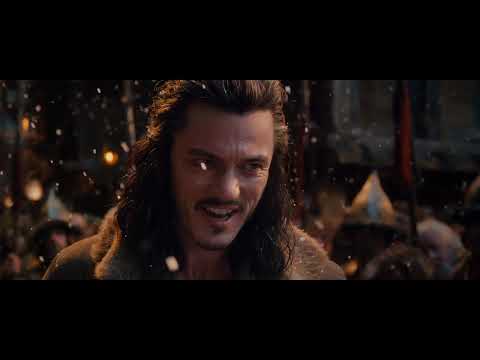
How do you score a road that gets darker with every step? Howard Shore narrows the light and hardens the edges. The Hobbit: The Desolation of Smaug expands the Middle-earth palette with new ideas — spider-skittering Mirkwood colours, Tauriel/Kíli lyricism, Laketown’s weary dignity, and the iron geometry of Erebor — while bending Dwarven motives toward obsession. The familiar Shire warmth appears less and less, on purpose.
The two-disc album (Standard and Special Edition) mirrors the film’s march: Beorn’s threshold, Mirkwood disorientation, the “Barrels” escape sprint, Laketown intrigue, the keyhole at Durin’s Day, and an extended duel of wits and timbres inside the Lonely Mountain. The curtain falls with Ed Sheeran’s end-credits ballad “I See Fire,” a modern folk echo of the chapter’s embers and vows.
Genres & themes in phases: modal folk-pastoral — camaraderie under strain; aleatoric woodwinds/strings — Mirkwood confusion and spiders; nautical ostinati + percussion — river escape momentum; brass anvil writing — dwarven will curdling into dragon-sickness; elegiac strings — Laketown endurance; modern folk ballad — aftermath and oath.
How It Was Made
Shore recorded primarily in Wellington with the New Zealand Symphony Orchestra at Wellington Town Hall, with choirs (London Voices and the Tiffin Boys’ Choir) tracked in London. Orchestrations were by Conrad Pope and James Sizemore (Pope also conducted orchestra sessions). The album landed December 10, 2013 via WaterTower Music and Decca, in both Standard and Special Edition programs. The end-credits original, “I See Fire”, was written and performed by Ed Sheeran after a visit to Peter Jackson’s cutting room — it became the public-facing single.

Tracks & Scenes
“The House of Beorn” (Special Edition — Extended)
- Where it plays:
- Dawn shelter at Beorn’s hall. Low strings and rustic timbres ease the Company out of peril; wary hospitality and a hint of ancient wildness colour the space.
- Why it matters:
- Resets the quest’s pulse after orc pursuit — calm before the forest turns the map sideways.
“Mirkwood” → “Flies and Spiders” (Special Edition — Extended)
- Where it plays:
- Deeper in the wood, compasses fail. Pitch-bent winds and staggered rhythms disorient; the spider ambush snaps into percussive, chittering action as Bilbo’s ring-fueled ferocity surfaces.
- Why it matters:
- Introduces the score’s most alien sound world — danger that feels psychological, not just physical.
“Feast of Starlight”
- Where it plays:
- Elvenking’s halls. A lyrical, luminous cue frames Tauriel and Kíli’s soft-spoken connection amid politics and bars.
- Why it matters:
- A rare breath — an Elven slow bloom that humanizes the middle act.
“Barrels Out of Bond” → “The Forest River”
- Where it plays:
- The escape sequence: dwarves in barrels; Elves and Orcs trading shots over rapids. Snare-driven ostinati and rolling low strings make the river itself the engine; accents track every swerve and slam.
- Why it matters:
- Signature set-piece cue — pure kinetic writing, funny and ferocious at once.
“Bard, a Man of Lake-Town” → “The High Fells” → “The Nature of Evil”
- Where it plays:
- From boatman to backstory to the Dol Guldur reveal. Shore threads mysterious modal lines for Bard, then chills the air as Gandalf confronts a growing shadow.
- Why it matters:
- Bridges the quest to the bigger war — tonal gravity increases.
“Protector of the Common Folk”
- Where it plays:
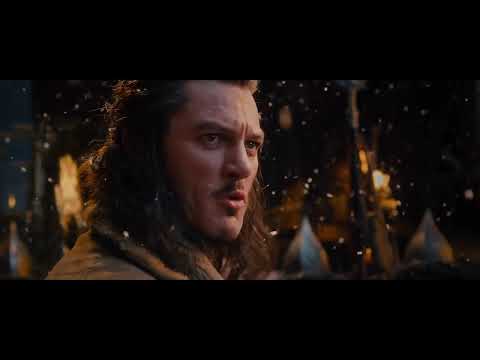
- Laketown politics and a quiet promise. Strings tilt toward dignity rather than triumph as Bard chooses people over power.
- Why it matters:
- Gives the film its conscience — a human-scale theme amid giants.
“On the Doorstep” → “The Courage of Hobbits”
- Where it plays:
- Keyhole revelation at Durin’s Day, then Bilbo’s descent. A solemn swell for the door’s secret; a tender, brave line as Bilbo volunteers.
- Why it matters:
- Theme work crystallizes: destiny for the Company, character for the Hobbit.
“Inside Information” → “Smaug” → “My Armor Is Iron”
- Where it plays:
- Bilbo and Smaug in dialogue, then fury. Celesta and sly bassoon for riddling stealth; when the dragon explodes, so does the brass, with pounding, molten harmony.
- Why it matters:
- The album’s dramatic core — language duel to firestorm, all in music.
“Beyond the Forest”
- Where it plays:
- Cliffhanger coda: Smaug takes wing for Lake-town. The cue climbs and refuses to resolve, handing the baton to the song.
- Why it matters:
- A musical ellipsis — tension sustained into credits.
End credits — “I See Fire” (Ed Sheeran)
- Where it plays:
- Main end-credits. Finger-picked folk, stacked harmonies, and lyric images of smoke, oath, and brotherhood.
- Why it matters:
- A contemporary ballad that still speaks the film’s language — grief and resolve.
Notes & Trivia
- The soundtrack arrived in two editions: Standard (~116 min) and Special (~129 min); the latter adds extended/bonus cues (e.g., “A Necromancer”).
- Recording forces: New Zealand Symphony Orchestra in Wellington; London Voices and Tiffin Boys’ Choir in London; orchestrations by Conrad Pope & James Sizemore.
- Several track titles double as clean scene signposts — helpful when mapping to the Extended Edition cut.
- Ed Sheeran wrote “I See Fire” after viewing late-stage footage in Wellington; it released as the album’s lead single.
Reception & Quotes
Reactions framed it as the trilogy’s most kinetic album — more chase, more menace — with praise for the river set-piece and the Smaug sequence’s colour and weight.
“The river cue is a small action symphony — comic timing and propulsion in lockstep.” Soundtrack roundups
“Sheeran’s folk coda threads embers back to oath — contemporary, but of Middle-earth.” Album coverage
Availability: CD/digital via WaterTower & Decca; the official Special Edition playlist streams the full expanded program.
Interesting Facts
- Forest as instrument: Woodwind effects and staggered meters in “Mirkwood” mimic losing one’s sense of direction.
- Barrels rhythm: Percussion accents are cut to splashes and log impacts — a literal “water meter.”
- Dragon timbre: Low brass stacked in tight intervals plus metallic percussion sell Smaug’s weight.
- Text & tongues: Choral texts credit translations by David Salo, maintaining linguistic continuity with the earlier saga.
- NZSO pivot: The orchestra rejigged touring to prioritize these sessions — a national-scale production effort.
Technical Info
- Title: The Hobbit: The Desolation of Smaug (Original Motion Picture Soundtrack)
- Year: 2013
- Type: Film soundtrack — original score; original end-credits song
- Composer/Producer: Howard Shore
- Orchestrations/Conductor: Conrad Pope (cond.); orchestrations by Pope & James Sizemore
- Performers/Choirs: New Zealand Symphony Orchestra; London Voices; Tiffin Boys’ Choir
- Recording: Wellington Town Hall (orchestra); Abbey Road Studios/London (choirs)
- Labels: WaterTower Music; Decca
- Editions/durations: Standard (~116:27); Special Edition (~129:17)
- Featured song: “I See Fire” — Ed Sheeran (end credits, lead single)
- Selected notable placements: “Mirkwood”/“Flies and Spiders” — forest delirium & battle; “Barrels Out of Bond”/“The Forest River” — escape set-piece; “Protector of the Common Folk” — Bard’s pledge; “On the Doorstep”/“The Courage of Hobbits” — keyhole & descent; “Inside Information”/“Smaug”/“My Armor Is Iron” — Bilbo vs. Smaug; “Beyond the Forest” — cliffhanger; “I See Fire” — credits.
Key Contributors
| Entity | Relation | Notes |
|---|---|---|
| Howard Shore | Composer/Producer → Album | Middle-earth leitmotif architecture |
| Conrad Pope; James Sizemore | Orchestrations → Score | Pope conducted NZSO sessions |
| New Zealand Symphony Orchestra | Performer → Score | Recorded at Wellington Town Hall |
| London Voices; Tiffin Boys’ Choir | Choirs → Score | Recorded in London |
| Ed Sheeran | Performer/Songwriter → End-credits | “I See Fire” (lead single) |
| WaterTower Music / Decca | Record Labels → Album | Two-disc Standard & Special Edition |
| Peter Jackson; Fran Walsh; Philippa Boyens | Album Producers | Executive production & song commissioning |
Questions & Answers
- Is there a Special Edition of the soundtrack?
- Yes — an expanded two-disc edition (~129 minutes) adds extended/bonus cues beyond the ~116-minute Standard.
- Who performs the end-credits song?
- Ed Sheeran sings and wrote “I See Fire,” commissioned for the film and released as the lead single.
- Which orchestra and choirs are featured?
- The New Zealand Symphony Orchestra, with London Voices and the Tiffin Boys’ Choir.
- Where was the score recorded?
- Orchestra in Wellington Town Hall; choirs in London (Abbey Road/associated London sessions).
- What cues cover Bilbo’s confrontation with Smaug?
- “Inside Information,” “Smaug,” and “My Armor Is Iron” — a stealth-to-storm arc that anchors the film’s climax.
Sources: WaterTower/Decca album pages & official playlist; Apple Music & Spotify (Special Edition track names/durations); Discogs release notes (credits, track names); New Zealand press & NZVideos (NZSO sessions; choir details); Wikipedia (soundtrack overview, release date/editions); TheOneRing reporting (NZSO recording); Classic FM news (NZSO schedule); official Warner Bros. trailer; Ed Sheeran single coverage/videos.
November, 28th 2025
'The Hobbit: The Desolation of Smaug': Find info on Internet Movie Database and WikipediaA-Z Lyrics Universe
Cynthia Erivo Popular
Ariana Grande Horsepower
Post Malone Ain't No Love in Oklahoma
Luke Combs Good Riddance (Time of Your Life)
Green Day Bye Bye Bye
*NSYNC You're the One That I Wan
John Travolta & Olivia Newton-John I Always Wanted a Brother
Braelyn Rankins, Theo Somolu, Kelvin Harrison Jr. and Aaron Pierre The Power of Love
Frankie Goes to Hollywood Beyond
Auli’i Cravalho feat. Rachel House MORE ›