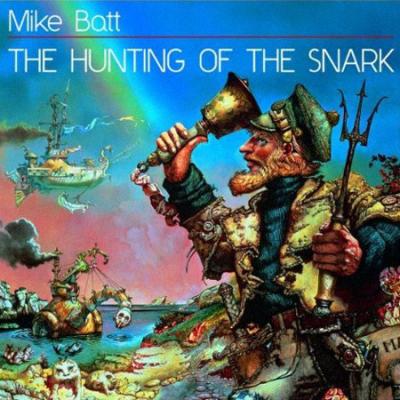
"The Hunting of the Snark" Soundtrack Lyrics
Musical • 1998
Track Listing
"The Hunting of the Snark (Original Cast/Concept Recording & Stage Musical)" – Album Guide to Tracks and Key Scenes
Overview
How do you score a creature that might not exist? Mike Batt’s musical The Hunting of the Snark turns Lewis Carroll’s nonsense epic into a through-composed voyage — equal parts tall tale and moral fable. Its musical DNA began as a star-studded concept album in the mid-1980s and later expanded for full stage productions, with songs that map each “Fit” of the poem to distinct theatrical set-pieces.
Expect luminous ballads (“As Long as the Moon Can Shine”), swaggering comic turns (“The Butchery Waltz,” “Snooker Song”), and pulse-driven anthems (“Children of the Sky”) that move the crew from blank-map bravado to the Baker’s vanishing. The sound world sits between symphonic pop and music-theatre storytelling — brass for bluster, strings for wonder, and rock rhythm for forward motion.
Styles & meanings, in phases: symphonic pop — wonder and mythmaking; comic vaudeville — satire of professions and pomposity; rock backbeat — communal resolve; lyrical balladry — grief, memory, and the Boojum’s chill.
How It Was Made
The project started as a costumed concert with the London Symphony Orchestra (Barbican, 1984), then a 1986 concept album featuring Cliff Richard, Art Garfunkel, Roger Daltrey, Deniece Williams, Julian Lennon, Sir John Gielgud and John Hurt, with guest players including George Harrison and Stéphane Grappelli. After concert stagings (RAH 1987; Australia 1990), a full West End production opened at the Prince Edward Theatre in 1991 with Philip Quast and David McCallum, using an ambitious, slide-projected visual design.
The recording history is tangled: the original album masters were withheld for years; later releases brought the concept recording and the RAH video to the public, and additional stage numbers were written for the Australian/London productions. In short — one musical, multiple editions, evolving song order.
Tracks & Scenes
Below pairs key numbers with their stage moments. Titles reflect the expanded West End/Australian song list; some differ slightly from the concept album. (Scene order may vary by production.)
“Children of the Sky”
- Where it plays:
- Early Act One, following a brief prologue and titles. The ensemble faces an empty ocean map — a blank sheet — and swears themselves to the hunt.
- Why it matters:
- Establishes communal mythmaking. A soaring chorus folds wonder and naiveté together, the show’s thesis: belief can power a ship.
“Hymn to the Snark”
- Where it plays:
- A ritualistic invocation as the crew names the Snark by negation and rumor; lanterns, slow build, then cut to wind and storm FX.
- Why it matters:
- Religious pastiche meets sea shanty — the joke and the dread coexist. Carroll’s ambiguity turns liturgical.
“The Bellman’s Speech”
- Where it plays:
- Act One mid-section. The Bellman lays down absurd rules and the famous “What I tell you three times is true,” while the map (a blank page) is triumphantly displayed.
- Why it matters:
- Comic authority theme with brassy punctuations. Establishes the tone of officious nonsense that the score will keep deflating.
“Midnight Smoke”
- Where it plays:
- A moody interlude as the journey darkens; the crew beds down, haunted by shapes in the fog.
- Why it matters:
- Pop-ballad color on the concept album; on stage, it’s atmosphere — a breather before things fracture.
“The Banker’s Fate”
- Where it plays:
- Act Two opener or early sequence. The Banker tries to bribe a bandersnatch and is chased into madness; staging often uses strobe or chase-gobo effects.
- Why it matters:
- Satire via rhythm. Jagged figures and comic terror sketch greed’s comeuppance.
“The Butchery Waltz”
- Where it plays:
- Mid Act Two. The Butcher’s grisly credentials become a ballroom number. A three-time lilt undercuts his bluster as he bonds, unexpectedly, with the Beaver.
- Why it matters:
- Counter-intuitive meter = humor. The waltz humanizes the supposed predator and tees up an unlikely friendship.
“Snooker Song”
- Where it plays:
- A show-within-the-show flourish related to the Billiard Marker; frequently staged as a novelty turn with trick-shot choreography.
- Why it matters:
- Comic relief and branding — its chorus even spun off to UK TV (“Big Break”).
“The Pig Must Die” / “The Barrister’s Dream”
- Where it plays:
- Dream-trial sequence: a pig on the stand; the Snark appears as defense counsel; logic collapses to nursery-rhyme rhythms.
- Why it matters:
- Carroll’s satiric nerve center. Batt sets the courtroom to patter and pomp — a lampoon of procedure.
“As Long as the Moon Can Shine”
- Where it plays:
- Late-Act Two love-lyric/soliloquy as the crew contemplates what they’ve risked for an idea. Often staged front-of-cloth.
- Why it matters:
- The show’s big heart. Hushes the comedy to let longing in.
“The Vanishing” / “Whatever You Believe” (Finale)
- Where it plays:
- Climax and epilogue. The Baker finds the Snark — it’s a Boojum — and “softly and suddenly vanishes away.” The finale reframes the quest as faith and fellowship.
- Why it matters:
- Tragedy inside a romp. The last chord holds two truths: not all hunts end with trophies, and belief still binds the crew.

Notes & Trivia
- The stage song stack expands the concept album with numbers like “The Banker's Fate,” “The Butchery Waltz,” and “Snooker Song.”
- Star power on the concept album: Cliff Richard (Bellman), Art Garfunkel (Butcher), Roger Daltrey (Barrister), Deniece Williams (Beaver), Julian Lennon (Baker).
- The 1991 West End run used a pioneering 152-projector system (≈12,000 slides) for moving scenic imagery.
- A later commercial release paired the original album with the filmed Royal Albert Hall concert.
- “Snooker Song”’s chorus became the theme for BBC’s Big Break.
Reception & Quotes
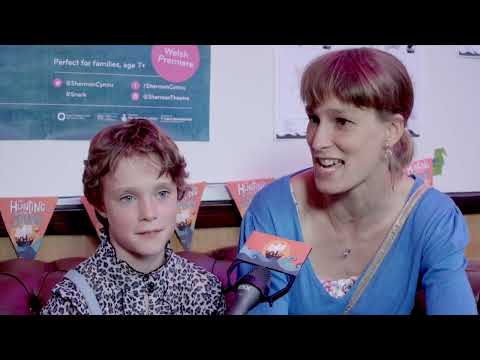
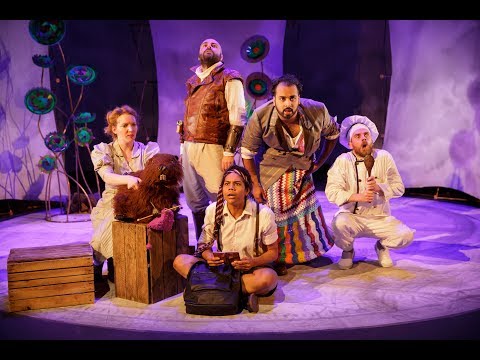
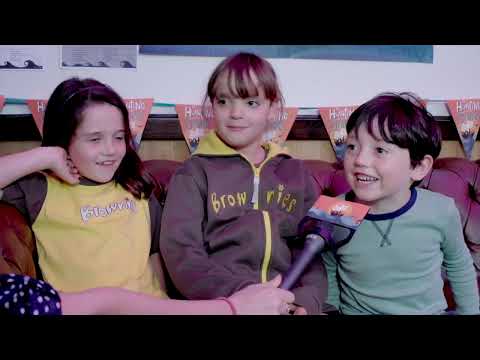
Critics admired the spectacle more than the book, but audiences have kept the songs — and the myth — alive through revivals and family-aimed stagings.
“Design that could revolutionise theatre design for years.” Sheridan Morley, International Herald Tribune
“A lavish curiosity: wondrous to look at, uneven to play.” West End notices, 1991
“For children, it’s a witty, musical gateway into Carroll.” London family-theatre reviews
Interesting Facts
- Blank map gag: The Bellman’s “map” — a plain white sheet — gets a musical fanfare as if it were a discovery.
- Two Bakers: Julian Lennon sings the Baker on the album; Mark McGann played him on the West End stage.
- Rock royalty: George Harrison’s guitar and Grappelli’s violin grace the concept recording.
- Australian lab: The 1990 Sydney concerts premiered extra material later folded into London.
- Media afterlife: The RAH concert was televised and later issued on DVD alongside the album.
Technical Info
- Title: The Hunting of the Snark (Musical; concept recording and stage score)
- Year: Core album recorded mid-1980s; major stage run 1991; later releases issued in the 2000s/2010s. (Research note: “1998” is often cited for circulation/reissue era, but canonical audio dates earlier.)
- Type: Symphonic pop musical (concept album → full stage musical)
- Composer/Writer: Mike Batt
- Key numbers (stage order): “Children of the Sky,” “Hymn to the Snark,” “The Bellman’s Speech,” “Midnight Smoke,” “The Banker’s Fate,” “The Butchery Waltz,” “Snooker Song,” “The Pig Must Die,” “As Long as the Moon Can Shine,” “The Vanishing,” “Whatever You Believe.”
- Notable casts: Album — Cliff Richard, Art Garfunkel, Roger Daltrey, Deniece Williams, Julian Lennon, John Hurt/John Gielgud (narration). West End — Philip Quast, David McCallum, Kenny Everett, Mark McGann.
- Orchestra/Ensembles: London Symphony Orchestra (album/RAH concert).
- Release context: Concept concerts 1984/1987; Australian concert 1990; West End opening Oct 24, 1991; album+RAH DVD issued commercially years later.
- Labels/rights: Early masters leased to CBS/Sony; later Dramatico Entertainment releases (album + RAH DVD).
- Availability: Streaming platforms carry the album; DVD/video excerpts circulate; sheet music folio published alongside later releases.
Questions & Answers
- Is there a definitive “original cast album”?
- Think of the 1980s concept recording as the canonical audio, with later stage numbers added for Australia/West End.
- Which song best captures Carroll’s melancholy?
- “As Long as the Moon Can Shine” — the show’s lyrical core before the Boojum twist.
- Where does the big comedy sit?
- “The Bellman’s Speech,” “Snooker Song,” and the dream-trial (“The Pig Must Die”) deliver the broadest laughs.
- Is the ending really tragic?
- Yes. “The Vanishing” sets the Baker’s disappearance against a consoling finale (“Whatever You Believe”).
- Can I watch a version today?
- Yes — the filmed 1987 concert and later family-theatre trailers are online; the album streams on major platforms.
Key Contributors
| Subject | Relation | Object |
|---|---|---|
| Mike Batt | composed / wrote / directed | The Hunting of the Snark (musical) |
| London Symphony Orchestra | performed | Concept album & RAH concert (1987) |
| Cliff Richard | sang | The Bellman (album) |
| Art Garfunkel | sang | The Butcher (album) |
| Roger Daltrey | sang | The Barrister (album/RAH) |
| Deniece Williams | sang | The Beaver (album/RAH) |
| Julian Lennon | sang | The Baker (album/RAH) |
| Philip Quast | starred as | The Bellman (West End 1991) |
| David McCallum | starred as | Lewis Carroll (West End 1991) |
| Prince Edward Theatre | hosted | West End production (opened Oct 24, 1991) |
| Royal Albert Hall | hosted | filmed concert (1987) |
| Dramatico Entertainment | released | album + RAH DVD (commercial issue) |
Sources: Wikipedia entry on the musical (song stack, West End data); Mike Batt’s official site (album history, RAH/West End details); Royal Albert Hall/Barbican references; streaming album pages; theatre reviews and family-show trailers for later stagings.
November, 28th 2025
A-Z Lyrics Universe
Cynthia Erivo Popular
Ariana Grande Horsepower
Post Malone Ain't No Love in Oklahoma
Luke Combs Good Riddance (Time of Your Life)
Green Day Bye Bye Bye
*NSYNC You're the One That I Wan
John Travolta & Olivia Newton-John I Always Wanted a Brother
Braelyn Rankins, Theo Somolu, Kelvin Harrison Jr. and Aaron Pierre The Power of Love
Frankie Goes to Hollywood Beyond
Auli’i Cravalho feat. Rachel House MORE ›