
"The Karate Kid" Soundtrack Lyrics
Movie • 2010
Track Listing
James Horner
James Horner
James Horner
The Forbidden City
James Horner
James Horner
James Horner
James Horner
James Horner
James Horner
James Horner
James Horner
James Horner
James Horner
James Horner
James Horner
James Horner
James Horner
Jay Sean ft. Sean Paul, Lil Jon
John Mayer
Patrick Pinney, Sara Paxton, Camryn Walling
The Roots
Baby Bash
Alyssa Park
Damon Albarn
K. T. Wilder
K'naan Ft Adam Levine
Flo Rida feat. T.Pain
Lady GaGa
Balazs Szokolay
Xuan Qu
AC/DC
Red Hot Chili Peppers
Justin Bieber ft. Jaden Smith
"The Karate Kid (Music from the Motion Picture)" – Album Guide to Tracks and Key Scenes
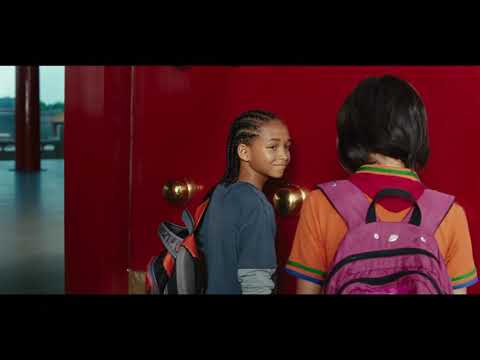
Overview
How do you remake a beloved underdog tale without the original’s musical DNA? By shifting continents and speaking in new colors. In Harald Zwart’s The Karate Kid (2010), James Horner trades Bill Conti’s SoCal fanfares for a glassy, lyrical score braided with Chinese timbres — dizi-like lines, delicate percussion, and surging strings. The result is gentler than you remember, but quietly heroic: music that gazes outward across Beijing’s sprawl and inward at a boy learning to be still.
Popular songs sketch Dre’s culture shock and bravado — a jet-lag mixtape flipping from John Mayer’s adult-pop calm to club swagger. The end credits bang with Justin Bieber and Jaden Smith’s Never Say Never
, a franchise-sized earworm pointedly left off the score album. Trailer music flexes different muscles again: library cut thunder and classic-rock swagger sell the redo as big-screen spectacle.
Styles & meanings, in phases: contemporary R&B/pop — new city, new mask; library/trailer rock — marketing bravado; Horner’s East–West orchestral blend — breath, grace, and resolve; percussive tournament writing — discipline as pulse.
How It Was Made
Zwart initially hired Atli Örvarsson, but pivoted in March 2010 to James Horner, fresh off Avatar. Horner recorded at the Sony Scoring Stage with The Hollywood Studio Symphony, weaving East Asian sonorities into his long-line lyricism. The album — The Karate Kid (Music from the Motion Picture) — arrived via Madison Gate Records with 18 cues (≈64 minutes), while the film’s pop/club placements live outside the official release.
Music supervision on the project is credited to Pilar McCurry, whose brief balanced glossy needle-drops (arrival, night out) with Horner’s narrative cues. The widely marketed “theme song,” Bieber & Jaden Smith’s Never Say Never
, plays the first slot over credits but — crucially — sits apart from Horner’s album.

Tracks & Scenes
Below blends the film’s songs, Horner’s score cues, and high-visibility trailer music. Time notes reference common theatrical runtimes; some placements vary across editions.
“Do You Remember” (Jay Sean feat. Sean Paul & Lil Jon)
- Where it plays:
- Opening montage in Detroit and the move’s early beats. Boxes, goodbyes, the bravado of pretending it’s fine.
- Why it matters:
- Upbeat denial — Dre’s self-mythologizing before the floor drops out in Beijing.
“Say” (John Mayer)
- Where it plays:
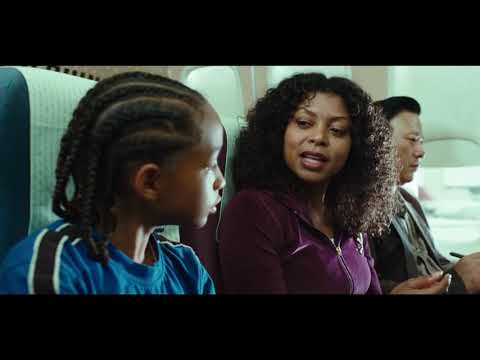
- Plane-to-China transition. Night cabin light, window clouds, a kid counting miles from home.
- Why it matters:
- Earnest pop as emotional translator — the lyric’s mantra dovetails with Dre’s first courage tests.
“SpongeBob SquarePants Theme” (TV audio)
- Where it plays:
- Apartment background TV during early Beijing scenes; a familiar sound in an unfamiliar home.
- Why it matters:
- Diegetic comfort food — a reminder he’s still a kid in a very adult-feeling situation.
“The Tribute (DJ Zeph Remix)” (Colossus feat. Capitol A)
- Where it plays:
- Neighborhood court basketball; local kids clock the newcomer’s confidence and clumsiness.
- Why it matters:
- Backbeat swagger that sets up Dre’s first social collision course.
“Here I Come” (The Roots)
- Where it plays:
- High-tempo ping-pong scene — a playful flex before the movie tightens its focus.
- Why it matters:
- Muscle and wit — the track’s brassy confidence foreshadows Dre’s fight-ready rhythm.
“Never Say Never” (Justin Bieber feat. Jaden Smith)
- Where it plays:
- First end-credits slot, intercut with production photos and victory glow.
- Why it matters:
- Franchise billboard and message-in-caps: persistence as pop sing-along. (Not on Horner’s album.)
Score moments — James Horner
- “Jacket On, Jacket Off”
- Mr. Han’s lesson reveal — the training montage reframed as muscle memory. Strings swell under hand-flick rhythms; patience becomes power.
- “Journey to the Spiritual Mountain”
- Temple ascent and the stillness lesson. Spacious orchestra with Chinese colors; the cue breathes like wind over stone.
- “Hard Training” → “All Work and No Play”
- Mid-film grind. Percussive ostinatos and light electronics keep the body in motion while the mind learns calm.
- “Tournament Time” → “Final Contest”
- Final reel. Horner’s classic build: pedal tones, swelling harmony, then a cathartic cadence as Dre’s focus locks in and the crane-like finishing move lands.
Trailer & promo cues (not in the score album)
- Brand X Music — “Dogs of War”
- Library track identified in early trailer discussions; used to frame the reboot as a high-stakes sports drama.
- Fort Minor — “Remember the Name”
- Cut into marketing spots; a now-classic training-montage shorthand.
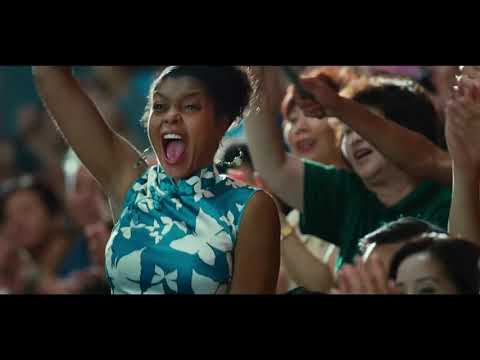
Notes & Trivia
- Horner replaced Atli Örvarsson late in post — a high-profile course correction that changed the score’s voice.
- The album was a digital-first Madison Gate release; physical discs circulated primarily as CD-R on demand.
Never Say Never
functions as the film’s theme song but is not on the score album.- Music supervision credit goes to Pilar McCurry; the album booklet also lists a full LA scoring team, with J.A.C. Redford among orchestrators.
- Marketing leaned on trailer/library cues and rock signifiers to complement the film’s gentler in-scene sound.
Reception & Quotes
Film critics were mixed-to-positive on the remake; film-music reviewers generally praised Horner’s elegant restraint and cultural color without pastiche.
“Horner writes with breath and patience — East–West without caricature.” Film-music review capsules, 2010
“If Horner had chased bigger themes, this would be a four-star knockout; as is, it wins on poise.” Album review summaries
“The end-credits single does the billboard work; the score does the heart work.” Soundtrack round-ups
Interesting Facts
- Score DNA: Horner threads dizi-like woodwinds and plucked textures into his trademark lyrical arcs — East–West without clichés.
- Album gap: The hit single (
Never Say Never
) is absent from the official score album; it lives on Bieber’s releases and the film itself. - Digital first: The soundtrack’s primary release was digital; physical copies largely came via Amazon’s CD-R on demand.
- Temple canvas: The long cue
Journey to the Spiritual Mountain
(≈9 minutes) lets the movie breathe — a rare, ruminative stretch in a studio family film. - Trailer muscle: Library track
Dogs of War
and sports-anthem staples helped sell the film’s grit in ads — a different vibe than the film’s interior score.
Technical Info
- Title: The Karate Kid (Music from the Motion Picture)
- Year: 2010
- Type: Film score (with additional licensed songs; separate single for end-credits)
- Composer: James Horner; orchestra: The Hollywood Studio Symphony
- Music supervision: Pilar McCurry
- Label/album status: Madison Gate Records; 18 tracks, ≈64 min; digital release with CD-R on demand
- Selected notable placements: “Do You Remember” (Jay Sean); “Say” (John Mayer); “Here I Come” (The Roots); “The Tribute (DJ Zeph Remix)” (Colossus); “Never Say Never” (Justin Bieber feat. Jaden Smith — end credits)
- Release context: U.S. theatrical June 2010; score issued mid-June 2010
- Availability: Streaming via major platforms; end-credits single on Bieber releases; trailers on Sony’s YouTube.
Questions & Answers
- Who composed the 2010 film’s score?
- James Horner — he replaced Atli Örvarsson late in production and recorded at the Sony Scoring Stage.
- Is the Bieber/Jaden song on the official soundtrack?
- No.
Never Say Never
plays over the credits but is not included on Horner’s album. - What tracks should I sample to “get” the score?
- “Jacket On, Jacket Off,” “Journey to the Spiritual Mountain,” “Tournament Time,” and “Final Contest.”
- Which songs play during early culture-shock scenes?
- Jay Sean’s “Do You Remember,” John Mayer’s “Say,” the SpongeBob theme (diegetic), and Colossus’ “The Tribute (DJ Zeph Remix).”
- What music did the trailers use?
- Library and rock identifiers — notably Brand X Music’s “Dogs of War,” and (in spots) sports-anthem staples like Fort Minor’s “Remember the Name.”
Key Contributors
| Subject | Relation | Object |
|---|---|---|
| James Horner | composed / produced | The Karate Kid (Music from the Motion Picture) |
| The Hollywood Studio Symphony | performed | score recording |
| Pilar McCurry | music supervision | The Karate Kid (2010) |
| Madison Gate Records | released | official score album |
| Justin Bieber & Jaden Smith | performed | Never Say Never(end-credits single) |
| Harald Zwart | directed | The Karate Kid (2010) |
| Columbia Pictures / China Film Group | produced / released | The Karate Kid (2010) feature |
Sources: Wikipedia (film & soundtrack pages); Apple Music album page; Filmtracks review/credits; SoundtrackCollector (album details & track names); IMDb Soundtracks (licensed songs); WhatSong (end-credits placement); ReelSoundtrack blog (scene/song notes); Adtunes trailer IDs; Sony Pictures trailer on YouTube.
November, 28th 2025
A-Z Lyrics Universe
Cynthia Erivo Popular
Ariana Grande Horsepower
Post Malone Ain't No Love in Oklahoma
Luke Combs Good Riddance (Time of Your Life)
Green Day Bye Bye Bye
*NSYNC You're the One That I Wan
John Travolta & Olivia Newton-John I Always Wanted a Brother
Braelyn Rankins, Theo Somolu, Kelvin Harrison Jr. and Aaron Pierre The Power of Love
Frankie Goes to Hollywood Beyond
Auli’i Cravalho feat. Rachel House MORE ›