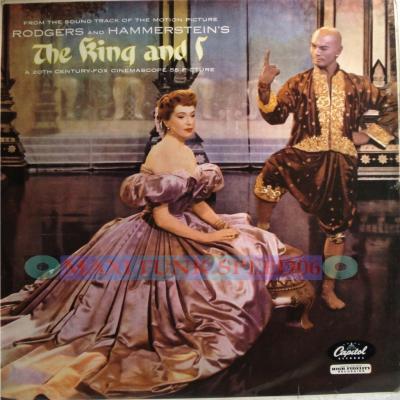
"The King and I" Soundtrack Lyrics
Musical • 1996
Track Listing
"The King and I (The New Broadway Cast Recording, 1996)" – Album Guide to Tracks and Key Scenes
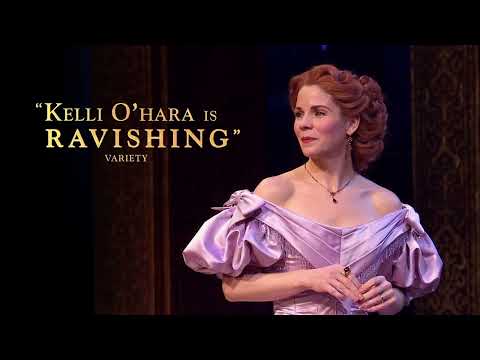
Overview
How do you refresh a Golden Age classic without sanding off its heart? The 1996 Broadway revival of The King and I answers with ravishing design, clean storytelling, and a “new” recorded document that treats Rodgers & Hammerstein’s score like chamber theatre: intimate when it counts, expansive when it must. As an album, The New Broadway Cast Recording captures Donna Murphy’s luminous Anna and Lou Diamond Phillips’ thoughtful King, framed by orchestra colors that favor warmth over bombast.
The dramatic arc remains the perennial one — a Western governess and an Eastern monarch wrestling over power, pedagogy, and dignity — but the musical argument is the point. Polka becomes politics, lullabies hide statecraft, and a narrated ballet detonates into protest theatre. The 1996 recording is a time capsule of performance and production: you can hear the Neil Simon Theatre’s grandeur in the band’s sheen, and you can feel the production’s visual sumptuousness in how the strings and percussion are balanced.
Styles & meanings, in phases: classic Broadway waltz — surface civility vs. private longing; march/processional — pageantry as power display; Thai-inflected ballet textures — critique from within ritual; torch-and-patter solos — private conscience speaking plain.
How It Was Made
The revival originated in Australia and transferred to Broadway under director Christopher Renshaw, opening at the Neil Simon Theatre on April 11, 1996. Costume designer Roger Kirk and scenic designer Brian Thomson delivered the gilded world that swept awards season. Choreographic heritage from Jerome Robbins was preserved (supervised in revival practice) and augmented with new musical staging by Lar Lubovitch.
The cast album — branded as The King and I (The New Broadway Cast Recording) — was produced at the Hit Factory in New York on August 26–27, 1996, with musical direction by Michael Rafter, and released by Varèse Sarabande on October 1, 1996. The headliners are Donna Murphy (Anna Leonowens) and Lou Diamond Phillips (King Mongkut), with standout turns by Taewon Yi Kim (Lady Thiang) and a Broadway-debut Jose Llana (Lun Tha).
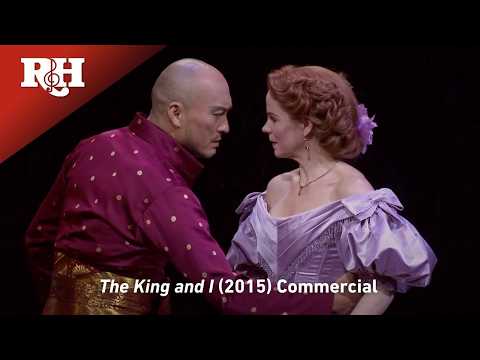
Tracks & Scenes
Below pairs key musical numbers with their stage moments in the 1996 revival. (Ordering follows the standard Broadway sequence.)
“I Whistle a Happy Tune” — Anna & Louis
- Where it plays:
- Dockside arrival into Siam. Anna steadies her young son with a jaunty mantra as fear nips at their heels. Staging plants resolve before politics intrude.
- Why it matters:
- A thesis in miniature: courage by performance. On the album, woodwinds brighten the smile that Anna wears like armor.
“Hello, Young Lovers” — Anna
- Where it plays:
- An intimate confession to the King’s wives. Murphy’s reading stretches time; the room becomes a chapel where memory can breathe.
- Why it matters:
- The quiet moral authority of the evening. The track captures the revival’s preference for sincerity over showiness.
“March of the Royal Siamese Children” — Orchestra
- Where it plays:
- Ceremonial introduction of the royal children. The 1996 staging gilds the moment — layered brocades, measured steps, and a court that listens with its eyes.
- Why it matters:
- Pageantry as governance. The album’s percussion profile underscores pomp without losing the human scale.
“A Puzzlement” — The King
- Where it plays:
- The King’s private crisis. Phillips opts for temper and wit over thunder; phrases land like arguments he’s losing with himself.
- Why it matters:
- Humanizes Mongkut. As recorded, the brass never drowns the man — a revival hallmark.
“Getting to Know You” — Anna, Wives & Children
- Where it plays:
- Schoolroom charm offensive. The classroom blooms into choreography, turning learning into diplomacy.
- Why it matters:
- Pedagogy as soft power; the album’s dance bounce keeps the smile honest.
“We Kiss in a Shadow” / “I Have Dreamed” — Tuptim & Lun Tha
- Where it plays:
- Forbidden love in counterpoint to palace politics. The revival keeps them physically near but socially miles apart.
- Why it matters:
- The private stakes. Jose Llana’s line and blend carry youthful urgency on disc.
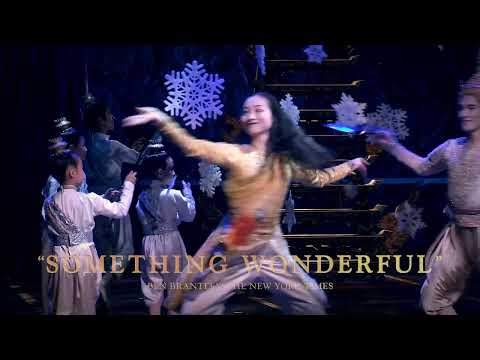
“Something Wonderful” — Lady Thiang
- Where it plays:
- A mother’s plea to Anna to understand a complicated man. The scene sits still; the argument is all in the phrasing.
- Why it matters:
- Moral triangulation. Taewon Yi Kim’s burnished tone justifies the track title.
“Western People Funny” — Wives
- Where it plays:
- Act II satire as the court “tries on” European custom. The 1996 production leans into comic ritual, not caricature.
- Why it matters:
- Laughter with teeth; the album preserves its rhythmic bite.
“The Small House of Uncle Thomas” (Ballet) — Tuptim & Ensemble
- Where it plays:
- A stylized retelling of Uncle Tom’s Cabin as political critique. Masks, fans, and percussive storytelling crescendo to a pointed indictment.
- Why it matters:
- The show’s conscience. On record, the percussion/chorus detailing lets you “see” the shapes.
“Shall We Dance?” — Anna & The King
- Where it plays:
- The polka-as-flirtation that becomes an accord. Hoop skirt arcs; a hand is offered; a line is crossed and honored.
- Why it matters:
- Political détente wrapped as romance. The track’s sweep is the revival’s calling card.
Notes & Trivia
- The revival won the Tony for Best Revival of a Musical; Donna Murphy won Best Actress. Roger Kirk (costumes) and Brian Thomson (sets) also took Tonys.
- The album was cut at the Hit Factory in two days and released by Varèse Sarabande.
- Broadway debuts: Lou Diamond Phillips (the King) and Jose Llana (Lun Tha) — both preserved on the recording.
- The transfer was produced on Broadway by the Dodgers, importing the Australian staging that Renshaw had shaped.
- The production ran roughly 780 performances on Broadway before touring; replacements included Faith Prince (Anna) and Kevin Gray (King).
Reception & Quotes
Reviews praised the balance of spectacle and sincerity; record reviewers singled out the leads and the courtly sheen of the pit.
“Lavish yet clarifying — a sumptuous revival with a human pulse.” Major outlets on the 1996 production
“Phillips stands free of Brynner’s shadow; Murphy is radiant.” Comparative cast-album write-ups
“Kirk and Thomson’s designs shimmer; the score glows to match.” Awards-season summaries
Interesting Facts
- Triple crown: The revival swept Tony, Drama Desk, and Outer Critics’ Circle for Best Revival.
- TV moment: Murphy’s Tony win became one of the ceremony’s headline clips that season.
- Design signatures: Gold-and-garnet palettes and fan choreography became the 1996 production’s visual shorthand.
- Album focus: The mix spotlights winds and strings — intimate theatre first, spectacle second.
- Lineage: Robbins’ choreographic DNA remains, with Lubovitch’s musical staging inflecting processions and ballroom flow.
Technical Info
- Title: The King and I (The New Broadway Cast Recording)
- Year: 1996 (revival; album issued Oct 1, 1996)
- Type: Broadway cast recording
- Music/Lyrics/Book: Richard Rodgers / Oscar Hammerstein II / Oscar Hammerstein II
- Director (revival): Christopher Renshaw
- Choreography: Jerome Robbins (heritage) with new musical staging by Lar Lubovitch
- Leads: Donna Murphy (Anna), Lou Diamond Phillips (King)
- Orchestra & Music Direction: Broadway pit ensemble; Michael Rafter (MD)
- Label: Varèse Sarabande
- Recording: Hit Factory, NYC — Aug 26–27, 1996
- Venue: Neil Simon Theatre (Broadway)
- Notable numbers: “I Whistle a Happy Tune,” “Hello, Young Lovers,” “A Puzzlement,” “Getting to Know You,” “We Kiss in a Shadow,” “I Have Dreamed,” “Something Wonderful,” “The Small House of Uncle Thomas” (ballet), “Shall We Dance?”
- Awards (revival): Tony — Best Revival; Actress (Murphy); Costume (Kirk); Scenic (Thomson)
- Availability: Cast album widely streaming; CD editions in print/second-hand markets
Questions & Answers
- Is the 1996 revival recording different from earlier albums?
- Yes — it preserves the Renshaw production’s intimate balances and features Murphy/Phillips, with processional/ballet details crisply caught.
- Who handled the revival’s choreography?
- Jerome Robbins’ original work underpins the show; Lar Lubovitch provided new musical staging for the revival.
- Where and when was the album recorded?
- At the Hit Factory (NYC), August 26–27, 1996; released October 1, 1996 by Varèse Sarabande.
- Did the revival win major awards?
- Yes — Best Revival at the Tonys (plus design awards), with Donna Murphy winning Best Actress.
- Which track best captures the revival’s “wow” factor?
- “Shall We Dance?” for sheer sweep; for conscience, cue up the Uncle Thomas ballet.
Key Contributors
| Subject | Relation | Object |
|---|---|---|
| Richard Rodgers | composed | The King and I (score) |
| Oscar Hammerstein II | wrote | lyrics & book for The King and I |
| Christopher Renshaw | directed | 1996 Broadway revival |
| Lar Lubovitch | musical staging | 1996 revival (with Robbins heritage) |
| Jerome Robbins | original choreography by | The King and I (heritage) |
| Donna Murphy | starred as | Anna Leonowens (Tony winner) |
| Lou Diamond Phillips | starred as | King Mongkut (Tony nominee) |
| Roger Kirk | designed | costumes (Tony winner) |
| Brian Thomson | designed | sets (Tony winner) |
| Michael Rafter | music direction | cast recording & revival |
| Varèse Sarabande | released | The New Broadway Cast Recording (1996) |
| Hit Factory (NYC) | recorded at | Aug 26–27, 1996 sessions |
| Neil Simon Theatre | hosted | 1996 Broadway revival |
Sources: Rodgers & Hammerstein Organization (production & album notes); IBDB; Wikipedia (revival overview & numbers list); Variety review (1996); Discogs (recording details); Amazon/retail listings (album availability); Tony Awards clips/records; R&H media playlist (TV commercial).
November, 28th 2025
A-Z Lyrics Universe
Cynthia Erivo Popular
Ariana Grande Horsepower
Post Malone Ain't No Love in Oklahoma
Luke Combs Good Riddance (Time of Your Life)
Green Day Bye Bye Bye
*NSYNC You're the One That I Wan
John Travolta & Olivia Newton-John I Always Wanted a Brother
Braelyn Rankins, Theo Somolu, Kelvin Harrison Jr. and Aaron Pierre The Power of Love
Frankie Goes to Hollywood Beyond
Auli’i Cravalho feat. Rachel House MORE ›