
"The Lion King 1 1/2" Soundtrack Lyrics
Cartoon • 2004
Track Listing
Raven
Vinx
Nathan Lane
Nathan Lane
Lebo M
French
Matt Walker
Matt Walker
“The Lion King 1½: Songs From Timon & Pumbaa’s Hilarious Adventure (Original Soundtrack)” – Album Guide to Tracks and Key Scenes
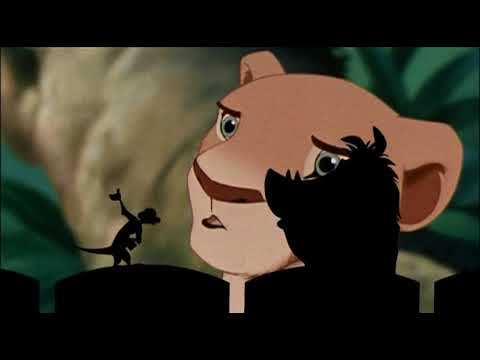
Review
What happens when a midquel turns a mega-musical into a mixtape? You get a breezy, self-aware album that swaps Broadway bombast for playground-party energy. The Lion King 1½ soundtrack stitches together reimagined pop/R&B covers (“Jungle Boogie,” “Grazing in the Grass”), cast-led reprises (“Hakuna Matata,” “That’s All I Need”), and a compact original score to match Timon & Pumbaa’s wisecracking POV.
It’s lighter by design: quips first, pathos second. Yet the selections still map character beats — Timon’s itchy restlessness, the duo’s makeshift-parent pride, and that warm, winkingly nostalgic end-credit glide. The score cues by Don L. Harper add quick-hit cinematic punctuation, while the licensed songs lean into a 1970s-tinged, radio-friendly color that keeps the jokes dancing.
Genres & themes in phases: bubblegum R&B — cheerful hustle; Disney show-tune DNA — comic confession and aspiration; pop-soul remake — communal groove; compact orchestral score — chase/transition sparkle; novelty quotes (Morricone, TV themes) — parody flair.
How It Was Made
Disneytoon’s midquel kept the musical DNA of the franchise but pivoted tone: original score by Don L. Harper, song supervision that pulled in new performances from the returning voice cast (notably Nathan Lane), and a handful of playful covers. Walt Disney Records released the album on February 10, 2004, in tandem with the home-video debut; international editions vary slightly but keep the core sequence.

Tracks & Scenes
Key moments below are described as they play in the film (no full tracklist). Diegetic = heard by characters on screen.
“Diggah Tunnah (Dig a Tunnel)” (Cast; written by Martin Erskine & Seth Friedman)
- Where it plays:
- Opening underground montage with the meerkat colony — an all-hands, call-and-response work song as tunnels crisscross and Uncle Max barks rhythm. Cuts between assembly-line gags and Timon’s daydreaming slip-ups. Diegetic song staged as community labor.
- Why it matters:
- Establishes the colony’s “safety through digging” ethos and sets up why Timon doesn’t fit in.
“That’s All I Need” (Nathan Lane as Timon)
- Where it plays:
- Early-on solo after Timon’s lookout fiasco. He imagines a better life — a place with room to breathe — while oblivious to hyenas closing in. Stagey cutaways and dream-poses keep it comic. Non-diegetic musical soliloquy.
- Why it matters:
- His “I want” song — the comic engine for leaving the colony and meeting Rafiki.
“Hakuna Matata” (Timon & Pumbaa; reprise/new performance)
- Where it plays:
- Sing-along framing once Timon and Pumbaa discover their jungle haven. Later, it dovetails with the familiar montage of seasons and Simba’s growth, seen from their cheeky vantage. Mostly non-diegetic, with diegetic jokes baked in.
- Why it matters:
- Re-centers the franchise motto through the duo’s lens; nostalgia with a wink.
“Jungle Boogie” (Drew K. & The French — Kool & the Gang cover)
- Where it plays:
- “Parenthood” montage after they rescue Simba. Bug-hunting lessons, hammock naptimes, the two goofballs turning into proud, if chaotic, guardians. Non-diegetic; upbeat needle drop.
- Why it matters:
- Locks the film’s comic-parent tone — funk horns for found family.
“The Lion Sleeps Tonight” (Lebo M.)
- Where it plays:
- Spills into parts of the same “parenthood” stretch and jokey night interludes. Duet/chorus fragments echo the original film’s gag but make it Timon & Pumbaa’s lullaby. Non-diegetic needle drop with diegetic echoes.
- Why it matters:
- Comfort via camp — a franchise in-joke turned cozy cover.
“Grazing in the Grass” (Raven-Symoné)
- Where it plays:
- End credits. After the final Pride Lands curtain call, this bright, radio-polished cover rolls over bloopers-style gags and credit scroll. Non-diegetic.
- Why it matters:
- Caps the album’s light, summery palette — a last dance into the credits.
“Timon’s Traveling Theme” (Don L. Harper)
- Where it plays:
- Short score cue for wanderlust transitions — Timon’s trek from colony to jungle, cueing quick-cut sight gags, map pans, and sand-dune silhouettes. Non-diegetic score.
- Why it matters:
- The album’s nod to Harper’s spry orchestral punctuation.
“The Good, the Bad and the Ugly” (Ennio Morricone — theme quotation)
- Where it plays:
- A brief western-pastiche sting during a comic standoff/gag. Whistle and twang telegraph the joke in seconds. Non-diegetic quotation.
- Why it matters:
- Meta-humor in music form — a classic theme repurposed for toon parody.
Trailer & non-album cues noted in-film
- Also heard:
- Brief quotes of “Sunrise, Sunset” and Henry Mancini’s “Peter Gunn” theme appear in the film but aren’t on the OST.
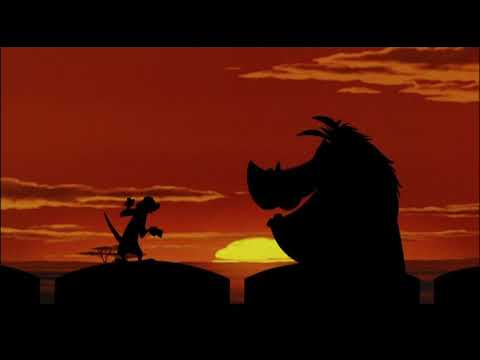
Notes & Trivia
- Internationally the film is titled The Lion King 3: Hakuna Matata; the soundtrack keeps the US album name.
- Two originals anchor the album: colony chant “Diggah Tunnah” and Timon’s solo “That’s All I Need.”
- “That’s All I Need” borrows the melody from the first film’s deleted “Warthog Rhapsody.”
- Composer Don L. Harper’s score cues are short, travel-light interludes that bridge the joke-heavy structure.
- “Grazing in the Grass” is a Raven-Symoné cover of the Friends of Distinction/Hugh Masekela hit — here as sunny end-credits candy.
Reception & Quotes
The album’s brief, radio-ready feel polarized purists but fits the movie’s skit-like rhythm — a punchline-first companion to a punchline-first film.
“Light, catchy, and built for gags — not grandeur.” Album overviews
“Clever reuse and covers keep the Lion King toolbox playful.” Fan guides
“Short cues, big smiles.” Collector listings
Availability: Released February 10, 2004 on Walt Disney Records; region variants exist. Streams and catalog pages remain active across major platforms and collector databases.
Interesting Facts
- Midquel mixtape: The album leans on covers to mirror the film’s “behind the scenes of The Lion King” conceit.
- Mini-score: Harper’s cues are album-short — quick bridges rather than full suites.
- Parenthood groove: “Jungle Boogie” scores Timon & Pumbaa’s accidental adoption montage.
- Sing-along framing: “Hakuna Matata” plays as a meta sing-along when the duo finds the jungle.
- Credits candy: Raven-Symoné’s “Grazing in the Grass” doubles as a Disney Channel–era crossover moment.
Technical Info
- Title: The Lion King 1½: Songs From Timon & Pumbaa’s Hilarious Adventure (Original Soundtrack)
- Year: 2004
- Type: Soundtrack (songs + short score cues)
- Composer (score): Don L. Harper
- Lead performances: Nathan Lane (“That’s All I Need”), Timon & Pumbaa (“Hakuna Matata” reprise), Lebo M. (“The Lion Sleeps Tonight”), Raven-Symoné (“Grazing in the Grass”)
- Label: Walt Disney Records
- Release date: February 10, 2004
- Selected notable placements: “Diggah Tunnah” — meerkat-colony opener; “That’s All I Need” — Timon’s “I want” solo; “Jungle Boogie” — parenthood montage; “The Lion Sleeps Tonight” — night/lullaby beats; “Hakuna Matata” — jungle discovery/sing-along; “Grazing in the Grass” — end credits.
- Also featured in film (not all on OST): Morricone’s “The Good, the Bad and the Ugly” (quotation); “Sunrise, Sunset”; “Peter Gunn” theme.
Questions & Answers
- Is this a full musical like the 1994 film?
- No — it’s a compact, pop-leaning set: a few cast numbers, several covers, and brief score cues.
- What’s the big Timon solo?
- “That’s All I Need,” his comic “I want” song that pushes him to leave the colony.
- Which track scores Timon & Pumbaa raising Simba?
- “Jungle Boogie,” used for the “Parenthood” montage; “The Lion Sleeps Tonight” pops up around the same stretch.
- What plays over the end credits?
- Raven-Symoné’s cover of “Grazing in the Grass.”
- Who composed the score cues?
- Don L. Harper — his themes tie the comic vignettes together.
Key Contributors
| Entity | Relation |
|---|---|
| Don L. Harper | Composer — original score cues for the film/album. |
| Nathan Lane | Performer — Timon; lead vocal on “That’s All I Need.” |
| Ernie Sabella | Performer — Pumbaa; “Hakuna Matata” reprise with cast. |
| Lebo M. | Performer/producer lineage — “The Lion Sleeps Tonight” and “Diggah Tunnah Dance.” |
| Raven-Symoné | Performer — “Grazing in the Grass.” |
| Drew K. & The French | Performers — “Jungle Boogie” cover. |
| Walt Disney Records | Label — released the album on Feb 10, 2004. |
| Disneytoon Studios | Production studio — film production. |
Sources: Wikipedia (film & soundtrack); Disney/Lion King Wikis; Discogs releases; MovieMusic & collector listings; YouTube scene clips (Jungle Boogie, The Lion Sleeps Tonight); Archive notes on Harper score; Spotify/label entries.
November, 28th 2025
A-Z Lyrics Universe
Cynthia Erivo Popular
Ariana Grande Horsepower
Post Malone Ain't No Love in Oklahoma
Luke Combs Good Riddance (Time of Your Life)
Green Day Bye Bye Bye
*NSYNC You're the One That I Wan
John Travolta & Olivia Newton-John I Always Wanted a Brother
Braelyn Rankins, Theo Somolu, Kelvin Harrison Jr. and Aaron Pierre The Power of Love
Frankie Goes to Hollywood Beyond
Auli’i Cravalho feat. Rachel House MORE ›