
"The Lion King: Musical" Soundtrack Lyrics
Musical • 1997
Track Listing
“The Lion King (Original Broadway Cast Recording)” – Album Guide to Tracks and Key Scenes
Review
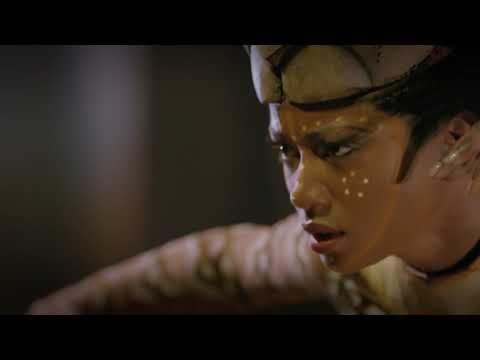
How do you record a sunrise? The cast album for The Lion King doesn’t just capture a show; it bottles a ritual. From the first ululation of “Nants’ Ingonyama,” the sound is ceremony, community, and stagecraft colliding. Elton John & Tim Rice’s pop bones remain, but choral writing and newly minted stage numbers re-route the emotional current — toward ancestry, exile, and return.
What separates this soundtrack from the 1994 film is its world-building through music. The OBCR moves between Broadway punch (“I Just Can’t Wait to Be King”), comic menace (“Chow Down”), and a suite of new pieces that deepen character — “They Live in You” (Mufasa’s creed), “Shadowland” (Nala’s migration prayer), “Endless Night” (Simba’s grief and resolve). Mark Mancina’s arrangements and Lebo M’s choral architecture bind the album into a living continuum: past voices lift present choices.
Genres & themes in phases: choral/world-pop — lineage and belonging; Broadway show-tune — bravado and satire; lament-aria — exile and duty; percussion-led ritual — transformation; pop ballad — romance and return.
How It Was Made
Director Julie Taymor reimagined the 1994 film for the stage with Roger Allers and Irene Mecchi crafting the book. The score keeps the Elton John/Tim Rice spine and adds significant new music and lyrics from Lebo M, Mark Mancina, Jay Rifkin, and Hans Zimmer. The Original Broadway Cast Recording (Walt Disney Records, 1997) preserves both the film songs and stage originals; its sequencing mirrors the show’s two-act arc and showcases the production’s hybrid sound — pit orchestra, South African choir, and intricate percussion.

Tracks & Scenes
Below: anchor numbers with scene function (no full tracklist). Descriptions follow the Broadway staging.
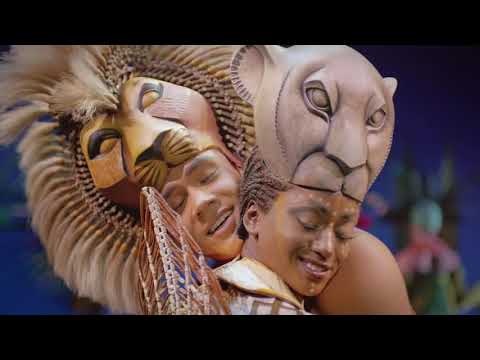
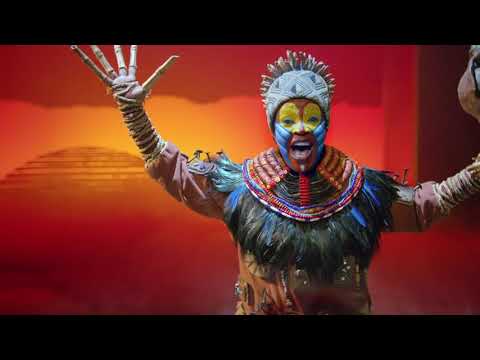
“Circle of Life / Nants’ Ingonyama” (Company)
- Where it plays:
- Prologue. Animals parade the aisles and stage toward Pride Rock; Rafiki calls the pride as the sunrise swells. Rafiki presents the newborn Simba; blackout to ovation.
- Why it matters:
- Sets the show’s ritual tone — a theatre transformed into a gathering ground.
“The Lioness Hunt” (Ensemble)
- Where it plays:
- Early Act I. Percussive canon and ululating lines as the lionesses coordinate a stalk; choreographic counterpoint becomes musical counterpoint.
- Why it matters:
- Establishes the production’s physical-music language: movement as rhythm.
“I Just Can’t Wait to Be King” (Young Simba, Young Nala, Zazu)
- Where it plays:
- Simba’s bravado fantasia — a technicolor procession of animal banners and patterns as he ducks Zazu’s rules and declares his destiny.
- Why it matters:
- Character study in pop — naive confidence with comic bite.
“They Live in You” (Mufasa & Company)
- Where it plays:
- Cliffside lesson after a patrol. Mufasa lays out the cosmology — ancestors in the stars, responsibility on the ground — as the ensemble hums a heartbeat drone.
- Why it matters:
- The show’s thesis: memory as guidance; community as inheritance.
“Chow Down” (Shenzi, Banzai, Ed)
- Where it plays:
- Elephant Graveyard set-piece. Hyenas taunt the cubs with rock-cabaret swagger; teeth snap on offbeats; danger wears a grin.
- Why it matters:
- Turns comic villainy into a rhythmic trap — a gateway to Scar’s coup.
“Be Prepared” (Scar & Company)
- Where it plays:
- Hyena lair rally. Scar outlines the plan as green fire rises; the chorus locks into goose-step accents and percussive laughs.
- Why it matters:
- Propaganda as showstopper; the coup gets its anthem.
“The Stampede / Rafiki Mourns” (Ensemble; Rafiki)
- Where it plays:
- Gorge sequence. Drums accelerate into a rolling ostinato as wildebeest masks flood the stage; after the fall, Rafiki keens, the pride gathers.
- Why it matters:
- Wordless storytelling at scale; grief rendered as chant.
“Hakuna Matata” (Timon, Pumbaa, Young Simba → Simba)
- Where it plays:
- Exile-to-adulthood montage. Gags, grubs, and growing pains flip the mood; Simba walks into a key change and adulthood.
- Why it matters:
- Philosophy as pop hook; time passes inside a joke.
“One by One” (Company)
- Where it plays:
- Act II opener. A community celebration — paper birds sail over the audience as layered polyrhythms lift the hall.
- Why it matters:
- Resets the worldpost-intermission — joy returns before conflict does.
“The Madness of King Scar” (Scar, Zazu, Hyenas, Nala)
- Where it plays:
- Scar’s brittle reign. Comedy curdles into menace as he pesters Nala; the number ends with her decision to leave in search of help.
- Why it matters:
- Shows the ecosystem collapsing — hunger, ego, and fear.
“Shadowland” (Nala & Company)
- Where it plays:
- Night departure. Nala bids the Pride Lands goodbye; chorus answers like wind over dry grass. Movement is spare; the vocal line carries the weight.
- Why it matters:
- A migration prayer — resilience against despair; one of Broadway’s great modern laments.
“Endless Night” (Simba & Company)
- Where it plays:
- Alone under the stars. Simba grieves Mufasa, hears the call to return, and steps out of fugitive life.
- Why it matters:
- Interior turning point; grief becomes action.
“He Lives in You (Reprise)” (Rafiki, Simba & Company)
- Where it plays:
- Vision sequence. Rafiki reveals the father within the son; ensemble voices crest as Simba claims the legacy.
- Why it matters:
- Spiritual hinge — memory powers return.
Finale: “King of Pride Rock / Circle of Life (Reprise)” (Company)
- Where it plays:
- Confrontation resolves; rains break; the circle renews with a new cub’s presentation.
- Why it matters:
- Ritual repeats — the album lands where it began, now earned.
Notes & Trivia
- Several stage numbers derive from the 1995 studio album Rhythm of the Pride Lands, especially “He Lives in You” and the roots of “Shadowland.”
- Official billing credits additional music/lyrics to Lebo M, Mark Mancina, Jay Rifkin, and Hans Zimmer alongside Elton John & Tim Rice.
- “The Morning Report” (on the OBCR) was later removed from the Broadway staging in 2014.
- The musical premiered in Minneapolis in July 1997 before its November 1997 Broadway opening; it remains a record-smashing long-runner.
Reception & Quotes
The album is celebrated for enlarging a beloved film score into a theatrical ritual with its own heartbeat.
“A pop soundtrack reborn as liturgy — voices that feel like sky.” Album overviews
“‘Shadowland’ and ‘Endless Night’ deepen character with true Broadway craft.” Critics’ notes
“The cast album plays like a story-circle — communal and cathartic.” Fan commentary
Availability: Widely streaming; original release via Walt Disney Records (1997) on CD and digital reissues.
Interesting Facts
- Languages on stage: The production features multiple African languages (including Zulu and Swahili) woven into vocals and dialogue.
- Percussion villages: Onstage/box percussionists create the show’s “surround-sound” heartbeat.
- From film to stage: Mark Mancina rebuilt orchestration and added new instrumental material tailored to movement and puppetry.
- Global reach: The musical has run on six continents and surpassed 10,000 Broadway performances.
- Design-musical fuse: Taymor’s mask/puppet vocabulary shapes how the music breathes on stage — you can hear the costumes move.
Technical Info
- Title: The Lion King (Original Broadway Cast Recording)
- Year: 1997
- Type: Original cast album (songs + stage-original numbers)
- Music/Lyrics: Elton John & Tim Rice
- Additional music/lyrics: Lebo M, Mark Mancina, Jay Rifkin, Hans Zimmer
- Director (stage): Julie Taymor
- Book: Roger Allers & Irene Mecchi
- Label: Walt Disney Records
- Selected notable placements (onstage moments): “They Live in You” — Mufasa’s creed; “Chow Down” — hyena trap; “Shadowland” — Nala’s departure; “Endless Night” — Simba’s turning point; “He Lives in You (Reprise)” — revelation; Finale — ceremony restored.
Questions & Answers
- What songs are unique to the stage version?
- “They Live in You,” “Chow Down,” “The Lioness Hunt,” “Shadowland,” “Endless Night,” “One by One,” among others.
- Where does “Shadowland” fall in the story?
- Act II — Nala’s farewell to the Pride Lands as she sets out to find help.
- Is “He Lives in You” the same as the movie sequel’s opener?
- It originated on 1995’s Rhythm of the Pride Lands and became both a key stage motif and the sequel’s opening anthem.
- Does the OBCR include “The Morning Report”?
- Yes — it’s on the album, though the number was later cut from the Broadway staging.
- Who handled the new arrangements for stage?
- Mark Mancina led the musical arrangements and new orchestral material; Lebo M crafted vocal/choral architecture.
Key Contributors
| Entity | Relation |
|---|---|
| Elton John; Tim Rice | Music & Lyrics — core songbook adapted from the 1994 film. |
| Lebo M; Mark Mancina; Jay Rifkin; Hans Zimmer | Additional music/lyrics — stage originals and integrations. |
| Julie Taymor | Director/Designer — mask/puppet vocabulary; additional lyric contributions noted in show history. |
| Roger Allers; Irene Mecchi | Book writers — stage narrative adaptation. |
| Jason Raize; Heather Headley; Tsidii Le Loka; Samuel E. Wright | Original Broadway leads — Simba, Nala, Rafiki, Mufasa. |
| Walt Disney Records | Label — issued the OBCR (1997). |
| Disney Theatrical Productions | Producer — Broadway and global productions. |
Sources: Wikipedia (musical overview & song credits); IBDB (official billing/awards); Disney Wiki/Discogs/Amazon (OBCR details); New York Theatre Guide (song list explainer); Official show sites and trailers.
November, 28th 2025
A-Z Lyrics Universe
Cynthia Erivo Popular
Ariana Grande Horsepower
Post Malone Ain't No Love in Oklahoma
Luke Combs Good Riddance (Time of Your Life)
Green Day Bye Bye Bye
*NSYNC You're the One That I Wan
John Travolta & Olivia Newton-John I Always Wanted a Brother
Braelyn Rankins, Theo Somolu, Kelvin Harrison Jr. and Aaron Pierre The Power of Love
Frankie Goes to Hollywood Beyond
Auli’i Cravalho feat. Rachel House MORE ›