
"The Little Mermaid" Soundtrack Lyrics
Cartoon • 1997
Track Listing
Jodi Benson
Samuel E. Wright
Jodi Benson
Pat Carroll, Jodi Benson
Rene Auberjonois
Samuel E. Wright
“The Little Mermaid (An Original Walt Disney Records Soundtrack)” – Album Guide to Tracks and Key Scenes
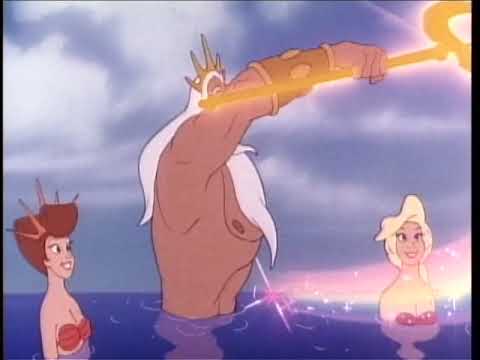
Review
Can a 1997 reissue feel like a fresh tide? With The Little Mermaid it does, because the Menken–Ashman partnership still snaps, glitters, and aches. The album’s pop-Broadway fusion turns character beats into singable motives: Ariel’s yearning (“Part of Your World”), Sebastian’s joy (“Under the Sea”), and Ursula’s smoky persuasion (“Poor Unfortunate Souls”). Even the orchestral underscoring moves like theater — overtures, reprises, curtain-call energy.
Heard front-to-back, the re-released set (mirroring the 1989 program) is a miniature musical: shipboard fanfare and sea shanty, coral-cave confession, calypso carnival, villain cabaret, and a finale that climbs to daylight. Melodic cells recur as signposts — flutes and harp for wonder, brass for peril, rippling strings for choice. It’s compact, but the world feels big.
Genres & themes in phases: Broadway pop — desire voiced as melody; calypso/soca inflection — community and play; cabaret-blues — temptation with teeth; classical film score — fate, storms, and rescue; reprise logic — memory turning into decision.
How It Was Made
Composer Alan Menken and lyricist/producer Howard Ashman built the score-and-songbook together, workshopping like a stage team. The original 1989 album landed with 20 tracks; Walt Disney Records re-released the soundtrack with updated packaging on October 14, 1997, coinciding with the film’s theatrical reissue. Orchestrations (notably by Thomas Pasatieri) give the music its operetta sheen and action punch. Later “Special Edition” issues added demos and alternates, but the ’97 set preserves the tight, theatrical flow.

Tracks & Scenes
Key placements and what they do (no full tracklist).
“Fathoms Below” (Sailors)
- Where it plays:
- Opening sea shanty aboard Prince Eric’s ship; drums and men’s chorus sketch the nautical stage before we dive under.
- Why it matters:
- A curtain raiser that frames the human world and sets up Eric’s theme.
“Part of Your World” (Ariel)
- Where it plays:
- In Ariel’s grotto of human artifacts. The melody climbs in steps — shelf to shelf, hope to vow — as she names her want.
- Why it matters:
- The film’s thesis of longing; every later decision echoes these intervals.
“Under the Sea” (Sebastian)
- Where it plays:
- Crab-led showstopper that tries to sell Ariel on ocean life; fish band, polyrhythms, and joyous call-and-response.
- Why it matters:
- Community vs. individual desire — the happiest argument in the canon.
“Poor Unfortunate Souls” (Ursula)
- Where it plays:
- Sea witch’s lair, staged like a smoky cabaret with eel spotlights; patter, belt, and a contract in crescendo.
- Why it matters:
- Temptation as theatre — the turn-key that powers the plot’s second act.
“Kiss the Girl” (Sebastian & chorus)
- Where it plays:
- Lagoon at twilight; a calypso paddle-boat serenade, strings of lights on water, the chorus nudging Eric toward courage.
- Why it matters:
- Consent framed as confidence — the gentle push before the storm.
“Main Titles / Storm / Destruction of the Grotto” (Score)
- Where it plays:
- Across action beats — overture swell, shipwreck rescue, Triton’s wrath in the grotto. Brass hits and timpani stamp the danger.
- Why it matters:
- Shows Menken’s film-score muscle: leitmotifs that can thrill or mourn on command.
Notes & Trivia
- The 1997 CD reissue accompanied the film’s theatrical re-release and kept the 20-track program intact.
- Later “Special Edition” releases (2006) added demos/work tapes — a window into Ashman’s dramaturgy in the studio.
- Pasatieri’s orchestration fingerprints: woodwind filigree for wonder; low brass for Ursula; harp arpeggios as Ariel’s signature texture.
- The soundtrack’s sales certifications ballooned in the 1990s alongside the home-video boom.
Reception & Quotes
The album is widely credited with jumpstarting Disney’s 1990s musical run — radio-ready hooks fused to Broadway craft.
“A pop-musical with oceanic charm — melodies that feel predestined.” Album overviews
“Ashman’s lyrics do the character work; Menken’s motifs do the lifting.” Critic retrospectives
Availability: The 1997 edition streams widely; physical reissues followed. The film itself saw a 1997 theatrical reissue that helped renew the album’s shelf life.
Interesting Facts
- Show DNA: The songs were developed like a stage musical — want song, comic showstopper, villain patter, love ensemble.
- Undercurrent: Ariel’s leitmotif returns orchestrally in decision points — a subtle reminder of her vow.
- Studio shorthand: The team thought in “cast album” terms; that’s why the record plays like theater.
- Era shift: This score reset Disney’s sound, paving the way for Beauty and the Beast and Aladdin.
Technical Info
- Title: The Little Mermaid (An Original Walt Disney Records Soundtrack)
- Year: 1997 re-release (original album: 1989)
- Type: Songs & score selections from the animated feature
- Composers/Lyricists: Alan Menken (music); Howard Ashman (lyrics & album producer)
- Orchestrations: Thomas Pasatieri (principal)
- Label: Walt Disney Records
- Release context: CD reissue with updated artwork aligned to the film’s 1997 theatrical re-release; later Special Edition added demos/work tapes
- Selected notable placements: “Part of Your World” — grotto soliloquy; “Under the Sea” — calypso showstopper; “Poor Unfortunate Souls” — pact sequence; “Kiss the Girl” — lagoon serenade; score suites — overture, storm, grotto, finale.
Questions & Answers
- What’s special about the 1997 edition?
- It’s a wide reissue with refreshed artwork tied to the film’s 1997 theatrical re-release, keeping the classic 20-track program.
- Are there editions with bonus material?
- Yes — later Special Edition issues add demos and work tapes that show Menken & Ashman’s process.
- Why does the album feel like a Broadway cast recording?
- The score was structured with stage logic: want song, showstopper, villain patter, love ensemble, and reprises.
- Who handled the orchestrations?
- Thomas Pasatieri’s orchestrations give the music its operetta shimmer and action weight.
- Did the 1997 film reissue impact the soundtrack?
- Yes — the theatrical return boosted awareness and aligned with the CD re-release, renewing sales and attention.
Key Contributors
| Entity | Relation |
|---|---|
| Alan Menken | Composer — songs and score; album architect. |
| Howard Ashman | Lyricist/Producer — character-focused lyrics; session leadership. |
| Thomas Pasatieri | Orchestrator — symphonic color and action set-pieces. |
| Walt Disney Records | Label — issued 1989 album; re-released in 1997; later Special Edition. |
| Walt Disney Feature Animation | Studio — film production; songs conceived in tandem with story. |
Sources: label listings and streaming pages for the 1997 edition; film/soundtrack histories; discographic databases (credits, reissue dates); re-release context and availability notes.
November, 28th 2025
A-Z Lyrics Universe
Cynthia Erivo Popular
Ariana Grande Horsepower
Post Malone Ain't No Love in Oklahoma
Luke Combs Good Riddance (Time of Your Life)
Green Day Bye Bye Bye
*NSYNC You're the One That I Wan
John Travolta & Olivia Newton-John I Always Wanted a Brother
Braelyn Rankins, Theo Somolu, Kelvin Harrison Jr. and Aaron Pierre The Power of Love
Frankie Goes to Hollywood Beyond
Auli’i Cravalho feat. Rachel House MORE ›