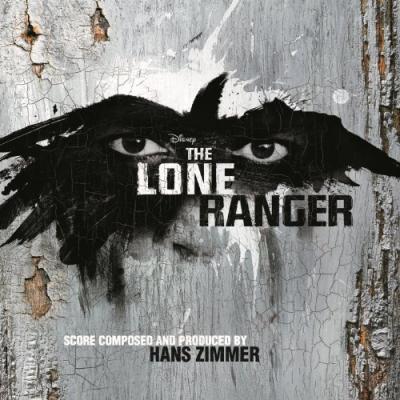
"The Lone Ranger" Soundtrack Lyrics
Movie • 2013
Track Listing
Ben Kweller
Grace Potter & The Nocturnals
Shane MacGowan
Pete Molinari
Sara Watkins
The White Buffalo
Dave Alvin
Iggy Pop
Iron & Wine
The Rubens
Lucinda Williams
The Aggrolites
Gomez
John Grant
“The Lone Ranger (Original Motion Picture Score) & ‘Wanted’ (Music Inspired by the Film)” – Album Guide to Tracks and Key Scenes
Review
How do you modernize an all-time TV theme without breaking it? The film’s score answers with a long fuse: Americana textures, comic-western feints, and then — when the set pieces demand — a thunderous, 10-minute, Zimmer–Zanelli arrangement of Rossini’s “William Tell Overture.” It’s both fanfare and punchline: a sincere gallop that also winks at the legend. Around it, cues like “Ride,” “Silver,” and “You’re Just a Man in a Mask” sketch identity, myth, and the machine-age West.
The soundtrack ecosystem is a diptych. Alongside the orchestral score sits The Lone Ranger: Wanted, a dust-and-drawl “music inspired by” compilation produced with Gore Verbinski — Grace Potter & The Nocturnals, Lucinda Williams, Iron & Wine, The White Buffalo, Iggy Pop and more. It’s road music for the shoot, not the diegesis; but the vibe bleeds back into the film’s patina: boots, ballast, and barroom lamplight.
Genres & themes in phases: Morricone-tinged orchestral western — scale and fate; parlor/saloon rag (diegetic) — frontier showmanship; outlaw-country & Americana (companion album) — dust, union tracks, and melancholy; classical quotation — heroic myth made literal in motion.
How It Was Made
Originally tapped to score, Jack White departed during production; Hans Zimmer took over and built the finished score, with Geoff Zanelli contributing to arrangements and the headline finale. Walt Disney Records released both albums on July 2, 2013 (Intrada handled physical manufacturing for the score). The “inspired by” set — titled Wanted — was produced with Verbinski and the Disney music team; tracks by Grace Potter and Lucinda Williams were premiered ahead of release to set the dusty, railroad-country mood.
Tracks & Scenes
Below: precise, scene-anchored notes (no full tracklist). Diegetic means characters hear it in-world.
“Finale (William Tell Overture)” — Hans Zimmer (arr. with Geoff Zanelli; after Rossini)
- Where it plays:
- Climactic dual-train chase and rescue. Couplings snap; ladders swing; Silver sprints in parallel as the main theme explodes into full gallop. The arrangement stretches the overture into rises and feints that sync with stunts and sight gags.
- Why it matters:
- It’s the franchise’s DNA — the TV theme reborn as a modern blockbuster engine. The cue’s pacing is the sequence’s choreography.
“Red’s Theater of the Absurd” — written by Jack White; performed by Pokey LaFarge & The South City Three (diegetic)
- Where it plays:
- Inside Red Harrington’s saloon/theatre. Fiddle-and-parlor-band vamping while Helena Bonham Carter’s Red holds court. The number threads through cutaways and banter, anchoring the brothel’s period vibe.
- Why it matters:
- World-building from the inside — a cheeky in-house show that lets the movie breathe between chases.
“Ride” — Hans Zimmer
- Where it plays:
- Action build-outs in the middle reels: percussive ostinati and clacking accents that mimic rails and hoofbeats as John Reid stumbles toward heroism.
- Why it matters:
- Bridges character comedy to kinetic western momentum — a proof-of-concept gallop before the full Rossini blitz.
“Silver” — Hans Zimmer
- Where it plays:
- Silver’s mythic introductions and wide-shot vistas; airy harmonies tilt whimsical when the horse behaves… inexplicably (tree poses included).
- Why it matters:
- Gives the supernatural-comic dimension a musical grin without puncturing the legend.
“You’re Just a Man in a Mask (Lone Ranger Theme)” — Hans Zimmer
- Where it plays:
- Moral crossroads and mask moments — reflective statements that step toward the eventual heroic identity.
- Why it matters:
- States the film’s thesis in music: lawman vs. legend, then both.
“The Railroad Waits for No One” — Hans Zimmer
- Where it plays:
- Railroad build scenes and corporate maneuvers — rhythmic, metallic pulse underscoring the encroaching machine age.
- Why it matters:
- Turns infrastructure into antagonist — progress with teeth.
Companion album moments — Wanted (Music Inspired by the Film)
- Standouts & context:
- Grace Potter & The Nocturnals’ “Devil’s Train” (steam-and-soul swagger), Lucinda Williams’ “Everything but the Truth” (dusky confession), Iron & Wine’s “Rattling Bone” (whispered frontier ballad), The White Buffalo’s “American Dream” (baritone Americana), Iggy Pop’s “Sweet Betsy from Pike” (a wry, trad-arranged interlude). These tracks color the campaign, featurettes, and the film’s myth-of-the-West halo more than on-screen narrative beats.
Notes & Trivia
- Jack White was first announced as composer; he later exited, though his saloon piece survived as a diegetic track.
- The score album’s physical edition was issued in partnership with Intrada; Walt Disney Records handled digital.
- The finale’s overture arrangement extends Rossini to blockbuster length — a structural map for the entire chase.
- Wanted was produced with Gore Verbinski; its roster mirrored the crew’s van-life listening on location.
- Pokey LaFarge & The South City Three appear on screen, tying Jack White’s vintage-roots circle to the film’s period sound.
Reception & Quotes
The albums drew a split verdict: wide praise for the barnstorming finale and for the rootsy curation on Wanted, grumbles about the film proper. Among soundtrack fans the consensus stuck — the train cue rips.
“A stirring, 10-minute ‘William Tell’ that turns choreography into melody.” Classical & score coverage
“Dust-on-the-teeth Americana; a road mixtape that fits the boots.” Album previews
“Best when it leans into Buster Keaton clockwork set-pieces.” Contemporary reviews
Availability: Both albums released July 2, 2013 on Walt Disney Records (score digital via Disney/Intrada; Wanted as a separate compilation). Widely streaming today.
Interesting Facts
- Classical backbone: The franchise has used Rossini’s overture as its de facto theme since radio/TV days; this film scales it up.
- Parlor-to-pop lineage: LaFarge previously worked inside Jack White’s orbit; their vintage sound slots neatly into Verbinski’s period palette.
- Rail as rhythm: Zimmer’s action cues lean on clacks and ostinati that mimic tie-and-spike cadence.
- Mixtape brief: Verbinski framed the companion album as music the team actually lived with during the shoot — not needle-drops.
- Mask motif: The score’s introspective theme titles underline the identity game the script plays with its hero.
Technical Info
- Title: The Lone Ranger (Original Motion Picture Score); companion: The Lone Ranger: Wanted (Music Inspired by the Film)
- Year: 2013
- Type: Score + separate “music inspired by” compilation
- Composer: Hans Zimmer (with finale arrangement by Zimmer & Geoff Zanelli; Rossini source)
- Diegetic feature: “Red’s Theater of the Absurd” — written by Jack White; performed by Pokey LaFarge & The South City Three
- Label: Walt Disney Records (Intrada partnered on physical score release)
- Release date: July 2, 2013 (both score and companion album)
- Selected notable placements: “Finale (William Tell Overture)” — dual-train climax; “Red’s Theater of the Absurd” — Red Harrington’s saloon stage (diegetic); “Ride” — mid-film pursuit build; “The Railroad Waits for No One” — railroad expansion beats; “You’re Just a Man in a Mask” — identity/costume turns.
Questions & Answers
- Why are there two Lone Ranger albums in 2013?
- Disney issued the orchestral score and a separate “inspired by” compilation (Wanted) curated with Gore Verbinski.
- Who actually wrote the famous finale?
- It’s Rossini’s “William Tell Overture” in a new, extended arrangement by Hans Zimmer with Geoff Zanelli for the film’s train climax.
- Is Jack White on the soundtrack?
- He left the scoring job but contributed the diegetic saloon tune “Red’s Theater of the Absurd,” performed on screen by Pokey LaFarge & The South City Three.
- Do the Wanted songs play in the movie?
- They’re mostly companion pieces — mood-setters tied to the campaign and packaging rather than narrative scenes.
- What label released the albums?
- Walt Disney Records (the score’s physical disc was partnered with Intrada Records).
Key Contributors
| Entity | Relation |
|---|---|
| Hans Zimmer | Composer — original score; co-arranger of finale. |
| Geoff Zanelli | Additional music/arrangements — extended “William Tell Overture.” |
| Gioachino Rossini | Composer — source material for “Finale (William Tell Overture).” |
| Jack White | Originally hired as composer; wrote “Red’s Theater of the Absurd.” |
| Pokey LaFarge & The South City Three | On-screen performers — saloon band for “Red’s Theater of the Absurd.” |
| Gore Verbinski | Director & producer of the companion album Wanted. |
| Walt Disney Records | Label — released both albums (July 2, 2013). |
| Intrada Records | Manufacturing/distribution partner for physical score release. |
| Artists on Wanted | Grace Potter & The Nocturnals; Lucinda Williams; Iron & Wine; The White Buffalo; Iggy Pop; Sara Watkins; Gomez; John Grant and others. |
Sources: official soundtrack listings and label notes; Wikipedia discography pages; Disney/Intrada release info; Film Music Reporter announcements; Apple Music/Spotify album pages; reviews/features on the finale’s Rossini arrangement; artist and track premieres for the companion album; trailer and scene clips.
November, 28th 2025
Read about 'The Lone Ranger' on Wikipedia, find movie profile and read user reviews on Internet Movie DatabaseA-Z Lyrics Universe
Cynthia Erivo Popular
Ariana Grande Horsepower
Post Malone Ain't No Love in Oklahoma
Luke Combs Good Riddance (Time of Your Life)
Green Day Bye Bye Bye
*NSYNC You're the One That I Wan
John Travolta & Olivia Newton-John I Always Wanted a Brother
Braelyn Rankins, Theo Somolu, Kelvin Harrison Jr. and Aaron Pierre The Power of Love
Frankie Goes to Hollywood Beyond
Auli’i Cravalho feat. Rachel House MORE ›