
"The Million Dollar Hotel" Soundtrack Lyrics
Movie • 2000
Track Listing
U2 with Daniel Lanois
Bono and the MDH Band
U2
Milla Jovovich and the MDH Band
Bono and Daniel Lanois
The MDH Band
U2
The MDH Band
Daniel Lanois and the MDH Band
Brad Mehldau with Bill Frisell
The MDH Band
Bono and the MDH Band
Jon Hassell, Greg Arreguin, Jamie Muhoberac, Peter Freeman
The MDH Band featuring Daniel Lanois, Bill Frisell, Greg Cohen
Milla Jovovich with Jon Hassell and Danny Saber
Tito Larriva and the MDH Band
"The Mill on the Floss (Original Motion Picture Soundtrack)" – Album Guide to Tracks and Key Scenes
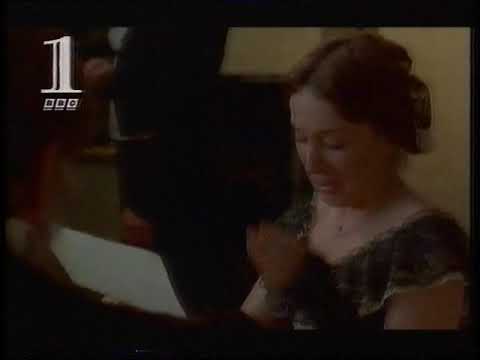
Review
What does a river sound like when it remembers? John Scott’s score for Graham Theakston’s The Mill on the Floss answers with strings that move like current and woodwinds that breathe like weather. The 1997 BBC/Masterpiece adaptation leans almost entirely on original score — there are no pop needle-drops to cushion George Eliot’s moral undertow — so the music becomes the film’s conscience.
Scott writes in supple, melodic arcs: yearning themes for Maggie, sterner harmonies for Tom, and tolling brass for fate. The palette is classical, but it’s not dusty; it flows, cresting in tragedy without drowning the drama. Across love, betrayal, and a flood that seems both natural and divine judgment, the album plays as a chamber-orchestral novel — intimate, then suddenly epic.
Genres & themes, in phases: late-Romantic lyricism — interior life; pastoral English writing — family/land; elegiac brass — social pressure; agitated strings and timpani — fate and flood. Translation: tenderness with teeth.
How It Was Made
Theakston’s production (BBC/Carnival/UGC DA International) premiered on 1 January 1997. John Scott composed and conducted the score, recorded with a BBC orchestra, and later issued it on his JOS Records imprint as a stand-alone CD. The album sequencing follows the narrative: schoolyard and mill life, Maggie’s awakenings, the red-deep romance, disgrace, return, and the river’s reckoning.

Tracks & Scenes
“Main Title” (John Scott)
- Where it plays:
- The opening credits move from river to mill to town, establishing St Ogg’s. Warm strings establish Maggie’s motif; low brass hint at the Tullivers’ looming troubles. Non-diegetic; ~1–2 minutes.
- Why it matters:
- States the score’s grammar: river-motion strings vs. stern brass. It’s the novel in miniature.
“Tom Goes to School / Maggie Rebels”
- Where it plays:
- Early chapters of childhood: Tom’s formal world underscored with measured rhythms; Maggie’s quick mind gets darting woodwinds that keep breaking the line — especially during her small acts of defiance. Non-diegetic, interstitials.
- Why it matters:
- Counterpoint as characterization — order collides with impulse.
“Philip and Maggie” / “At the Red Deep”
- Where it plays:
- Secluded meetings by the riverbank. Solo oboe and muted strings sketch guarded intimacy; at Red Deep the harmony opens briefly, then tightens when duty intrudes. Non-diegetic; mid-film.
- Why it matters:
- The theme refuses melodrama. It lets affection and guilt coexist, exactly as Eliot writes it.
“Death of Tulliver”
- Where it plays:
- Following the mill’s loss and a family collapse, the cue uses tolling brass and hushed strings under bedside scenes, then falls away to near-silence as Maggie and Tom absorb the blow. Non-diegetic.
- Why it matters:
- Grief without excess — the restraint makes it hurt more.
“Love on the River” / “For the Love of Steven”
- Where it plays:
- Maggie’s unintended flight downriver with Stephen Guest: the accompaniment swells into rippling arpeggios, then fractures as conscience returns. Non-diegetic, extended sequence.
- Why it matters:
- Desire vs. duty in one modulation — a moral undertow you can hear.
“Return to the Mill” / “Tom Rejects Maggie”
- Where it plays:
- Her return in disgrace and Tom’s refusal. Strings withdraw; cellos and basses speak in clipped phrases while low winds harden the scene. Non-diegetic.
- Why it matters:
- The music withholds warmth. It’s familial love turned to granite.
“The Flood” (finale)
- Where it plays:
- Storm and inundation engulf St Ogg’s. Timpani and tremolo strings rise like the river; the siblings’ reconciliation lands on a luminous restatement of Maggie’s theme before the waters claim them. Non-diegetic; climax.
- Why it matters:
- Classical tragedy, cleanly voiced — catharsis without sensationalism.
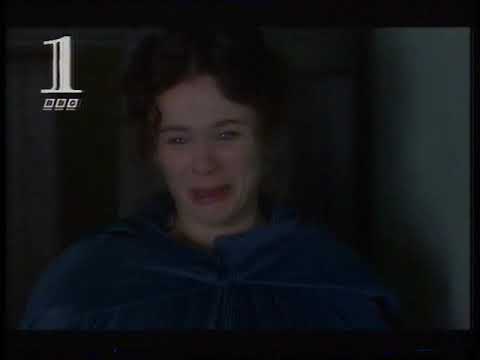
Notes & Trivia
- Composer John Scott issued the score on his own JOS Records label (catalog JSCD-124), a 1997 CD that’s now collectible.
- Contemporary coverage singled out the music as “supportive but never intrusive,” praising its period sensitivity.
- Exterior street scenes were filmed at The Historic Dockyard Chatham in Kent; the album mirrors that sense of lived-in place.
- The production is a compact TV film, not a miniseries — the album’s arc is correspondingly tight and linear.
- Library records credit a BBC orchestra for the sessions; some listings specify BBC Concert or BBC Symphony — the release notes vary by catalog.
Reception & Quotes
Viewers and critics largely embraced the adaptation’s classical approach. The score drew particular praise for its unobtrusive eloquence and emotional clarity.
“John Scott’s music, supportive but never intrusive, creates the perfect aural atmosphere.” Los Angeles Times (Masterpiece review, 1997)
Availability: Original CD on JOS Records (JSCD-124). Out-of-print in many territories, but copies surface via specialty retailers and collectors’ markets.
Interesting Facts
- Author-true cadence: The score keeps Maggie’s theme lyrical but unresolved until the finale — a musical echo of Eliot’s ethics.
- Through-composed flow: Minimal source music; orchestral narrative carries nearly every scene.
- River motif: Arpeggiated figures recur whenever choices “move downstream” toward consequence.
- Compact running time: The album plays like one movement in chapters, suiting a 90-minute telefilm.
- Collector favorite: JOS pressings are sought after; catalog sites track copies and remainders closely.
Technical Info
- Title: The Mill on the Floss (Original Motion Picture Soundtrack)
- Year: 1997
- Type: Television film score (album)
- Composer/Conductor: John Scott
- Orchestra: BBC orchestra (credited on library/retail listings)
- Label/Album status: JOS Records — JSCD-124; original 1997 CD; OOP/collector market
- Release context: Aired 1 January 1997 (UK); album released spring 1997
- Studios/production: BBC; Carnival Films; UGC DA International; Canal+
- Selected notable placements: “Main Title”; “Philip and Maggie”; “At the Red Deep”; “Death of Tulliver”; “Love on the River”; “Return to the Mill”
Key Contributors
| Entity | Relation |
|---|---|
| John Scott | Composer & Conductor — authored and recorded the score; album released on JOS Records |
| Graham Theakston | Director — guided a score-led adaptation approach |
| Emily Watson | Actor — Maggie Tulliver; dramatic through-line tied to primary theme |
| Bernard Hill | Actor — Edward Tulliver |
| James Frain | Actor — Philip Wakem |
| BBC / Carnival Films / UGC DA International / Canal+ | Production companies |
| JOS Records | Label — issued the soundtrack (JSCD-124) |
Questions & Answers
- Who composed the 1997 film’s score?
- John Scott, who also conducted the recording and released the album on his JOS label.
- Is there a commercial soundtrack?
- Yes — a 1997 CD (JSCD-124). It’s out-of-print but available via specialty shops and collectors.
- Are there songs or source cues?
- Very few; it’s primarily orchestral score. The drama relies on themes rather than period songs.
- What scene does the finale cover?
- The flood and the siblings’ reconciliation — a sweeping restatement of Maggie’s theme before the tragic close.
- Where was it filmed?
- Exterior street scenes at The Historic Dockyard Chatham (Kent), which the score treats like a living setting.
Sources: IMDb title & credits; Los Angeles Times (Masterpiece review, 1997); SoundtrackCollector; MovieMusic/SoundtrackINFO; JOS Records listings (retail/catalog); Kent Film Office production notes; library catalogue records; Letterboxd credits.
November, 28th 2025
A-Z Lyrics Universe
Cynthia Erivo Popular
Ariana Grande Horsepower
Post Malone Ain't No Love in Oklahoma
Luke Combs Good Riddance (Time of Your Life)
Green Day Bye Bye Bye
*NSYNC You're the One That I Wan
John Travolta & Olivia Newton-John I Always Wanted a Brother
Braelyn Rankins, Theo Somolu, Kelvin Harrison Jr. and Aaron Pierre The Power of Love
Frankie Goes to Hollywood Beyond
Auli’i Cravalho feat. Rachel House MORE ›