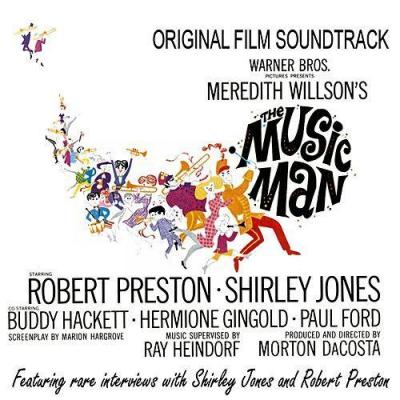
"The Music Man" Soundtrack Lyrics
Musical • 1962
Track Listing
"The Music Man (Motion-Picture Soundtrack)" – Album Guide to Tracks and Key Scenes
Review
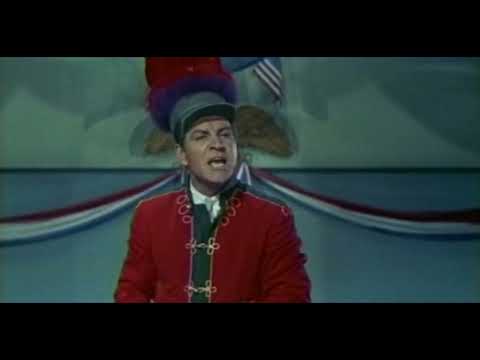
Can a swindle sound like salvation? Morton DaCosta’s film of Meredith Willson’s The Music Man says yes — by letting show tunes do civic magic. Robert Preston’s Harold Hill sells a marching band to River City with patter and rhythm; the score sells us back our faith in people. It’s corn, sure — but the kind that stands tall.
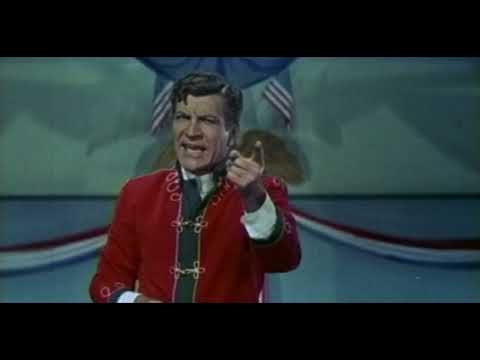
The soundtrack balances patter songs, barbershop counterpoint, and parade pomp with unabashed romance. “Ya Got Trouble” clicks like a telegraph; “Seventy-Six Trombones” turns a town square into a rehearsal for joy; “Till There Was You” hushes the movie until it glows. Underneath, Ray Heindorf’s music direction keeps the band tight and the heart supple. Result: a cast album that also feels like a community calendar.
Genres & themes, in phases: sales-patter & barbershop — persuasion and harmony; waltz-time balladry — longing; march & parade forms — civic pride; novelty/character pieces — humor with plot function.
How It Was Made
Warner Bros. filmed DaCosta’s own Broadway staging — same director-producer, same Harold Hill — preserving the show’s bones while letting cinema do the big crowd pictures. Willson’s numbers remain intact, with one notable swap: Marian’s stage song “My White Knight” becomes the film ballad “Being in Love.” Sessions were cut late 1961–early 1962 for on-set playback; the cast later lip-synced to those recordings. Warner Bros. Records issued the soundtrack in stereo and mono to ride the summer 1962 release.
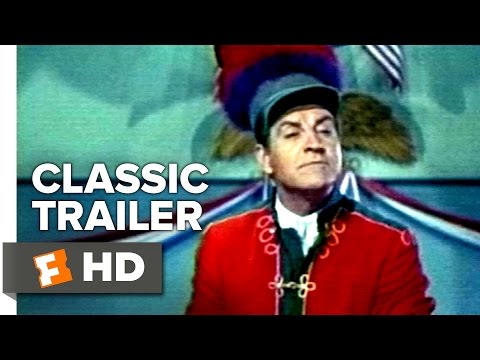
Tracks & Scenes
“Rock Island” (Traveling Salesmen)
- Where it plays:
- Opens on a rattling train car. Salesmen argue in percussive speech-song about a con man named Harold Hill. The clickety-clack becomes the beat; the cut ends on Hill’s target: River City, Iowa. Diegetic rhythm, non-diegetic flourish; opening minutes.
- Why it matters:
- Establishes tempo, myth, and the movie’s patter DNA — a musical gossip column on rails.
“Iowa Stubborn” (Ensemble)
- Where it plays:
- Hill hits Main Street; townsfolk size him up in an antiphonal welcome that’s not quite welcoming. Sung in the square amid stiff postures and side-eye.
- Why it matters:
- Plants the obstacle: prideful, cautious River City needs harmony before it gets a band.
“Ya Got Trouble” → “Seventy-Six Trombones” (Harold & Ensemble)
- Where it plays:
- Inside the billiard parlor and out into the street. Hill conjures a moral panic about the new pool table (“trouble… with a capital T”) then sells the cure — a boys’ band — morphing into the parade anthem.
- Why it matters:
- Salesmanship as choreography. The two numbers dovetail like a pitch becoming a promise.
“Goodnight, My Someone” (Marian)
- Where it plays:
- At home with Mrs. Paroo and Amaryllis. Marian sings a quiet waltz by lamplight, a dream of the person who will meet her standards.
- Why it matters:
- Countermelody to Hill’s march — same tune as “Seventy-Six Trombones,” slowed to confession.
“Sincere” → “Pick-a-Little, Talk-a-Little/Goodnight, Ladies” (The Buffalo Bills & Townswomen)
- Where it plays:
- Hill distracts the school board by turning them into a barbershop quartet; meanwhile the town gossips peck at Marian’s reputation. The two songs collide in classic Broadway counterpoint as the men and women’s tunes interlock.
- Why it matters:
- Harmony as plot device — talk is noise until it’s tuned.
“The Sadder-But-Wiser Girl” (Harold & Marcellus)
- Where it plays:
- In the livery stable/pool-hall orbit, Hill jokes about his romantic “type,” with Marcellus hyping him along.
- Why it matters:
- Comic self-portrait that makes the later genuine feelings pop.
“Marian the Librarian” (Harold)
- Where it plays:
- Daytime in the library stacks. Hill turns shushing into syncopation, dancing the room into chaos as Marian maintains poise.
- Why it matters:
- A flirtation built from hushes and heel-clicks — their chemistry, complicated, begins here.
“Being in Love” (Marian)
- Where it plays:
- Marian’s reflective solo replaces “My White Knight” from the stage version. Sung at home, weighing ideals against a very real man.
- Why it matters:
- Film-only ballad that keeps Marian modern — self-aware, unsentimental, yet open.
“The Wells Fargo Wagon” (Ensemble)
- Where it plays:
- Town lines Main Street awaiting deliveries. Winthrop bursts forward — lisp forgotten — as the instruments arrive and the town’s dream feels tangible.
- Why it matters:
- Elation made literal: boxes = belief.
“Lida Rose/Will I Ever Tell You” (Buffalo Bills & Marian)
- Where it plays:
- Counterpoint showpiece: the quartet sings outside while Marian, on her porch, confides her feelings. Two separate melodies knit together as one.
- Why it matters:
- Broadway craft flex — inner and outer lives harmonize.
“Shipoopi” (Marcellus & Ensemble)
- Where it plays:
- At the school gym social. A joy-bomb of a dance number breaks out; Hill and Marian are pulled into the swirl as the town finds its collective groove.
- Why it matters:
- Community unlocked — choreography as civic therapy.
“Gary, Indiana” (Harold → Winthrop reprise)
- Where it plays:
- First as Hill’s patter to charm the Paroos; later, the shy Winthrop belts it with pride, newly confident.
- Why it matters:
- When a con turns into care: the kid’s voice is the proof.
“Till There Was You” (Marian → Harold)
- Where it plays:
- Night on the footbridge. Marian sings a plainspoken confession; later, Hill answers with a reprise. Strings hush; the town sleeps.
- Why it matters:
- All brass and banter fall away — love, unadorned.
Finale: “Seventy-Six Trombones/Goodnight, My Someone” (reprise)
- Where it plays:
- Parade-vision blooms into reality. The “Think System” finally yields a band — ragged at first, then magically grand as River City imagines itself triumphant.
- Why it matters:
- Belief completes the con — and redeems the con man.
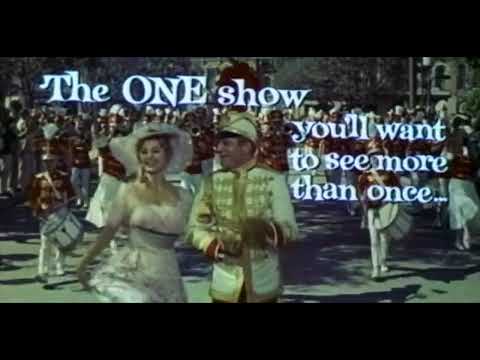
Notes & Trivia
- Marian’s film solo “Being in Love” replaces the stage’s “My White Knight.”
- Two famous counterpoint pairings land here: “Pick-a-Little/Goodnight, Ladies” and “Lida Rose/Will I Ever Tell You.”
- During soundtrack sessions, Robert Preston also recorded Willson’s fitness novelty “Chicken Fat.”
- The Buffalo Bills (barbershop champs) reprise their Broadway roles as the school board quartet.
- Ronny Howard’s (later Ron Howard) big “Gary, Indiana” moment becomes the film’s emotional pivot for Winthrop.
Reception & Quotes
A box-office hit and a critics’ favorite, the film was praised for preserving stage energy while expanding it to CinemaScope scale. The soundtrack has stayed a family staple — perfect for parades, road trips, and impromptu barbershop attempts.
“A triumph… of small-town nostalgia and the American love of a parade.” Variety (contemporary)
“The rich, ripe roundness of it… preserved and made richer.” The New York Times (Bosley Crowther)
Availability: The movie soundtrack has appeared on LP, CD and digital; modern digital editions collect ~18 cues. Film clips and numbers circulate widely on studio channels.
Interesting Facts
- Same tune, new time: “Goodnight, My Someone” is “Seventy-Six Trombones” slowed to a waltz — one melody, two meanings.
- Quartet alchemy: Hill’s dodge — turning the school board into a barbershop quartet — became the film’s stealth mascot.
- Counterpoint craft: Willson’s paired songs are textbook Broadway counterpoint and a crowd-pleasing film edit trick.
- From patter to prayer: The score’s arc runs from spoken rhythms to unguarded lyricism — a con man learning legato.
- Parade payoff: The finale’s “imagined” perfect band is the town’s collective daydream made sound.
Technical Info
- Title: The Music Man (Motion-Picture Soundtrack)
- Year: 1962
- Type: Film musical soundtrack (songs by Meredith Willson; music direction by Ray Heindorf)
- Composer/Lyricist: Meredith Willson
- Music direction: Ray Heindorf
- Key numbers (selected): “Rock Island,” “Iowa Stubborn,” “Ya Got Trouble,” “Seventy-Six Trombones,” “Goodnight, My Someone,” “Marian the Librarian,” “The Wells Fargo Wagon,” “Lida Rose/Will I Ever Tell You,” “Shipoopi,” “Till There Was You”
- Label/album status: Warner Bros. Records; multiple reissues on CD/digital
- Release context: Film opened June 19, 1962 (U.S.); soundtrack issued alongside
- Studios/production: Warner Bros. Pictures; Director/Producer Morton DaCosta
Key Contributors
| Entity | Relation |
|---|---|
| Meredith Willson | Composer & Lyricist — authored all songs; crafted counterpoint pairs |
| Ray Heindorf | Music Director — supervised film musical recording |
| Morton DaCosta | Director/Producer — preserved stage staging for film |
| Robert Preston | Performer — Harold Hill (lead vocals on key numbers) |
| Shirley Jones | Performer — Marian Paroo (ballads incl. “Being in Love,” “Till There Was You”) |
| The Buffalo Bills | Performers — Barbershop quartet (school board) on “Sincere,” “Goodnight, Ladies,” “Lida Rose” |
| Warner Bros. Records | Label — released soundtrack |
| Warner Bros. Pictures | Studio/Distributor — film release |
Questions & Answers
- Is “Being in Love” from the original stage show?
- No — it replaces the stage ballad “My White Knight” in the 1962 film.
- Which numbers use Broadway-style counterpoint?
- “Pick-a-Little/Goodnight, Ladies” and “Lida Rose/Will I Ever Tell You” — separate melodies that lock together.
- What’s the deal with “Goodnight, My Someone” and “Seventy-Six Trombones”?
- They are the same melody in different meters — waltz vs. march — mapping romance vs. razzle.
- Who sings “Gary, Indiana” in the movie?
- Harold Hill introduces it; Winthrop later reprises it in a breakthrough moment.
- Was anything unusual recorded during the soundtrack sessions?
- Yes — Robert Preston also recorded Willson’s fitness song “Chicken Fat” during the film’s music sessions.
Sources: Film & soundtrack overviews; contemporary reviews; album listings; song/scene documentation.
November, 28th 2025
A-Z Lyrics Universe
Cynthia Erivo Popular
Ariana Grande Horsepower
Post Malone Ain't No Love in Oklahoma
Luke Combs Good Riddance (Time of Your Life)
Green Day Bye Bye Bye
*NSYNC You're the One That I Wan
John Travolta & Olivia Newton-John I Always Wanted a Brother
Braelyn Rankins, Theo Somolu, Kelvin Harrison Jr. and Aaron Pierre The Power of Love
Frankie Goes to Hollywood Beyond
Auli’i Cravalho feat. Rachel House MORE ›