
"The Next Best Thing" Soundtrack Lyrics
Movie • 2000
Track Listing
Metisse
Manu Chao
Christina Aguilera
Madonna
Mandalay
Groove Armada
Moby
Olive
Beth Orton
Madonna
Solar Twins
Gabriel Yared
"The Next Best Thing (Music from the Motion Picture)" – Album Guide to Tracks and Key Scenes
Review
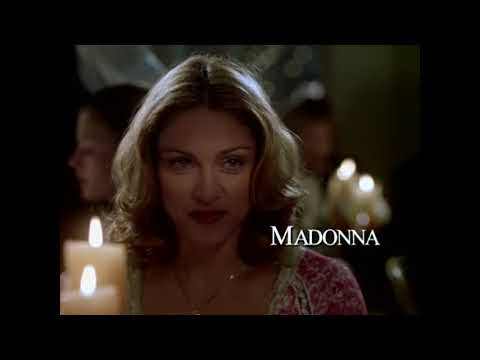
Can a custody melodrama play like a DJ set? This one tries — and often succeeds. The Next Best Thing pairs a sleek, global-pop compilation (executive-produced by Madonna) with a lyrical, European-tinged score from Gabriel Yared. The result is a soundtrack that moves between café cool and club gloss while the film wrestles with friendship, family and fallout.
Madonna’s two originals anchor the arc: “Time Stood Still,” a hushed Orbit-produced ballad, gives the story its bruise; her cover of “American Pie” delivers the pop headline and end-credits catharsis. Around them, you get era-defining downtempo and electronica (Moby, Groove Armada, Mandalay), a Manu Chao singalong, Beth Orton’s nocturne, and left-field cuts that make Los Angeles feel borderless. It’s a turn-of-the-millennium mixtape — smooth on the surface, quietly sad underneath.
Genres & themes, in phases: downbeat electronica — private doubts; mid-tempo pop-soul — tentative romance; world-pop & lounge — friendship-as-home; anthemic pop — letting go; orchestral score — the ache that lingers.
How It Was Made
Director John Schlesinger tapped composer Gabriel Yared for the score, while the song album was built and sequenced under Madonna’s executive production with key production by William Orbit. Lakeshore/Paramount’s film used Happy Walters and Gary Jones as music supervisors; Maverick/Warner Bros. issued the 12-track soundtrack in late February 2000 to precede the U.S. release. The compilation folds in then-current electronica and adult-pop alongside two Madonna tracks: the Orbit co-write “Time Stood Still” and her dance-pop take on Don McLean’s “American Pie.”

Tracks & Scenes
“Time Stood Still” (Madonna — written/produced with William Orbit)
- Where it plays:
- Used as the film’s intimate leitmotif for Abbie and Robert’s regret — quiet transitional scenes and reflective beats that follow their rift. Non-diegetic; late-act passages and bittersweet montage moments.
- Why it matters:
- Orbit’s glassy programming and Madonna’s close-mic vocal make space for grief; it’s the film’s emotional thesis in miniature.
“American Pie” (Madonna — Don McLean cover)
- Where it plays:
- Heard as the film’s capstone cue — a cathartic, radio-ready end-credits statement that reframes loss and resilience after the courtroom/family resolution.
- Why it matters:
- The single that sold the album worldwide; a pop curtain call that turns personal upheaval into communal singalong.
“Boom Boom Ba” (Métisse)
- Where it plays:
- Over early Los Angeles lifestyle beats — yoga-studio rhythms, car-window sunshine, and best-friend banter establishing Abbie’s world. Non-diegetic montage opener energy.
- Why it matters:
- Signals the compilation’s global-pop palette and the film’s breezy tone before things get complicated.
“Bongo Bong” (Manu Chao)
- Where it plays:
- Café chatter, backyard hangs, and kid-in-the-house interludes — the domestic groove when co-parenting actually feels easy. Source-adjacent vibe, likely diegetic radio/ambient in a few scenes.
- Why it matters:
- Light, multilingual swagger that sketches community — you can almost smell the sage and takeout.
“This Life” (Mandalay)
- Where it plays:
- Placed under reflective nighttime sequences as the friendship starts to fray. Non-diegetic; mid-film.
- Why it matters:
- Mandalay’s downtempo ache mirrors the characters’ too-late honesty.
“If Everybody Looked the Same” (Groove Armada)
- Where it plays:
- Party and nightlife connective tissue — breezy, four-on-the-floor confidence as the friend group rallies. Non-diegetic; mid-film social scenes.
- Why it matters:
- A unifier: GA’s disco-funk makes fractured relationships feel briefly frictionless.
“Why Does My Heart Feel So Bad?” (Moby)
- Where it plays:
- Sad-drift montage after a legal setback; driving shots and phone calls that don’t fix anything. Non-diegetic; late second act.
- Why it matters:
- Moby’s gospel sample floats like a conscience; it’s the story’s foggiest morning.
“Stars All Seem to Weep” (Beth Orton)
- Where it plays:
- Midnight stillness after an argument — the house quiet, the hurt loud. Non-diegetic.
- Why it matters:
- Orton’s whispery melancholy gives the film its bruised underbelly.
Score cue: “Forever and Always” (Gabriel Yared)
- Where it plays:
- Tender orchestral interludes around parent–child moments and the funeral sequence’s aftermath; short, lyrical statements that frame big choices. Non-diegetic score.
- Why it matters:
- Yared’s writing grounds the pop with grace notes — small motifs for love and consequence.
Also heard in marketing/alt media
- Where they play:
- Trailer and TV spots lean on the Madonna cuts and GA/Moby for instant recognition; music videos (“American Pie”) circulated with/without film footage.
- Why they matter:
- The campaign sold the soundtrack as a stand-alone vibe — a major reason the album outpaced the movie.
Notes & Trivia
- Madonna executive-produced the soundtrack and contributed two tracks: “Time Stood Still” and her William Orbit–produced cover of “American Pie.”
- The album arrived via Maverick/Warner and peaked at No. 34 on the Billboard 200; “American Pie” topped charts across multiple countries.
- Music supervision was handled by Happy Walters and Gary Jones; Gabriel Yared composed the original score.
- Streaming editions commonly present a 12-track program including Groove Armada, Moby, Mandalay, Beth Orton, Solar Twins and more.
Reception & Quotes
Critics were mixed on the film, warmer on the soundtrack — often calling it a sleek, cohesive pop/electronica set with two headline Madonna cuts.
“A clubber’s dream… a groovy mix of global beats.” Billboard
“‘Time Stood Still’… her best ballad since ‘Take a Bow.’” Orlando Sentinel
Availability: Commercial CD/digital (Maverick/Warner). The Madonna singles are widely available; the Yared score is in-film, with select cues appearing on international CD pressings/credits.
Interesting Facts
- Chart quirk: “American Pie” was a global No. 1 despite no U.S. commercial single release at the time.
- Two Madonnas: The “American Pie” video exists with and without film footage; Rupert Everett provides backing vocals on the single mix.
- Label alignment: Maverick (Madonna’s label) handled the soundtrack release, turbocharging international promotion.
- Score & songs handshake: Some international CD credits explicitly note Yared’s involvement alongside the pop producers.
- Mixtape memory: The album’s eclecticism — Manu Chao to Beth Orton — mirrors the movie’s chosen-family theme.
Technical Info
- Title: The Next Best Thing (Music from the Motion Picture)
- Year: 2000
- Type: Songs compilation with original score (film) by Gabriel Yared
- Label: Maverick / Warner Bros. Records
- Executive production: Madonna (album); key production by William Orbit on Madonna tracks
- Music supervision: Happy Walters; Gary Jones
- Selected notable placements: Madonna — “Time Stood Still” (reflective motif); “American Pie” (end-credits capstone); Groove Armada — “If Everybody Looked the Same” (party/social montage); Moby — “Why Does My Heart Feel So Bad?” (post-setback drift); Mandalay — “This Life” (late-night reflection); Beth Orton — “Stars All Seem to Weep” (after-argument quiet)
- Release context: Soundtrack streeted Feb. 21–22, 2000, ahead of the U.S. theatrical release
- Charts: U.S. Billboard 200 peak No. 34; “American Pie” reached No. 1 in multiple territories
Key Contributors
| Entity | Relation |
|---|---|
| Madonna | Album executive producer; performer — “Time Stood Still,” “American Pie” |
| William Orbit | Producer/co-writer — “Time Stood Still”; producer — “American Pie” |
| Gabriel Yared | Composer — original score; cue “Forever and Always” credited on releases |
| Happy Walters; Gary Jones | Music supervisors — film |
| John Schlesinger | Director — integrated pop selections with score |
| Maverick / Warner Bros. Records | Labels — soundtrack release |
| Lakeshore Entertainment / Paramount Pictures | Studio & distributor — feature film |
Questions & Answers
- Who composed the score?
- Gabriel Yared. His orchestral cues offset the album’s pop/electronica sheen.
- Which Madonna songs are new to this film?
- “Time Stood Still” (an Orbit co-write) and her cover of Don McLean’s “American Pie.”
- Did the soundtrack chart?
- Yes — it peaked at No. 34 on the U.S. Billboard 200; “American Pie” topped multiple international charts.
- Who handled music supervision?
- Happy Walters and Gary Jones, bridging licensing with the film’s tone.
- Is the full score available?
- Primarily in-film; the commercial album focuses on songs, though some editions credit Yared and list a closing cue.
Sources: Apple Music album page; Spotify album page; Discogs release/master pages; IMDb soundtrack; Variety crew listing; Billboard/press quotes aggregated via album coverage; Wikipedia (film & soundtrack entries); official trailer uploads; label/distributor credits.
November, 28th 2025
A-Z Lyrics Universe
Cynthia Erivo Popular
Ariana Grande Horsepower
Post Malone Ain't No Love in Oklahoma
Luke Combs Good Riddance (Time of Your Life)
Green Day Bye Bye Bye
*NSYNC You're the One That I Wan
John Travolta & Olivia Newton-John I Always Wanted a Brother
Braelyn Rankins, Theo Somolu, Kelvin Harrison Jr. and Aaron Pierre The Power of Love
Frankie Goes to Hollywood Beyond
Auli’i Cravalho feat. Rachel House MORE ›