
"Theory Of Everything, The" Soundtrack Lyrics
Movie • 2014
Track Listing
Martha Reeves & The Vandellas
Dinah Washington
The Stuttgart State Opera Orchestra
Hancock
The Top Shelf Band
Hanley/McCarthy
Dudas/Hart
The Stuttgart State Opera Orchestra
The Cinematic Orchestra
The Cinematic Orchestra
“The Theory of Everything (Original Motion Picture Soundtrack)” – Album Guide to Tracks and Key Scenes
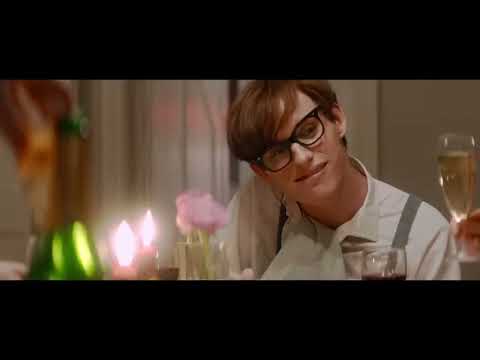
Review
How do you score equations and heartbreak at once? Jóhann Jóhannsson answers with a clockwork waltz that breathes. Piano ostinatos tick like thought; strings unfurl like hope. The album moves from spring-bright Cambridge to winter-cold hospital wards without ever shouting — restraint as eloquence.
The score’s secret is motion. Tracks like “Cambridge, 1963,” “Rowing,” and “Forces of Attraction” glide forward with small, repeating cells that accumulate feeling. When life turns, harmony does too — a sunny cadence curdles into minor shade; a gentle figure steadies a collapsing world. It’s a love story first, a science story second, and the music honors that ordering.
Genres & themes, in phases: neo-classical minimalism — curiosity and youth; chamber lyricism — intimacy and resolve; subdued electronics — interiority; choral/strings bloom — transcendence. Thesis: time isn’t just a topic — it’s the groove.
How It Was Made
Recorded in London with a 65-piece orchestra at Abbey Road (pianos at AIR), the score centers piano (Tom Poster) with orchestra and subtly processed acoustics. Jóhannsson and director James Marsh steered away from period pop signifiers, opting for “timeless” colors: precise, lyrical, mostly orchestral. The album was issued by Back Lot Music on November 4, 2014, with packaging that mirrors film chronology rather than radio singles.
Process-wise, the opening four-note figure became the score’s DNA, morphing across cues — lively for Cambridge, contemplative in later lectures, weightless in the end credits’ “The Whirling Ways of Stars That Pass.”
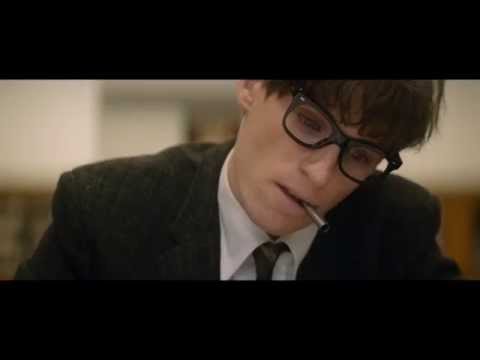
Tracks & Scenes
Key placements from the film; timings vary by cut/edition. (Album cue titles in quotes.)
“Cambridge, 1963”
- Where it plays:
- Early Cambridge sequences — bicycles, gowns, the River Cam. The piano’s four-note engine introduces Stephen’s kinetic world; strings shimmer over brisk edits. Non-diegetic.
- Why it matters:
- Establishes the score’s heartbeat — curiosity as rhythm.
“Rowing” (and “Rowing — Alternative Version”)
- Where it plays:
- Boat-club practices and banter. Pizzicato and light percussion mimic oar cadence; harmony smiles, then tightens as stakes rise. Non-diegetic.
- Why it matters:
- Sports montage as character sketch — confidence, community, momentum.
“Domestic Pressures”
- Where it plays:
- Home-life montage that spans joy, fatigue, and creeping strain as Stephen’s illness advances. A lilting 3/4 figure begins playful, then sours by degrees. Non-diegetic.
- Why it matters:
- A miniature diary — love weathered by time and care work.
“The Origins of Time” → “Viva Voce”
- Where it plays:
- Academic ascent: Hawking’s thesis momentum into the viva examination. The motif stretches into stately counterpoint as intellect and illness coexist. Non-diegetic.
- Why it matters:
- Finds awe without bombast — achievement against a narrowing horizon.
“The Wedding”
- Where it plays:
- Stephen and Jane’s marriage — a radiant, bells-and-strings vignette. Non-diegetic, intercut with family/friends’ warmth.
- Why it matters:
- Declares the film’s center: partnership as miracle.
“A Spacetime Singularity”
- Where it plays:
- Hospital/collapse pivots. Harmonies tighten; the ostinato thins to a single line before the orchestra gathers underneath. Non-diegetic.
- Why it matters:
- When the body falters, the theme recalibrates — same math, new stakes.
“The Whirling Ways of Stars That Pass” (end-credits)
- Where it plays:
- Credits coda after the final rewind. A contemplative summation for piano and strings. Non-diegetic.
- Why it matters:
- Grace note — the score’s question mark turns into an ellipsis.
“Arrival of the Birds” (The Cinematic Orchestra) — non-album needle-drop
- Where it plays:
- Final garden scene and reverse-flashback rewind to Stephen meeting Jane. A radiant string swell and chorale-like cadence carry the life-in-photos sequence. Non-diegetic.
- Why it matters:
- An imported theme that feels native — the film’s quiet catharsis.
“(Love Is Like a) Heat Wave” (Martha Reeves & the Vandellas) — needle-drop
- Where it plays:
- Early student social/party setting in Cambridge. Diegetic dance-floor energy under quick character beats.
- Why it matters:
- Period vibe without defining the score’s palette — joy before gravity.
“Time After Time” (Dinah Washington) — needle-drop
- Where it plays:
- Intimate, old-soul counterpoint to a tender interlude; heard source-like within a quiet room scene.
- Why it matters:
- Vintage warmth that mirrors the film’s emphasis on devotion.
Wagner excerpts — needle-drops
- Where it plays:
- Prelude/opening from Die Walküre and “Brünnhilde’s Awakening” from Siegfried surface as high-culture source cues within the film’s academic/musical milieu.
- Why it matters:
- Signals intellectual romance — grand forms beside everyday grit.
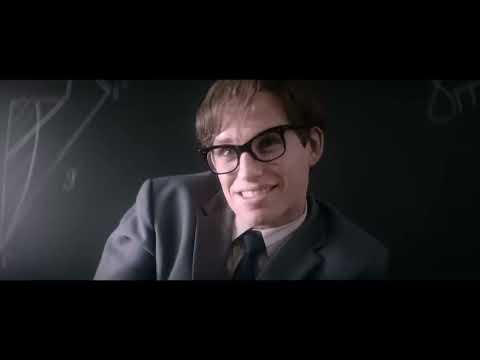
Notes & Trivia
- The album was released by Back Lot Music on Nov 4, 2014; the score was recorded at Abbey Road with a 65-piece orchestra; pianos at AIR Studios.
- Tom Poster is the primary pianist; the writing avoids overt synths, using lightly processed acoustic textures instead.
- Jóhannsson’s score won the 2015 Golden Globe and was nominated for the Oscar, BAFTA, Critics’ Choice, and Grammy.
- Track titles echo Hawking’s language (“A Spacetime Singularity,” “The Origins of Time”).
- The film’s final scene famously uses The Cinematic Orchestra’s “Arrival of the Birds,” originally from a 2008 nature documentary.
Reception & Quotes
Critics heard elegance without sentimentality; fans heard a love theme built from motion and patience.
“An impressive piece of work… combining very different pulls of emotion into a coherent whole.” Movie Wave
“A musical big-bang.” IndieWire
“Subtle and highly engaging… resplendent in intimacy yet alluding to the infinite.” PopMatters
Availability: Digital and CD; streaming under Back Lot Music. Vinyl issues appear via later catalog partners.
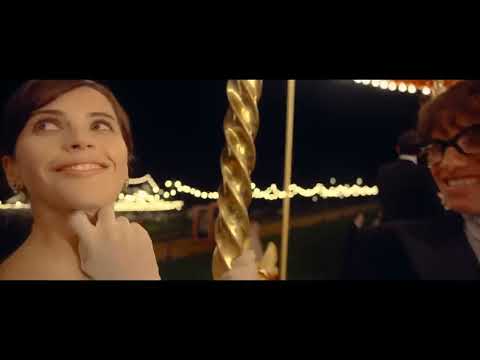
Interesting Facts
- Theme physics: The opening four-note figure recurs slowed, spaced, and reharmonized — a musical model of time dilation.
- Less period, more timeless: Marsh and Jóhannsson sidestepped “British Invasion” needle-drops inside the score to avoid dating it.
- Lecture reprise: The late-film talk mirrors the opening cue in a calmer, philosophical guise.
- Piano as proxy: The instrument’s “mathematical precision” and expressivity made it the emotional narrator.
- Imported finale: “Arrival of the Birds” isn’t on the OST — it’s a licensed needle-drop that became inseparable from the movie’s goodbye.
Technical Info
- Title: The Theory of Everything (Original Motion Picture Soundtrack)
- Year: 2014
- Type: Film score (album) with additional licensed songs in film
- Composer/producer: Jóhann Jóhannsson
- Primary performers: Tom Poster (piano); 65-piece orchestra
- Studios: Abbey Road (orchestra); AIR Studios (pianos)
- Label: Back Lot Music
- Selected notable placements: “Cambridge, 1963”; “Rowing”; “Domestic Pressures”; “A Spacetime Singularity”; “The Whirling Ways of Stars That Pass” (end credits); needle-drops — “Arrival of the Birds,” “(Love Is Like a) Heat Wave,” “Time After Time,” Wagner excerpts
- Awards: Golden Globe (Best Original Score) — winner; Oscar/BAFTA/Grammy — nominations
Questions & Answers
- Who composed the score and who released the album?
- Jóhann Jóhannsson composed and produced it; Back Lot Music released the OST in November 2014.
- Where was the score recorded?
- Orchestra at Abbey Road; pianos at AIR Studios in London.
- Is “Arrival of the Birds” on the official OST?
- No — it’s a licensed needle-drop by The Cinematic Orchestra, used in the film’s final scene but not on the OST album.
- Did the score win major awards?
- Yes — Golden Globe winner; also nominated for the Academy Award, BAFTA, Critics’ Choice, and Grammy.
- What instruments define the palette?
- Piano-led chamber orchestra with minimal electronics; lyric strings and precise piano ostinatos lead.
Key Contributors
| Entity | Relation | Entity |
|---|---|---|
| Jóhann Jóhannsson | composed & produced | The Theory of Everything (Original Motion Picture Soundtrack) |
| Back Lot Music | released | OST album (Nov 4, 2014) |
| Tom Poster | performed | primary piano on score |
| Abbey Road Studios / AIR Studios | recorded | orchestra / pianos |
| James Marsh | directed | The Theory of Everything (film) |
| The Cinematic Orchestra | performed | “Arrival of the Birds” (final scene needle-drop; not on OST) |
| Martha Reeves & the Vandellas; Dinah Washington | performed | period source songs used in film |
Sources: Back Lot Music / artist discography; interviews with Jóhann Jóhannsson; Abbey Road/AIR studio notes; Discogs/retailer metadata; Wikipedia film & soundtrack entries; Filmtracks/Movie Wave/IndieWire reviews; Golden Globes/press; trailer IDs via Universal/Working Title channels.
Film, shooting planning of which took more time than the actual shooting. Created by the book of Jane Hawking, movie was filmed for ten years. More than three went out to persuade the author to allow the novel was filmed. Despite the insanely thorough preparation, the film was not perfect – there are about a dozen of so-called "faults". However, it does not spoil the overall impression from the picture. Eddie Redmayne, acted the main hero, so accustomed to the role of a character that even in between filming retained the certain position, being almost stationary. This led to a thorough health problems, but thanks to Steven Hawking he was awarded – the scientist admitted that in some moments he saw oneself. It is surprising that the actor only once met the physicist in person. At the same time, he did not succeed to ask questions about the role. Soundtrack was written in the studio of the famous Abbey Road, famed, of course, primarily by the legendary “The Beatles”. Full half of the recorded tracks are instrumental. Musicians of Stuttgart State Opera Orchestra and The Cinematic Orchestra were involved in their recording. Songs in which there is a vocal, show spectacular names – for example, The Devil May Care and ( (Love is Like a) Heat Wave, which opens the soundtrack’s album. Composers surprisingly well managed to recreate the atmosphere of those years, and at the same time, to highlight the dramatic story of a young scientist with a complex fate. Special attention has to be given to the composition Time After Time, which is one of the most popular by ratings. The soundtrack was nominated for the Golden Globe award and the same for Oscar too.November, 29th 2025
"The Theory Of Everything" - more info on IMDb, WikipediaA-Z Lyrics Universe
Cynthia Erivo Popular
Ariana Grande Horsepower
Post Malone Ain't No Love in Oklahoma
Luke Combs Good Riddance (Time of Your Life)
Green Day Bye Bye Bye
*NSYNC You're the One That I Wan
John Travolta & Olivia Newton-John I Always Wanted a Brother
Braelyn Rankins, Theo Somolu, Kelvin Harrison Jr. and Aaron Pierre The Power of Love
Frankie Goes to Hollywood Beyond
Auli’i Cravalho feat. Rachel House MORE ›