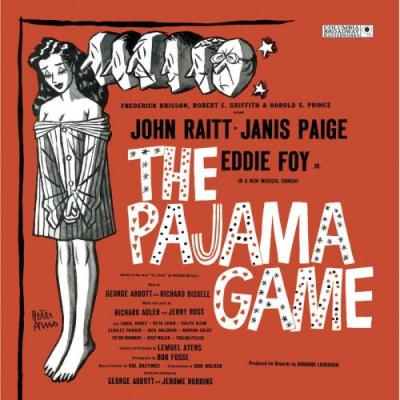
"The Pajama Game" Soundtrack Lyrics
Musical • 1954
Track Listing
Reta Shaw
John Raitt
Carol Haney
Carol Haney
"The Pajama Game (Original Broadway Cast Recording / Musical Score)" – Album Guide to Tracks and Key Scenes
Review
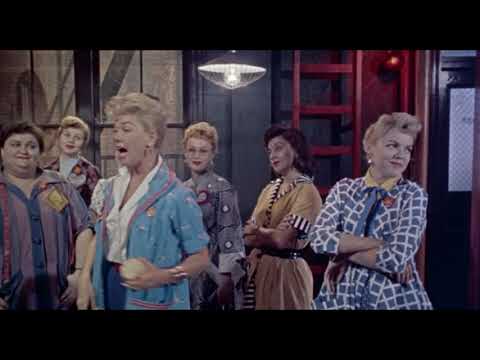
How do you sell a labor dispute as a feel-good musical? The Pajama Game answers with melodies that grin while they argue. Richard Adler and Jerry Ross write tunes that bounce like time clocks — brisk, flirty, and deceptively sharp — while Bob Fosse’s debut Broadway choreography snap-crackles around the beat.
The factory romance between superintendent Sid Sorokin and union firebrand Babe Williams needs songs that can flirt and fight at once. That’s the trick here: the cast album swings from office dictaphone introspection to union-hall stomp to after-hours tango without losing the through-line. You hear American industry’s optimism and its frictions — the comic patience of workers, the managerial charm offensive, the giddy release when both sides step onto a dance floor.
Genres & themes in phases: brassy showtune swing — public bravado and pep-talks; torch-tango cool — secrecy, desire, and power games; soft-shoe/vamp — corporate charm and self-delusion; pep-band Americana — solidarity and spectacle. On record, that arc plays like a workweek: clock in, clash, clock out dancing.
How It Was Made
Based on Richard Bissell’s novel 7½ Cents, the musical’s book was crafted by George Abbott with Bissell, music and lyrics by Adler & Ross. The original Broadway production opened at the St. James Theatre on May 13, 1954, directed by Abbott and Jerome Robbins, with Bob Fosse making his Broadway choreography debut. The original cast album was recorded and issued by Columbia Masterworks under producer Goddard Lieberson within days of opening — a then-new strategy that helped lock the show’s sound into the culture.
Tracks & Scenes
“Hey There” (John Raitt, as Sid)
- Where it plays:
- Late at night in the office, Sid records advice to himself on a dictaphone — then “duets” with the playback. The room is quiet; the only rhythm is the machine’s whirr and his second thoughts. Non-diegetic within the story world except for the onstage playback device; intimate spotlight moment.
- Why it matters:
- It’s the character’s conscience set to melody, and one of Broadway’s great staging ideas: self-interrogation literally harmonized.
“Steam Heat” (Carol Haney and dancers)
- Where it plays:
- At a union rally’s entertainment segment, Gladys leads a trio number that stops the show. Minimal hats, crisp isolations, punctuated snaps — the movement is tight, teasing, and modern. Diegetic “act-within-the-show.”
- Why it matters:
- Fosse’s breakout. The number’s sleek geometry turned a rally interlude into Broadway dance history and redefined sexy precision.
“Hernando’s Hideaway” (Carol Haney / Company)
- Where it plays:
- After hours, whispers point toward an invitation-only club. Lights drop to slits; bodies move in silhouette. The tango slinks as secrets trade hands and eyes adjust to the dark. Diegetic nightclub atmosphere that bleeds into underscoring.
- Why it matters:
- A smoky pressure-valve — the workday’s heat rerouted into dancefloor power games.
“I’m Not at All in Love” (Janis Paige & Factory Girls)
- Where it plays:
- On the factory floor, Babe insists she’s immune to Sid’s charm while the girls needle her. Typewriters clack between phrases; teasing crescendos mimic assembly-line rhythm. Diegetic/character soliloquy.
- Why it matters:
- Denial with harmony — a workplace gossip chorus wrapped around a rom-com beat.
“Once-A-Year Day” (Company)
- Where it plays:
- At the company picnic, rules loosen. Brass band strains, sack races, a few ill-advised dips by the water. The number unfurls like a park panorama. Diegetic festivity.
- Why it matters:
- Shows labor and management dancing in the same field — a temporary truce that can’t last.
“Small Talk” (Reta Shaw & Eddie Foy Jr.)
- Where it plays:
- In the office, time-study man Hines and secretary Mabel toggle between flirt and fluster, joking about jealousy and etiquette. Stage business with props mirrors lyrical banter. Diegetic comedy duet.
- Why it matters:
- Humanizes the bureaucracy — romance as a timesheet entry.
“There Once Was a Man” (Raitt & Paige)
- Where it plays:
- After an emotional thaw, Sid and Babe unleash a barn-storming declaration that ricochets through the factory set. The melody sprints; the lyrics brag; the two finally match pace. Non-diegetic, character-driven outpouring.
- Why it matters:
- It’s the show’s joyous combustion engine — big voices, bigger relief.
“Seven-and-a-Half Cents” (Company)
- Where it plays:
- Union math becomes a rallying cry: pennies into dreams, raises into futures. Desks, ledgers, and hard hats turn percussive. Finale-adjacent choral drive.
- Why it matters:
- Translates policy into pulse — solidarity you can sing.
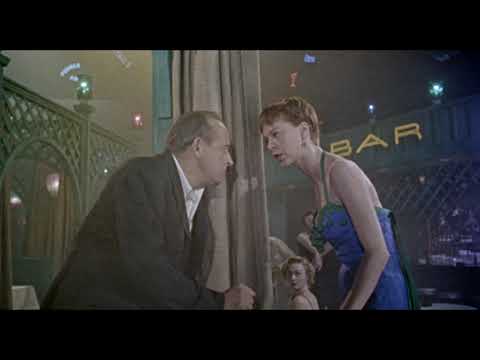
Notes & Trivia
- Opened at the St. James Theatre on May 13, 1954; ran 1,063 performances — a major mid-’50s hit.
- Fosse’s choreography debut on Broadway; “Steam Heat” became his first signature.
- Shirley MacLaine, an understudy for Carol Haney, famously vaulted to stardom when she went on and caught Hollywood’s eye.
- The cast album was recorded and released within days — part of Columbia Masterworks’ early, game-changing Broadway LP strategy.
- Won the 1955 Tony Award for Best Musical; producers included a very young Harold S. Prince.
Reception & Quotes
From 1954 onward, the score’s reputation has stayed sky-high: bright tunes, clever plotting, historic choreography. Revivals (notably 2006) reaffirmed its crowd-pleasing craft without blunting its labor-versus-management bite.
“An infectious score… and Fosse’s choreography.” — critical capsule
“‘Steam Heat’ stopped the show.” — production histories
“A landmark debut for a future titan: Prince in the producer’s chair.” — awards record
Availability: The Original Broadway Cast Recording is widely available (digital and CD reissues). Key numbers — “Hey There,” “Hernando’s Hideaway,” “Steam Heat” — also circulate on best-of Broadway compilations.
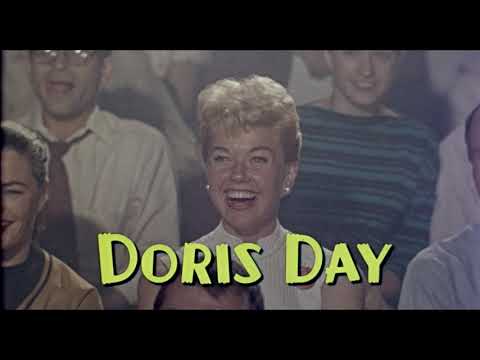
Interesting Facts
- Dictaphone duet: “Hey There” turns office tech into a scene partner — a staging idea still taught in musical-theatre classes.
- Union rally as showstopper: “Steam Heat” is diegetic entertainment inside the plot, yet it’s the evening’s biggest explosion.
- Tango’s secret origin: “Hernando’s Hideaway” was inspired by a real Midwestern supper club repurposed from a Prohibition-era speakeasy.
- Cast-album sprint: Columbia’s rapid release helped make show albums a commercial engine, not just souvenirs.
- From Pajama to Yankees: Adler & Ross followed this smash with Damn Yankees a year later — lightning in a bottle, twice.
Technical Info
- Title: The Pajama Game — Original Broadway Cast Recording
- Year: 1954 (premiere & album)
- Type: Stage musical (Broadway); cast album (Columbia Masterworks)
- Book: George Abbott & Richard Bissell (from Bissell’s novel 7½ Cents)
- Music & Lyrics: Richard Adler & Jerry Ross
- Direction (orig. Broadway): George Abbott & Jerome Robbins
- Choreography: Bob Fosse (Broadway debut)
- Original leads: John Raitt (Sid), Janis Paige (Babe), Carol Haney (Gladys), Eddie Foy Jr. (Hines)
- Producers: Frederick Brisson, Robert E. Griffith, Harold S. Prince
- Awards: Tony Award for Best Musical (1955)
- Label/Album: Columbia Masterworks LP (first issue May–June 1954; multiple reissues)
Key Contributors
| Entity | Relation |
|---|---|
| Richard Adler & Jerry Ross | Composers–lyricists; wrote all songs |
| George Abbott & Richard Bissell | Book writers; adapted Bissell’s novel 7½ Cents |
| Bob Fosse | Choreographer (Broadway debut; signature numbers “Steam Heat,” “Hernando’s Hideaway” styling) |
| John Raitt; Janis Paige | Originated Sid Sorokin; Babe Williams |
| Carol Haney; Eddie Foy Jr.; Reta Shaw | Originated Gladys; Hines; Mabel |
| Frederick Brisson; Robert E. Griffith; Harold S. Prince | Original producers (Tony-winning production) |
| Columbia Masterworks (Goddard Lieberson) | Label & producer of the Original Broadway Cast Recording |
| St. James Theatre, NYC | Original Broadway venue (opened May 13, 1954) |
Questions & Answers
- Who wrote the music and lyrics?
- Richard Adler and Jerry Ross — their first of two back-to-back Broadway smashes.
- When and where did the original production open?
- May 13, 1954, at the St. James Theatre on Broadway; it ran 1,063 performances.
- Why is “Steam Heat” famous?
- It’s the number that launched Bob Fosse’s Broadway choreography career and became an instant showstopper.
- What’s the story setting?
- A Midwestern pajama factory, where a push for a 7½-cent raise complicates a romance between management and labor.
- Is the cast album available today?
- Yes — the Columbia Masterworks recording has been reissued on CD and digitally; key tracks are widely streaming.
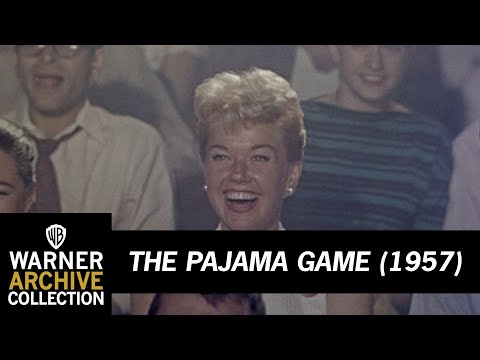
Sources: Wikipedia (musical overview & credits); IBDB (production dates/credits); Masterworks Broadway (album history & release); Tony Awards (1955 winners); production histories on Fosse’s “Steam Heat”; song background on “Hernando’s Hideaway”; contemporary critical capsules; Warner Archive trailer (visual reference).
November, 29th 2025
A-Z Lyrics Universe
Cynthia Erivo Popular
Ariana Grande Horsepower
Post Malone Ain't No Love in Oklahoma
Luke Combs Good Riddance (Time of Your Life)
Green Day Bye Bye Bye
*NSYNC You're the One That I Wan
John Travolta & Olivia Newton-John I Always Wanted a Brother
Braelyn Rankins, Theo Somolu, Kelvin Harrison Jr. and Aaron Pierre The Power of Love
Frankie Goes to Hollywood Beyond
Auli’i Cravalho feat. Rachel House MORE ›