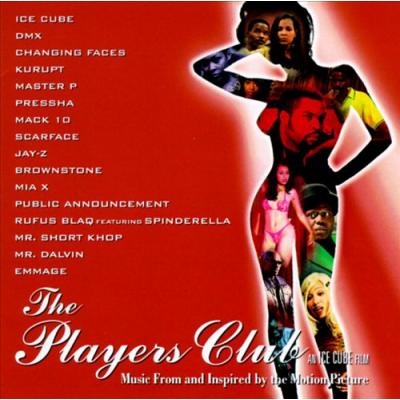
"The Players Club" Soundtrack Lyrics
Movie • 1998
Track Listing
Ice Cube
Ice Cube f/ DMX
Ice Cube f/ Mr. Short KHOP
Changing Faces
Kurupt the Kingpin (formerly of Tha Dogg Pound)
Master P and Ice Cube
Pressha
Mack 10 & Scarface
Jay-Z f/ M. Bleek, Sauce Money
Brownstone
Mia X
Public Announcement
Rufus Blaq f/ Spinderella
Ice Cube f/ Mr. Short Khop
Mr. Dalvin
Emmage f/ Mr. Short KHOP, Lil' Mo
"The Players Club: Music From and Inspired by the New Line Cinema Motion Picture (1998)" – Album Guide to Tracks and Key Scenes
Review
Can a club movie carry a conscience and still bang in the speakers? The Players Club walks that line: Ice Cube frames the grind of a South L.A. strip club with a mixtape of late-90s hip-hop and R&B while a lean original score keeps the drama taut. The album, released weeks before the movie, works like a street-level trailer — radio singles upfront, deep-cut R&B in the pocket, Cube’s own cuts anchoring the brand.
Onscreen, the music is mostly diegetic: a DJ, a house system, and cars idling in the lot. That choice matters; it grounds Diamond’s night-shift world in tracks you’d actually hear in 1998. Around the songs, a small, moody score by Frank Fitzpatrick/Hidden Faces (with David Tobocman) stitches scenes together — synth bass and noirish chords for back rooms, brighter textures for Diamond’s path out.
Genres & themes in phases: club rap & West Coast bounce — bravado and threat; sleek R&B — seduction and politics of attention; East Coast cameos — heat from outside the neighborhood; underscored tension — bills due, loyalties tested. It’s a snapshot of the era that doubles as narrative scaffolding.
How It Was Made
Soundtrack album: The Players Club: Music From and Inspired by the New Line Cinema Motion Picture dropped March 17, 1998 on Heavyweight/A&M — a compilation overseen by Ice Cube (executive producer) with contributions from Jay-Z, DMX, Kurupt, Changing Faces, Brownstone, Mack 10, Scarface, Master P and more. The set mixes cuts used in the film with “inspired by” material to broaden radio play.
Original score & music department: The film credits list Frank Fitzpatrick and his project Hidden Faces alongside David Tobocman as composers/primary music makers. Fitzpatrick also carried studio-side supervision duties for New Line on releases around this period, and his Hidden Faces imprint is documented across 1990s feature scores.

Tracks & Scenes
“We Be Clubbin’” (Ice Cube)
- Where it plays:
- Heard in marketing and used as a floor-igniter around club sequences — the hook and synth stabs match the strobe-cut energy of Diamond’s workplace. Non-diegetic in trailer; diegetic feel within in-club montage moments.
- Why it matters:
- Theme-as-branding: Cube’s single became the film’s calling card and the album’s lead.
“Money Can’t Buy You Love” (K-Ci & JoJo)
- Where it plays:
- Spins on the club system during a softer-tempo stretch — a contrast to the harder rap cues. Diegetic DJ source.
- Why it matters:
- Shows how R&B re-centers the room — courtship dynamics, different hustle.
“I Wanna Be Down” (Brandy)
- Where it plays:
- Used in the film’s music list for in-club ambience — a familiar 90s groove under conversations and movement. Diegetic source.
- Why it matters:
- Era-defining R&B texture that grounds scenes in a specific radio moment.
“Same Tempo” (Changing Faces)
- Where it plays:
- Album cut tied to the film’s world; heard in the club mix environment. Diegetic floor cue.
- Why it matters:
- Slinky groove that maps to the choreography of the room — dancers working the beat rather than over it.
“You Know I’m a Ho” (Master P & Ice Cube)
- Where it plays:
- Album track associated with the club’s rowdier sequences; drops as a hype-up during crowded nights. Diegetic DJ source.
- Why it matters:
- No-nonsense chant energy — it mirrors the movie’s rowdy side characters and escalating chaos.
“Who Are You Lovin’?” (Ice Cube feat. Mr. Short Khop)
- Where it plays:
- On the album and in the club’s general rotation; a mid-tempo swagger track that fits floor pacing. Diegetic feel.
- Why it matters:
- Cube’s presence across multiple cuts knits the compilation into the film’s authorial voice.
Score motifs (Frank Fitzpatrick / Hidden Faces; David Tobocman)
- Where they play:
- Between songs — locker-room conversations, office threats, and the post-club fallout. Short synth-led cues and guitar pads underline Diamond’s POV and Dollar Bill’s mounting pressures. Non-diegetic score.
- Why it matters:
- The score is small by design — a glue that keeps the jukebox from feeling episodic.
Also heard (film & credits — not all on the CD):
- “Shake Whatcha Mama Gave Ya” — a classic Miami bass/party-rap staple heard as floor energy.
- Additional contemporary R&B/rap snippets rotate via the club DJ; some appear only in the end-credit roll.
Notes & Trivia
- The album arrived March 17, 1998 — a few weeks before the film’s April release — and doubled as a radio compilation.
- Chart run: No. 10 on the Billboard 200; No. 2 on Top R&B/Hip-Hop Albums (U.S.).
- Composers credited on the film: Frank Fitzpatrick, his project Hidden Faces, and David Tobocman.
- New Line’s in-house/associate supervision touches are visible in credits — a typical 90s studio approach on urban-leaning soundtracks.
- “We Be Clubbin’” became a mini-franchise of its own (remixes with DMX; heavy rotation on music video channels).
Reception & Quotes
The movie drew mixed reviews but the album connected — a hook-heavy, radio-friendly set that still reads like 1998 in amber.
“A successful soundtrack… peaked at #10 on the Billboard 200 and #2 R&B/Hip-Hop.” — film/soundtrack overviews
“Cube’s ‘We Be Clubbin’’ branded the film as much as any poster could.” — retrospective notes
Availability: The 15-track album streams widely; physical CD and cassette issues circulated via Heavyweight/A&M.
Interesting Facts
- Diegetic design: Most songs are heard as if they’re actually playing in the club, not as outside narration — a choice that grounds the drama.
- Two lanes: The album mixes “from” and “inspired by” tracks, broadening radio reach while keeping club realism onscreen.
- Cube’s triple role: Director, star, and executive producer of the soundtrack — a 90s blueprint for brand-tied albums.
- Score as glue: Short, moody cues by Fitzpatrick/Hidden Faces and Tobocman keep the jukebox coherent between scenes.
- ’98 snapshot: The artist list doubles as a roll call of late-90s hip-hop/R&B crossovers.
Technical Info
- Title: The Players Club: Music From and Inspired by the New Line Cinema Motion Picture
- Year: 1998 (album); film released April 10, 1998
- Type: Film — compilation soundtrack (songs) + original score cues
- Label: Heavyweight Records / A&M Records
- Executive producer (album): Ice Cube
- Composers (film score): Frank Fitzpatrick; Hidden Faces; David Tobocman
- Selected placements (film/album): “We Be Clubbin’” (Ice Cube); “Money Can’t Buy You Love” (K-Ci & JoJo); “I Wanna Be Down” (Brandy); “Same Tempo” (Changing Faces); “You Know I’m a Ho” (Master P & Ice Cube)
- Chart peaks: US Billboard 200 — #10; Top R&B/Hip-Hop Albums — #2
Key Contributors
| Entity | Relation |
|---|---|
| Ice Cube | Director; Writer; Executive Producer (album); Performer |
| Frank Fitzpatrick / Hidden Faces | Composers; music department (film) |
| David Tobocman | Composer; music department (film) |
| Heavyweight Records; A&M Records | Soundtrack labels |
| New Line Cinema | Distributor (film) |
| Ghettobird Productions; Cube Vision | Production companies |
| Featured artists | Jay-Z; DMX; Kurupt; Changing Faces; Brownstone; Master P; Scarface; Mack 10; Mia X; Pressha; Public Announcement; Sauce Money; Memphis Bleek; Lil’ Mo; Dalvin DeGrate; DJ Spinderella |
Questions & Answers
- Is the soundtrack all songs from the film?
- No — it’s a mix of tracks heard in the club scenes and “inspired by” cuts designed for radio and retail.
- Who composed the score cues?
- Frank Fitzpatrick (via his project Hidden Faces) and David Tobocman are credited on the movie for original score/music duties.
- What was the lead single?
- Ice Cube’s “We Be Clubbin’,” issued ahead of the movie and used heavily in marketing.
- How did the album perform?
- It peaked at #10 on the Billboard 200 and #2 on Top R&B/Hip-Hop Albums in 1998.
- Where can I stream it?
- It’s available widely; the standard digital edition runs 15 tracks (about an hour).
Sources: film & soundtrack overviews; label/retail listings; composer/credit pages; chart histories; official trailer.
November, 29th 2025
A-Z Lyrics Universe
Cynthia Erivo Popular
Ariana Grande Horsepower
Post Malone Ain't No Love in Oklahoma
Luke Combs Good Riddance (Time of Your Life)
Green Day Bye Bye Bye
*NSYNC You're the One That I Wan
John Travolta & Olivia Newton-John I Always Wanted a Brother
Braelyn Rankins, Theo Somolu, Kelvin Harrison Jr. and Aaron Pierre The Power of Love
Frankie Goes to Hollywood Beyond
Auli’i Cravalho feat. Rachel House MORE ›