
"The Rescuers Down Under" Soundtrack Lyrics
Cartoon • 2002
Track Listing
"The Rescuers Down Under (Original Motion Picture Soundtrack — Bruce Broughton)" – Album Guide to Tracks and Key Scenes
Review
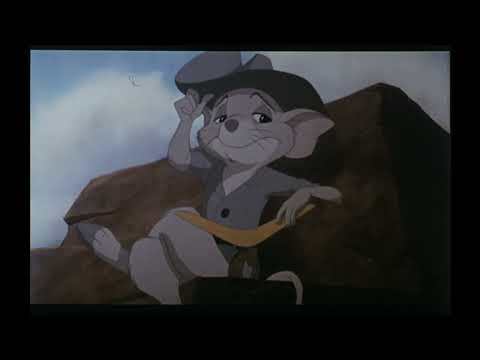
What happens when a Disney sequel ditches songs and lets the orchestra tell the story? The Rescuers Down Under answers with an unabashedly symphonic score by Bruce Broughton — kinetic, lyrical, and full of sky. The music flies first: sweeping eagle lines, racing ostinatos for chase scenes, and jewel-box woodwinds for the film’s tiny heroes, Bernard and Bianca.
This soundtrack plays like a single breath that keeps expanding. Broughton paints the Outback with bold primary colors — brass for cliffs and trucks, iridescent strings for Marahuté’s wings — then flips to comedy bounce for Wilbur the albatross and lizardy sneak-motifs for Joanna. No filler; just story energy. And because the film uses almost no diegetic songs, the album feels like an adventure suite that happens to have a movie attached.
Genres & themes in phases: widescreen orchestral adventure — courage and scale; scherzo comedy — Wilbur and gadget gags; suspense writing — poacher, trap, ticking rope bridge; tender pastoral — child–animal bond and quiet night skies. It’s Disney’s most purely symphonic 1990s ride.
How It Was Made
Composer/conductor: Bruce Broughton. The original score album streeted with the film in 1990; Disney later reissued a bonus-track edition in 2002, and collectors have since gotten an expanded program via specialty labels. Unlike the 1977 original, this sequel was conceived as a score-driven film — no new character songs, just orchestral storytelling.
Digital firsts: The movie itself was the first Disney feature finished entirely in a digital environment (CAPS), and the score mirrors that clarity — punchy recording, crisp dynamics, and a modern sheen for a classic symphonic language.

Tracks & Scenes
“Main Title” → “Answering Faloo’s Call”
- Where it plays:
- Logo, dawn over the Outback, and the bush kangaroo’s cry that kicks off the rescue network. Non-diegetic; opening minutes.
- Why it matters:
- States the adventure DNA: open-interval brass over rhythmic strings, then quick-cut scherzo relay energy.
“Cody’s Flight” (a.k.a. “Cody Rescues Marahuté/At the Nest”)
- Where it plays:
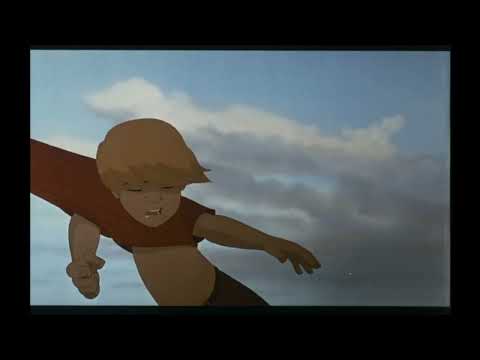
- Cody frees Marahuté and gets lifted into the clouds; the camera and harmony climb, then the music glides as boy and eagle skim waterfalls and thermals. Non-diegetic; early set-piece.
- Why it matters:
- The film’s musical heart: long-lined melody for wonder, with harp and high strings that feel like wind under feathers.
“McLeach’s Arrival” → “McLeach Threatens Cody”
- Where it plays:
- George C. Scott’s poacher rolls up in a growling truck; later corners Cody. Brass in low gear; percussion like bootheels. Non-diegetic; antagonist cues.
- Why it matters:
- Clear villain coding without a song — just grimy, propulsive harmony and sneering trombones.
“Message Montage”
- Where it plays:
- Global Rescue Aid Society relay from mouse to mouse to mouse. Whip-fast woodwinds, pizzicato strings, and comic interruptions. Non-diegetic montage.
- Why it matters:
- One cue, three jobs: world-build, time-skip, and wink at the first film’s anthem with a quoted phrase.
“At the Restaurant / See Wilbur / Wilbur Takes Off”
- Where it plays:
- New York handoff to Sydney: Bianca and Bernard enlist Wilbur (John Candy). The score toggles from urbane bustle to slapstick flight. Non-diegetic; mid-film.
- Why it matters:
- Comedy orchestration clinic — muted brass punchlines, bassoon grumbles, and a breathless takeoff crescendo.
“Launch the Back Brace”
- Where it plays:
- Wilbur meets a sadistic field-mouse “surgeon” — gag escalates to an action burst. Non-diegetic.
- Why it matters:
- Cartoon timing scored like chamber music: clean, zippy, and perfectly rim-shotted.
“The Landing” → “Big Time Hurt”
- Where it plays:
- Arrival in Australia ends with a crunch. Brass fanfare feints into slapstick sting. Non-diegetic.
- Why it matters:
- Adventure meets pratfall — the album preserves the laugh without the picture.
Finale cues (rope bridge rescue / “Peabody’s Arrival” / “End Credits”)
- Where it plays:
- The cliffside showdown tilts from pounding ostinato to triumphant release, then rolls into a glowing end-title suite. Non-diegetic; climax to credits.
- Why it matters:
- Classic Hollywood closure — themes return bigger, brighter, and perfectly paced for applause.
Notes & Trivia
- No new songs: Unusual for a Disney feature of the era — the movie is carried almost entirely by score.
- CAPS milestone: First Disney animated feature completed in a fully digital environment; the album’s clarity mirrors that leap.
- Album history: Original 1990 CD; a 2002 reissue added a few cues/bonuses; later specialty labels issued expanded programs for collectors.
- Motivic fun: “Message Montage” briefly quotes the earlier film’s “Rescue Aid Society” as a wink.
Reception & Quotes
Film-music circles hail Broughton’s writing here as top-tier adventure scoring — aerodynamic themes, razor editing, and heart.
“A thrilling, lyrical ride — one of Disney’s great all-score soundtracks.” — album roundups
“‘Cody’s Flight’ is pure cinema — you can feel the wind.” — fan retrospectives
Availability: The 2002 Walt Disney Records edition (17 tracks) streams widely; expanded editions circulate via specialty soundtrack labels for deeper cue coverage.
Interesting Facts
- 1990 film, 2002 album stamp: Many digital releases carry a 2002 date due to Disney’s reissue, which causes the most common date mix-up.
- Comedy orchestration: Bassoons and muted trumpets do as much “joking” as the dialogue in Wilbur’s scenes.
- Outback palette: Open-fifth brass voicings and wide string intervals paint big skies without cliché didgeridoo tropes.
- Continuity nod: A tiny musical salute connects back to 1977’s The Rescuers without stopping the plot.
- Collector favorite: Expanded editions restore “rope-bridge” suspense material and transitional scherzos missing from the early CD.
Technical Info
- Title: The Rescuers Down Under — Original Motion Picture Soundtrack
- Film Year: 1990 (album widely reissued 2002)
- Type: Animated feature — orchestral score
- Composer/Conductor: Bruce Broughton
- Label(s): Walt Disney Records (1990; 2002 bonus-track reissue); later expanded editions via specialty labels
- Selected notable placements: “Cody’s Flight” (eagle aerial); “Message Montage” (global relay); “McLeach’s Arrival/Threatens Cody” (villain motif); “Wilbur Takes Off/Launch the Back Brace” (comedy set-piece); Finale/End Titles
- Production note: First Disney animated feature completed end-to-end in a digital pipeline (CAPS)
Key Contributors
| Entity | Relation |
|---|---|
| Bruce Broughton | Composer & conductor — original score |
| Walt Disney Pictures / Walt Disney Feature Animation | Studio & production |
| Hendel Butoy; Mike Gabriel | Directors — shaped music placement and tone |
| Rescue Aid Society (fictional) | Motif source — quoted phrase from the 1977 anthem in “Message Montage” |
| Walt Disney Records | Label — 1990 release; 2002 bonus-track reissue |
Questions & Answers
- Wait — is this a 2002 soundtrack?
- The film is from 1990. Many streaming copies show a 2002 date because Disney reissued the album that year with bonus material.
- Are there any character songs?
- No. Unlike most Disney features of the era, this sequel is carried almost entirely by Broughton’s orchestral score.
- What’s the big flying music cue called?
- Often listed as “Cody’s Flight” (or “Cody Rescues Marahuté/At the Nest”) — it scores the soaring eagle sequence.
- Where can I hear the complete score?
- Disney’s 2002 edition covers the highlights; specialty-label expanded releases add many film cues for collectors.
- Is this the first fully digital Disney feature?
- Yes — the movie was the first Disney animated feature assembled completely in a digital environment (CAPS), a landmark noted in histories of the film.
Sources: Disney/YouTube trailer; film page (music & CAPS milestone); Disney Wiki soundtrack page (1990 release & 2002 reissue); Apple Music listing (2002 bonus-track edition); Discogs & retail listings (track names/expanded issues); specialty soundtrack page (expanded cue titles).
November, 29th 2025
A-Z Lyrics Universe
Cynthia Erivo Popular
Ariana Grande Horsepower
Post Malone Ain't No Love in Oklahoma
Luke Combs Good Riddance (Time of Your Life)
Green Day Bye Bye Bye
*NSYNC You're the One That I Wan
John Travolta & Olivia Newton-John I Always Wanted a Brother
Braelyn Rankins, Theo Somolu, Kelvin Harrison Jr. and Aaron Pierre The Power of Love
Frankie Goes to Hollywood Beyond
Auli’i Cravalho feat. Rachel House MORE ›