
"The Rover" Soundtrack Lyrics
Movie • 2014
Track Listing
Savy Heng and James Cecil
Gabby La La
Colin Stetson
Colin Stetson
Colin Stetson
Colin Stetson
Robert Black
Colin Stetson
The Ink Spots
William Basinski
Tortoise
Tortoise
Pattie Rosemon with Frank & Odie Rosemon
Keri Hilson
Sam Petty
Matthias Loibner
Sam Petty
"The Rover (Original Motion Picture Soundtrack)" – Album Guide to Tracks and Key Scenes
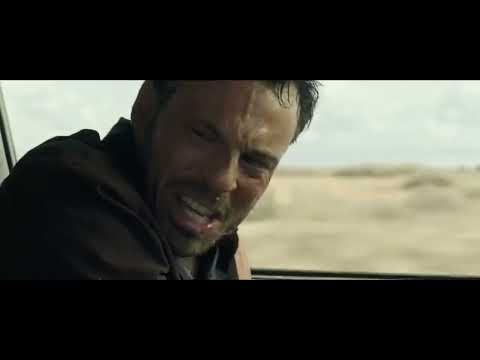
Review
How do you score a world that’s run out of mercy? The Rover answers with abrasion and ache — Antony Partos’s original score welded to found textures, post-rock pulsations, and the desolate beauty of Colin Stetson’s sax drones. The album (Lakeshore Records) feels less like cues than a heat mirage: metallic scrapes, sandblasted harmonics, and sudden oases of melody that vanish when you reach for them.
Michôd’s film barely speaks; the soundtrack does. Bass rumbles and clattering percussion track Eric’s hunt; wire-tense strings and hurdy-gurdy harmonics trace Rey’s fragile decency; and then, out of nowhere, a candy-sweet pop song detonates a scene with cruel irony. It’s a collage that never loses the through-line — survival, stripped to bone.
Genres & themes in phases: post-industrial drone — moral vacuum; post-rock/minimalism — stasis, dread; folk-adjacent timbres (hurdy-gurdy/whistle) — human trace; vintage pop — irony and heartbreak; ambient decay — memory like heat shimmer.
How It Was Made
Score & sound: Antony Partos composed and produced the score; sound designer/composer Sam Petty curated additional music and collaborated closely on the film’s “music–sound” continuum. The album mixes original cues with selections by Colin Stetson, William Basinski, Matthias Loibner, and Tortoise. Lakeshore Records released it digitally on Oct 10, 2014 (physical Nov 14).
Approach: Partos and Petty built a palette of manipulated low strings, baritone registers pitched into alien highs, Irish whistle, and “bastardized” violins recorded one by one — intimate, lonely, and slightly unreal. Michôd originally temped with Stetson/Basinski; several of those pieces remained, stitched into the score’s fabric.
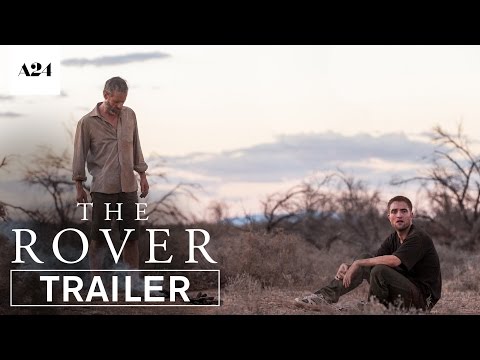
Tracks & Scenes
“Arrival” (Antony Partos)
- Where it plays:
- Early, as Eric’s pursuit starts to narrow — the cue grinds like a stalled engine, all low resonance and scraped metal. Non-diegetic score.
- Why it matters:
- Establishes the film’s musical grammar: texture first, melody as a mirage.
“(No) Vacancy” (Sam Petty)
- Where it plays:
- Roadside encounter sequences and empty-room interludes; a rhythmic tremor under fluorescent light. Non-diegetic score.
- Why it matters:
- Petty’s contribution sits between music and sound design — the film’s pulse without a drum kit.
“Campfire” (Antony Partos)
- Where it plays:
- A wary, low-flame respite as Eric and Rey recalibrate by firelight. Non-diegetic; mid-film.
- Why it matters:
- A rare exhale — harmony creeps in, hinting at the uneasy bond that’s forming.
“Two Themes for Rey” (Sam Petty, Thom Kellar)
- Where it plays:
- Character pivots for Rey — the sound turns more human even as danger closes. Non-diegetic.
- Why it matters:
- Gives Rey musical dignity; it’s small, bruised, but sincere.
“Four-Day Interval” / “Djed” (Tortoise)
- Where it plays:
- Used as source/needle-drops to warp time between waypoints; the motorik glide underlines long, empty mileage. Mostly non-diegetic montage energy.
- Why it matters:
- Post-rock drift that makes the Outback feel endless — and indifferent.
“Variation V / VI” (William Basinski)
- Where it plays:
- Decaying loops in reflective stretches — a memory fog over violence. Non-diegetic.
- Why it matters:
- Basinski’s erosion aesthetic dovetails with the film’s moral erosion.
“Time Is Advancing with Fitful Irregularity” / “As a Bird or Branch” / “Awake on Foreign Shores” (Colin Stetson)
- Where it plays:
- Intense road and standoff passages; circular-breathing sax turns into machinery and wind. Non-diegetic.
- Why it matters:
- Stetson’s physical sound makes the desert feel pressurized.
“Do I Worry?” (The Ink Spots)
- Where it plays:
- Vintage croon on a radio during a lull — the vinyl hiss softens the edges for a moment. Diegetic source.
- Why it matters:
- Old-world tenderness crashing into a cruel present — the film’s black-comic streak in three minutes.
“Pretty Girl Rock” (Keri Hilson)
- Where it plays:
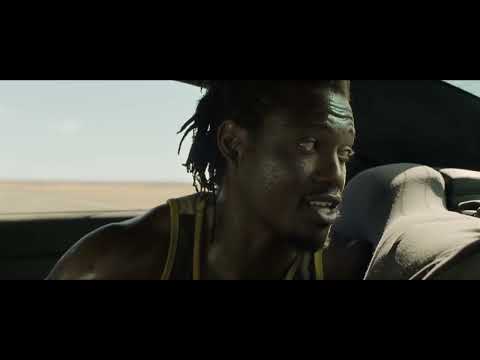
- Rey sings along, off-key but full-hearted, in a moving car — a jolt of pop sugar in a wasteland. Diegetic sing-along.
- Why it matters:
- The movie’s most famous needle-drop: it humanizes Rey and undercuts the machismo around him.
Also heard / not on every album edition:
- “I Heard the Voice of Jesus Say” — Pattie Rosemon with Frank & Odie Rosemon (gospel source).
- “Meak Mer Nov Odor Meanchhey” — Savy Heng & James Cecil (Cambodian pop).
- “Ko-Tha — Three Dances of Shiva (I)” — Robert Black (double-bass transcription).
- Trailer song: “Gone” — Clearside (first trailer).
Notes & Trivia
- Lakeshore released the soundtrack months after the U.S. theatrical run (digital Oct 10, 2014; physical Nov 14).
- AACTA nominations: Best Original Music Score (Antony Partos) and Best Sound; the film’s sound team won the latter.
- Michôd reportedly considered the Pussycat Dolls’ “Don’t Cha” for the car sing-along before landing on “Pretty Girl Rock.”
- The album is credited to Various Artists; Partos produced and anchors the program.
Reception & Quotes
Critics singled out the soundscape — abrasive, strange, and weirdly beautiful — as crucial to the film’s spell.
“Immeasurably enhances the mood… an inspired mix of shrieks, drumbeats, and fleeting melody.” — Variety
“Probably the most effectively eccentric score since There Will Be Blood.” — Hollywood Reporter
Availability: Standard digital edition (14 tracks) on major platforms; physical CD followed. Some pieces heard in the film (gospel/Ink Spots/Cambodian pop) are not on every retail edition.
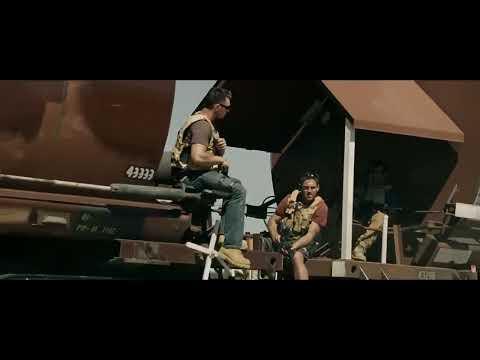
Interesting Facts
- Score–sound blur: Petty’s sound design is intercut with Partos’s cues so tightly that the boundary often dissolves.
- Post-rock spine: Tortoise’s long-form grooves (“Djed”) quietly knit the journey’s in-between miles.
- Loop decay: Basinski’s Variations echo the film’s moral rot — beauty, fraying at the edges.
- Hurdy-gurdy! Matthias Loibner’s timbre adds a medieval ghost to this near-future ruin.
- Trailer misdirection: Clearside’s “Gone” appears in marketing, not in the main album sequence.
Technical Info
- Title: The Rover — Original Motion Picture Soundtrack
- Year: 2014 (album release Oct 10 digital / Nov 14 physical)
- Type: Film soundtrack — score & compiled source selections
- Composer/Producer: Antony Partos (score/album producer)
- Additional music/curation: Sam Petty; selections by Colin Stetson, William Basinski, Matthias Loibner, Tortoise
- Label: Lakeshore Records
- Accolades: AACTA nominee — Best Original Music Score; Best Sound (won, ensemble)
- Selected placements: “Arrival,” “(No) Vacancy,” “Campfire,” “Two Themes for Rey,” “Four-Day Interval,” “Djed,” “Pretty Girl Rock,” “Do I Worry?”
Key Contributors
| Entity | Relation |
|---|---|
| David Michôd | Director — set the music/sound brief |
| Antony Partos | Composer & album producer — original score |
| Sam Petty | Sound designer/additional composer; curated source music |
| Colin Stetson; William Basinski | Featured composers/performers — source selections retained in film |
| Matthias Loibner | Hurdy-gurdy — featured track |
| Tortoise | Post-rock band — key needle-drops |
| Lakeshore Records | Label — released the soundtrack |
| A24 | U.S. distributor — trailer & marketing |
Questions & Answers
- Who composed the score for The Rover?
- Antony Partos. The album also includes curated pieces by Sam Petty and tracks from Colin Stetson, William Basinski, Matthias Loibner, and Tortoise.
- When did the soundtrack come out?
- Lakeshore released it digitally on Oct 10, 2014; the physical CD followed on Nov 14, 2014.
- Is the car sing-along on the album?
- The needle-drop is Keri Hilson’s “Pretty Girl Rock.” It’s referenced in official listings, though not on every retail edition.
- What’s the trailer song?
- “Gone” by Clearside appears in the first trailer; it’s not part of the core score program.
- Did the score receive awards attention?
- Yes — AACTA nomination for Best Original Music Score; the film’s sound department won Best Sound.
Sources: Wikipedia soundtrack & development notes; Apple Music & Spotify listings (Lakeshore release, track program); Discogs (CD issue, dates); IndieWire/The Playlist preview of included tracks; IMDb Soundtracks (additional music); A24 official trailer; fan/press pieces noting the Ink Spots cue and trailer song.
17 songs included in the collection, which does not please us at all. The reason for that – only 9 of them are not instrumental and those that left were created in the genre of cacophony (Time is Advancing with Fitful Irregularity), a home video (Backpack) or blues (Do I Worry?). Other genres, such as, gospel – are abhorrent at the quality. There are no artists with big names. All instrumental melodies performed by Colin Stetson, which is also kind of not really well-known. Performer of the opening song in the collection used for her stage name the acronym (changeling) from the name of Lady Ga Ga – Gabby La La. One-to-one for those who like such non-random coincidences. And yet it is said that one performer that borrowed the name has not a bit of imagination. What is interesting about the movie? Perhaps, nothing special, except for the game of actors who are trying to protect their property, surviving in a post-apocalyptic world. According to the story, the entire global economic system collapsed 10 years ago. Survivors try to make ends meet somehow in this world, relying on the power of the fist and weapons. In fact, no rules remained, except the right of the strongest. This is a real anti-fairy tale for those who believe that, after all factors that lead to the destruction of humanity, the survivors still will give a damn about the rules and principles. Sometime in the past scientists even conducted secret experiments showing that before the man rolled to the level of bestial degradation amazingly little time passes. All civilizational plaque disappears in a few days or even hours if you really want to survive. The world depicted on screen, perhaps, the most approximate to the one that can expect all of us.November, 29th 2025
Movie profile on IMDb, Rotten TomatoesA-Z Lyrics Universe
Cynthia Erivo Popular
Ariana Grande Horsepower
Post Malone Ain't No Love in Oklahoma
Luke Combs Good Riddance (Time of Your Life)
Green Day Bye Bye Bye
*NSYNC You're the One That I Wan
John Travolta & Olivia Newton-John I Always Wanted a Brother
Braelyn Rankins, Theo Somolu, Kelvin Harrison Jr. and Aaron Pierre The Power of Love
Frankie Goes to Hollywood Beyond
Auli’i Cravalho feat. Rachel House MORE ›