
"The Royal Tenenbaums" Soundtrack Lyrics
Movie • 2002
Track Listing
Mark Mothersbaugh
Nico
Ysaye Quartet
Paul Simon
The Mutato Muzika Orchestra
Bob Dylan
Mark Mothersbaugh
John Lennon
Emitt Rhodes
Mark Mothersbaugh
The Clash
Mark Mothersbaugh
Ramones
Mark Mothersbaugh
Elliott Smith
Nick Drake
Mark Mothersbaugh
Vince Guaraldi Trio
The Velvet Underground
Mark Mothersbaugh
Mark Mothersbaugh
Nico
The Mutato Muzika Orchestra
“The Royal Tenenbaums (Original Soundtrack)” – Album Guide to Tracks and Key Scenes
Review
What happens when immaculate whimsy meets bruised adult heartbreak? Wes Anderson’s The Royal Tenenbaums answers with a mixtape that is equal parts sigh and smirk — Mark Mothersbaugh’s clockwork score threaded with 60s–70s gems that feel like they were waiting decades for these frames.
The film follows a clan of faded prodigies circling their charming, unreliable patriarch. The soundtrack becomes their shared diary. Nico’s dolorous voice ushers in a bus-stop reunion that freezes time; Elliott Smith’s whisper turns a bright bathroom into an airless confession; Paul Simon, The Velvet Underground, The Clash, Nick Drake, Emitt Rhodes, and more lend color to grief, backsliding, and tentative repair. Unlike needle-drops that wink at the audience, these cues often keep secrets — saying what the characters won’t.
Styles map neatly to theme across the film’s phases: baroque pop and chamber cues — surface poise, repressed longing; psych-folk and singer-songwriter cuts — vulnerability cracking through; punk/reggae jolts — relapse and acting out; Mothersbaugh’s playful motifs — the family’s brittle rituals trying to hold.
How It Was Made
Anderson and longtime music supervisor Randall Poster curated many syncs early in scripting, designing scenes to songs rather than dropping tracks late in post. Mothersbaugh’s score (via Mutato Muzika) bridges chapters with toy-box precision — canons, minuets, and sly pastiche, plus a Mutato studio “Hey Jude” that lets the film have Beatles DNA without licensing the original mix. The commercial soundtrack complicated matters: a 2001 edition omitted several high-profile cues (notably two Rolling Stones tracks and Van Morrison’s end-credits “Everyone”), and a 2002 reissue restored some missing pieces like Paul Simon’s “Me and Julio Down by the Schoolyard” and John Lennon’s “Look at Me.”

Tracks & Scenes
“These Days” (Nico)
- Where it plays:
- Bus station reunion. Margot steps off the bus in slow motion, Richie’s gaze locked as she glides through steam and traffic; the camera holds a hush as time dilates. Non-diegetic; early-mid film.
- Why it matters:
- Instantly codes their unspoken history — melancholy, longing, and the ache of lost time — and establishes the soundtrack’s reflective pulse.
“Needle in the Hay” (Elliott Smith)
- Where it plays:
- Richie’s bathroom breakdown: he trims his hair and beard, then attempts suicide; the sound mix collapses to the song alone as blue light drains the room. Non-diegetic; mid-film.
- Why it matters:
- A devastating character hinge. Smith’s hushed, serrated strum reframes Anderson’s symmetry as a mask for pain.
“Me and Julio Down by the Schoolyard” (Paul Simon)
- Where it plays:
- Royal’s chaotic “bonding” montage: he leads Chas’s sons on city misadventures — running, stealing rides, dodging trouble — as their guarded smiles thaw. Non-diegetic; later-mid film.
- Why it matters:
- Cuts through the family stalemate with kinetic warmth; it’s the first time the movie lets joy breathe.
“Stephanie Says” (The Velvet Underground)
- Where it plays:
- A drifting, memory-clouded passage that tracks Richie and Margot’s quiet orbit — rooftop talks, soft dissolves, wistful looks. Non-diegetic; late-mid film.
- Why it matters:
- Lou Reed’s delicate melancholy doubles the film’s theme: naming a feeling you can’t quite live out loud.
“Look at Me” (John Lennon)
- Where it plays:
- Chas tucks in his boys during their first night back at 111 Archer Avenue; the house hums with old ghosts, new rules, and a father’s raw vigilance. Non-diegetic; early-mid film.
- Why it matters:
- Lennon’s fingerpicked intimacy mirrors Chas’s grief and control — tenderness wrapped in anxiety.
“Police & Thieves” (The Clash)
- Where it plays:
- A street-level exhale after family fireworks; Eli Cash drifts through, a little too famous and a little too lost. Non-diegetic; mid-film.
- Why it matters:
- Reggae-punk cool underscores the film’s delinquent edges and Eli’s self-mythology.
“Fly” (Nick Drake)
- Where it plays:
- Quiet interstitial of Richie reflecting — letters, sketches, sea-glow memories from the ship. Non-diegetic; mid-film.
- Why it matters:
- Drake’s feather-light orchestration makes room for grace; it’s the film’s softest lifeline.
“Lullaby” (Emitt Rhodes)
- Where it plays:
- Domestic reset beats inside the brownstone; lights low, rituals resumed. Non-diegetic; later-mid film.
- Why it matters:
- Homespun McCartney-esque balm; the Tenenbaums try normal.
“Judy Is a Punk” (Ramones)
- Where it plays:
- A brash punch-in around a jag of impulsive energy — a comic-chaotic beat that cuts across the film’s tidiness. Non-diegetic.
- Why it matters:
- Lets the movie yell for a second; a reminder that this family’s damages don’t always whisper.
“Wigwam” (Bob Dylan)
- Where it plays:
- A transitional cue for Royal, post-con; brass swells over sheepish apologies and small, ridiculous schemes. Non-diegetic.
- Why it matters:
- Its wordless moan gives Royal’s bluster a melancholy halo — all performance, some truth.
“She Smiled Sweetly” → “Ruby Tuesday” (The Rolling Stones)
- Where it plays:
- Margot drops the needle; the two songs play back-to-back in-world as she and Richie sit with a feeling they cannot name. Diegetic hand-off, late film.
- Why it matters:
- It’s the film’s quiet confession scene, scored by baroque-pop ache — love as a secret language.
“Everyone” (Van Morrison)
- Where it plays:
- Closing shot into end credits — a processional of reconciled faces and modest grace notes. Non-diegetic; final moments.
- Why it matters:
- A curtain call of hope — the family doesn’t fix itself; it softens.
Score cues (Mark Mothersbaugh) — “Mothersbaugh’s Canon,” “Sparkplug Minuet,” “Pagoda’s Theme,” “111 Archer Avenue.”
- Where it plays:
- Chapter headings, title cards, and connective tissue — ticking percussion, winds, and toy-box textures carry us between stanzas of the story.
- Why it matters:
- These cues give Anderson’s diorama rhythm — the metronome that lets the needle-drops land as emotion, not gimmick.
Notes & Trivia
- The film had two soundtrack releases; the 2002 edition adds Paul Simon and Lennon but still omits the Rolling Stones and Van Morrison cuts.
- Beatles licensing: the film uses a Mutato Muzika studio performance of “Hey Jude” in place of the original master.
- “These Days” and “Stephanie Says” bookend the film’s bittersweetness; both evoke 60s New York melancholy that mirrors the brownstone mythos.
- Anderson and Poster reportedly chose most songs before shooting, staging scenes to match tempo and mood rather than cutting to fit later.
- “Needle in the Hay” has become a canonical modern needle-drop — frequently cited in lists of the most affecting music cues in film.
Reception & Quotes
Critics praised the curation’s emotional intelligence — a step beyond Rushmore’s teen angst to adult regret. Some noted the punk/reggae blasts feel purposely abrasive beside the chamber-pop core. Fans still debate which edition of the soundtrack best represents the film.
“A blend of modern-classical sparkle and crate-dug 60s/70s melancholy; the score quietly steals the album.” — contemporary review
“Nico at the bus stop; Elliott Smith in the bathroom — two perfect images of longing and collapse.” — feature essay
“The Stones two-fer functions like a confession you hear through a wall.” — music column
“Poster and Anderson pick with a novelist’s ear; these songs live with the characters.” — retrospective
Interesting Facts
- Two-version album: 2001 release vs. 2002 reissue; track lists differ meaningfully.
- Rolling Stones on screen, not on disc: “She Smiled Sweetly” and “Ruby Tuesday” appear in the film but not on either album edition.
- End-credits outlier: Van Morrison’s “Everyone” closes the film but is absent from the OST.
- Mutato “Hey Jude”: a bespoke in-film cover solves Beatles licensing, keeps the emotional color.
- Score promo: a limited Oscar promo CD circulated with additional Mothersbaugh cues.
Technical Info
- Title: The Royal Tenenbaums (Original Soundtrack)
- Year: 2001 (original release); 2002 (re-release)
- Type: Film soundtrack (various artists + original score)
- Composers: Mark Mothersbaugh (original score)
- Music supervision: Randall Poster
- Selected notable placements: Nico “These Days”; Elliott Smith “Needle in the Hay”; Paul Simon “Me and Julio Down by the Schoolyard”; The Velvet Underground “Stephanie Says”; John Lennon “Look at Me”; Rolling Stones “She Smiled Sweetly”/“Ruby Tuesday” (film-only); Van Morrison “Everyone” (end credits, film-only)
- Release context: US film release 2001; soundtrack issued by Hollywood Records; reissue followed in 2002
- Label/album status: Hollywood Records (compilation); differing track lists across editions
- Availability: Digital streaming editions reflect the reissue sequencing; Stones and Van Morrison placements remain film-only.
Questions & Answers
- Why are some songs in the movie missing from the soundtrack album?
- Licensing and repertoire policies (notably for the Rolling Stones and the closing Van Morrison cue) prevented inclusion on the commercial releases.
- Was the music chosen after the edit?
- Mostly no — Anderson and Poster are known for locking songs early so scenes can be choreographed to them.
- What’s the most discussed needle-drop?
- Richie’s bathroom sequence with Elliott Smith’s “Needle in the Hay,” often cited as one of Anderson’s most devastating uses of music.
- Which edition of the OST should I stream?
- The 2002 re-release restores Paul Simon and John Lennon and better mirrors the film (still missing Stones and Van Morrison).
- Is there a Beatles song in the film?
- Not the original master — a Mutato Muzika in-film performance of “Hey Jude” stands in and fits the movie’s tone.
Key Contributors
| Entity | Relation |
|---|---|
| Wes Anderson | Director — shaped scenes around preselected songs |
| Randall Poster | Music Supervisor — sourced and cleared pre-existing tracks |
| Mark Mothersbaugh | Composer — original score and Mutato Muzika arrangements |
| Mutato Muzika Orchestra | Performer — in-film “Hey Jude” and chamber arrangements |
| Nico | Performer — “These Days,” “The Fairest of the Seasons” |
| Elliott Smith | Performer — “Needle in the Hay” (bathroom scene) |
| Paul Simon | Performer — “Me and Julio Down by the Schoolyard” (montage) |
| The Velvet Underground | Performer — “Stephanie Says” |
| John Lennon | Performer — “Look at Me” |
| The Rolling Stones | Performers — “She Smiled Sweetly,” “Ruby Tuesday” (film-only) |
| Van Morrison | Performer — “Everyone” (end credits, film-only) |
| Hollywood Records | Label — issued 2001 OST and 2002 re-release |
| New York City locations | Setting — 111 Archer Avenue brownstone as musical “stage” |
Sources: IMDb Soundtracks; Wikipedia (Soundtrack & songs); Pitchfork review & feature; WhatSong listing; British GQ; TIME; American Songwriter; artist/label notes and archival features.
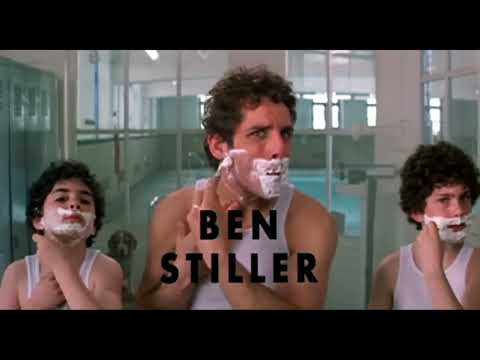
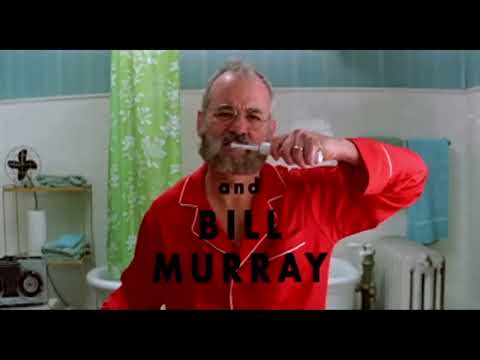
Interesting comedy from 2001, bizarre and peculiar – it can really be characterised with these two words from its trailer. We would also add ‘hilarious’ – as the best comedians star in it. Gene Hackman (retired from acting in 2004), Bill Murray, Gwyneth Paltrow, Ben Stiller, brothers Luke Wilson and Owen Wilson (Ben Stiller eventually became friends only with one of them – Owen), Danny Glover and Alec Baldwin – a hell of a team, yeah? Royal Tenenbaum is the name of a person, depicted by Gene Hackman. He is funny and disgusting, his family hates him and he has, according to the plot, only 6 weeks to reconcile with every his hater, as he wants to leave this world with pure consciousness. Many old-years stars like John Lennon and The Ramones embellish the soundtrack to the film. Lennon’s fantastical Look At Me expresses sorrow and disappointment, despite very uncomplicated lyrics. His voice under the guitar sound is everything that could be said about the grief of the protagonist. The Velvet Underground’s Stephanie Says is almost a lullaby from the first seconds. Tranquil sounds of xylophone and violins coupled with the same calm voices can characterize the mood of the protagonist closer to an end of the movie, when he had reconciled with everyone and, in the first place, with himself. 2:46 of pure tranquilization from the lyrics and the melody. Ramones gave totally rabid rock in their Judy Is A Punk. Nothing remarkable in its lyrics, it is just about two plain persons, a girl and a guy, who will do nothing in their lives and will only die. It is to underline the inevitability of faith of the main hero, who is the same plain person, but he managed to bring up three enormously successful children. What we will bring out of this movie is an understanding of the finiteness of all things.November, 29th 2025
A-Z Lyrics Universe
Cynthia Erivo Popular
Ariana Grande Horsepower
Post Malone Ain't No Love in Oklahoma
Luke Combs Good Riddance (Time of Your Life)
Green Day Bye Bye Bye
*NSYNC You're the One That I Wan
John Travolta & Olivia Newton-John I Always Wanted a Brother
Braelyn Rankins, Theo Somolu, Kelvin Harrison Jr. and Aaron Pierre The Power of Love
Frankie Goes to Hollywood Beyond
Auli’i Cravalho feat. Rachel House MORE ›