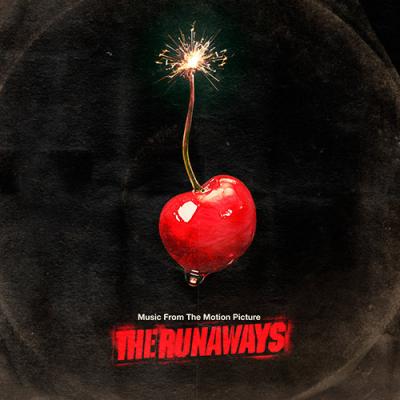
"The Runaways" Soundtrack Lyrics
Movie • 2010
Track Listing
Nick Gilder
Suzi Quatro
MC5
David Bowie
Dakota Fanning
The Runaways
Dakota Fanning
The Runaways
Dakota Fanning & Kristen Stewart
Kristen Stewart & Dakota Fanning
The Stooges
The Runaways
Sex Pistols
Joan Jett
“The Runaways (Music From the Motion Picture)” – Album Guide to Tracks and Key Scenes
Review
What does rock ’n’ roll sound like when you’re fifteen and furious? The Runaways answers with glitter on the floor and feedback in your teeth — a mixtape of glam, proto-punk and radio poison that grows up as fast as its heroines. The album isn’t a greatest-hits victory lap; it’s a character study told through other people’s anthems and the band’s own, with cast re-recordings daring you to hear the legend forming in real time.
Floria Sigismondi’s film keeps the story close to Joan Jett and Cherie Currie, so the soundtrack leans into their obsessions: Bowie as mirror and map; Suzi Quatro as dare; MC5 and the Stooges as permission slip; and, of course, Runaways cuts that throb with adolescent danger. By the time “Cherry Bomb” detonates, the cues have done the heavy lifting — glam sheen masking an industry that will chew these girls up.
Genres-to-themes, in phases: glitter & glam — possibility and pose; Detroit proto-punk — swagger and transgression; teen-idol pop glare — exploitation and image; cast-performed Runaways cuts — the messy, beating heart; later Jett cuts — survival and reinvention. The arc lands because the songs aren’t wallpaper; they argue with the scenes.
How It Was Made
The commercial album, released by Atlantic in March 2010, is a 14-track companion that stitches originals (Runaways, Bowie, MC5, the Stooges, Sex Pistols) to newly recorded vocals by the leads — Dakota Fanning and Kristen Stewart — on key Runaways numbers. The film itself crams in roughly 34 credited songs; the album cherry-picks highlights rather than attempting a document dump. There’s no traditional orchestral score; instead, a lean original score was composed by Lillian Berlin (a.k.a. Lawrence Rothman), whose raw textures thread between diegetic performances and needle-drops.
Music supervision centered on period accuracy and band DNA — Bowie for Cherie’s self-creation, Suzi Quatro for Joan’s blueprint, Detroit noise as attitude kit. The record was issued across regions with Atlantic/WEA credits and ties to Blackheart (Jett’s label) on packaging, reflecting the artists’ direct involvement in the project and rights landscape.
Tracks & Scenes
“Roxy Roller” (Nick Gilder)
- Where it plays:
- Opens the movie with a strut — Los Angeles sidewalks, a camera in love with eyeliner and neon. It cues the film’s glam attitude before characters even speak.
- Why it matters:
- Planting a flag: glitter rock as permission for girls to swagger.
“The Wild One” (Suzi Quatro) → acoustic reprise (Kristen Stewart as Joan)
- Where it plays:
- Credits sprint with Quatro’s studio version; later, Joan idly picks the tune against a chain-link fence, small and stubborn — the aspiration becoming muscle memory.
- Why it matters:
- Quatro is the north star; Joan’s quiet reprise makes the idol human and reachable.
“Lady Grinning Soul” (David Bowie)
- Where it plays:
- Cherie’s high-school talent show lip-sync. She sculpts herself into Bowie’s Aladdin Sane glamour while hecklers jeer; she wins anyway — the film’s first act of self-invention.
- Why it matters:
- Bowie isn’t background — he’s the operating system for Cherie’s persona.
“Cherry Bomb” (Dakota Fanning — as Cherie; written on the spot)
- Where it plays:
- Kim Fowley needs a song; Joan and Kim bash one out in a trailer-park rehearsal, then Cherie auditions with it — trembling, electric, suddenly undeniable.
- Why it matters:
- The band’s birth on camera; the cast vocal underlines the film’s you-are-there ethos.
“It’s a Man’s Man’s Man’s World” (MC5)
- Where it plays:
- Early montage of scuzzy clubs and formative rehearsals; the Detroit snarl reframes the girls’ project as a jailbreak from rock’s boys’ club.
- Why it matters:
- Proto-punk irony — title as taunt, performance as rebuttal.
“I Wanna Be Your Dog” (The Stooges)
- Where it plays:
- Grimy club interludes, amps pushed into the red. The cue bleeds into chaos training as Fowley weaponizes noise and humiliation to toughen the band on stage.
- Why it matters:
- Shows the film’s thesis: punk as armor and theatre.
“Fujiyama Mama” (Wanda Jackson)
- Where it plays:
- Record-store/rockabilly beat; an Americana shard inside a glam diary — a wink at the group’s later Japan mania.
- Why it matters:
- Roots music slips into a story about invention — continuity with the past even as they torch it.
“Queens of Noise” (Dakota Fanning & Kristen Stewart)
- Where it plays:
- Tour montage at full roar. Hotel corridors and stage strobes blur; the band moves like a single organism — until fame starts picking favorites.
- Why it matters:
- A victory lap scored as warning — success is centrifugal.
“Dead End Justice” (Dakota Fanning & Kristen Stewart)
- Where it plays:
- Jail-themed stage number, performed in leather and spotlights; the fantasy of delinquency collides with the reality of scrutiny and burnout.
- Why it matters:
- Meta-text: their outlaw act is a costume — and a cage.
“Rebel Rebel” (David Bowie)
- Where it plays:
- Catwalk-swagger montage as the band’s image machine spins up — magazine covers, smirking press, mirror poses that start to crack.
- Why it matters:
- Glam as both fuel and funhouse mirror; the riff becomes prophecy.
“I Love Rock ’n’ Roll” / “Crimson and Clover” / “Bad Reputation” (Joan Jett & the Blackhearts)
- Where it plays:
- In the film’s coda, Cherie hears Joan’s post-Runaways breakthrough on the radio from her bakery job; “Crimson and Clover” rolls after a brief call-in. It’s an epilogue in needle-drops.
- Why it matters:
- Closes the character arcs with real-world outcomes — survival scored by hits that the movie earns.
“You Drive Me Wild,” “California Paradise,” “Hollywood” (The Runaways / cast versions)
- Where it plays:
- Rehearsals, small gigs, and studio days — sweat, eye-contact, and the first taste of volume the girls can control.
- Why it matters:
- Binds biography to performance; the cast cuts collapse distance between actors and band.
Notes & Trivia
- The film licenses ~34 songs; the retail album includes 14. Many on-screen cues (e.g., Bowie’s “Lady Grinning Soul,” Wanda Jackson’s “Fujiyama Mama,” several Blackhearts tracks) are film-only.
- Lillian Berlin (the name Lawrence Rothman used in that era) composed the film’s original score textures; there’s no traditional orchestral “score album.”
- Atlantic/WEA issued regional variants; packaging often nods to Blackheart Records given Jett’s executive-producer role.
- Cast recordings — especially “Cherry Bomb,” “Queens of Noise,” and “Dead End Justice” — are integral to the movie’s lived-in feel.
- Suzi Quatro’s influence is dramatized twice: her record blares over the credits, then Joan casually re-picks it, characterizing her stubbornness.
Reception & Quotes
Reviews called the film “as electric as the band’s music,” praising the performances and the sonic curation, while noting it’s more a coming-of-age riff than completist biopic. Fans still single out the “Cherry Bomb” audition and the Bowie-scored talent show as peak music moments.
“As electric as the band’s music — performances drive it, and the soundtrack does, too.” — critics’ consensus snapshot
“The writing and first performance of ‘Cherry Bomb’ is the film’s lightning-in-a-bottle scene.” — music-in-film retrospective
“The album smartly mixes influences (Bowie, Quatro) with cast cuts, not just Runaways staples.” — store editorial blurb
“Berlin’s score threads grit between needle-drops — minimal, effective.” — credits & trade notes
Interesting Facts
- Cast vocals: Dakota Fanning and Kristen Stewart cut multiple Runaways songs specifically for the film/album.
- Album vs. film: Only ~40% of the movie’s songs appear on the commercial release.
- Label web: Credits point to Atlantic in the U.S. with WEA internationally; Blackheart appears on some packaging and promos.
- No big score drop: Despite strong music identity, there’s no stand-alone “original score” album release.
- Bowie bookends: From Cherie’s talent show to the image-montage swagger, Bowie functions as character DNA, not nostalgia.
Technical Info
- Title: The Runaways — Music From the Motion Picture
- Year: 2010 (album release; film premiered January 24, 2010 at Sundance; U.S. release March 19, 2010)
- Type: Film soundtrack — compilation + cast performances; minimal original score
- Composer (original score textures): Lillian Berlin (a.k.a. Lawrence Rothman)
- Music supervision: George Drakoulias
- Selected notable placements: “Roxy Roller” (open); “The Wild One” (credits; Joan reprise); “Lady Grinning Soul” (talent show); “Cherry Bomb” (audition/breakthrough); “I Wanna Be Your Dog” (club/boot camp chaos); “Queens of Noise” & “Dead End Justice” (tour/stage); “I Love Rock ’n’ Roll” / “Crimson and Clover” / “Bad Reputation” (coda)
- Label/album status: Atlantic Recording Corp. (U.S.); WEA International (ROW); 14 tracks officially released
- Availability: Streaming and digital storefronts; CD releases in multiple territories
Questions & Answers
- Is this a full Runaways “best of”?
- No — it’s a curated companion mixing band cuts, influences (Bowie, Suzi Quatro, MC5), and cast performances.
- Who composed the film’s original score elements?
- Lillian Berlin (the name Lawrence Rothman used then) provided raw, connective score textures; there’s no separate score album.
- Why are so many songs in the film missing from the album?
- Clearance scope and album length — ~34 cues in the movie, 14 on the retail disc/streaming edition.
- Which cast tracks matter most narratively?
- “Cherry Bomb” (audition/birth of the band), “Queens of Noise” and “Dead End Justice” (tour persona and its costs).
- Who handled music supervision?
- George Drakoulias oversaw music supervision/clearances; the choices lean hard into glam and Detroit proto-punk DNA.
Key Contributors
| Entity | Relation |
|---|---|
| Floria Sigismondi | Director/Screenwriter — frames the story as coming-of-age rather than completist biopic |
| Lillian Berlin (Lawrence Rothman) | Composer — original score textures |
| George Drakoulias | Music Supervisor — period needle-drops & clearances |
| Atlantic Recording Corporation / WEA | Labels — released the 2010 soundtrack |
| Blackheart Records | Artist/rights stakeholder — Joan Jett’s label referenced across packaging/promos |
| Joan Jett & the Blackhearts | Performers — “I Love Rock ’n’ Roll,” “Crimson and Clover,” “Bad Reputation” (film placements) |
| David Bowie | Performer — “Lady Grinning Soul” (talent show), “Rebel Rebel” (image montage) |
| The Stooges; MC5 | Performers — “I Wanna Be Your Dog”; “It’s a Man’s Man’s Man’s World” (proto-punk backbone) |
| Suzi Quatro | Performer — “The Wild One” (credits cue; Joan motif) |
| Wanda Jackson | Performer — “Fujiyama Mama” (rockabilly wink) |
| Dakota Fanning; Kristen Stewart | Cast performers — Runaways songs (“Cherry Bomb,” “Queens of Noise,” “Dead End Justice”) |
Sources: Wikipedia (film & soundtrack sections); Variety review/credits; Apple Music editorial/album page; Spotify album metadata; Discogs releases; IMDb Soundtracks notes; ReelSoundtrack scene list; Rotten Tomatoes summary; Set the Tape (music-in-film retrospective).
November, 29th 2025
A-Z Lyrics Universe
Cynthia Erivo Popular
Ariana Grande Horsepower
Post Malone Ain't No Love in Oklahoma
Luke Combs Good Riddance (Time of Your Life)
Green Day Bye Bye Bye
*NSYNC You're the One That I Wan
John Travolta & Olivia Newton-John I Always Wanted a Brother
Braelyn Rankins, Theo Somolu, Kelvin Harrison Jr. and Aaron Pierre The Power of Love
Frankie Goes to Hollywood Beyond
Auli’i Cravalho feat. Rachel House MORE ›