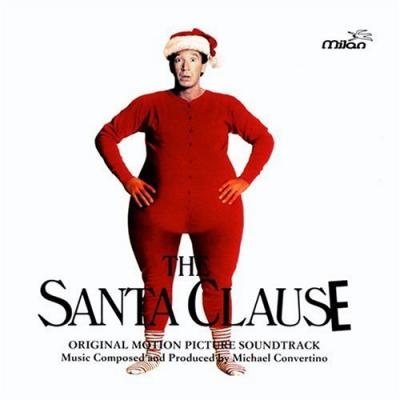
"The Santa Clause" Soundtrack Lyrics
Movie • 1994
Track Listing
“The Santa Clause (Original Motion Picture Soundtrack)” – Album Guide to Tracks and Key Scenes
Review
What if becoming Santa felt less like destiny and more like a legal loophole? The Santa Clause answers with a candy-cane contract and a score that warms on contact. Michael Convertino’s orchestral writing gives sleigh-bell sparkle to a very 90s family comedy, while curated needle-drops — doo-wop, glam-boogie, even Alvin & the Chipmunks — pin each chapter to a very specific kind of holiday memory.
The film’s arc moves from single-dad snark to reluctant wonder; the music traces the same path. The Drifters’ “White Christmas” turns a burnt turkey into a funny/sad holiday reality check, Loreena McKennitt’s carol ushers Scott and Charlie into the North Pole like a hush falling over a crowd, and Brenda Russell & Howard Hewett’s end-credits ballad sends you home with a bow. Convertino’s cue titles (“Elves with Attitude,” “Comfort and Joy”) aren’t just cute — they’re little scene synopses set to sleighs and woodwinds.
Genres-to-themes in phases: vintage pop and novelty (nostalgia, kid logic); contemporary rock swagger (comic bravado as the suit “chooses” Scott); choral/folk carols (thresholds and awe); orchestral capers (elves, rescue, momentum). The soundtrack doesn’t just decorate the movie — it flips the switch from cynic to believer right alongside Scott.
How It Was Made
Composer Michael Convertino scored the film; the commercial album (Milan Records) presents his cues alongside a handful of key songs — notably Yello’s peppy movie-version of “Jingle Bells,” The Drifters’ “White Christmas” (added on a 1995 reissue), Loreena McKennitt’s “The Bells of Christmas,” and “Christmas Will Return,” written by Jimmy Webb and performed by Brenda Russell & Howard Hewett. The film itself also uses additional source cues (e.g., a ZZ Top montage beat, the Jeopardy theme, and an Alvin & the Chipmunks cut) that weren’t all on the CD.
On screen, John Pasquin keeps music moment-driven: source cues hit the comedy beats (Denny’s, police hunt, workshop swagger), while Convertino’s motifs glue together the sleigh ride, elf ops, and father-son rescue. The result — a holiday mix where the jokes land and the sentiment sneaks up on you.
Tracks & Scenes
“White Christmas” (The Drifters)
- Where it plays:
- Early evening — Scott incinerates the holiday turkey, TV murmuring with crooning doo-wop; he and Charlie trudge to Denny’s. Later, bedtime at home. Non-diegetic; early film.
- Why it matters:
- Frames Scott as a capable mess — funny, a little sad, and ripe for transformation.
“The Bells of Christmas” (Loreena McKennitt)
- Where it plays:
- North Pole arrival — sleigh drifts into the workshop; the soundstage hushes into choral glow. Non-diegetic; end of first act.
- Why it matters:
- First pure awe moment; the film stops winking and lets wonder in.
“Santa Claus Is Comin’ to Town” (Alvin & The Chipmunks)
- Where it plays:
- Laura catches Charlie playing Santa in his room — kid logic on full blast. Diegetic from the room; mid-film.
- Why it matters:
- Shows belief living where adults can’t quite reach it.
“Jeopardy Theme” (Merv Griffin)
- Where it plays:
- Back at work, Scott orders a comically huge lunch as coworkers stare; the cue turns a midday binge into a game-show gag. Source cue; mid-film.
- Why it matters:
- Signals the suit is “winning” — his appetite and timing are no longer his own.
“Gimme All Your Lovin’” (ZZ Top)
- Where it plays:
- Police search montage vs. North Pole prep — Scott, now fully Santa, strides in sync with elves down a corridor in the new flame-proof suit. Non-diegetic; late-film.
- Why it matters:
- Injects rock bravado right when Scott embraces the role — the beard fits, and so does the swagger.
“Carol of the Bells” (street choir — film version not on OST)
- Where it plays:
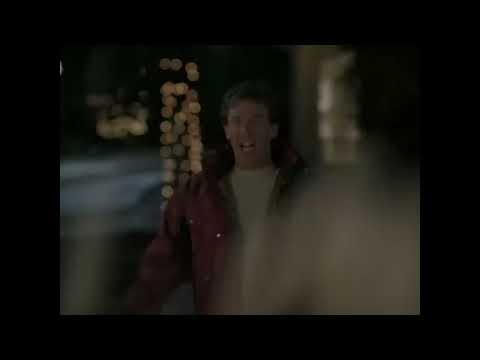
- After a holiday party, Scott walks outside as a caroling choir performs; the moment hangs between his old life and the new contract he can’t escape. Diegetic; early-mid film.
- Why it matters:
- A threshold cue — a literal chorus at the door to the myth.
“Jingle Bells (Movie Version)” (Yello)
- Where it plays:
- Used in marketing and tied to early comedic beats; the album opens with this shiny, synth-bouncy cut. Non-diegetic feel; early film/promos.
- Why it matters:
- Gives the album a contemporary 90s snap without losing the sleigh-ride vibe.
“Christmas Will Return” (Brenda Russell & Howard Hewett) — written by Jimmy Webb
- Where it plays:
- End credits — after reconciliations and flight, the ballad rolls over holiday tableaux. Non-diegetic; final.
- Why it matters:
- Earns the sentiment — a gentle coda that ties belief to family.
Score cues (Michael Convertino) — “Elves With Attitude,” “Near Capture,” “Comfort and Joy,” “Not Over Any Oceans”
- Where it plays:
- Elf rescue ops, rooftop escapes, warm North Pole interludes, and the closing sleigh sweep. Non-diegetic throughout.
- Why it matters:
- These cues do the heavy lifting — comic timing, heist rhythms, and that last glow of wonder.
Notes & Trivia
- The retail album was issued by Milan Records; a 1995 re-release adds The Drifters’ “White Christmas” to earlier cue selections.
- Jimmy Webb penned the end-credits original “Christmas Will Return,” performed by Brenda Russell & Howard Hewett.
- Several recognizable film cues (e.g., Alvin & the Chipmunks; ZZ Top; the Jeopardy theme) appear on screen but not on the original CD.
- Convertino’s score is the connective tissue — no wall-to-wall songs; the album remains mostly orchestral with a few marquee placements.
Reception & Quotes
The film became a perennial holiday rewatch, and the music’s blend of cozy nostalgia and light caper energy is a big reason why. Fans often single out the Denny’s stretch and the North Pole arrival as the moments where the soundtrack tells the story for the characters.
“A warm orchestral spine with strategic needle-drops — the music sells the ‘believing is seeing’ arc.” — retrospective summary
“Convertino’s cues twinkle without schmaltz; the doo-wop opener is the secret weapon.” — album blurb
“End credits original ties a bow on the myth.” — soundtrack notes
Interesting Facts
- OST vs. film: The movie uses ~two dozen pieces; the CD selects highlights and Convertino cues.
- Doo-wop durability: The Drifters’ “White Christmas” scene became a signature early-film needle-drop.
- North Pole hush: McKennitt’s carol functions like a curtain lifting — a tonal pivot point.
- Rock-and-roll Santa: The ZZ Top montage gives Scott’s full-Santa reveal a strut.
- Jimmy Webb touch: A legendary songwriter pens the film’s end-credits original.
Technical Info
- Title: The Santa Clause (Original Motion Picture Soundtrack)
- Year: 1994 (album release; film released November 11, 1994; CD shipped widely in early 1995)
- Type: Film soundtrack — original score with select pre-existing songs
- Composer: Michael Convertino
- Key songs on album/film: “White Christmas” (The Drifters — album re-release); “The Bells of Christmas” (Loreena McKennitt); “Jingle Bells (Movie Version)” (Yello); “Christmas Will Return” (Brenda Russell & Howard Hewett)
- Other notable film placements (not all on OST): “Santa Claus Is Comin’ to Town” (Alvin & The Chipmunks); “Gimme All Your Lovin’” (ZZ Top); “Jeopardy Theme” (Merv Griffin); “Carol of the Bells” (street choir)
- Label/editions: Milan Records; 1995 re-release adds The Drifters’ cut of “White Christmas.”
- Availability: Digital streaming for score selections and key songs; physical CD releases vary by territory.
Questions & Answers
- Who composed the score?
- Michael Convertino, whose cues carry most of the film’s emotional beats.
- Which Drifters song is in the movie?
- “White Christmas” — it plays through the burnt-turkey fiasco and into the Denny’s run.
- What song plays when Scott and Charlie first arrive at the North Pole?
- Loreena McKennitt’s “The Bells of Christmas.”
- What’s the end-credits song?
- “Christmas Will Return,” written by Jimmy Webb and performed by Brenda Russell & Howard Hewett.
- Is every movie song on the album?
- No. Several on-screen cues (e.g., ZZ Top, the Chipmunks, Jeopardy theme) are film-only.
Key Contributors
| Entity | Relation |
|---|---|
| John Pasquin | Director — shapes comic beats around source cues and score |
| Michael Convertino | Composer — original score; album producer on score tracks |
| Milan Records | Label — issued the soundtrack (1994/1995 re-release) |
| Yello | Artists — “Jingle Bells (Movie Version)” featured on album |
| The Drifters | Artists — “White Christmas” (on 1995 re-release; used early in film) |
| Loreena McKennitt | Artist — “The Bells of Christmas” (North Pole arrival) |
| Brenda Russell & Howard Hewett | Artists — end-credits song “Christmas Will Return” (written by Jimmy Webb) |
| ZZ Top | Artists — “Gimme All Your Lovin’” (workshop/stride montage; film-only) |
| Merv Griffin | Composer — “Jeopardy Theme” (work-lunch gag; film-only) |
| Alvin & The Chipmunks | Artists — “Santa Claus Is Comin’ to Town” (Charlie’s room; film-only) |
| Walt Disney Pictures | Studio — production/distribution context for licensing |
Sources: Wikipedia (film); The Santa Clause Wiki (soundtrack details); WhatSong listing (scene placements); SoundtrackINFO (album data & Q&A); Discogs (release credits); AllMusic (album entry); Spotify listing; Movieclips Classic Trailers (YouTube trailer).
Convertino Michael, who created the music for this remarkable film, had put a huge effort, skills and all of himself (and perhaps even a little more) to this soundtrack. His first composition – The Bells Of Christmas – so impressive and so shrilly impregnated with the spirit of Christmas, so the mood of one comes immediately. The rest of the music is instrumental in this collection. But it is rather their technical characteristics, than some kind of auditory property. After all, they do not sound less warm and homy. Each of the composition chosen to accompany a particular scene and it sounds organic and complete. For example, Believing Is Seeing or Elves With Attitude. Although these compositions are no better than the others in this collection, they are more shrill or, if it may be said so, monumental. The film is the first part in a trilogy. Each of them was released by Walt Disney Pictures, with some collaboration with other studios. For the second part, a composer was replaced on George S. Clinton, although it seems that Michael fully coped with the task in the first film. Spending USD 99 million on all three movies, the studio earned UDS 470 million at the box office, once again proving not only the fact that Disney is able well to make films, but also that movies about Christmas and New Year always collect excellent amounts. Think of any movie about this fabulous time of the year – you would call at least one of them as bad or unmemorable? No? This is because the creators of such films are raised too on the understanding that Christmas is something homy, good and warm. And try not to disappoint the huge army of admirers who believe strongly in this charming time and all the best that is associated with it. Enjoy your Christmas holidays!November, 29th 2025
Movie profiles on IMDb and Rotten Tomatoes, more info on WikipediaA-Z Lyrics Universe
Cynthia Erivo Popular
Ariana Grande Horsepower
Post Malone Ain't No Love in Oklahoma
Luke Combs Good Riddance (Time of Your Life)
Green Day Bye Bye Bye
*NSYNC You're the One That I Wan
John Travolta & Olivia Newton-John I Always Wanted a Brother
Braelyn Rankins, Theo Somolu, Kelvin Harrison Jr. and Aaron Pierre The Power of Love
Frankie Goes to Hollywood Beyond
Auli’i Cravalho feat. Rachel House MORE ›