Soundtracks:  A B C D E F G H I J K L M N O P Q R S T U V W X Y Z #


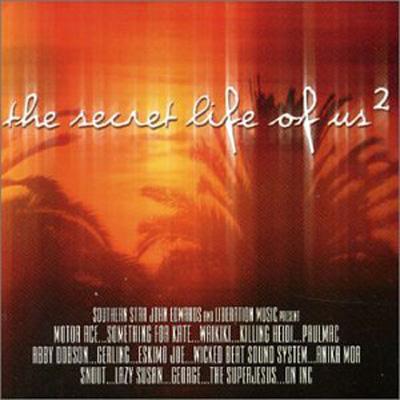
The Serect Life Of Us 2 Album Cover

"The Serect Life Of Us 2" Soundtrack Lyrics

TV • 2002

Track Listing


“The Secret Life of Us² (Original Television Soundtrack, Vol. 2)” – Album Guide to Tracks and Key Scenes

The Secret Life of Us early-2000s Network Ten promo montage of the St Kilda share-house
The Secret Life of Us — TV soundtrack culture, circa 2002

Review

What did Australian TV sound like when your 20s felt endless and every rooftop chat could tilt a life? The Secret Life of Us² — the 2002 companion to the Melbourne-set series — answers with indie guitars, trip-hop haze, and pub-night optimism. It’s less a “greatest hits” than a mood board: nights at the Espy, morning-after coffees on Acland Street, hard talks by the bay.

The album leans into what the show did best: threading contemporary local music through character beats. Where season one established the formula (anchored by Powderfinger’s “These Days” as the de facto theme), this 2002 set widens the lens — Something for Kate’s quiet thunder, Eskimo Joe’s hooky pulse, Killing Heidi’s shine, plus left-of-center picks that feel like mixtape flexes from your coolest friend. The result plays like a weekend — pre-drinks, mess, repair — and still lands soft.

Genres to themes in phases: indie/alt-rock — self-myth and second chances; downbeat/electronica — the 3 a.m. honesty window; singer-songwriter turns — consequence and care; radio-ready pop-rock — momentum after the wobble. It’s needle-drop storytelling, bottle-cap poetry included.

How It Was Made

Volume 2 arrived mid-run as the series’ music identity solidified: a sharp bias toward contemporary Australian artists, peppered with internationals. Liberation Music handled the release; episode teams sourced cues early, then the label compiled a listener-friendly disc around the season’s most resonant moments. Behind the scenes, music coordination and clearances were part of the show’s craft DNA — a reason the songs land like memories rather than wallpaper.

Promo frame with cast walking through St Kilda streets—music-driven montage energy
How it was made — curated heavy on Australian contemporaries, cleared to fit scenes not trends

Tracks & Scenes

“These Days” (Powderfinger) — series identity cut

Where it plays:
Series branding/open-title associations and recurring recap/promotional use. The soft-ache of the song became shorthand for the show’s worldview: big feelings, small apartments, everything in flux.
Why it matters:
Even when not on the 2002 CD, it’s the sonic logo — the first chord recalls friendships, fallouts, and the St Kilda skyline.

“Monsters” (Something for Kate)

Where it plays:
A late-night introspection beat: a character walks home past neon and shuttered shops, replaying the argument that shouldn’t have happened. The cut carries the scene from self-defense to uneasy apology by morning.
Why it matters:
That slow churn is the show’s pulse — private doubts, public bravado.

“Planet Earth” (Eskimo Joe)

Where it plays:
House-party montage: friends rotate rooms, secrets migrate with them, someone kills the smoke alarm with a tea towel. The hook turns gossip kinetic.
Why it matters:
Gives the ensemble that buoyant, we-might-be-okay energy before the next complication lands.

“Heavensent” (Killing Heidi)

Where it plays:
A breathless will-they/won’t-they run-and-smile sequence — tram bells, side glances, the city cooperating for once.
Why it matters:
Lets the show be unabashedly romantic without losing its edge.

“New Technology” (Waikiki)

Where it plays:
Apartment re-shuffle: somebody moves out, somebody moves in, and an old answering-machine message hits too hard. The chiming guitars cut the sentiment just enough.
Why it matters:
Exhibit A for the show’s taste: emerging Aussie bands scoring everyday rites of passage.

“Death Defy” (Motor Ace)

Where it plays:
Morning-after clarity on the rooftop — coffee, wind, a pact to do better (or at least to try). The chorus sells the vow.
Why it matters:
A small personal anthem in a show built from them.

“Pace It” (Magic Dirt)

Where it plays:
A rehearsal-room or pub-floor sequence where conversation rides the riff — flirts, feints, and the choice not to say the one thing that would fix everything.
Why it matters:
Turns social static into electricity; the cut is grit under the show’s gloss.

“Sunshine” (78 Saab)

Where it plays:
Sunday-afternoon truce: beach grass, back-porch beers, an almost-forgiveness. The jangly swing lets the scene exhale.
Why it matters:
The series’ optimism rarely shouts — this one smiles.

Deep-cut episode cues (season 1 examples that set the template)

Where they play:
From jazzy café source (David Rex Quintet) to Australian soul (Christine Anu) and local electronica (Wicked Beat Sound System), early episodes pepper diegetic moments — bar speakers, shop stereos — that bleed into character POV.
Why it matters:
It’s world-building: St Kilda sounds like St Kilda.
Promo still of the ensemble on the rooftop — music threading between conversations
Tracks & scenes — indie confessionals, party sweep, rooftop vows

Notes & Trivia

  • The series premiered in 2001; Volume 2 of the soundtrack hit in 2002 under Liberation Music with a heavy Australian-artist tilt.
  • Powderfinger’s “These Days” became the show’s signature association even when not on every retail compilation.
  • Official soundtrack discs (2001, 2002, 2003) don’t capture every on-screen song — they’re curated companions, not archival dumps.
  • Episode music lists highlight how often cues were diegetic (bars, cafés, parties), making songs part of the social fabric.
  • Music coordination roles (incl. Martin Armiger and team credits) underpin how deliberately the series used contemporary tracks.

Reception & Quotes

Critics and fans regularly cite the show’s use of contemporary Australian music as part of its texture — more like a character than décor. The compilations functioned as gateway records for a generation who met bands here first.

“Signature audiovisual elements include a soundtrack featuring Australian contemporary popular music… set-piece party scenes where the action flows.” — Australian Screen
“The discs cherry-pick highlights; the series itself uses far more music than any retail album could carry.” — compilation notes consensus
“‘These Days’ isn’t just a song here — it’s the show’s emotional weather report.” — retrospective fan take
Title card era frame — St Kilda beach light with indie-rock undertow
Reception — the soundtrack as lived-in texture

Interesting Facts

  • Local first: The compilations doubled as a showcase of early-2000s Australian acts, many on the rise.
  • Diegetic glue: Bars, trams, shop radios — the show loved making music “in the room.”
  • Mixtape logic: The discs flow like a night out, not a label sampler.
  • Rooftop canon: Some of the most replayed scenes used songs at conversational volume — music as confidante.
  • Ongoing hunt: Fans keep collaborative playlists updated, filling in gaps from broadcast and home-video versions.

Technical Info

  • Title: The Secret Life of Us² — Original Television Soundtrack (Volume 2)
  • Year: 2002 (album); series originally aired 2001–2005
  • Type: Television soundtrack — compilation of various artists
  • Label: Liberation Music (Australia)
  • Key artists featured (selection): Something for Kate; Eskimo Joe; Killing Heidi; Waikiki; Motor Ace; Magic Dirt; 78 Saab
  • Release context: Issued mid-run as a curated companion; additional volumes followed (Vol. 1 in 2001; Vol. 3 in 2003)
  • Series signature cue: Powderfinger — “These Days” (series identity; not unique to Vol. 2)
  • Availability: Physical CD via Liberation; used/market listings; streaming playlists (fan-compiled) reflect episode use.

Questions & Answers

Is “These Days” on the 2002 CD?
No — it’s the series-signature association, but Volume 2 focuses on season-era placements by other artists.
Why do the discs miss some on-screen songs?
Clearances and curation — the albums are companion samplers, not complete music dumps for every episode.
Which tracks best capture the show’s vibe?
“Monsters” (Something for Kate) for late-night reckonings; “Planet Earth” (Eskimo Joe) for party sweep; “Death Defy” (Motor Ace) for morning rooftop vows.
Who released Volume 2?
Liberation Music handled the 2002 Australian release.
Where can I find episode-by-episode song IDs?
The Australian Television Information Archive maintains detailed music lists; fan Spotify playlists mirror much of it.

Key Contributors

EntityRelation
John Edwards; Amanda HiggsSeries creators/producers — drove the show’s character-first tone
Southern Star Entertainment; Network Ten; Channel 4 (UK)Production & financing — series context for licensing and music budget
Martin ArmigerMusic coordinator — series music department credit (clearances/coordination)
Liberation MusicRecord label — issued the 2002 “Vol. 2” compilation
PowderfingerArtists — “These Days” (series-signature association)
Something for Kate; Eskimo Joe; Killing Heidi; Waikiki; Motor Ace; Magic Dirt; 78 SaabArtists — featured on the 2002 companion CD and/or season-era episodes
St Kilda, MelbournePrimary location — bars/cafés/rooftops as diegetic music spaces

Sources: Discogs (2001/2002/2003 soundtrack releases & artist listings); MusicBrainz label catalog (date & catalog data for Vol. 2); Australian Screen (series music identity); Australian Television Information Archive (episode music lists); AllMusic (2001 soundtrack entry); IMDb (series credits); public playlists reflecting episode use; YouTube/MUBI promos (for figures & series context).

November, 29th 2025


A-Z Lyrics Universe

Lyrics / song texts are property and copyright of their owners and provided for educational purposes only.