
"The Slaughter Rule" Soundtrack Lyrics
Movie • 2003
Track Listing
Jay Farrar
Vic Chesnutt
Freakwater
Wylie & the Wild West
Blood Oranges
Ryan Adams
Speedy West and Jimmy Bryant
Neko Case
Flatlanders
Malcolm Holcombe
Uncle Tupelo
Pernice Brothers
“The Slaughter Rule (Original Motion Picture Soundtrack)” – Album Guide to Tracks and Key Scenes
Review
What do grief and small-town ambition sound like on the winter edge of the plains? The Slaughter Rule answers with a dusty, clear-eyed mix: Jay Farrar’s spare, wind-bitten score stitched to alt-country staples and old 78-rpm ghosts. It isn’t a jukebox; it’s a hand-built mixtape that lets silence breathe, then lets steel guitar and close harmonies do the talking.
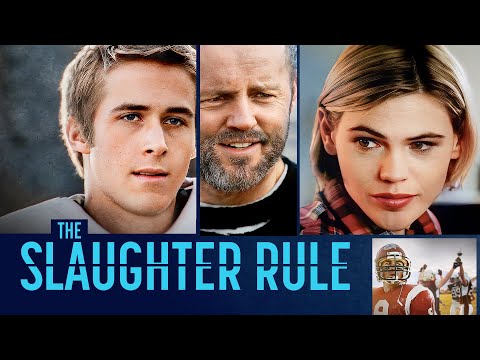
The film follows Roy (Ryan Gosling) as he’s coaxed into six-man football by a haunted coach (David Morse). The album mirrors that push-pull — lonesome instrumentals (“Open Ground,” “Frost Heaves,” “Dark Early”) give way to porch-light vocals (Neko Case, Jimmie Dale Gilmore & the Flatlanders) and road-warm companions (Ryan Adams’ “To Be Young”). The mood shifts are subtle: sacred-adjacent traditionals sit beside prairie instrumentals and vintage pedal-steel (Speedy West/Jimmy Bryant). It feels lived in — not curated for trend, but for truth.
Genres → themes, in phases: alt-country & Americana — hard truths and second chances; pedal-steel instrumentals — distance and weather; traditional hymnody — grace without sentimentality; indie singer-songwriter — motion and fragile hope. The result is a soundtrack that holds the characters instead of steering them.
How It Was Made
Brothers Alex & Andrew J. Smith shot their Montana-set debut with a sound world anchored by Jay Farrar (Uncle Tupelo / Son Volt). Farrar composed and performed the score cues and, with the music team, interwove contributions from a small constellation of alt-country peers: Ryan Adams, Neko Case & Her Boyfriends, Freakwater, Cheri Knight & Blood Oranges, Jimmie Dale Gilmore & the Flatlanders, Malcolm Holcombe, plus archival pedal-steel from Speedy West & Jimmy Bryant.
The commercial album arrived via Bloodshot Records in 2003 as a 23-track set: roughly half Farrar’s score pieces (“Open Ground,” “Gather,” “Augusta,” “Dark Early,” “Gumption,” “Hangman”) and half licensed recordings. The film itself also deploys Native powwow singing and a closing hymn take — choices that deepen the rural spiritual texture without cliché.
Tracks & Scenes
“Open Ground” (Jay Farrar) — score
- Where it plays:
- Used as an establishing motif around Roy’s solitary routines and open-road interludes; its return in later passages frames his tentative steps back toward connection.
- Why it matters:
- A theme as landscape: fingerpicked guitar and low drone mapping distance, cold, and the chance of thaw.
“Gather” (Jay Farrar) — score/song hybrid
- Where it plays:
- Bridges recruitment beats between Roy and Coach Menlo — a road piece that turns into purpose. It often tags driving scenes and quiet resolve moments.
- Why it matters:
- It’s the film’s forward-motion cue — sparse but determined, like a winter engine that will turn over.
“Rank Stranger” (Vic Chesnutt)
- Where it plays:
- Over a contemplative transition after a family setback; the song’s plain-spoken existential ache sits right inside Roy’s grief.
- Why it matters:
- Chesnutt’s voice makes the film’s spiritual questions feel local and human-sized.
“When I Stop Dreaming” (Freakwater)
- Where it plays:
- Heard during a downtown night stretch — shop windows, sodium lights, mistakes that feel inevitable.
- Why it matters:
- Two voices, one bruise — it underscores the movie’s refusal to romanticize hurt.
“To Be Young (Is to Be Sad, Is to Be High)” (Ryan Adams)
- Where it plays:
- Used in a movement montage to mark restless energy: pickup cabs, lockers, practice, the first sparks of a crush — life trying to reassert itself.
- Why it matters:
- A shot of motion and sunlight in a wintry film; it earns its place by sounding like breath coming back.
“Porchlight” (Neko Case & Her Boyfriends)
- Where it plays:
- Low-lit interior scene — domestic light through thin curtains; a near-confession deferred.
- Why it matters:
- Case’s timbre turns a small room into a cathedral; the scene feels larger than the walls.
“Tonight I Think I’m Gonna Go Downtown” (Jimmie Dale Gilmore & the Flatlanders)
- Where it plays:
- A barroom/after-practice interlude, with glances and unsaid apologies; the camera lingers on hands and windows more than mouths.
- Why it matters:
- It’s the movie’s permission slip for tenderness — the closest it gets to warm air.
“West of Samoa” (Speedy West & Jimmy Bryant)
- Where it plays:
- A brief, twang-bright palate cleanser laid under transitional imagery — pickup rolling past elevators of grain, sky widening.
- Why it matters:
- Old vinyl in a modern story — a reminder that rural soundtracks carry time.
“Will There Be Any Stars in My Crown?” (Pernice Brothers)
- Where it plays:
- End-titles coda: after the final, bruised grace notes, a hymn-touched indie take eases the credits in.
- Why it matters:
- Frames the ending as neither triumph nor defeat, but a small, honest mercy.
Additional texture — “Warrior Song” (Young Grey Horse Singers)
- Where it plays:
- Heard diegetically in a cultural setting, underscoring place and community beyond the field.
- Why it matters:
- Locates the story within a living Montana soundscape, not a postcard.
Notes & Trivia
- The album is a hybrid: roughly half Farrar’s original cues and half licensed songs by alt-country peers and archival sides.
- Bloodshot Records issued the soundtrack commercially in 2003; the film premiered in 2002.
- Vintage pedal-steel duo Speedy West & Jimmy Bryant supply a brief archival cut (“West of Samoa”) that functions like a wink to country-instrumental history.
- Pernice Brothers’ closing hymn take (“Will There Be Any Stars in My Crown?”) mirrors the film’s moral modesty — no sermons, only questions.
- A Native powwow song (“Warrior Song,” Young Grey Horse Singers) is credited onscreen, reflecting the regional sound fabric.
Reception & Quotes
Critics were mixed on the film’s overall execution but singled out the mood — much of which rides the music’s shoulders. Among alt-country listeners, the album stands as a low-key cult favorite, especially Farrar’s lean instrumentals and the sequencing’s dusty coherence.
“A spare, wind-scarred score threaded with plain-spoken songs — exactly the right weather for this story.” — alt-country roundup
“Farrar’s cues prove how little you need to move a scene.” — soundtrack column
“The hymn and the honky-tonk live side by side here — like they always have.” — roots-music blog
Interesting Facts
- Score bones: Farrar’s titles (“Open Ground,” “Frost Heaves,” “Dark Early”) read like field notes — and that’s how they play.
- Bloodshot DNA: The label’s roster (Freakwater, Blood Oranges, etc.) makes the set feel like a community effort more than a clearance exercise.
- Hymn thread: At least two selections trace to hymnody or shape-note lineage, reframed for a secular film about loss.
- Region true: Credits include a powwow piece, pointing to sound traditions of the northern plains.
- Portable mood: The album works even if you haven’t seen the film — a rare feat for a drama this interior.
Technical Info
- Title: The Slaughter Rule (Original Motion Picture Soundtrack)
- Year: 2003 album (film festival premiere 2002)
- Type: Film soundtrack — score + various artists
- Composer: Jay Farrar
- Label: Bloodshot Records
- Selected notable placements: “Open Ground”; “Gather”; “Rank Stranger” (Vic Chesnutt); “When I Stop Dreaming” (Freakwater); “To Be Young (Is to Be Sad, Is to Be High)” (Ryan Adams); “Porchlight” (Neko Case & Her Boyfriends); “Tonight I Think I’m Gonna Go Downtown” (Jimmie Dale Gilmore & the Flatlanders); “West of Samoa” (Speedy West & Jimmy Bryant); “Will There Be Any Stars in My Crown?” (Pernice Brothers); “Warrior Song” (Young Grey Horse Singers).
- Release/editions: CD/digital (Bloodshot); later streaming availability varies by region/platform.
Questions & Answers
- Who composed the score?
- Jay Farrar wrote and performed the original cues; the album interleaves his pieces with alt-country and archival tracks.
- Is this mostly score or songs?
- A true hybrid — about half spare instrumentals, half songs from artists like Neko Case, Ryan Adams, Freakwater, and the Flatlanders.
- What’s the vibe compared to Farrar’s band work?
- More minimalist than Son Volt — skeletal guitars, pedal-steel shadows, and lots of room tone.
- Where can I hear it?
- Official releases exist on CD and major streaming services (availability can vary by region); Bloodshot handled the retail release.
- Does the film use any traditional or regional music?
- Yes — a powwow song (Young Grey Horse Singers) and a closing hymn arrangement deepen the regional/folk spine.
Key Contributors
| Entity | Relation |
|---|---|
| Alex Smith; Andrew J. Smith | Writers/Directors — grounded the story in Montana’s landscape & sound |
| Jay Farrar | Composer/Performer — original score; multiple instrumental cues |
| Bloodshot Records | Label — released the 2003 soundtrack album |
| Ryan Adams | Artist — “To Be Young (Is to Be Sad, Is to Be High)” |
| Neko Case & Her Boyfriends | Artists — “Porchlight” |
| Freakwater | Artists — “When I Stop Dreaming” |
| Jimmie Dale Gilmore & the Flatlanders | Artists — “Tonight I Think I’m Gonna Go Downtown” |
| Speedy West & Jimmy Bryant | Artists — “West of Samoa” (archival) |
| Pernice Brothers | Artists — “Will There Be Any Stars in My Crown?” |
| Young Grey Horse Singers | Artists — “Warrior Song” (powwow) |
Sources: Bloodshot/artist discography pages; Discogs master/release entries; Apple Music/Spotify listings; IMDb soundtracks page; Free Music Archive/Muziekweb previews; press/retrospectives; official and remastered trailers.
November, 29th 2025
A-Z Lyrics Universe
Cynthia Erivo Popular
Ariana Grande Horsepower
Post Malone Ain't No Love in Oklahoma
Luke Combs Good Riddance (Time of Your Life)
Green Day Bye Bye Bye
*NSYNC You're the One That I Wan
John Travolta & Olivia Newton-John I Always Wanted a Brother
Braelyn Rankins, Theo Somolu, Kelvin Harrison Jr. and Aaron Pierre The Power of Love
Frankie Goes to Hollywood Beyond
Auli’i Cravalho feat. Rachel House MORE ›