
"The Spy Who Dumped Me" Soundtrack Lyrics
Movie • 2018
Track Listing
Michael Bublé
Britney Spears
Bonnie McKee
Scorpions
Crash Test Dummies
Parov Stelar
Armin van Buuren
Bishop Allen
The Essex Green
Elvis Presley
Beulah
Yvonne Prenosilová
Die Krupps
Elliphant
Grandtheft & Delaney Jane
“The Spy Who Dumped Me — Music From & Around the Film (2018)” – Album Guide to Tracks and Key Scenes
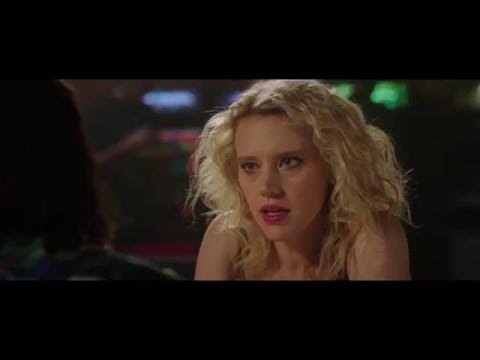
Review
Can a pop-packed spy caper have its cake (explosions) and eat it too (punchlines)? The Spy Who Dumped Me answers with a knowingly mixed playlist: Euro-club pulses for the chases, jukebox deep cuts for the jokes, and Tyler Bates’ propulsive score to glue it all together. It keeps the movie nimble — when a gag lands, the song winks; when the bodies drop, the synths get teeth.
The music works like a mood toggle. One minute you’re in a lethal cat-and-mouse, the next you’re giggling at a knowingly on-the-nose needle-drop. I like how the selections frame Audrey and Morgan as tourists in both Europe and espionage; the cues often shift from swagger to “wait, what?” mid-scene — exactly the film’s comedy engine.
Genre map in fast phases: glossy EDM and electro-pop — performance mode, bravado, disguise; retro pop & lounge — irony and cultural remix; bar-band indie — friendship ballast; iconic standards and trailer anthems — marketing swagger and tonal misdirection. Together they make a knowingly fizzy mixtape with a spine of action scoring.
How It Was Made
Composer Tyler Bates handled the score, recording in London with a crisp, modern action palette; his cues thread through the mayhem and punch up the chases. On the source side, music supervision (commercial and in-film) corralled a grab-bag of recognizable cuts and Euro-set oddities to match the globetrotting plot. The studio did not issue a commercial “various artists” soundtrack in 2018; instead, an official streaming playlist mirrored most of the prominent songs while the score lived primarily on-screen.

Tracks & Scenes
Key placements (album availability varies). Timestamps are approximate to the standard 117-minute cut. Trailer/marketing uses noted separately.
“Wind of Change (Re-Recorded)” (Scorpions)
- Where it plays:
- Cold open and later callback — the whistle and chorus bookend the film’s fish-out-of-water vibe (opening minutes; then reprised during a hostage moment near the finale). Non-diegetic.
- Why it matters:
- Iconic earworm repurposed for espionage irony — a power ballad as a wink at “big history” swirling around two very un-Bond heroines.
“The Pink Panther Theme” (Henry Mancini)
- Where it plays:
- Diegetic performance within a European venue gag; the instantly recognizable slink underscores Morgan’s improv bravado as chaos brews (early mid-film).
- Why it matters:
- Meta-spy music as punchline — the movie knowingly borrows Capers 101 to set up the next subversion.
“Everybody (feat. Azealia Banks)” (Elliphant)
- Where it plays:
- Late pre-credits come-down, after the dust settles but before the bonus sting. Non-diegetic; quick, high-energy button.
- Why it matters:
- Victory lap with attitude — the duo’s friendship gets the final word before the tag.
“Happy Birthday (In Hyper 8-Bit)” (Darryl Banner)
- Where it plays:
- Bonus stinger at the top of the credits; an 8-bit joke tied to Audrey’s birthday thread. Diegetic-feeling novelty in a non-diegetic position.
- Why it matters:
- A tiny, nerdy bow on the friendship-first theme.
“Bad Girls (feat. Desi Mo)” (Pussy Riot)
- Where it plays:
- First main end-credits song. Non-diegetic, immediately after the final scene.
- Why it matters:
- On-brand closer — noisy, rebellious, and perfect for our chaos agents.
“Work B**ch” (Britney Spears)
- Where it plays:
- Second end-credits banger (following “Bad Girls”), extending the high-energy roll into the card crawl.
- Why it matters:
- Camp-glam anthem that reframes the duo’s survival as a dance-floor flex.
“Rain” (Bishop Allen)
- Where it plays:
- Needle-drop in the first act to tint Audrey’s everyday life before the plot detonates. Non-diegetic.
- Why it matters:
- Indie steadiness — a baseline from which the movie will gleefully swerve.
“Don’t Know Why (You Stay)” (The Essex Green)
- Where it plays:
- Early domestic scene underscoring the “dumped” premise. Non-diegetic.
- Why it matters:
- Jangle-pop irony — heartbreak with a shrug before the bullets fly.
“Fun in Acapulco” (Elvis Presley)
- Where it plays:
- Comic juxtaposition cue during travel hijinks; the sunny vintage sheen contrasts with mounting danger.
- Why it matters:
- Mood-versus-action dissonance — a signature trick throughout the movie.
“Dark Romance” (John Jorgenson Quintet)
- Where it plays:
- Euro-café ambience during covert tailing. Mostly diegetic-feeling source in the mix.
- Why it matters:
- Gypsy-jazz color that sells the “continental spy” fantasy just long enough to break it.
“Créature de Siam” (Cirque du Soleil)
- Where it plays:
- Diegetic at the performance venue where Morgan, mid-acrobatic chaos, tangles with an assassin above the stage.
- Why it matters:
- High-wire fight scored by stage spectacle — the movie’s oddball spirit in one sequence.
“Easy Go” (Grandtheft)
- Where it plays:
- Late-film beat during the birthday-mission crossover. Non-diegetic pulse that lifts the tempo into the home stretch.
- Why it matters:
- EDM lift for the final sprint — slick, disposable, effective.
Trailer & TV-spot music
- Teaser: “Feeling Good” (Michael Bublé) — suave misdirection for a mayhem-heavy comedy.
- Trailer #2: “Work B**ch” (Britney Spears) — the one audiences remember from marketing.
- TV spot: “Bombastic” (Bonnie McKee) — punchy, wink-happy hook for 30-second cuts.
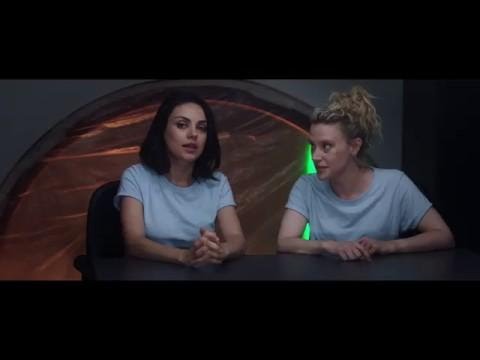
Notes & Trivia
- There was no retail “various artists” soundtrack album on release — the studio circulated an official streaming playlist instead.
- Composer Tyler Bates recorded the score in London; the production shot in Budapest and Amsterdam, leaning on local color for music sourcing.
- “Wind of Change” appears in a re-recorded form — a recognizable wink that bookends the story.
- “Pink Panther Theme” is used as a self-aware caper gag — a rare studio comedy that plays the reference straight, then undercuts it.
Reception & Quotes
Critics were split on tone but praised Kunis–McKinnon chemistry; audiences turned the movie into a word-of-mouth “Friday-night fun” pick.
“Enjoyable female-buddy romp with sharp action and solid laughs.” ScreenRant
“Can’t decide between light caper and B-movie mega-violence — still, never dull.” Variety
Availability: Songs are scattered across rights holders; the official playlist gathers most cues. Physical OST for songs was not issued; the score remains on-screen.

Interesting Facts
- Spy pastiche: The Pink Panther nod doubles as a mini-lesson in how the film toggles homage and parody.
- Marketing switch-ups: Trailers leaned on big pop hooks (Bublé, Spears) to broaden appeal beyond action-comedy diehards.
- Cirque set-piece: A stage number becomes a combat soundtrack — chaotic, colorful, and very on-brand.
- Playlist over album: Instead of a CD, an official streaming playlist functioned as the de facto soundtrack.
- End-credits double-tap: “Bad Girls” into “Work B**ch” matches the movie’s “we survived — now dance” vibe.
Technical Info
- Title: The Spy Who Dumped Me (music from & inspired by the film)
- Year: 2018 (US release August 3, 2018)
- Type: Film soundtrack (various artists; original score by Tyler Bates)
- Composer: Tyler Bates
- Music supervision (in-film/credits): Kier Lehman (supervision credit), with music department support (coordination, orchestration, programming)
- Selected notable placements: “Wind of Change” (Scorpions); “Everybody” (Elliphant ft. Azealia Banks); “The Pink Panther Theme” (Henry Mancini); “Fun in Acapulco” (Elvis Presley); “Bad Girls” (Pussy Riot); “Work B**ch” (Britney Spears)
- Album status: No retail “various artists” OST at release; an official playlist exists. Score was not released as a standalone album.
Questions & Answers
- Was there an official song album?
- No — the studio pushed an official streaming playlist; the songs are split across labels.
- Who composed the score?
- Tyler Bates, recorded in London, delivering contemporary action textures with synth-forward momentum.
- What’s the first song in the movie?
- “Wind of Change” (re-recorded version) plays at the start — later echoed during the hostage callback.
- What plays over the end credits?
- “Bad Girls” (Pussy Riot) rolls first, then “Work B**ch” (Britney Spears) keeps the energy up.
- Which trailer song most people remember?
- “Work B**ch” — it headlined a major trailer and cemented the movie’s sassy tone.
Key Contributors
| Subject | Relation | Object |
|---|---|---|
| Susanna Fogel | Directed | The Spy Who Dumped Me (2018) |
| Tyler Bates | Composed score for | The Spy Who Dumped Me |
| Kier Lehman | Music supervision on | The Spy Who Dumped Me |
| Lionsgate | Distributed | The Spy Who Dumped Me (US) |
| Imagine Entertainment | Produced | The Spy Who Dumped Me |
| Scorpions | Performed | “Wind of Change (Re-Recorded)” (opening) |
| Henry Mancini | Composed/Performed | “The Pink Panther Theme” (diegetic set-piece) |
| Elliphant feat. Azealia Banks | Performed | “Everybody” (late scene) |
| Pussy Riot | Performed | “Bad Girls” (first end-credits track) |
| Britney Spears | Performed | “Work B**ch” (end-credits / trailer) |
Sources: Wikipedia film page; Filmmusicreporter (score); WhatSong; Moviesost database; Spotify official playlist; IMDb soundtrack page; Plex credits; Variety/critical round-ups; Lionsgate/YouTube trailers.
November, 29th 2025
A-Z Lyrics Universe
Cynthia Erivo Popular
Ariana Grande Horsepower
Post Malone Ain't No Love in Oklahoma
Luke Combs Good Riddance (Time of Your Life)
Green Day Bye Bye Bye
*NSYNC You're the One That I Wan
John Travolta & Olivia Newton-John I Always Wanted a Brother
Braelyn Rankins, Theo Somolu, Kelvin Harrison Jr. and Aaron Pierre The Power of Love
Frankie Goes to Hollywood Beyond
Auli’i Cravalho feat. Rachel House MORE ›