
"The Tourist" Soundtrack Lyrics
Movie • 2010
Track Listing
James Newton Howard
"The Tourist (Original Motion Picture Soundtrack)" – Album Guide to Tracks and Key Scenes
Review
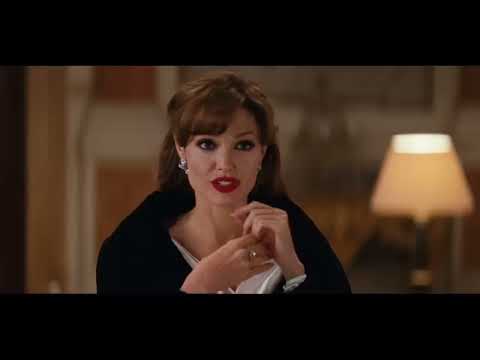
What if a spy caper wore evening wear — and sounded like it too? The Tourist leans into old-school elegance: waltzes of suspense, tango-adjacent flirt cues, and suave end-credit pop. James Newton Howard’s score drapes the film in velvet — graceful on the surface, with a pulse that tightens whenever the plot slides down a Venetian alley.
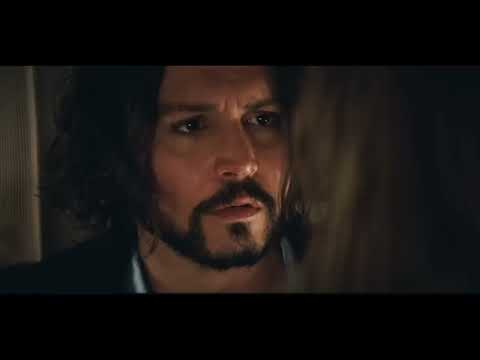
The music’s job here is twofold. First, give Venice its own voice — gondola-glide strings, nocturnal woodwinds, polite menace — and second, sell the movie’s playful “is he or isn’t he?” conceit between Elise and Frank. The album largely favors Howard’s orchestral writing, but spotlights two needle drops that define edges of the story: Katie Melua’s tender “No Fear of Heights” (romance, possibility) and Muse’s “Starlight” (jet-set exhale over the credits). It’s a cocktail: half espionage shimmer, half ballroom swoon.
Across the runtime, the soundtrack cycles phases — sleek thriller motifs (plucked bass + brushed percussion) for surveillance and chases; romantic noir themes with lyrical strings for close-ups and stolen looks; and continental pop to bookend mood. The mapping is clear: spy craft cues = calculation; lyrical waltz = vulnerability; arena-pop closer = release.
How It Was Made
Early in production, Gabriel Yared developed material (including the dance piece “Dance in F”). Midway through, James Newton Howard took over the score and recorded primarily at Sony Scoring Stage with the Hollywood Studio Symphony. The finished album (Varèse Sarabande) emphasizes Howard’s palette — plush strings, sly woodwinds, and restrained electronics — while preserving Yared’s dance cue as a nod to the project’s evolution. A small handful of licensed tracks round out the presentation, most notably Katie Melua and Muse.

Tracks & Scenes
“No Fear of Heights” (Katie Melua)
- Where it plays:
- Airport parting scene: Elise leaves Frank at the gate, and the film lets the moment breathe. The song enters as a melodic counter-argument to suspicion, turning a procedural separation into a fragile maybe. (Late in the film; diegetic feel via source-style mix.)
- Why it matters:
- It reframes Elise as more than a riddle — a human pivot between duty and desire — and preps the emotional runway for the finale.
“Starlight” (Muse)
- Where it plays:
- End credits roll: after the last reveal clicks into place, the arena-sized anthem swells. Non-diegetic; full-band lift that escorts viewers out of Venice with a grin.
- Why it matters:
- A glossy, cathartic palate cleanser — pop sheen after orchestral intrigue.
“Dance in F” (Gabriel Yared)
- Where it plays:
- Heard on the album and tied to the film’s ballroom energy; a European-flavored dance cue that mirrors the gala atmosphere and the Elise–Frank push-pull. (Album bonus from the original scoring phase.)
- Why it matters:
- Gives a peek at the project’s first musical DNA and the elegant, continental dance sensibility that Howard also channels.
Score cue: “Arrival at Venice” (James Newton Howard)
- Where it plays:
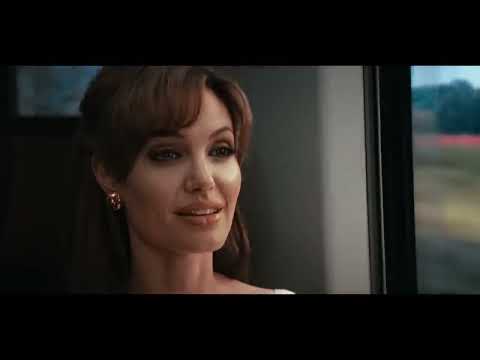
- Frank’s entry into Venice by train and boat. The music is all postcard shimmer — strings that ripple like canal light, woodwinds that suggest secrets a bridge away.
- Why it matters:
- It establishes place as character: Venice isn’t backdrop; it’s the co-conspirator.
Score cue: “Paranoid Math Teacher”
- Where it plays:
- Frank’s identity mix-ups escalate; the cue snaps between pizzicato suspicion and playful woodwinds as he bumbles through high-stakes surveillance.
- Why it matters:
- Shows the score’s balancing act — suspense with a wink — instead of blunt, wall-to-wall tension.
Score cue: “A Very Nice Kiss”
- Where it plays:
- A balcony interlude that flirts with melodrama — tremolo strings under soft brass, holding the camera just a beat longer on Elise.
- Why it matters:
- The romance theme in full bloom — proof the album can sigh without getting syrupy.
Library/source drops
- Where they play:
- Brief source snippets (e.g., Extreme Music cues like “Cat’s Pyjamas”) tease the hotel and party spaces. They’re mixed like in-world background, never stealing focus.
- Why it matters:
- They texture the environment, keeping the posh-hotel fantasy credible while the score handles storytelling.
Notes & Trivia
- Composer switch mid-production: Gabriel Yared to James Newton Howard; one Yared cue survives on album as “Dance in F.”
- The album is predominantly score; only a couple of songs appear in-film — used surgically to frame emotion rather than montage entire sequences.
- Recording home base: Sony Scoring Stage, with the Hollywood Studio Symphony bringing the gloss.
- End-credits choice (“Starlight”) places modern arena-rock against a classic caper frame — a deliberate tonal contrast.
- Venice’s gala sequence was filmed in a historic Venetian venue, and the music leans into European dance elegance to match the location’s grandeur.
Reception & Quotes
Critical response to the film was mixed, but the score drew consistent notice for its chic, throwback sensibility — part spy, part swoon. Reviewers highlighted Howard’s blend of retro espionage writing and modern polish.
“An alternately jittery and swoony concoction by James Newton Howard.” Variety
“Old-school charm… glamorous music for glamorous stars.” AssignmentX
“Strikes a nice balance between modern heist cues and Bond-style themes.” AllMusic
“The album is generous… plus a retained Yared dance cue.” Filmtracks
Interesting Facts
- Bond-adjacent DNA: Several reviewers heard affectionate nods to classic espionage scoring — without pastiche overload.
- One foot in dance: “Dance in F” preserves the project’s first, more overtly European dance flavor.
- Short cues, long glow: Many album tracks are compact, mirroring the film’s quick scene beats, but themes recur for cohesion.
- Pop brackets: The only big pop placements sit at narrative edges — airport farewell and end credits.
- Recording team muscle: A-list engineers (Shawn Murphy, Joel Iwataki) help the orchestra feel expensive without bombast.
Technical Info
- Title: The Tourist (Original Motion Picture Soundtrack)
- Year: 2010 (album released December 21, 2010)
- Type: Original score with select songs
- Composer/Producer: James Newton Howard
- Additional music: Gabriel Yared (“Dance in F”)
- Orchestra: Hollywood Studio Symphony; recorded at Sony Scoring Stage
- Label: Varèse Sarabande
- Notable songs in film: “No Fear of Heights” (Katie Melua); “Starlight” (Muse — end credits)
- Music supervision (credit): Becky Bentham
- Availability: Streaming/download on major services; physical CD editions exist via Varèse Sarabande/retail partners
Questions & Answers
- Is this mostly a score album or a songs compilation?
- Mostly score. Two notable songs — Katie Melua’s “No Fear of Heights” and Muse’s “Starlight” — frame key moments.
- Who originally started the score before James Newton Howard?
- Gabriel Yared, whose “Dance in F” survives on the album as a dance-style piece.
- Which song plays over the end credits?
- Muse’s “Starlight.”
- Where does “No Fear of Heights” appear in the film?
- At the airport parting scene between Elise and Frank, near the finale.
- Does the album reflect the Venice setting?
- Yes — strings and woodwinds glide with a canal-lit elegance, offset by nimble suspense writing.
Key Contributors
| Entity | Relation | Entity |
|---|---|---|
| Florian Henckel von Donnersmarck | wrote & directed | The Tourist (2010) |
| James Newton Howard | composed & produced score for | The Tourist (2010) |
| Gabriel Yared | composed early material; album includes | “Dance in F” |
| Becky Bentham | music supervised | The Tourist (2010) |
| Varèse Sarabande | released | The Tourist (Original Motion Picture Soundtrack) |
| Hollywood Studio Symphony | performed | score recording |
| Sony Scoring Stage | hosted sessions for | orchestral recording |
| Muse | performed end-credits song | “Starlight” |
| Katie Melua | performed | “No Fear of Heights” |
Sources: Variety; AllMusic; Filmtracks; AssignmentX; IMDb (soundtracks/credits); Varèse Sarabande/Apple Music listings; Discogs; MediaStinger; SoundtrackINFO Q&A; Wikipedia (album background); MusicBrainz (credits).
November, 29th 2025
A-Z Lyrics Universe
Cynthia Erivo Popular
Ariana Grande Horsepower
Post Malone Ain't No Love in Oklahoma
Luke Combs Good Riddance (Time of Your Life)
Green Day Bye Bye Bye
*NSYNC You're the One That I Wan
John Travolta & Olivia Newton-John I Always Wanted a Brother
Braelyn Rankins, Theo Somolu, Kelvin Harrison Jr. and Aaron Pierre The Power of Love
Frankie Goes to Hollywood Beyond
Auli’i Cravalho feat. Rachel House MORE ›