
"The Transporter" Soundtrack Lyrics
Movie • 2002
Track Listing
Tweet
Nate Dogg
Sacario Featuring Angie Martinez & Fat Joe
Benzino
Knoc-Turn'al
Missy Elliott
Angie Martinez Featuring Lil' Mo & Sacario
Rell Featuring Jay-Z
Gerald Levert
Tamia
Hustlechild
Keith Sweat
Nate Dogg
"The Transporter (Music From and Inspired by the Motion Picture)" – Album Guide to Tracks and Key Scenes
Review
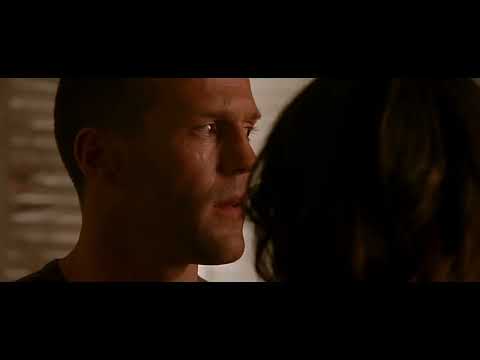
What happens when a precision driver’s three rules meet a DJ crate and a fusion legend? The Transporter answers with a hybrid soundtrack: glossy Elektra/urban cuts for swagger and courtship, and Stanley Clarke’s sinewy score — salted with French turntablist grit — for wheel-to-wheel tension. The album is half club, half chase.
In the film, songs do the flexing — Nate Dogg, Tweet, Missy Elliott — while the score handles physics: metallic synth pulses, nimble low strings, and percussive motifs that count down every gear shift. The mood slides between lacquered R&B seduction and Euro-action propulsion. That contrast mirrors Frank Martin himself: impeccable suit, brutal efficiency.
Phases, mapped. Urban/R&B (confidence; “no-names” rule-as-style), French electro/turntablism (impact edits, comic snap), and Clarke’s orchestral-fusion (clean lines, moral pressure). When a needle drop lands, it sells cool; when Clarke’s cues arrive, the story breathes — or holds its breath.
How It Was Made
The film splits musical duties: Clarke delivers the main score, with additional cues credited to Alexandre Azaria (under The Replicant moniker on album for “Love Rescue” and “Transfighter”). French DJ team D.J. Pone & Drixxxé contribute blistered breakbeat instrumentals (“Fighting Man,” “The Chase,” “Rockin’ and Scratchin’”) that the edit team wields like jump-cuts. The song compilation leans Elektra/EastWest — a 2002 time capsule of radio-primed R&B and rap — while the score album spotlights Clarke’s sleek action writing.

Tracks & Scenes
“Muzik” (Knoc-Turn’al)
- Where it plays:
- Cool-down cruise after an early drop: Frank heads home along the Riviera, the hook riding the asphalt. The placement functions like a victory lap — non-diegetic swagger between jobs.
- Why it matters:
- Defines the film’s 2002 sheen — sleek car, smoother chorus — and frames Frank’s outlaw professionalism as lifestyle.
“I Got Love” (Nate Dogg)
- Where it plays:
- Roadside pivot: after leaving the bound passenger on the shoulder, Frank hesitates, then reverse-rocket returns to pick her up. The song flicks on as he commits to breaking his own rule.
- Why it matters:
- A character turn with a radio smile — the needle drop underlines the first moral crack in his code.
Clarinet Concerto in A major, K.622 — Allegro (W.A. Mozart)
- Where it plays:
- Engine ritual: Frank cues Mozart as he starts the BMW, a diegetic habit that sands the edge off his workday. Classical calm in a criminal commute.
- Why it matters:
- Signals control — he’s the rare action lead who prefers measured elegance to adrenaline.
“Life of a Stranger” (Nadia)
- Where it plays:
- Intimate quietude: late-night respite with Lai — hushed vocals over low lamp light before the next explosion of violence.
- Why it matters:
- Gives the story its softest breath; the album’s outlier becomes a pulse check for their connection.
Score cue: “Give Package a Drink” (Stanley Clarke)
- Where it plays:
- On a coastal turnout, Frank cracks the trunk, threads a straw into a water bottle, and helps the bound passenger drink. The cue stays close — strings and synth pads tuned to the awkward tenderness of the moment.
- Why it matters:
- Humanizes the professional. The music’s restraint lets the scene play as empathy, not just plot logistics.
Score cue: “Mission” (Stanley Clarke)
- Where it plays:
- Opening gambit and early pursuit: arpeggiated synth and muted brass punctuate parking-garage geometry, then widen as the chase spills into Nice. Editorial glue for the film’s first statement of intent.
- Why it matters:
- Establishes the sonic grammar of speed — precise, clipped, muscular.
“Fighting Man” / “The Chase” (D.J. Pone & Drixxxé)
- Where it plays:
- Bus brawl and alley sprint: propulsive breakbeats, scratch accents, and abrupt drops that sync to kicks, grabs, and gear changes. The mix treats beats like impacts.
- Why it matters:
- Injects a local (French) club texture that differentiates the action from Hollywood’s standard temp-track chug.
Score cue: “Interrogation with Inspector” (Stanley Clarke)
- Where it plays:
- Coffee-table chess with Inspector Tarconi — plucked bass and sly woodwinds keep the dialogue buoyant while hinting at suspicion.
- Why it matters:
- Shows Clarke’s light touch: not every cue punches; some smile while they tighten the screws.
Notes & Trivia
- The film credits music by Stanley Clarke with additional cues by Alexandre Azaria; the score album tags Azaria’s tracks as The Replicant.
- French turntablists D.J. Pone & Drixxxé record several in-film instrumentals used for fights and chases.
- The commercial soundtrack leans heavily R&B/hip-hop; some tracks on the CD do not appear in the film (common for early-’00s “music from and inspired by” releases).
- Music supervision on the picture is credited in French tech listings to Didier Lozahic.
- “Muzik” later bumps the artist’s visibility in France, charting there off the film’s profile.
Reception & Quotes
Even critics mixed on the movie singled out the sound for doing heavy lifting — sleek songs as style and a muscular score that keeps the car-opera humming.
“Stanley Clarke’s unique score is ace and comes through with great power in the action scenes.” Eye for Film (DVD review)
“Elektra all-stars” package a radio-friendly companion, from Tweet to Missy Elliott. Billboard (industry note)
“A hybrid that sells cool between the crashes.” Album listings & retrospective notes
Interesting Facts
- Rule of three: Frank’s three rules find musical mirrors — classical calm (Mozart), urban gloss (Elektra cuts), and surgical score (Clarke).
- Local flavor: The DJ cues come from a Parisian scene — they’re not generic library tracks.
- Two-disc reality: In practice, fans chase both the song compilation and the separate score release to “complete” what they hear in the movie.
- Character tell: Using Mozart as driving prep isn’t a gag — it’s the film’s best shorthand for Frank’s self-discipline.
- Franchise DNA: Later sequels tilt more toward Euro-pop and dance; this first entry remains the most hip-hop/R&B-leaning.
Technical Info
- Title: The Transporter — Music From and Inspired by the Motion Picture (songs) / The Transporter (Original Motion Picture Score)
- Year: 2002 (film U.S. release October 11, 2002; soundtrack streeted September 10, 2002)
- Type: Songs compilation + separate original score
- Composers: Stanley Clarke (score); Alexandre Azaria (additional cues credited as The Replicant on album)
- Contributing artists (selected): Tweet, Nate Dogg, Knoc-Turn’al, Missy Elliott, Nadia
- Music supervision: Didier Lozahic (credited in technical listings)
- Notable placements: “I Got Love” (roadside reversal); “Muzik” (Riviera glide); Mozart Clarinet Concerto (car-start ritual); “Life of a Stranger” (quiet respite); Clarke’s “Mission,” “Give Package a Drink,” “Interrogation with Inspector” (story beats)
- Labels: Elektra / EastWest (songs); 2002 score CD release (various territories)
- Availability: Streaming/download for both the compilation and score; multiple digital storefronts carry the albums
Questions & Answers
- Is the album mostly songs or score?
- The commercial soundtrack is songs; a separate album collects Stanley Clarke’s score cues.
- Who did the hard-charging electronic fight cues?
- French duo D.J. Pone & Drixxxé — their tracks power several brawls and chase edits.
- What classical piece does Frank play in the car?
- Mozart’s Clarinet Concerto in A major, K.622 (first movement Allegro) — used diegetically as his “start the day” ritual.
- Which song underscores Frank breaking his own rule?
- Nate Dogg’s “I Got Love” — during the quick-reverse decision to help the passenger.
- Do all tracks on the CD appear in the movie?
- No — like many early-’00s soundtracks, several compilation cuts are “inspired by” and don’t play on-screen.
Key Contributors
| Entity | Relation | Entity |
|---|---|---|
| Louis Leterrier | directed (credited on EU cut as director) | The Transporter (2002) |
| Corey Yuen | directed/action directed | The Transporter (2002) |
| Stanley Clarke | composed | Original Motion Picture Score |
| Alexandre Azaria | composed additional cues | “Love Rescue”, “Transfighter” (as The Replicant) |
| D.J. Pone & Drixxxé | performed/produced | “Fighting Man”, “The Chase”, “Rockin’ and Scratchin’” |
| Didier Lozahic | music supervised | The Transporter (2002) |
| Elektra / EastWest | released | Song compilation (2002) |
| Tweet; Nate Dogg; Knoc-Turn’al; Missy Elliott; Nadia | performed | Compilation tracks |
| Jason Statham | starred as | Frank Martin |
| EuropaCorp; 20th Century Fox | produced/distributed | The Transporter (2002) |
Sources: AllMusic (album pages); Discogs (score & compilation credits); Wikipedia (film & soundtrack overview); Billboard (soundtrack lineup note); WhatSong (title inventory); SoundtrackINFO (scene Q&A); Eye for Film (DVD review); ShotonWhat/technical listings (music supervision); YouTube (official trailers).
November, 29th 2025
A-Z Lyrics Universe
Cynthia Erivo Popular
Ariana Grande Horsepower
Post Malone Ain't No Love in Oklahoma
Luke Combs Good Riddance (Time of Your Life)
Green Day Bye Bye Bye
*NSYNC You're the One That I Wan
John Travolta & Olivia Newton-John I Always Wanted a Brother
Braelyn Rankins, Theo Somolu, Kelvin Harrison Jr. and Aaron Pierre The Power of Love
Frankie Goes to Hollywood Beyond
Auli’i Cravalho feat. Rachel House MORE ›