
"The U.S. vs. John Lennon" Soundtrack Lyrics
Movie • 2006
Track Listing
"The U.S. vs. John Lennon (Music From the Motion Picture)" – Album Guide to Tracks and Key Scenes
Review
What does political pop sound like when the state listens back? The soundtrack to The U.S. vs. John Lennon answers with a pointed reel of Lennon’s solo work — agitprop anthems, tender manifestos, and a few historical one-offs — sequenced to tell the story of an artist becoming an activist under surveillance. It’s part greatest-hits, part primary source.
As a listening experience, the album leans on familiar pillars (“Imagine,” “Instant Karma!,” “Give Peace a Chance”) while folding in era-specific documents (“John Sinclair,” “Attica State” live; an instrumental “How Do You Sleep?” created to function like score). The cumulative effect mirrors the film’s thesis: the music wasn’t wallpaper — it was the message, and sometimes the evidence. You get the sweetness (“Oh My Love,” “Love”), the steel (“Gimme Some Truth”), and the street-level reportage (“New York City”). It plays like a civics lesson you can hum.
Phases & meanings: movement songs (“Power to the People,” “Give Peace a Chance”) — organizing and spectacle; NY exile rock (“New York City,” “John Sinclair”) — community and consequence; intimate counterpoint (“Love,” “Oh My Love”) — what’s at stake at home; and documents/rarities (live cuts; the instrumental “How Do You Sleep?”) — the paper trail turned playlist.
How It Was Made
Directors David Leaf and John Scheinfeld built the documentary’s narrative around verified archival music and footage, with Ono’s cooperation easing access to masters and performance tapes. The companion album, issued by Parlophone/Capitol/EMI in late September 2006, compiles 21 tracks recorded between 1968 and 1980; producers credited on the release include John Lennon, Yoko Ono, Phil Spector, and the film’s Leaf and Lisa Wohl. The set mixes radio staples with previously unreleased elements (notably, an instrumental version of “How Do You Sleep?” and live recordings from the 1971 John Sinclair Freedom Rally) to track the escalation from bed-ins to courtroom battles.
Tracks & Scenes
“Give Peace a Chance” (John Lennon)
- Where it plays:
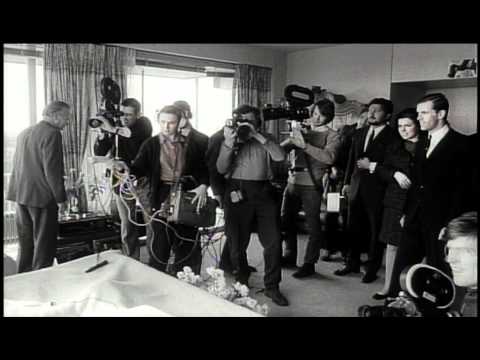
- Montreal Bed-In footage — Room 1742 at the Queen Elizabeth Hotel. Lennon leads a chorus of journalists, friends, and drop-ins; guitars, hand percussion, and a roomful of voices become a protest chant caught on tape.
- Why it matters:
- It’s the film’s thesis in four words and a sing-along — activism as performance art with receipts.
“Power to the People” (John Lennon)
- Where it plays:
- Over rally footage and TV clips as Lennon leans into organizing optics — placards, megaphones, and street-corner interviews.
- Why it matters:
- Frames Lennon not as a celebrity dabbling in causes but as a repeat player in movement spaces.
“John Sinclair” (Live at Crisler Arena, Ann Arbor, 1971)
- Where it plays:
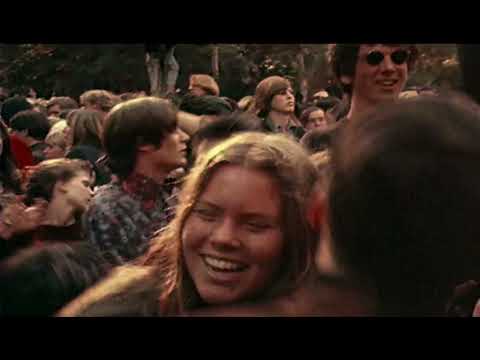
- At the John Sinclair Freedom Rally — Lennon debuts the song for thousands, the camera bouncing from stage to crowd as he calls for Sinclair’s release.
- Why it matters:
- Protest song as intervention; the film connects music to real-world outcomes.
“Attica State” (Live, 1971)
- Where it plays:
- Cut against news footage and interviews in the uprising’s aftermath; acoustic strums meet documentary images of grief and anger.
- Why it matters:
- Shows Lennon reacting in real time to state violence — urgency over polish.
“New York City” (John Lennon & The Plastic Ono Band with Elephant’s Memory)
- Where it plays:
- Move-in montage — downtown shots, loft life, and jam-room clips as Lennon stakes out a new home base for activism.
- Why it matters:
- Geography as identity; the soundtrack shifts from London myth to East Village grit.
“Gimme Some Truth” (John Lennon)
- Where it plays:
- Synced to legal maneuvers and press conferences during the deportation fight; the edit rides its snarling riff between court doors and microphones.
- Why it matters:
- Concentrated distrust — the perfect bridge between private frustration and public testimony.
“How Do You Sleep?” (Instrumental)
- Where it plays:
- Used like score under investigative passages — tape boxes, memos, and FBI files flipping by while strings and rhythm from Lennon’s 1971 recording roll without vocals.
- Why it matters:
- A clever editorial choice: familiar textures repurposed as documentary underscore.
“Imagine” / “Love” / “Oh My Love”
- Where they play:
- Breathing spaces — interviews with Ono and friends, domestic footage, and post-legal relief. Piano, strings, and hush offset the rallies and headlines.
- Why it matters:
- Balances slogan and soul; the private sphere keeps the politics human.
“The Ballad of John and Yoko” (The Beatles)
- Where it plays:
- Travelogue snippets and press scrums, charting the couple’s public performance of partnership — airport photos, bed-in callbacks, and tabloid glare.
- Why it matters:
- A Beatles-era bridge that contextualizes the media theater Lennon later weaponizes for peace activism.
Notes & Trivia
- The album collects recordings from 1968–1980 but streeted in September 2006 alongside the film’s release.
- Two live tracks (“John Sinclair” and “Attica State”) come from the December 1971 Freedom Rally in Ann Arbor, Michigan.
- An instrumental mix of “How Do You Sleep?” was prepared for the film/album to serve as de-facto score.
- “The Ballad of John and Yoko” is the lone Beatles-credited track, sitting among Lennon’s solo work.
- Chart note: the soundtrack reached the U.S. Top Soundtracks chart shortly after release.
Reception & Quotes
Critics called the film accessible and timely; the album drew praise for context, with caveats that most material was already classic. As a companion, it succeeds — you hear the activism arc without watching a frame.
“A friendly portrait of the activist Lennon — effective, if unsurprising.” Screen Daily
“Great songs cut through the politics; the drawback is you likely own many already.” Drowned in Sound
“The rallies and bed-ins reassert ‘Give Peace a Chance’ as a working anthem.” The Guardian (review)
Interesting Facts
- Documentary premieres: The film bowed at Venice, then screened at Toronto before its U.S. release.
- Label triad: Parlophone/Capitol/EMI shared the 2006 soundtrack rollout across regions.
- Bed-in to billboard: The Montreal sing-along that birthed “Give Peace a Chance” doubled as a media strategy lesson.
- Paper trail: The movie intercuts FBI files and court documents with songs — music as discovery material.
- Producers on album: Alongside Lennon/Ono/Spector, the film’s David Leaf and Lisa Wohl are credited — a rare film/album crossover.
Technical Info
- Title: The U.S. vs. John Lennon — Music From the Motion Picture
- Year: 2006 (UK release Sep 25; U.S. Sep 26)
- Type: Soundtrack compilation (1968–1980 recordings) with select live & previously unreleased elements
- Primary artist: John Lennon (plus one Beatles track)
- Album producers: John Lennon, Yoko Ono, Phil Spector, David Leaf, Lisa Wohl
- Labels: Parlophone / Capitol / EMI
- Selected notable placements: “Give Peace a Chance” — Montreal Bed-In; “John Sinclair” & “Attica State” — Freedom Rally (Ann Arbor, 1971); “Gimme Some Truth” — immigration fight montage; “How Do You Sleep?” (instrumental) — investigative sections
- Film credits (select): Directed by David Leaf & John Scheinfeld; distributed by Lionsgate
- Availability: CD/digital; widely available via major services and catalog reissues
Questions & Answers
- Is this a greatest-hits set?
- It’s curated like one, but themed to the film’s activism arc, with live cuts and a unique instrumental mix.
- Are the bed-in recordings actually heard?
- Yes — the album includes “Give Peace a Chance,” tied to the Montreal Bed-In session.
- Is there any Beatles material?
- One: “The Ballad of John and Yoko,” placed among Lennon’s solo tracks for context.
- What’s unique to this release?
- The instrumental “How Do You Sleep?” and specific live recordings (“John Sinclair,” “Attica State”) aligned to the film.
- Who made the documentary?
- David Leaf and John Scheinfeld wrote, directed, and produced the film.
Key Contributors
| Entity | Relation | Entity |
|---|---|---|
| David Leaf | wrote/directed/produced | The U.S. vs. John Lennon (2006) |
| John Scheinfeld | wrote/directed/produced | The U.S. vs. John Lennon (2006) |
| Parlophone / Capitol / EMI | released | Soundtrack album (2006) |
| Yoko Ono | cleared/authorized archives; co-produced tracks | Soundtrack selections |
| John Lennon & The Plastic Ono Band | performed | core tracks on soundtrack |
| The Beatles | performed | “The Ballad of John and Yoko” (included) |
| Queen Elizabeth Hotel, Montreal | hosted | 1969 Bed-In (“Give Peace a Chance” recording) |
| Crisler Arena, Ann Arbor | hosted | 1971 John Sinclair Freedom Rally (live tracks) |
| Lionsgate | distributed | feature documentary |
Sources: Wikipedia (film & soundtrack overviews); MusicBrainz (release metadata & credits); Discogs (pressings & production notes); Official John Lennon site (track credits & notes); Screen Daily (review); The Guardian (context); Amazon/Prime listing (credits); YouTube (official trailers).
November, 29th 2025
A-Z Lyrics Universe
Cynthia Erivo Popular
Ariana Grande Horsepower
Post Malone Ain't No Love in Oklahoma
Luke Combs Good Riddance (Time of Your Life)
Green Day Bye Bye Bye
*NSYNC You're the One That I Wan
John Travolta & Olivia Newton-John I Always Wanted a Brother
Braelyn Rankins, Theo Somolu, Kelvin Harrison Jr. and Aaron Pierre The Power of Love
Frankie Goes to Hollywood Beyond
Auli’i Cravalho feat. Rachel House MORE ›