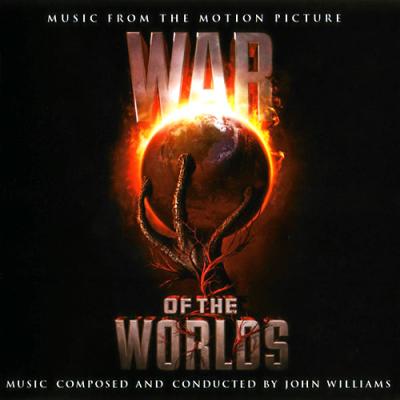
"The War of the Worlds" Soundtrack Lyrics
Musical • 1990
Track Listing
"Jeff Wayne’s Musical Version of The War of the Worlds (1990 CD Edition)" – Album Guide to Tracks and Key Scenes
Review
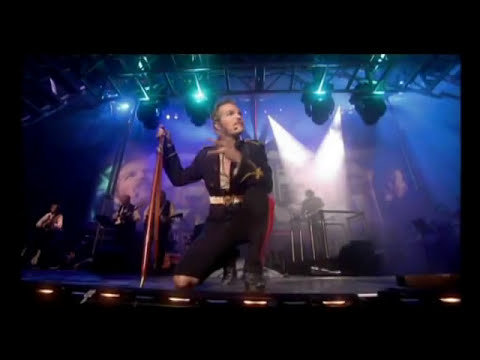
What if H. G. Wells’s Martian invasion were told as a rock-oratorio with a velvet narrator and laser-etched synths? Jeff Wayne’s long-lived concept album answers with a fusion of orchestral sweep, prog-rock pulse, and pop voices — a narrative you can play loud. The 1990 compact-disc issue didn’t change the story, but it gave a new generation the definitive way to hear it end-to-end.
Richard Burton’s spoken “Journalist” anchors the tale while singers personify key figures: Justin Hayward’s aching Sung Thoughts of the Journalist, David Essex’s restless Artilleryman, Phil Lynott’s tormented Parson, Julie Covington’s steadfast Beth, and Chris Thompson’s blazing set pieces. Wayne’s production — Moogs and CS-80s braided with strings and guitars — turns Horsell Common into theater, “Forever Autumn” into a national sigh, and “Thunder Child” into pure heroism. It’s big, bold, and remarkably faithful to Wells’s plot contours.
Phases & meanings: symphonic rock for awe and terror (fighting machines, red weed), radio-friendly balladry for human grief (“Forever Autumn”), funk & hard rock for defiance (“Thunder Child,” “Brave New World”), and electronic sound design for the Martians themselves (the infamous “ULLA!” motif). The album’s drama still hits like a heat ray.
How It Was Made
Wayne recorded the work across 1976–77 at Advision Studios on synchronized 48-track — then cutting-edge for a rock opera — and cast Burton plus a slate of star vocalists (Hayward, Essex, Lynott, Covington, Thompson). Ken Freeman’s synths (Minimoog, ARP Odyssey, Yamaha CS-80) share space with rock band and orchestra. The original double-LP appeared in 1978; a first widely distributed CD configuration followed around 1990 as the album’s classic master moved to the digital era, with further editions in the mid-1990s and beyond.
Tracks & Scenes
“The Eve of the War” (Narration: Richard Burton; Sung Thoughts: Justin Hayward)
- Where it plays:
- Prologue and first sighting. The Journalist frames the late-Victorian calm as Martian cylinders streak toward Earth. Swelling strings and a disco-prog groove announce a world about to tilt; the first “ULLA!” lands like a flare.
- Why it matters:
- Sets the album’s grammar — documentary narration woven into anthemic hooks and electronic menace.
“Horsell Common and the Heat Ray” (Burton; ensemble)
- Where it plays:
- The cylinder opens. On Horsell Common, curiosity turns to horror as the Heat-Ray cuts through the crowd. Brass stabs and synth sirens make the massacre feel mechanical, inevitable.
- Why it matters:
- Wayne’s sound design makes the Martians a texture as much as characters.
“Forever Autumn” (Justin Hayward)
- Where it plays:
- Separation. The Journalist loses Carrie in the chaos; Hayward sings memory as landscape — woodwind sighs, gentle guitar, a melody that hangs in cool air.
- Why it matters:
- The album’s emotional center; grief becomes singable.
“The Artilleryman and the Fighting Machine” (David Essex; Burton)
- Where it plays:
- Retreat and resolve. Essex’s soldier collides with a towering tripod; drums and synth brass punch through narration as humans scatter.
- Why it matters:
- Introduces the album’s human counterpunch — bravado, strategy, denial.
“Thunder Child” (Chris Thompson)
- Where it plays:
- At sea, a British ironclad charges the tripods to cover a civilian evacuation. Guitar chugs and choral lift sell sacrifice as spectacle; the ship goes down a legend.
- Why it matters:
- Classic rock heroics translated into maritime myth — goosebumps every time.
“The Spirit of Man” (Phil Lynott & Julie Covington; Burton)
- Where it plays:
- Under siege with the Parson and Beth. Lynott spirals between despair and zeal; Covington tries to pull him back. Organ swells, guitar grit, and a choir argue about hope.
- Why it matters:
- Faith and fury in duet form — the record’s most operatic confrontation.
“Brave New World” (David Essex)
- Where it plays:
- The Artilleryman’s grand plan: underground cities, a rebuilt civilization. Marching rhythm and swaggering vocal sell a dream the Journalist rejects.
- Why it matters:
- Utopian fantasy collides with narrative realism; character revealed by groove.
“Dead London” (Burton; orchestra & electronics)
- Where it plays:
- Ruins and revelation. The Journalist walks a silent city overtaken by the Red Weed before discovering the Martians dying of Earthly bacteria.
- Why it matters:
- From dread to deliverance without a battle — the score’s dynamics do the storytelling.
“Epilogue (Part 2) — NASA/Space Probe” (voice FX; Wayne)
- Where it plays:
- Stinger ending. A late-20th-century space transmission hints the Martians may return. Cold electronics; gooseflesh.
- Why it matters:
- Future-shock coda that kept fans scanning the skies (and replaying the disc).
Notes & Trivia
- Originally a 1978 double-LP; the first widely available CD issue landed circa late 1990, with new remastered and expanded editions following in 1995 and 2005.
- Guest cast on the classic version: Richard Burton (narrator), Justin Hayward, David Essex, Phil Lynott, Julie Covington, Chris Thompson.
- Ben Liebrand’s 1989 remix of “The Eve of the War” reached No. 3 on the UK Singles Chart.
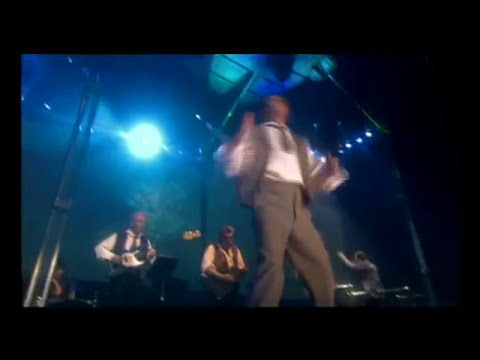
- Wayne later mounted arena tours and a “New Generation” re-recording (2012) with Liam Neeson narrating.
- The album’s ending “NASA” tag was inspired by the 1976 Viking Mars program.
Reception & Quotes
On release (and ever since), critics framed it as a rare concept album that actually works: big hooks, clear storytelling, and studio craft to spare. The 1990s CD era only broadened its audience.
“Four sides of sheer excellence … script, music and voices in lockstep.” Record Mirror (contemporary note)
“The ultimate concept album — groundbreaking, cutting-edge and seminal.” Prog/LouderSound retrospective
“New tech, same heart” — on Wayne’s later “New Generation”. Wired (live/album feature)
Interesting Facts
- 48-track feat: The 1976–77 sessions synced two 24-track machines — huge for the time.
- Logo lore: The iconic italic “The War of the Worlds” title treatment became a brand across editions and tours.
- Global variants: A German-language version (1981) cast Curd Jürgens as the Journalist.
- Remix universe: Wayne’s ULLAdubULLA projects (2000s) reimagined core cues for club and hip-hop contexts.
- Stage hardware: Live shows feature a descending tripod with a working “Heat Ray.”
Technical Info
- Title: Jeff Wayne’s Musical Version of The War of the Worlds — 1990 CD Edition
- Year: 1990 (first broadly distributed compact-disc issue of the classic 1978 recording)
- Type: Studio concept album / rock-oratorio (narrated musical)
- Composer/producer: Jeff Wayne
- Writers (lyrics/script): Gary Osborne, Paul Vigrass (lyrics); Doreen Wayne (script adaptations)
- Principal cast (classic version): Richard Burton; Justin Hayward; David Essex; Phil Lynott; Julie Covington; Chris Thompson
- Notable tracks/scenes: “The Eve of the War”; “Horsell Common & the Heat Ray”; “Forever Autumn”; “Thunder Child”; “The Spirit of Man”; “Dead London”; “Epilogue (Part 2)”
- Later editions: 1995 CD expansions/remixes; 2005 SACD/Collector’s; 2012 The New Generation re-recording
- Labels (various): CBS/Columbia/Sony (regional, era-specific)
- Availability: Multiple CD/streaming masters; live DVDs and arena recordings available separately
Questions & Answers
- Why “1990” for a 1978 album?
- It marks the first widely available CD issue of Wayne’s classic recording as it migrated from vinyl to digital, before later remasters.
- How faithful is it to H. G. Wells?
- Very — the plot beats (Horsell Common, Red Weed, Thunder Child, bacteria twist) track the novel closely, with added character songs.
- Who sings “Forever Autumn”?
- Justin Hayward of The Moody Blues — his performance became the album’s signature ballad.
- Is there a newer version?
- Yes. Wayne’s 2012 The New Generation re-recording features Liam Neeson narrating and a new vocal cast.
- What’s that “ULLA!” sound?
- The Martian war-cry — created on synths and woven through the score as a sonic calling card.
Key Contributors
| Entity | Relation | Entity |
|---|---|---|
| Jeff Wayne | composed, produced, conducted | Musical Version of The War of the Worlds |
| Richard Burton | narrated as | The Journalist (classic cast) |
| Justin Hayward | sang | Sung Thoughts of the Journalist (“Forever Autumn”) |
| David Essex | sang | The Artilleryman (“Brave New World”) |
| Phil Lynott | sang | Parson Nathaniel (“The Spirit of Man”) |
| Julie Covington | sang | Beth, Parson’s wife |
| Chris Thompson | sang | “Thunder Child”; Voice of Humanity |
| Ken Freeman | performed | synthesisers (Minimoog, ARP Odyssey, CS-80) |
| CBS/Columbia/Sony | issued | LP (1978) → CD editions (from 1990 onward) |
| Liam Neeson | narrated | The New Generation (2012, later tours) |
Sources: Wikipedia (album history, personnel, remix/chart notes); MusicBrainz (edition timelines); Discogs (1990–91 CD pressings); Official channels & trailers; Wired (New Generation live/album feature).
November, 29th 2025
A-Z Lyrics Universe
Cynthia Erivo Popular
Ariana Grande Horsepower
Post Malone Ain't No Love in Oklahoma
Luke Combs Good Riddance (Time of Your Life)
Green Day Bye Bye Bye
*NSYNC You're the One That I Wan
John Travolta & Olivia Newton-John I Always Wanted a Brother
Braelyn Rankins, Theo Somolu, Kelvin Harrison Jr. and Aaron Pierre The Power of Love
Frankie Goes to Hollywood Beyond
Auli’i Cravalho feat. Rachel House MORE ›