
"The Wild Party" Soundtrack Lyrics
Musical • 2000
Track Listing
“The Wild Party (Original Broadway Cast Recording)” – Album Guide to Tracks and Key Scenes
Review
What happens when a party becomes a pressure cooker — and the music is the steam? LaChiusa’s The Wild Party answers with a score that slinks, snaps, and finally explodes.
Based on Joseph Moncure March’s 1928 poem, the Broadway version (2000) tracks Queenie and Burrs as they host a gin-slicked bash that spirals from flirtation to violence. The cast album bottles that arc: vaudeville prologue, parade of misfits, a midnight crest of desire and jealousy, and a dawn that feels like reckoning. Toni Collette’s Queenie (debuting on Broadway) and Mandy Patinkin’s Burrs are etched in color by Michael John LaChiusa’s period-savvy writing — reed-bent jazz, cakewalk ghosts, and orchestral surges — while Eartha Kitt glides through as Dolores with feline bite. It plays like a musical noir: glamorous, hungry, fatal.
Functionally, this album is a narrative engine. Songs aren’t detachable “numbers”; they’re scenes. The party is the instrument: chatter in counterpoint, sax stabs for temptation, muted brass for secrets. As the room fogs with smoke and cocaine, textures thicken; then the music strips bare for morning — a hangover of truth. That’s the hook: the score behaves like alcohol in the bloodstream.
Genres & themes, in phases: vintage jazz and vaudeville — social masks and showbiz survival; blues inflections — lust curdling into power games; orchestral modernism — the violence below the glitter; late-night torch-song lyricism — the cost of wanting out. The sonic thesis: surface razzle versus inner rot.
How It Was Made
Composer-lyricist Michael John LaChiusa, with book by LaChiusa and George C. Wolfe, reimagined March’s poem as a vaudeville-within-a-musical, framing scenes like acts on a bill. The Broadway production opened April 13, 2000, at the Virginia Theatre (now August Wilson). Directed by Wolfe and choreographed by Joey McKneely, it starred Toni Collette (Queenie), Mandy Patinkin (Burrs), Yancey Arias (Black), and Eartha Kitt (Dolores). A cast album followed on Decca Records, capturing the deliberately interwoven cues and ensemble vocal architecture. Editorially, the show rejects stand-alone radio singles; the storytelling sits in reprises, cross-rhythms, and party “underscoring.”
Licensing & editorial notes: the production leaned into authentic 1920s timbres and dance forms (black bottom, cakewalk), while acknowledging the era’s thorny performance practices (minstrelsy appears as character context, not endorsement). The album preserves these tensions, which is why it still feels nervy rather than nostalgic.
Tracks & Scenes
Below: select numbers and how they land in-story. (Album track titles are LaChiusa’s; timings vary by production, so markers are approximate and dramaturgical.)
“Queenie Was a Blonde” (Company)
- Where it plays:
- Prologue-as-vaudeville. The company presents Queenie’s myth: a blonde who loves “violent and vicious” men. Staged with easel cards and showbill flair, it sets the performative lens before the apartment fills. ~Opening minutes; quasi-diegetic vaudeville style.
- Why it matters:
- Establishes the unreliable glamour of self-invention — and warns that performance is this world’s currency.
“Wild Party” (Queenie, Burrs)
- Where it plays:
- After an early lovers’ spat, they decide to throw the party-to-end-all-parties. Music swells with anticipatory brass as invitations (and resentments) go out. ~Early Act I; non-diegetic number fueling montage of prep.
- Why it matters:
- Desire as strategy. The party becomes a weapon; the groove promises release and sets up catastrophe.
“Welcome to My Party” (Queenie)
- Where it plays:
- Guests arrive — a cavalcade of types: producers, chorus girls, dangerous men. Queenie hosts like a ringmaster, clocking power dynamics while pouring bathtub gin. Mid–Act I; partially diegetic (performed “to” the room).
- Why it matters:
- Introduces the chessboard. Queenie’s charm reads as control, but the crowd has its own agenda.
“Black Bottom” (Queenie, Company)
- Where it plays:
- Dance ignition. The floor heaves; heat turns to showmanship. Choreographic call-backs to 1920s steps underline the historical frame. Mid–Act I; diegetic dance number bleeding into underscoring.
- Why it matters:
- Party as spectacle; group pleasure papers over individual fractures.
“People Like Us” (Queenie, Black)
- Where it plays:
- Quiet balcony/bedroom beat outside the noise. Queenie and Black confess they’re out of step with the room. Harmonies are intimate; percussion recedes. Late Act I; non-diegetic.
- Why it matters:
- A genuine lifeline — the album’s most human duet — and the spark that makes Burrs’ jealousy lethal.
“Gin” (Burrs, Company)
- Where it plays:
- Burrs toasts the madness, rallying the crowd as tempers rise. The groove is swaggering; horns leer. Late Act I; diegetic toast pivoting into non-diegetic frenzy.
- Why it matters:
- Accelerant. The song liquefies boundaries — social, moral, physical.
“After Midnight Dies” (Sally)
- Where it plays:
- Near-dawn tableau: the party’s detritus. Sally walks through sleeping bodies, naming what’s left when the high wears off. Early Act II; solo spotlight, non-diegetic lament with diegetic staging.
- Why it matters:
- Moral x-ray. It reframes the bacchanal as a community of addicts, romantics, and liars.
“What I Need” → “How Many Women in the World? (Reprise)” → Finale
- Where it plays:
- Queenie tries to choose a future; Burrs paints himself into a corner. Gun drawn, the triangle detonates in the bedroom. The orchestration tightens to a wire before the fatal crack and a cold sunrise. Late Act II; through-sung climactic sequence.
- Why it matters:
- Musical inevitability — motives, motifs, and masks collide; the album’s narrative promise pays off.
About trailers & non-album cues
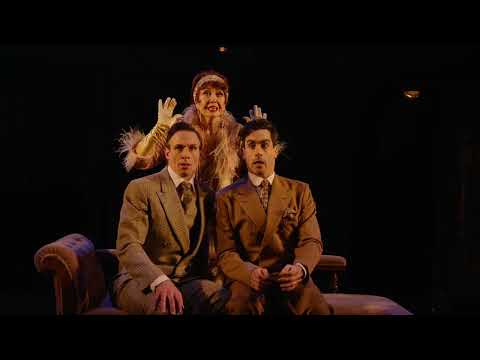
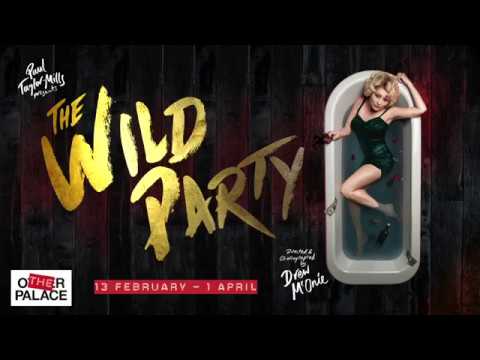
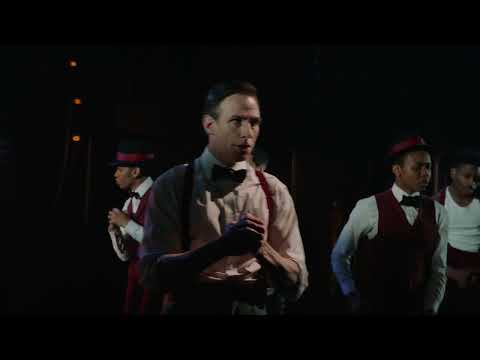
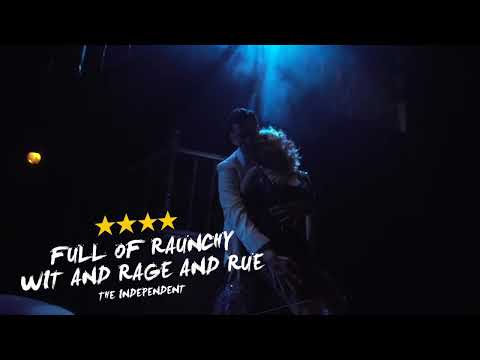
Marketing reels for later productions often underscore with compact medleys (no clean single). If you’ve seen a UK/Other Palace trailer or an Encores! promo, those cuts rearrange album material to foreground Queenie/Burrs/Black and the “party” hook; they’re montages rather than discrete tracks.
Notes & Trivia
- Eartha Kitt created Dolores on Broadway — a late-career turn that adds delicious sting to “Moving Uptown.”
- The staging uses a vaudeville frame — title cards and show-within-a-show language — then lets the conceit erode as reality intrudes.
- Two different musicals titled The Wild Party premiered the same season: LaChiusa on Broadway; Andrew Lippa off-Broadway. Both are from March’s poem, but they sound and cast differently.
- The cast album’s mix privileges ensemble counterpoint; listen for overlapping gossip lines during crowd scenes — it’s dramaturgy by mic.
- Collette’s Broadway debut was originally envisioned for Vanessa Williams; pregnancy shifted casting trajectories and vocal color.
Reception & Quotes
Critics admired the ambition and orchestration, sparring over emotional temperature. Fans of LaChiusa’s muscular writing prize the album’s integrity as a full narrative listen.
“A parade of personalities in search of a missing party.” Ben Brantley, The New York Times
“Polished theatrical entertainment, with a distinctive edginess.” CurtainUp
“Restlessly percolating… stylish… in a smoky world of vices.” Variety
Availability: LaChiusa’s Broadway cast album — Decca Records (2000). Lippa’s Off-Broadway album — RCA (2000). Digital storefronts carry both; note differing song lists and tonal palettes.
Interesting Facts
- Twin premieres: The 1999–2000 season hosted two different Wild Party musicals — a Broadway anomaly.
- Sound-world split: LaChiusa leans 1920s jazz/vaudeville; Lippa opts for anachronistic pop-rock sheen — electric guitars in a flapper room.
- Narrative weave: LaChiusa’s album plays best straight through; random shuffle dulls the dramatic payoff.
- Character calculus: Dolores is pivotal in LaChiusa; her analog is minimal in Lippa’s version.
- Staging ethics: The show depicts minstrelsy to indict it — an uncomfortable but historically honest choice that the album doesn’t soft-pedal.
- Encore glow: Lippa’s 2015 Encores! concert (Sutton Foster, et al.) reignited interest and spiked streams for both albums.
Technical Info
- Title: The Wild Party (Original Broadway Cast Recording)
- Year: 2000
- Type: Stage musical cast album (score by Michael John LaChiusa)
- Composers: Michael John LaChiusa (music & lyrics)
- Book: Michael John LaChiusa & George C. Wolfe
- Music supervision/direction: Broadway production team under George C. Wolfe; album produced for Decca
- Selected notable placements: “People Like Us” (Queenie/Black), “Gin” (Burrs/Company), “After Midnight Dies” (Sally)
- Release context: Opened April 13, 2000 (Virginia Theatre, Broadway); album issued 2000
- Label/album status: Decca Records (LaChiusa). Parallel release: RCA (Lippa Off-Broadway) — different score.
- Availability: Digital/streaming storefronts; physical CD via catalog reissues/secondary market.
Questions & Answers
- Is this the LaChiusa or the Lippa Wild Party?
- This guide centers on LaChiusa’s 2000 Broadway album; we note Lippa’s 2000 Off-Broadway album for comparison.
- Why do the two albums feel so different?
- LaChiusa writes era-rooted jazz/vaudeville tightly welded to plot; Lippa favors pop-rock immediacy and stand-alone song appeal.
- Do I need to hear the album in order?
- Yes. LaChiusa’s sequencing mirrors the party’s rise and crash; the final tracks only land if you’ve taken the trip.
- Is Eartha Kitt on the Broadway album?
- Yes — as Dolores, with signature phrasing that spices the producers’ “uptown” thread.
- Which album is easier to sing from out of context?
- Lippa’s. LaChiusa’s numbers are more integrated; they hit hardest inside the narrative.
Key Contributors
| Entity | Relation | Entity |
|---|---|---|
| Michael John LaChiusa | composed & wrote lyrics for | The Wild Party (Broadway musical, 2000) |
| George C. Wolfe | co-wrote book & directed | The Wild Party (Broadway, 2000) |
| Toni Collette | originated role of | Queenie (Broadway, 2000) |
| Mandy Patinkin | originated role of | Burrs (Broadway, 2000) |
| Eartha Kitt | originated role of | Dolores (Broadway, 2000) |
| Yancey Arias | originated role of | Black (Broadway, 2000) |
| Decca Records | released | Original Broadway Cast Recording (2000) |
| RCA Records | released | Original Off-Broadway Cast Recording (Lippa, 2000) |
| Joseph Moncure March | wrote source poem | The Wild Party (1928) |
| Virginia Theatre (August Wilson Theatre) | premiered | Broadway production (Apr 13, 2000) |
Sources: Wikipedia (LaChiusa & Lippa pages); Variety; The New York Times; CurtainUp; MusicBrainz/Discogs catalogs; Decca/RCA release notes; New Yorker background on March’s poem.
November, 29th 2025
A-Z Lyrics Universe
Cynthia Erivo Popular
Ariana Grande Horsepower
Post Malone Ain't No Love in Oklahoma
Luke Combs Good Riddance (Time of Your Life)
Green Day Bye Bye Bye
*NSYNC You're the One That I Wan
John Travolta & Olivia Newton-John I Always Wanted a Brother
Braelyn Rankins, Theo Somolu, Kelvin Harrison Jr. and Aaron Pierre The Power of Love
Frankie Goes to Hollywood Beyond
Auli’i Cravalho feat. Rachel House MORE ›