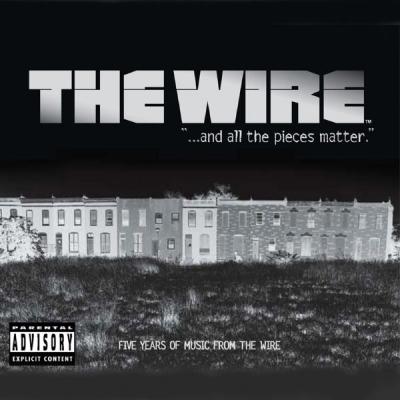
"The Wire: And All the Pieces Matter" Soundtrack Lyrics
Movie • 2008
Track Listing
The Blind Boys Of Alabama
Wire
Michael Franti & Spearhead
Rod Lee
DJ Technics
Wire
Neville Brothers
The Nighthawks
Lafayette Gilchrist
Jesse Winchester
Paul Weller
Solomon Burke
The Pogues
Wire
Stelios Kazantzidis
Wire
Domaje
Wire
Tyree Colion
Wire
Bossman
Sharpshooters
Wire
Masta Ace Feat. Stricklin
Ogun Feat. Phathead
Diablo
Mullyman
Wire
Steve Earle
Tom Waits
Wire
“The Wire: ‘…And All the Pieces Matter’ — Five Years of Music from The Wire (Soundtrack)” – Album Guide to Tracks and Key Scenes
Review
Can a soundtrack about restraint still hit like a brick? This one does. The Wire’s music is famously sparing — radios, bars, wakes, the opening credits — which makes the 2008 compilation feel like a coded message: memories, indexed in sound.
The album braids versions of Tom Waits’ “Way Down in the Hole” (the show’s shifting title theme) with Baltimore club cuts, soul, folk, and scene-stealing end-montage songs. Dialogue interludes snap you back to casework — “the king stay the king,” “we used to make things in this country” — while cuts by The Pogues, Solomon Burke, Paul Weller, Steve Earle and more map the show’s moral weather. It isn’t a jukebox; it’s evidence. The playthrough mirrors the series’ method: context is everything, and all the pieces matter.
Genres & themes, in phases: roots/blues and gospel — systems and faith; Irish folk and barroom chant — grief as ritual; Baltimore club and hip-hop — local reality, kinetic; Americana and singer-songwriter — the morning-after reckonings. The thesis: songs arrive like wiretap hits — few, precise, devastating.
How It Was Made
Released by Nonesuch in January 2008 alongside the final season, the set was assembled with music supervisor Blake Leyh and the creative team. It collects multiple performers of the opening theme “Way Down in the Hole” and folds in season-defining placements (“Fast Train,” “I Walk on Gilded Splinters”), plus the show’s closing-credits cue, Leyh’s “The Fall.” A sister compilation, Beyond Hamsterdam, spotlights Baltimore artists referenced or featured in-series. The sequencing leans into the show’s diegetic philosophy (music mostly exists in the world of the story) while preserving the few non-diegetic statements that end each season.
Editorial choices skew documentary: no glossy remixes, minimal sweetening. The booklet essays and dialogue pulls position the album as a field report — a memory palace for five seasons of detail work.
Tracks & Scenes
Below: key cuts and where they land. (Song titles as credited on the 2008 album; episode specifics noted where verifiable.)
“Way Down in the Hole” (Tom Waits — song; multiple performers across seasons)
- Where it plays:
- Opening credits each season, with a different recording: S1 The Blind Boys of Alabama; S2 Tom Waits; S3 The Neville Brothers; S4 DoMaJe (Baltimore teens); S5 Steve Earle. Season 5 finale reprises the Blind Boys’ version inside a late montage. Non-diegetic title theme.
- Why it matters:
- Same hymn, five lenses — the show’s shifting vantage points, stamped in sound.
“The Body of an American” (The Pogues)
- Where it plays:
- Police wakes at Kavanagh’s bar — first for Det. Ray Cole (S3 “Dead Soldiers”), again in S4 (“Corner Boys”), and at McNulty’s staged wake (S5 finale “-30-”). It erupts diegetically — a roomful of cops roaring the chorus, whiskey high, eyes wet.
- Why it matters:
- Grief as ritual. The bar becomes a church; the song is liturgy and release.
“Fast Train” (Solomon Burke)
- Where it plays:
- Season 3 finale montage (“Mission Accomplished”). As courtrooms empty and corners reset, Burke’s elegy floats over pivots and endings. Non-diegetic.
- Why it matters:
- A humane benediction over a system that keeps rolling — tender, unsentimental, crushing.
“I Walk on Gilded Splinters” (Paul Weller)
- Where it plays:
- Season 4 finale (“Final Grades”) closing montage. Over schools, corners, and careers colliding, Weller’s swamp-stomp stalks the images. Non-diegetic.
- Why it matters:
- Predatory swagger for an ecosystem that absorbs everything — victories and casualties alike.
“I Feel Alright” (Steve Earle)
- Where it plays:
- Season 2 finale (“Port in a Storm”) montage. After the docks saga’s reckoning, Earle’s bittersweet barroom bounce carries a hard reset. Non-diegetic.
- Why it matters:
- Irony with a grin — the machine hums on; people pay the tab.
“Step by Step” (Jesse Winchester)
- Where it plays:
- Season 1 finale (“Sentencing”) montage into credits; “The Fall” follows. Non-diegetic.
- Why it matters:
- The show’s first big summation — a weary, humane cadence for the cases and the corners.
“Oh My God” (Michael Franti & Spearhead)
- Where it plays:
- Used within season arcs and on album as tone-setter — activist pulse that mirrors the series’ systems critique.
- Why it matters:
- Gives the compilation its protest spine without preaching.
“The Fall” (Blake Leyh)
- Where it plays:
- Closing theme over end credits (most episodes). An instrumental exhale after each hour’s last image. Non-diegetic.
- Why it matters:
- A two-minute elegy that teaches you how to leave the world of the show — then come back.
About trailers & non-album cues
HBO’s trailers lean on series score textures and dialogue rhythm more than licensed tracks; the album’s pull is memory — it reconstructs those moments without the pictures.

Notes & Trivia
- Each season’s main titles use a different performance of “Way Down in the Hole” — the performers mirror seasonal tone and focus.
- “The Body of an American” became the show’s unofficial cop-wake ritual — a recurring diegetic tradition.
- The compilation sprinkles spoken-word dialogue between tracks — mini-scenes that frame the songs as case exhibits.
- Beyond Hamsterdam released alongside this set to foreground Baltimore club/rap tracks connected to the show’s world.
- Steve Earle not only sings the S5 theme version; he appears in-series as Walon, a counselor.
Reception & Quotes
Critics praised the set as a fan’s memory-trigger — less a standalone playlist, more a guided tour through the show’s emotional pressure points.
“Most of the great moments come from the Pavlovian joy of recognition.” Pitchfork
“Prompts a Proustian rush: wakes, finales, and the way this show used songs like casefile tabs.” The Guardian (music blog)
“Dialogue clips and multiple ‘Way Down’ covers anchor a document of the series’ musical minimalism.” AllMusic (summary)
Availability: Nonesuch’s 2008 CD/digital issue; streaming editions (standard and “deluxe”) continue to circulate; companion Beyond Hamsterdam spotlights Baltimore artists.
Interesting Facts
- Diegetic rule: The Wire largely keeps music inside the world — radios, bars, bands — saving non-diegetic songs for the big seasonal montages.
- Wake canon: The Pogues’ song scores three key wakes, including McNulty’s fake one — a rare moment of communal catharsis.
- Theme as thesis: Five covers of one Waits hymn sketch five angles on the same city.
- Final grace notes: The Blind Boys’ version returns inside the finale, looping the series back to its start.
- Booklet value: The CD notes include essays and a Simon interview that double as a micro-oral history.
Technical Info
- Title: “…And All the Pieces Matter” — Five Years of Music from The Wire
- Year: 2008 (compilation release)
- Type: Television soundtrack compilation (songs + dialogue; closing-theme cue)
- Label: Nonesuch Records
- Key tracks featured: “Way Down in the Hole” (multiple versions), “The Body of an American,” “Fast Train,” “I Walk on Gilded Splinters,” “I Feel Alright,” “Step by Step,” “The Fall.”
- Compilation concept: Document five seasons’ most resonant placements, with interleaved dialogue; companion set Beyond Hamsterdam highlights Baltimore artists.
- Release context: Timed to the show’s fifth (final) season rollout.
- Album status: CD/digital; streaming “deluxe” versions include expanded cuts.
Questions & Answers
- Is this a movie soundtrack?
- No — it’s the official TV soundtrack compilation for HBO’s The Wire, released in 2008.
- Who performs the theme in each season?
- S1 The Blind Boys of Alabama; S2 Tom Waits; S3 The Neville Brothers; S4 DoMaJe; S5 Steve Earle.
- What’s the end-credits music after most episodes?
- Blake Leyh’s instrumental “The Fall,” the show’s closing theme.
- Which songs score the season-ending montages?
- S1 “Step by Step” (Jesse Winchester); S2 “I Feel Alright” (Steve Earle); S3 “Fast Train” (Solomon Burke); S4 “I Walk on Gilded Splinters” (Paul Weller). S5 uses varied cues within its finale.
- What’s on the companion album Beyond Hamsterdam?
- Primarily Baltimore club/rap tracks tied to the show’s world — a scene snapshot separate from the series-wide compilation.
Key Contributors
| Entity | Relation | Entity |
|---|---|---|
| Nonesuch Records | released | “…And All the Pieces Matter” (2008) |
| David Simon | created | The Wire (TV series), source of all recordings |
| Blake Leyh | music supervised & composed | Closing theme “The Fall” |
| Tom Waits | wrote | “Way Down in the Hole” (theme song) |
| The Blind Boys of Alabama; Tom Waits; The Neville Brothers; DoMaJe; Steve Earle | performed | Seasonal versions of “Way Down in the Hole” |
| The Pogues | performed | “The Body of an American” (wake scenes) |
| Solomon Burke | performed | “Fast Train” (S3 finale montage) |
| Paul Weller | performed | “I Walk on Gilded Splinters” (S4 finale montage) |
| Steve Earle | performed | “I Feel Alright” (S2 finale montage); acted as Walon |
| HBO / Blown Deadline | produced | The Wire (2002–2008) |
Sources: Nonesuch Records; Wikipedia (album, episodes & songs); AllMusic; Pitchfork; The Guardian (Music Blog); Wired (magazine); TIME Entertainment; IMDb episode pages.
November, 29th 2025
A-Z Lyrics Universe
Cynthia Erivo Popular
Ariana Grande Horsepower
Post Malone Ain't No Love in Oklahoma
Luke Combs Good Riddance (Time of Your Life)
Green Day Bye Bye Bye
*NSYNC You're the One That I Wan
John Travolta & Olivia Newton-John I Always Wanted a Brother
Braelyn Rankins, Theo Somolu, Kelvin Harrison Jr. and Aaron Pierre The Power of Love
Frankie Goes to Hollywood Beyond
Auli’i Cravalho feat. Rachel House MORE ›