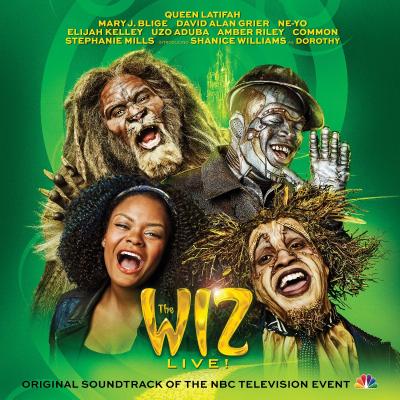
"The Wiz" Soundtrack Lyrics
Musical • 1978
Track Listing
The Wiz Cast
The Wiz Cast
The Wiz Cast
The Wiz Cast
The Wiz Cast
The Wiz Cast
The Wiz Cast
The Wiz Cast
The Wiz Cast
The Wiz Cast
The Wiz Cast
The Wiz Cast
The Wiz Cast
The Wiz Cast
The Wiz Cast
The Wiz Cast
The Wiz Cast
The Wiz Cast
The Wiz Cast
The Wiz Cast
The Wiz Cast
The Wiz Cast
The Wiz Cast
The Wiz Cast
“The Wiz (Original Motion Picture Soundtrack)” – Album Guide to Tracks and Key Scenes
Review
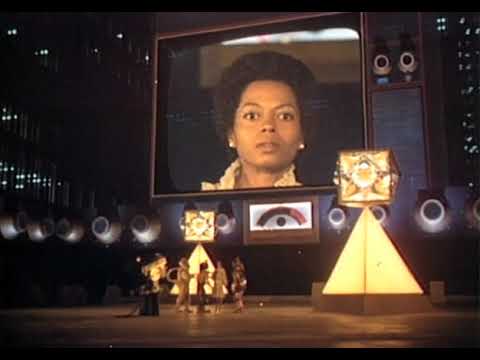
What happens when Oz trades gingerbread for concrete — and the music has to make a city dance? The Wiz soundtrack answers with disco brass, gospel lift, and R&B sheen, all funneled through Quincy Jones’s studio brain.
It’s a star vehicle and a world-builder at once. Diana Ross sings Dorothy like a diary; Michael Jackson’s Scarecrow moves on rhythm; Ted Ross, Nipsey Russell, and Lena Horne give the score bite and balm. Arrangements go big: string cushions, city-block percussion, harmonica sighs (Toots Thielemans), and a choir that turns chorus lines into crowds. The album plays like a night out that becomes a parade — sidewalk funk to cathedral glow — and it still lands the story’s soft heart in “Home.”
Genres & themes, in phases: soul & disco — motion and optimism; funk & club grooves — streetwise swagger; gospel — revelation, community; torch balladry — private courage. Thesis: liberation feels like a beat change.
How It Was Made
Recorded in New York (late 1977–early 1978) and released by MCA Records as a two-LP set on September 18, 1978, the album was produced and adapted for record by Quincy Jones. It blends Charlie Smalls’s Broadway songs and Luther Vandross’s “A Brand New Day (Everybody Rejoice)” with film-specific material and pop production. Like many film musicals of the period, the album uses pre/re-recorded cast performances rather than direct film mixes, with some differences from the screen versions noted in the liners.
Key studio signatures: Bruce Swedien engineering, Thielemans’s harmonica cameos, and a large vocal contingent. Singles rolled out to radio — “Ease on Down the Road,” “You Can’t Win,” and “A Brand New Day” — with the soundtrack ultimately outpacing the film at retail.
Tracks & Scenes
Selected numbers below — what they score, and why they land. (Order follows the film.)
“You Can’t Win” (Michael Jackson)
- Where it plays:
- On the junkyard poles, crows chant their “commandments” while the Scarecrow tries and fails to break free; the song blooms into a pleading groove before Dorothy helps him down. Diegetic performance turning into a stylized set-piece.
- Why it matters:
- Jackson’s elastic phrasing sells the city’s first rule — the game is rigged — so that friendship can break it.
“Ease on Down the Road” (Diana Ross & Michael Jackson; later with company)
- Where it plays:
- Motif for the journey — first steps off the graffiti-tagged yellow brick, then reprise as Tin Man and Lion join, each verse picking up a traveler and a new pocket of groove.
- Why it matters:
- Community in motion: the Broadway hook gets a radio-ready engine and becomes the album’s pop calling card.
“What Would I Do If I Could Feel?” → “Slide Some Oil to Me” (Nipsey Russell)
- Where it plays:
- Tin Man’s rusted lament under neon scrap; a comic/relief answer once the joints loosen, with percussive clanks and sly brass.
- Why it matters:
- Blueprint for the film’s tone: melancholy to bounce in 16 bars — and Russell’s timing is the grease.
“I’m a Mean Ole Lion” / “Be a Lion” (Ted Ross; company)
- Where it plays:
- Braggadocio intro at the museum steps gives way later to a tender pledge when Dorothy coaxes courage out of him in a quiet corner of the Emerald City night.
- Why it matters:
- Two sides of bravado: pose and truth. The album captures both with swagger and warmth.
“Emerald City Sequence (Green/Red/Gold)” (Ensemble)
- Where it plays:
- Fashion-crazy court shuffle in the Wiz’s plaza — the city changes color by decree, and the beat pivots with it; whistles, chants, and a disco runway feel.
- Why it matters:
- City as chorus — a satire of trend and power wrapped in a dance break.
“Don’t Nobody Bring Me No Bad News” (Mabel King)
- Where it plays:
- Evillene’s sweatshop throne room. Workers tremble; a stomp-yell gospel-funk sermon lays down the law until Dorothy’s crew triggers the revolt.
- Why it matters:
- Villain aria with church fire — a crowd-pleaser built from menace.
“A Brand New Day (Everybody Rejoice)” a.k.a. “Liberation Ballet” (Diana Ross, Michael Jackson, Nipsey Russell, Ted Ross & Winkies)
- Where it plays:
- Post-Evillene jubilee: chains off, lights up, and the Winkies dance the factory into freedom. The long album take mirrors the extended choreography on screen.
- Why it matters:
- Luther Vandross’s anthem turns plot into party — the soundtrack’s unshakable feel-good crest.
“Believe in Yourself” (Lena Horne, reprise) → “Home” (Diana Ross)
- Where it plays:
- Glinda’s counsel over starlight cues Dorothy’s farewell; “Home” closes the story as Dorothy sings herself back to Harlem and the block lights feel warmer than before.
- Why it matters:
- Two benedictions: one public, one private. If “Ease” moves your feet, “Home” stills them.
Notes & Trivia
- The LP is a two-record MCA release (gold-certified in the U.S.); the film used Motown’s production unit, but Universal/MCA issued the album.
- Quincy Jones adapted/supervised the music; this project led directly to his work with Michael Jackson on Off the Wall, Thriller, and Bad.
- The album versions aren’t strict film mixes — some lines/sections differ from what’s heard on screen.
- Toots Thielemans’s harmonica colors several cues; Bruce Swedien engineered.
- Singles: “Ease on Down the Road” (1978), “You Can’t Win” (early 1979), and “A Brand New Day” (1979).
Reception & Quotes
While the movie divided critics, the soundtrack drew praise for performances and production — and its singles worked on radio and charts.
“Great moments and a lot of life… sensational special effects and costumes, and Ross, Jackson, and Russell.” Roger Ebert
“A rich… album” — pricey at list but worth it “if you can get it on sale.” The Washington Post (1978)
AllMusic tags: R&B/disco gloss with Broadway bones; Jones’s studio craft in full view. AllMusic (album page)
Interesting Facts
- City as orchestra: The Emerald City fashion changes (“Green/Red/Gold”) are scored like a club DJ flipping scenes.
- Theme park ballad: “Home” became a long-life standard beyond the film — covered by stage and R&B stars alike.
- Crossroads moment: Jones meets Jackson here; pop history follows.
- LP as artifact: Early pressings included a fold-out poster and a 12-page booklet with notes and lyrics.
- Chart note: “A Brand New Day” unexpectedly hit #1 in the Netherlands in its film-cast single edit.
Technical Info
- Title: The Wiz (Original Motion Picture Soundtrack)
- Year: 1978 (LP release: Sept 18, 1978)
- Type: Film soundtrack — cast performances, studio album
- Composers/lyrics (core): Charlie Smalls; “A Brand New Day” by Luther Vandross; additional film material by Quincy Jones with Nickolas Ashford & Valerie Simpson, and others
- Producer/Music supervision: Quincy Jones; engineering by Bruce Swedien; featured harmonica by Toots Thielemans
- Label/format: MCA Records — original 2×LP; later CD/digital reissues
- Selected notable placements: “You Can’t Win” (crows/junkyard); “Ease on Down the Road” (journey motif, multiple reprises); “Don’t Nobody Bring Me No Bad News” (Evillene’s factory); “A Brand New Day” (post-Evillene liberation); “Believe in Yourself” → “Home” (Glinda counsel & finale)
- Chart/award notes: U.S. RIAA Gold; Top 40 on Billboard 200; multiple radio singles
Questions & Answers
- Why is the album on MCA if Motown produced the film?
- Universal (the film’s distributor) was owned by MCA Inc.; the soundtrack was issued on MCA Records as a label-family release.
- Are the album vocals the same as in the movie?
- Not exactly — like many ’70s musicals, cast vocals were re-recorded for album; a few lines/sections differ from the film mixes.
- Which single defined the soundtrack?
- “Ease on Down the Road,” a Top-40 radio staple; “You Can’t Win” and “A Brand New Day” followed.
- Where does “Home” appear?
- As Dorothy’s finale — after Glinda’s guidance, Ross delivers the closing ballad over the last images and credits.
- What’s the big ensemble explosion after the witch falls?
- “A Brand New Day (Everybody Rejoice)” — a liberation party sequence that doubles as the album’s ecstatic peak.
Key Contributors
| Entity | Relation | Entity |
|---|---|---|
| Quincy Jones | produced/adapted music for | The Wiz soundtrack (1978) |
| Diana Ross | starred as/voiced | Dorothy; “Home,” “Believe in Yourself (Dorothy)” |
| Michael Jackson | starred as/voiced | Scarecrow; “You Can’t Win,” “Ease on Down the Road” |
| Ted Ross; Nipsey Russell | performed | “I’m a Mean Ole Lion” / “Be a Lion”; “What Would I Do If I Could Feel,” “Slide Some Oil to Me” |
| Mabel King | performed | “Don’t Nobody Bring Me No Bad News” |
| Lena Horne | performed | “Believe in Yourself (Reprise)” |
| Luther Vandross | wrote | “A Brand New Day (Everybody Rejoice)” |
| Charlie Smalls | wrote | core songs from the Broadway score |
| Bruce Swedien | engineered | soundtrack recording |
| Toots Thielemans | featured on | harmonica (select cues) |
| MCA Records | released | Original Motion Picture Soundtrack (2×LP) |
| Sidney Lumet | directed | The Wiz (film) |
Sources: Wikipedia (soundtrack & film pages); AllMusic (album page & release details); Discogs (LP credits & packaging notes); Roger Ebert review; The Washington Post (1978 album piece); Universal/YouTube trailers & official clips.
November, 29th 2025
A-Z Lyrics Universe
Cynthia Erivo Popular
Ariana Grande Horsepower
Post Malone Ain't No Love in Oklahoma
Luke Combs Good Riddance (Time of Your Life)
Green Day Bye Bye Bye
*NSYNC You're the One That I Wan
John Travolta & Olivia Newton-John I Always Wanted a Brother
Braelyn Rankins, Theo Somolu, Kelvin Harrison Jr. and Aaron Pierre The Power of Love
Frankie Goes to Hollywood Beyond
Auli’i Cravalho feat. Rachel House MORE ›