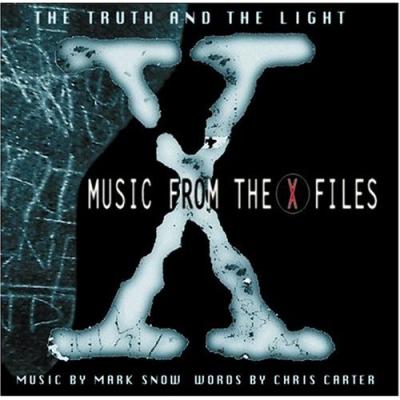
"The X-Files" Soundtrack Lyrics
Movie • 1998
Track Listing
Filter
Tonic
Foo Fighters
Ween
Sting & Aswad
The Cardigans
Better Than Ezra
The Cure
Bjork
Soul Coughing
X
Sarah McLachlan
Noel Gallagher
The Dust Brothers
Chris Carter
“The X-Files: Fight the Future — The Album & Original Score (1998)” – Album Guide to Tracks and Key Scenes
Review
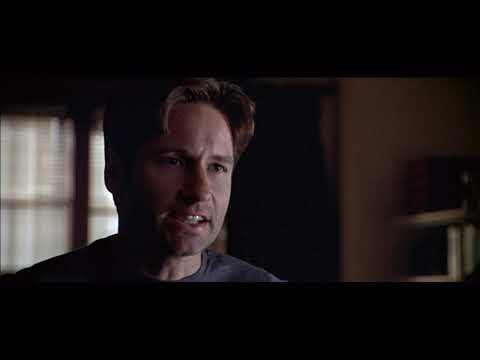
How do you soundtrack paranoia? Fight the Future splits the atom: an alt-rock compilation that curates mood, and a Mark Snow score that carries plot and dread. Together they feel like a case file — exhibits (songs) and evidence (score).
The X-Files: The Album (Elektra) gathers late-90s heavyweights — Foo Fighters, Filter, The Cure, Björk, Sarah McLachlan, Ween, Sting with Aswad — mostly in exclusive or reworked cuts. But on screen the film keeps music sparse: one jukebox needle-drop and end-credit songs. The heavy lifting is Snow’s orchestral/electronic score: propulsive ostinati for conspiracies, chilly choral pads for ancient ice, and a muscular set of action cues that turn cornfields and cargo holds into thriller playgrounds. The balance works — radio-friendly atmosphere off camera, narrative muscle on.
Genres & themes, in phases: alternative/indie (album) — unease, nocturnal romance; electronica-tinted orchestral score — procedure, menace, revelation; rock balladry (credits) — catharsis after catastrophe. Thesis: the songs haunt the world; the score makes it move.
How It Was Made
The X-Files: The Album was released June 2, 1998 (Elektra). Producer David Was asked artists to lean eerie or rework prior material — Foo Fighters cut a new version of “Walking After You”; Filter bent “One” toward dread; Sting teamed with Aswad for a reggae “Invisible Sun.” Most tracks are exclusive to the album; Björk’s “Hunter” arrived from her 1997 LP. On screen, only three songs are actually heard: “Crystal Ship” (X) in a bar scene and, over credits, Noel Gallagher’s instrumental “Teotihuacan” followed by Foo Fighters’ “Walking After You.”
Snow’s Original Motion Picture Score (also June 2, 1998) delivers the story architecture — from the opening “Threnody in ‘X’” to cornfield chases (“Corn Hives,” “Corn Copters”), the bee/bee-sting thread (“Stung Kissing/Cargo Hold”), and the polar climax (“Ice Base,” “Pod Monster Suite”). A 2014 La-La Land remaster corrected channel issues and added previously unreleased cues, aligning the album more closely to film order.
Tracks & Scenes
Key scene placements (album cuts and score). Timings vary by edition; order follows the film.
“Crystal Ship” (X)
- Where it plays:
- A dim, near-empty bar early in the film. Mulder sits with the jukebox murmuring as he weighs the fallout from the latest disaster. The song is diegetic — heard in-world — and mixed low under dialogue.
- Why it matters:
- The only in-film source cue sets a human, off-duty register before the conspiracy yanks him back.
“Teotihuacan” (Noel Gallagher) → “Walking After You” (Foo Fighters)
- Where it plays:
- End credits roll. Gallagher’s instrumental launches the credits, then segues to Foo Fighters’ ballad (newly recorded for the album), carrying the Mulder–Scully aftermath.
- Why it matters:
- Two moods for the come-down: steely resolve, then tenderness.
“Threnody in ‘X’” (Mark Snow)
- Where it plays:
- Opening passages and recurring statements around the prologue. A lament that folds the series theme into widescreen stakes.
- Why it matters:
- Declares a bigger canvas than the TV mix — same DNA, new muscle.
“Corn Hives” → “Corn Copters” (Mark Snow)
- Where it plays:
- The Texas cornfield set-piece: beehives, pursuit through rows, helicopters slicing the night. Arpeggios and percussion accelerate as the agents run the maze.
- Why it matters:
- Pristine Snow action writing — procedural anxiety turned kinetic.
“Stung Kissing / Cargo Hold” (Mark Snow)
- Where it plays:
- The infamous near-kiss interrupted by a bee, and the subsequent container-ship sequence. The cue flips from intimacy to alarm to metal-on-metal tension.
- Why it matters:
- Romance collides with biothreat; Snow stitches genres in one breath.
“Ice Base” → “Pod Monster Suite” (Mark Snow)
- Where it plays:
- Antarctic facility and organism reveal; escape across the collapsing ice. Low brass blocks, choral frost, and synth grit push the climax forward.
- Why it matters:
- The series’ chill perfected for cinema — awe and terror in the same color.
Album-only vibes that shaped marketing/listening
These tracks don’t play in the movie but define the companion album’s nocturnal tone: Filter’s cover of “One,” The Cure’s “More Than This,” Björk’s “Hunter,” Sarah McLachlan’s “Black,” Ween’s “Beacon Light,” Sting & Aswad’s “Invisible Sun,” The Cardigans’ “Deuce,” Better Than Ezra’s “One More Murder.” Think of them as the film’s mixtape — mood, not diegesis.
Notes & Trivia
- The Album charted worldwide (US Billboard 200 peak #26; NZ peak #5) and received broadly positive reviews; AllMusic called it the alt-rock soundtrack of summer ’98.
- Album producer David Was asked for “uncharacteristically eerie” cuts — hence the cover/re-work emphasis.
- The Dust Brothers’ closing track on the CD hides a post-silence Easter egg: Chris Carter narrates a compact mythology recap.
- La-La Land’s 2014 score reissue fixed reversed stereo channels on the original CD and added unreleased cues in film order.
- End titles begin with Noel Gallagher’s “Teotihuacan” — a unique film edit — before the Foo Fighters track.
Reception & Quotes
Reception split along the two-album strategy: critics liked the curated listen while noting how little of it appears in the movie — and praised Snow’s meat-and-potatoes suspense writing.
“Only a few songs are in the film… but it’s the best alt-rock soundtrack of the summer of 1998.” AllMusic (summary)
“The X-Files score, remastered: corrected channels, added cues, closer to the film you remember.” La-La Land Records notes
“Jukebox: ‘Crystal Ship’ by X… End credits: Noel Gallagher, Foo Fighters.” Film/credits documentation
Interesting Facts
- Album vs. film: Only three songs from the compilation are heard in the movie; the rest are mood pieces tied to the brand.
- Ad-lib to album: Filter’s “One” was chosen after Duchovny ad-libbed the line on set — the producer leaned into the coincidence for the track list.
- Hidden lore: The album’s hidden track features Chris Carter delivering a mythology crash course after a silence tail.
- Score cue cult: Fans prize the unreleased “Smoking Telegram” (final scene) — long discussed until later archival releases surfaced a version.
- Widescreen Snow: Many TV-series motifs appear with new orchestral weight — especially in “Threnody in ‘X.’”
Technical Info
- Title: The X-Files: The Album — Fight the Future (Various Artists) & The X-Files: Original Motion Picture Score (Mark Snow)
- Year: 1998
- Type: Film soundtrack (compilation) + original score
- Labels: Elektra (both releases); La-La Land (2014 expanded score reissue)
- Key in-film songs: “Crystal Ship” (X) — bar jukebox; “Teotihuacan” (Noel Gallagher) → “Walking After You” (Foo Fighters) — end credits
- Selected score cues: “Threnody in ‘X’,” “Corn Hives,” “Corn Copters,” “Stung Kissing/Cargo Hold,” “Ice Base,” “Pod Monster Suite”
- Chart/notes (album): US #26; NZ #5; widely reviewed as a strong late-90s alt-rock compilation
Questions & Answers
- How much of the compilation album is actually in the movie?
- Just three songs: X’s “Crystal Ship” (bar scene) and, over the credits, Noel Gallagher’s “Teotihuacan” and Foo Fighters’ “Walking After You.”
- What does the score cover that the songs don’t?
- All the narrative machinery — the Dallas opener, cornfield chase, bee sting/container ship, and Antarctic climax — is driven by Mark Snow’s score.
- Is the Foo Fighters track a different version?
- Yes. “Walking After You” was newly recorded for the soundtrack, distinct from the band’s earlier album version.
- Is there a later, better-sounding score release?
- La-La Land’s 2014 reissue corrected stereo issues and added previously unreleased cues in near-film order.
- What’s the instrumental at the very start of the credits?
- Noel Gallagher’s “Teotihuacan” — a film-specific edit that sets a cool, determined tone before the Foo Fighters ballad.
Key Contributors
| Entity | Relation | Entity |
|---|---|---|
| Mark Snow | composed | The X-Files: Original Motion Picture Score (1998) |
| Elektra Records | released | The X-Files: The Album & score CD (1998) |
| La-La Land Records | reissued (expanded) | The X-Files: Fight the Future score (2014) |
| Noel Gallagher | wrote/performed | “Teotihuacan” (end-title instrumental) |
| Foo Fighters | performed | “Walking After You” (new recording for soundtrack) |
| X (the band) | performed | “Crystal Ship” (jukebox scene) |
| David Was | produced | The X-Files: The Album (various artists) |
| Chris Carter | created | The X-Files (series & film); provided hidden-track narration on album |
| Rob Bowman | directed | The X-Files: Fight the Future (1998) |
Sources: Wikipedia (album & score pages; chart/track facts); IMDb soundtrack entries; Discogs & Amazon listings (track titles/labels); La-La Land Records notes (2014 reissue); Spotify/retailer pages (release metadata); official trailers (YouTube) and end-title examples.
November, 29th 2025
A-Z Lyrics Universe
Cynthia Erivo Popular
Ariana Grande Horsepower
Post Malone Ain't No Love in Oklahoma
Luke Combs Good Riddance (Time of Your Life)
Green Day Bye Bye Bye
*NSYNC You're the One That I Wan
John Travolta & Olivia Newton-John I Always Wanted a Brother
Braelyn Rankins, Theo Somolu, Kelvin Harrison Jr. and Aaron Pierre The Power of Love
Frankie Goes to Hollywood Beyond
Auli’i Cravalho feat. Rachel House MORE ›