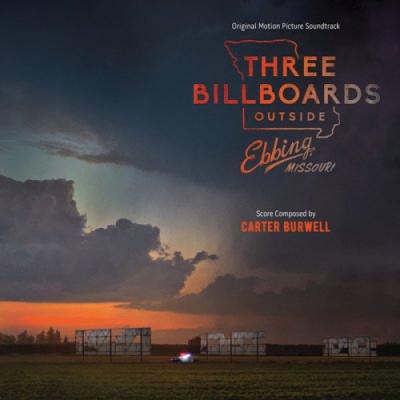
"Three Billboards Outside Ebbing Missouri" Soundtrack Lyrics
Movie • 2017
Track Listing
Carter Burwell
Monsters of Folk
Renée Fleming
The Four Tops
Joan Baez
“Three Billboards Outside Ebbing, Missouri — Original Motion Picture Soundtrack” – Album Guide to Tracks and Key Scenes
Review
What does righteous fury sound like when grief keeps cutting the volume? In Three Billboards Outside Ebbing, Missouri, Carter Burwell answers with stomp-and-clap marches that feel like a showdown and quiet guitar laments that won’t quite heal. Source songs — ABBA, Joan Baez, Townes Van Zandt, The Four Tops, Monsters of Folk — swing the tone from bitter irony to bruised tenderness, mirroring Mildred Hayes’s whiplash between action and aftermath.
Burwell’s palette plays like a “modern western”: banjo and guitars for resolve, woodwinds and piano for the ache, all threaded with a death-haunted motif. The needle-drops are strategic counterpoints. “Chiquitita” blares in Dixon’s ears as the town reels; Baez’s “The Night They Drove Old Dixie Down” turns a bar into an omen; Townes’s “Buckskin Stallion Blues” becomes the road’s last word. The soundtrack works because it doesn’t comfort. It confronts, then breathes, then confronts again.
Genres & themes in phases — outlaw-country/folk: stubborn resolve; 70s/80s pop & soul: irony and memory; chamber minimalism: regret and reflection; “western” score language: grit and forward motion.
How It Was Made
Composer: Carter Burwell, in his third collaboration with writer-director Martin McDonagh. He shaped Mildred’s perspective into two primary modes — a warpath march and a private, mournful theme — and let them braid as characters shift. He’s said the film’s costume cues and character “roles” nudged him toward the final approach rather than classic character leitmotifs.
Music supervision: Karen Elliott balanced Burwell’s lean score with eclectic source cues (ABBA, Baez, Townes Van Zandt, Monsters of Folk, The Four Tops, The Felice Brothers), securing placements that play with — and against — the film’s mood.
Album: The official soundtrack appeared in late 2017, with variations by territory/format: a Varèse Sarabande-branded release and digital editions via Music.Film/Lakeshore/First Score Music. Track counts differ slightly (18–19 cuts), but each presents Burwell’s cues alongside the key songs.
Tracks & Scenes
“The Last Rose of Summer” (Renée Fleming; from Flotow’s Martha)
- Where it plays:
- Opening shots over the derelict boards; later reprises around the police-station fire. A stately, old-world vocal laid over raw new rage. (~Opening; reprise mid-film.) Non-diegetic.
- Why it matters:
- Elegy as prologue — a reminder that mourning, not mayhem, lit the first match.
“Buckskin Stallion Blues” (Townes Van Zandt)
- Where it plays:
- Mildred drops her son at school right after the billboards go up; doors slam, silence stings. (~00:09). Non-diegetic.
- Why it matters:
- Country fatalism to score a family already frayed by the fight.
“Radio Song” (The Felice Brothers)
- Where it plays:
- Dixon pushes Red around a pool table until Mildred calls next game. (~00:17). Non-diegetic with bar bleed.
- Why it matters:
- Barroom swagger for a bully who hasn’t met his reckoning yet.
“Chiquitita” (ABBA)
- Where it plays:
- Dixon’s headphones fill with ABBA while the station reels from Willoughby’s death. (~00:55). Partly diegetic (headphones).
- Why it matters:
- Cheery consolation weaponized as contrast — oblivion before explosion.
“His Master’s Voice” (Monsters of Folk)
- Where it plays:
- Dixon, incandescent, storms Red’s office and throws him out the window in a single, savage sequence. (~00:56). Non-diegetic.
- Why it matters:
- A loping, ominous groove undercuts Dixon’s “authority,” turning rage into indictment.
“Walk Away Renée” (The Four Tops)
- Where it plays:
- Alone at the bar, Dixon drinks as two men enter — one will change his trajectory. (~01:27). Source-leaning bar needle-drop.
- Why it matters:
- 1960s heartbreak finds a modern echo — a prelude to hurt and penance.
“Andante (K.279)” (W.A. Mozart — Maria João Pires)
- Where it plays:
- James and Mildred’s dinner date — polite, awkward, richly scored by the room’s genteel piano. (~01:28). Diegetic/source.
- Why it matters:
- A pocket of civilization that can’t soften the truth waiting outside.
“The Night They Drove Old Dixie Down” (Joan Baez)
- Where it plays:
- At the bar, Dixon overhears a war-story brag about a rape; he steps out, returns with a plan…and a cost. (~01:29). Non-diegetic into ambience.
- Why it matters:
- History’s lament becomes Dixon’s pivot — from bluster to a bruised attempt at doing one thing right.
“Buckskin Stallion Blues” (Amy Annelle) — end version
- Where it plays:
- Final drive toward Idaho — two uneasy allies and an unresolved mission — carrying into credits. (~01:47 → end). Non-diegetic.
- Why it matters:
- Same song, different singer — a quieter compass for a question the film won’t answer.
Score highlights (Carter Burwell)
- “Mildred Goes to War” / “Billboards on Fire”
- Boot-stomp march and banjo bite — the sonic face of defiance; the motif returns, scorched but steady.
- “The Deer” / “My Dear Anne”
- Guitar and winds for private grief; the cue that breaks when Mildred breaks.
- “Countermove” / “Sorry Welby”
- Small-ensemble tension: strings and piano chart the ugly middle ground between catharsis and escalation.
Notes & Trivia
- Burwell focused the score through Mildred’s point of view — a “warpath” march versus a “loss” ballad — rather than assigning full character leitmotifs.
- The soundtrack album mixes score and songs; the film itself uses only ~20 minutes of score — the rest is placement muscle.
- Music supervision (Karen Elliott) threads unlikely contrasts: ABBA’s comfort-pop in a tragedy; Baez’s Civil War lament for a modern moral pivot.
- Two different “Buckskin Stallion Blues” versions bookend the story: Townes Van Zandt early; Amy Annelle at the end.
- Label credits vary by territory/format: Varèse Sarabande for the physical release; Music.Film/Lakeshore/First Score handle digital distribution in some regions.
Reception & Quotes
The score received an Academy Award nomination and drew praise for its restraint and concept — a musical portrait that refuses easy catharsis. Critics often singled out the song choices as sharp tonal counterpoints.
“A perfect musical portrait of Mildred’s dichotomy: raw aggression wrapped around crippling grief.” Movie Music UK
“Burwell balances comedy, cruelty, and quiet like few composers working.” Profiles and interviews
Interesting Facts
- Modern western DNA: Burwell explicitly nodded to spaghetti-western language (rhythmic march, spare melody) without leaning on full character themes.
- Headphones gag, heartbreak context: “Chiquitita” plays only to Dixon — syrupy solace before a violent outburst.
- Bar as oracle: The Baez cover of “Dixie Down” isn’t nostalgia — it foreshadows Dixon’s painful attempt at penance.
- Short score, big presence: The album runs ~44 minutes, but the original score used on screen is just over 20 minutes.
- Credits that matter: The music supervisor credit belongs to Karen Elliott; Carter Burwell produced his own album mix.
Technical Info
- Type: Original Motion Picture Soundtrack (score + selected songs)
- Title: Three Billboards Outside Ebbing, Missouri
- Year: 2017 (film & album)
- Composer: Carter Burwell (Oscar nominee, Best Original Score)
- Music supervisor: Karen Elliott
- Key song placements: “The Last Rose of Summer” (opening/PS fire); Townes Van Zandt “Buckskin Stallion Blues” (school drop); The Felice Brothers “Radio Song” (pool table); ABBA “Chiquitita” (headphones); Monsters of Folk “His Master’s Voice” (assault sequence); Four Tops “Walk Away Renée” (bar prelude); Mozart K.279 Andante (date); Joan Baez “The Night They Drove Old Dixie Down” (bar turn); Amy Annelle “Buckskin Stallion Blues” (final drive).
- Label/availability: Varèse Sarabande (physical); regional digital via Music.Film / Lakeshore / First Score Music; streaming on major platforms.
Questions & Answers
- Who composed the score?
- Carter Burwell. His cues pivot between a march for Mildred’s “warpath” and a spare, grieving theme.
- Why is “Chiquitita” in such a grim movie?
- It’s a deliberate contrast — we hear it in Dixon’s headphones as the film drops a gut punch elsewhere.
- What song closes the film?
- Amy Annelle’s cover of Townes Van Zandt’s “Buckskin Stallion Blues” — it runs into the credits.
- Is there a full songs-only album?
- No — the official album mixes score and selected songs. A few cues in the movie aren’t on the album.
- Who handled the clearances/placements?
- Music supervisor Karen Elliott, coordinating the film’s eclectic lineup.
Key Contributors
| Subject | Relation | Object |
|---|---|---|
| Martin McDonagh | wrote & directed | Three Billboards Outside Ebbing, Missouri (2017) |
| Carter Burwell | composed & produced album for | Three Billboards Outside Ebbing, Missouri |
| Karen Elliott | served as | Music Supervisor |
| Varèse Sarabande | released | soundtrack album (physical) |
| Music.Film / Lakeshore / First Score Music | handled | digital distribution (regional) |
| Renée Fleming | performed | “The Last Rose of Summer” (from Flotow’s Martha) |
| Townes Van Zandt | performed | “Buckskin Stallion Blues” (early film) |
| Amy Annelle | performed | “Buckskin Stallion Blues” (end credits) |
| Monsters of Folk | performed | “His Master’s Voice” (office assault sequence) |
| Joan Baez | performed | “The Night They Drove Old Dixie Down” (bar pivot) |
| The Four Tops | performed | “Walk Away Renée” (bar prelude) |
| ABBA | performed | “Chiquitita” (Dixon’s headphones) |
Sources: official trailer (Fox Searchlight); Movie Music UK review/notes; Spotify & Apple Music album pages; Discogs release; German/English Wikipedia (music section); Soundtrakd scene guide with timestamps; Metacritic credits; Guild of Music Supervisors interview with Karen Elliott.
November, 29th 2025
Get more information about this movie: Internet Movie Database, IMDbA-Z Lyrics Universe
Cynthia Erivo Popular
Ariana Grande Horsepower
Post Malone Ain't No Love in Oklahoma
Luke Combs Good Riddance (Time of Your Life)
Green Day Bye Bye Bye
*NSYNC You're the One That I Wan
John Travolta & Olivia Newton-John I Always Wanted a Brother
Braelyn Rankins, Theo Somolu, Kelvin Harrison Jr. and Aaron Pierre The Power of Love
Frankie Goes to Hollywood Beyond
Auli’i Cravalho feat. Rachel House MORE ›