
"Three Musketeers" Soundtrack Lyrics
Movie • 2011
Track Listing
Paul Haslinger
Paul Haslinger
Paul Haslinger
Paul Haslinger
Paul Haslinger
Paul Haslinger
Paul Haslinger
Paul Haslinger
Paul Haslinger
Paul Haslinger
Paul Haslinger
Paul Haslinger
Paul Haslinger
Paul Haslinger
Paul Haslinger
Paul Haslinger
Paul Haslinger
Paul Haslinger
Paul Haslinger
Paul Haslinger
Paul Haslinger
Paul Haslinger
Take That
“The Three Musketeers (Original Motion Picture Soundtrack)” – Album Guide to Tracks and Key Scenes
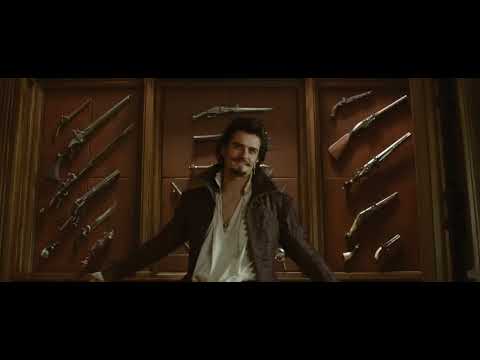
Review
How do you score Dumas with airships? Composer Paul Haslinger answers with a bright, clockwork action palette — metallic percussion, razor-edged strings, and cleanly articulated rhythmic ostinatos — then softens it with courtly color for Versailles and a touch of romance for D’Artagnan. The soundtrack moves like the movie: quick set-ups, gadget reveals, and clean swerves between caper and cavalry charge.
The single “When We Were Young” by Take That supplies the end-credits catharsis, but the album is primarily score — kinetic cues that brand each set-piece (a Venice vault, an aerial battle, a palace infiltration). Period-source selections inside the film — a Renaissance gavotte, a court “royal dance” — wink at history without slowing the pop engine. It’s pulp with polish.
Genres & themes in phases — hybrid orchestral action: ingenuity and spectacle; dance-suite pastiche: Versailles pomp; pop-single uplift: curtain call; stealth strings & tango flourishes: espionage and Milady’s blade-in-a-fan intrigue.
How It Was Made
Haslinger (ex-Tangerine Dream; Underworld) wrote the score, recorded with the Berlin Session Orchestra. The album arrived through Constantin Music/Milan with 23–24 tracks depending on territory, while Take That contributed the theme song for the end credits. Music supervision was overseen by Jonathan Hughes, who also cleared the handful of period source pieces heard at court.

Tracks & Scenes
“Only Four Men” (Paul Haslinger)
- Where it plays:
- Album opener; used over the Venice prologue as Athos, Porthos, Aramis and Milady raid da Vinci’s vault — grappling hooks, submerged corridors, booby traps. Non-diegetic score.
- Why it matters:
- Introduces the score’s slick, clockwork engine — staccato strings and metallic hits for a gadget-heist tone.
“The Venice Heist” (Paul Haslinger)
- Where it plays:
- Extends the prologue into a breathless escape through canals; harpsichord spikes and choir stabs accent slow-motion money shots. Non-diegetic.
- Why it matters:
- Set-piece branding cue — the album’s showpiece of rhythmic layering.
“Concealed Weapons Tango” (Paul Haslinger)
- Where it plays:
- Milady de Winter’s introduction and later seduction/spy beats — lace, poison, and fan blades. Non-diegetic with diegetic echoes at court.
- Why it matters:
- A sly dance meter that becomes her calling card, fusing elegance and danger.
“Get Me One of Those!” (Paul Haslinger)
- Where it plays:
- D’Artagnan’s first brush with airship tech and the musketeers’ “toys,” as plans escalate from duel to sky battle. Non-diegetic.
- Why it matters:
- Action cue with swagger — brass pops and propulsion as recruitment becomes adventure.
“Open Fire!” → “A Chance to Escape” (Paul Haslinger)
- Where it plays:
- Airship combat over Paris; cannon blasts, boarding hooks, and a desperate drop toward the Seine. Non-diegetic.
- Why it matters:
- Haslinger’s clean thematic cells let the edit breathe — momentum without wall-to-wall noise.
“You Should Have Apologized to My Horse!” (Paul Haslinger)
- Where it plays:
- Rochefort’s men versus D’Artagnan in the streets; the title quip cues a whip-smart skirmish. Non-diegetic.
- Why it matters:
- Comedy-action balance — rhythmic hits timed to stunt beats.
“All for One” (Paul Haslinger)
- Where it plays:
- Team-bonding montage as grudges thaw and the four align. Non-diegetic.
- Why it matters:
- Motto-as-motif — bright harmonic writing that reads as camaraderie in sound.
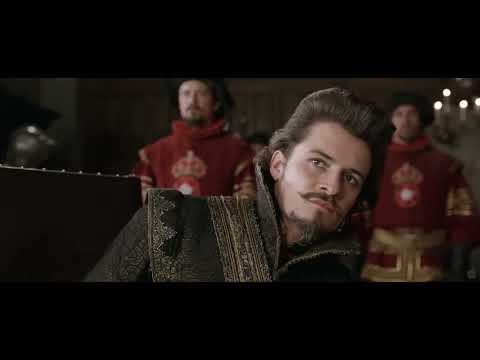
“Royal Dance” (A. R. Luciani) — source
- Where it plays:
- Court entertainment at Versailles — powdered wigs, minuet patterns, and gliding strings. Diegetic band.
- Why it matters:
- A period postcard that contrasts the film’s steam-punky inventions.
“Praetorius: Gavotte” (Collegium Terpsichore & Fritz Neumeyer) — source
- Where it plays:
- Another courtly interlude used as scene-setting inside the palace. Diegetic.
- Why it matters:
- Historic dance texture amid caper plotting.
“When We Were Young” (Take That) — end credits single
- Where it plays:
- Immediately over the end credits; also featured in marketing spots. Non-diegetic song.
- Why it matters:
- A reflective, arena-sized goodbye after non-stop spectacle; official theme for the film’s release.
Notes & Trivia
- The official album is Haslinger’s score; the only pop song tied to the film in release is Take That’s “When We Were Young,” used in the end credits.
- Some territories list 23 tracks; others 24 — both conclude with the Take That single.
- Period-source pieces at court include A. R. Luciani’s “Royal Dance” and a Praetorius gavotte.
- Haslinger’s cue titles telegraph scenes (“The Venice Heist,” “I Hate Air Travel,” “Open Fire!”), making the album a guided tour of set-pieces.
- Jonathan Hughes handled music supervision on the film.
Reception & Quotes
Reviews of the film were mixed, but the score drew steady praise from soundtrack outlets for its clarity and propulsion, and the single provided radio presence around release.
“Haslinger combines action-packed sequences with soulful and reflective moments.” Label notes
“‘When We Were Young’ served as the film’s theme and end-credits song.” Artist/label sources
Interesting Facts
- Berlin sessions: The album credits the Berlin Session Orchestra — tight ensemble articulations keep complex rhythms crisp.
- Single strategy: Take That’s track was released ahead of the film and folded into the band’s Progressed era.
- Hybrid palette: Harpsichord colors and tango gestures modernize “period” without going full pastiche.
- Album variants: Running times range ~46–48 minutes across services.
- No stingers: No post-credits scenes; the Take That single carries the audience out.
Technical Info
- Type: Original Motion Picture Soundtrack (score with end-credits single)
- Title: The Three Musketeers (Original Motion Picture Soundtrack)
- Year: 2011
- Composer: Paul Haslinger
- Music Supervision: Jonathan Hughes
- Label: ℗ 2011 Constantin Music GmbH — under exclusive license to Milan Entertainment
- Notable placements: “The Venice Heist” (opening caper); “Concealed Weapons Tango” (Milady’s espionage beats); “Open Fire!” (airship battle); “Royal Dance” / “Praetorius: Gavotte” (Versailles source); “When We Were Young” (end credits).
- Album length/editions: 23–24 tracks; ~46–48 minutes depending on edition.
- Trailer ID: TYic5JxgTMc (images used above)
Questions & Answers
- Who composed the 2011 film’s score?
- Paul Haslinger — a streamlined, action-forward orchestral/electronic hybrid.
- What song plays over the end credits?
- “When We Were Young” by Take That — the film’s official single.
- Are there songs during the film itself?
- A few period-style source pieces appear at court (e.g., a Praetorius gavotte, Luciani’s “Royal Dance”); the rest is score.
- Is there more than one album?
- Commercially, no — it’s the score album (with the Take That single). Digital/territorial editions vary slightly in track count.
- Who cleared the music?
- Music supervisor Jonathan Hughes handled clearances and placements.
Key Contributors
| Subject | Relation | Object |
|---|---|---|
| Paul Haslinger | composed & produced | The Three Musketeers (2011) score |
| Berlin Session Orchestra | performed | score recording |
| Take That | performed | “When We Were Young” (end-credits single) |
| Jonathan Hughes | served as | Music Supervisor |
| Constantin Music GmbH / Milan Entertainment | released | original soundtrack (2011) |
| Paul W. S. Anderson | directed | The Three Musketeers (2011) |
| A. R. Luciani | composed | “Royal Dance” (source music at court) |
| Collegium Terpsichore; Fritz Neumeyer | performed | Praetorius “Gavotte” (source) |
Sources: Spotify & Apple Music (album editions/label); Milan Records release page; IMDb full credits & soundtrack; Wikipedia (film & song theme); MovieMusic tracklist; MediaStinger (end-credits song note); trailer (for figures).
November, 29th 2025
Visit 'Three Musketeers' profiles on Internet Movie Database and Rotten TomatoesA-Z Lyrics Universe
Cynthia Erivo Popular
Ariana Grande Horsepower
Post Malone Ain't No Love in Oklahoma
Luke Combs Good Riddance (Time of Your Life)
Green Day Bye Bye Bye
*NSYNC You're the One That I Wan
John Travolta & Olivia Newton-John I Always Wanted a Brother
Braelyn Rankins, Theo Somolu, Kelvin Harrison Jr. and Aaron Pierre The Power of Love
Frankie Goes to Hollywood Beyond
Auli’i Cravalho feat. Rachel House MORE ›