
"Tick, Tick… Boom! the Movie" Soundtrack Lyrics
Movie • 2021
Track Listing
Andrew Garfield
Andrew Garfield
Joshua Henry
Andrew Garfield
Andrew Garfield
Andrew Garfield
Tariq Trotter
Andrew Garfield
Andrew Garfield
Alexandra Shipp
Robin de Jesús
Andrew Garfield
Andrew Garfield
Jazmine Sullivan
Andrew Garfield
Veronica Vazquez
The Mountain Goats
“tick, tick… BOOM! (Soundtrack from the Netflix Film)” – Album Guide to Tracks and Key Scenes
Review
What does panic sound like when it’s tuneful? The film album for tick, tick… BOOM! answers with pop-rock adrenaline, Broadway polish, and a few lovingly cracked edges — exactly right for a composer who’s racing the calendar. Andrew Garfield’s vocals carry the vulnerable center; arrangements punch and pull back like breathwork. The soundtrack doesn’t just collect numbers — it narrates an artistic growth spurt in real time.
Alex Lacamoire, Bill Sherman, and Kurt Crowley reframe Jonathan Larson’s stage score for cinema, folding in archival gems and a brand-new rap interlude (“Play Game”) while keeping the show’s heartbeat intact. “30/90” sprints; “Boho Days” turns a cramped apartment into a choir; “Sunday” explodes into a Broadway dream sequence; “Swimming” literalizes writer’s block until inspiration arrives; “Why” strips everything bare. The album culminates with “Louder Than Words” — less finale than credo. It’s Larson’s voice, newly amplified, and the film knows when to get out of its way.
Genres & themes in phases — pop-rock and synths: momentum vs. dread; choral/Broadway grandeur: community and lineage; R&B gloss and hip-hop: 1990 NYC in the bloodstream; acoustic confessionals: grief, memory, and choosing the work.
How It Was Made
Direction & adaptation: Lin-Manuel Miranda’s feature directing debut reframes Larson’s monologue-turned-three-hander as a memory play with onstage narration and cinematic flashbacks. Screenwriter Steven Levenson threads Larson’s Superbia fragments and real-life ephemera into the narrative.
Music team: Producers/arrangers Alex Lacamoire, Bill Sherman, and Kurt Crowley supervised new film arrangements; Greg Wells mixed the album. Music supervision by Stephen (Steven) Gizicki balanced on-camera performance with clearances for end-credit cuts and archival material. The official album arrived via Maisie Music Publishing/Masterworks Broadway with digital singles (“30/90,” “Louder Than Words”) ahead of release; a CD followed.
Tracks & Scenes
“30/90” (Andrew Garfield, Joshua Henry, Vanessa Hudgens & company)
- Where it plays:
- Opens the film: Jon at the piano in a club set, freeze-frames, then smash-cuts to 1990 NYC life — diner shifts, a failing answering machine, rehearsal snippets. Non-diegetic performance intercut with diegetic prep.
- Why it matters:
- Establishes the thesis — time as antagonist — and the film’s concert-frame storytelling.
“Boho Days” (Apartment party ensemble)
- Where it plays:
- Friends crowd into Jon’s walk-up; counter-melodies bloom from clinking bottles and handclaps. Diegetic singalong that swells into performance.
- Why it matters:
- Community in a single room — Larson’s tribe, and the show’s oxygen.
“Johnny Can’t Decide” (Garfield, Hudgens, Henry)
- Where it plays:
- Interior tug-of-war after Susan’s ultimatum and Michael’s corporate pitch; the city blurs as Jon narrates both futures. Performance framing over montage.
- Why it matters:
- Turns ambivalence into counterpoint — the album’s first big knot.
“Sunday” (Garfield & the Moondance Diner Ensemble, Broadway cameos)
- Where it plays:
- The Moondance Diner becomes a proscenium in Jon’s mind; orders become arias; the frame shifts to a pointillist homage. Non-diegetic fantasy sprung from diegetic drudgery.
- Why it matters:
- A love letter to Sondheim and to service-industry artists; lineage meets longing.
“No More” (Garfield & Robin de Jesús)
- Where it plays:
- Tour through Michael’s luxury building — key fobs, valet, central air — as the friendship flexes between envy and pride. Performance cutting into on-location gags.
- Why it matters:
- Security vs. risk, in 3 minutes and perfect rhymes.
“Play Game” (Tariq Trotter)
- Where it plays:
- A slick, 90s-styled rap interlude underscoring Jon’s brush with commercial assignments and focus-group culture — beats, graphics, and anxiety.
- Why it matters:
- Mirrors the temptation to monetize the muse; a film-only addition that fits the era.
“Therapy” (Garfield & Vanessa Hudgens)
- Where it plays:
- A lovers’ quarrel becomes a patter duet; split screens and mis-emphasis underline how two people talk past each other.
- Why it matters:
- Comic fireworks that show the crack — and why “choosing” costs.
“Swimming” (Garfield)
- Where it plays:
- Blocked and desperate, Jon laps an indoor pool; staff paper appears on the tiles, lyrics float by, the missing song clicks into place. Recorded and staged to keep the vocals live-feeling; intercut with creative epiphany.
- Why it matters:
- Writer’s block visualized; a cut 1990 number reborn onscreen as a breakthrough moment.
“Come to Your Senses” (Vanessa Hudgens; end-credit single by Jazmine Sullivan)
- Where it plays:
- At Jon’s workshop, Karessa sings the power ballad from Superbia; later, a full R&B end-credit version arrives as a single.
- Why it matters:
- The fictional show’s song becomes Jon’s message to Susan — and to himself.
“Real Life” (Robin de Jesús)
- Where it plays:
- Michael’s confession reframes earlier bravado; the melody sits you down and tells the truth.
- Why it matters:
- Shifts the film’s center of gravity — friendship takes the spotlight.
“Why” (Garfield)
- Where it plays:
- At the Delacorte, just voice, piano, and memory. No tricks, no cutaways — just Jon and the city that raised him.
- Why it matters:
- Everything the movie believes, sung plainly.
“Louder Than Words” (Garfield, Hudgens, Henry & ensemble)
- Where it plays:
- Finale-turned-epilogue; company joins as Susan narrates the real-world coda. Performance leads into credits.
- Why it matters:
- Not closure — a charge. The album’s thesis statement.
End credits & extras
- “Out of My Dreams” (Veronica Vázquez); “It Only Takes a Few” (The Mountain Goats)
- Roof meet-cute callback and post-credit coda; both appear on the album. An archival Larson piano sketch, “Rhapsody,” also appears in-film, with additional rarities surfacing around release.
- “Sextet Montage” (single)
- Larson’s Superbia fragment, spotlighted in-film as rehearsal, later issued as a standalone track after fan demand.
Notes & Trivia
- Green Green Dress was filmed as a full duet but cut for pacing; the album preserves Garfield/Shipp’s version and Netflix later shared the deleted scene.
- Music supervision credit reads Stephen (Steven) Gizicki; the album credits Maisie Music Publishing and Masterworks Broadway.
- Two lead singles dropped ahead of release: “30/90” and “Louder Than Words.”
- “Play Game” (feat. Tariq Trotter) is film-only — not part of the stage score — and nods to 90s hip-hop aesthetics.
- “Sextet” from Superbia became “Sextet Montage” and was issued after the film’s release.
Reception & Quotes
The film earned raves for performance and concept; coverage repeatedly highlighted the musical staging — the “Sunday” fantasia and the underwater “Swimming” breakthrough — and Garfield’s live-feeling vocals.
“The ‘Sunday’ sequence is a love letter to Broadway lore and to Larson’s imagination.” Feature coverage
“‘Swimming’ turns writer’s block into cinema — and he sings it underwater.” Reporting & craft notes
“Garfield’s voice serves character first; the album keeps that honesty.” Interviews & reviews
Interesting Facts
- Concert bones: The film keeps the stage-show’s “onstage narrator” device — you hear the band count-ins and room tone on purpose.
- Archival rescue: Several Larson pieces came from Library of Congress tapes; a few appear only as underscore in the film.
- Bonus tracks with purpose: The end-credit “Come to Your Senses” (Jazmine Sullivan) and the cut “Green Green Dress” honor fan-favorite moments.
- Live-ish vocals: Key numbers (“Why,” portions of “Swimming”) were conceptualized to feel live; you can hear breaths and space.
- Label pairing: The album is branded Masterworks Broadway with publishing credited to Maisie Music — a Netflix/Sony pipeline used on multiple titles.
Technical Info
- Type: Original Motion Picture Soundtrack (cast performances + end-credit cuts)
- Title: tick, tick… BOOM! (Soundtrack from the Netflix Film)
- Year: 2021 (digital 12 Nov; CD 3 Dec)
- Producers/Arrangers: Alex Lacamoire, Bill Sherman, Kurt Crowley
- Mix: Greg Wells
- Music Supervisor: Stephen/Steven Gizicki
- Labels: Maisie Music Publishing; Masterworks Broadway (Sony)
- Selected placements: “30/90” (opening); “Boho Days” (apartment party); “Sunday” (Moondance fantasia); “No More” (luxury tour); “Play Game” (ad/focus-group bite); “Therapy” (argument duet); “Swimming” (pool epiphany); “Come to Your Senses” (workshop; end-credit single); “Why” (Delacorte confessional); “Louder Than Words” (finale); “Out of My Dreams” / “It Only Takes a Few” (credits).
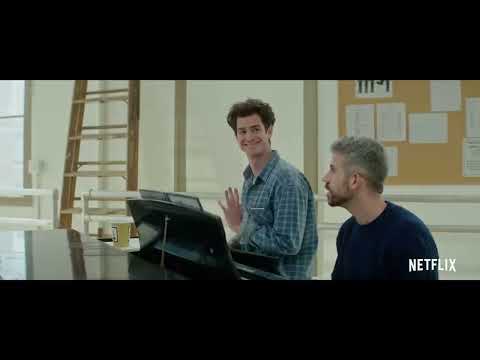
- Trailer ID for figures: YJserno8tyU
Questions & Answers
- Is every film song on the album?
- Almost — the core numbers are here; a few archival/underscore cues surface separately (e.g., “Sextet Montage”).
- Who sings “Come to Your Senses” on the album?
- Vanessa Hudgens (in-film) and Jazmine Sullivan (end-credit single version).
- Was “Green Green Dress” really cut?
- Yes. The duet was removed for pacing; the studio released the scene later, and the track appears as an album bonus.
- What’s the new rap track?
- “Play Game,” performed by Tariq Trotter (Black Thought) — a film-specific addition reflecting 1990 ad-culture temptation.
- Who released the soundtrack?
- Maisie Music Publishing/Masterworks Broadway (Sony) — digital first, then CD.
Key Contributors
| Subject | Relation | Object |
|---|---|---|
| Lin-Manuel Miranda | directed | tick, tick… BOOM! (2021 film) |
| Steven Levenson | wrote screenplay for | film adaptation |
| Jonathan Larson | wrote | songs & source material |
| Andrew Garfield | performed as | Jonathan Larson (lead vocals on multiple tracks) |
| Vanessa Hudgens; Alexandra Shipp; Robin de Jesús; Joshua Henry | performed | principal vocals/featured numbers |
| Alex Lacamoire; Bill Sherman; Kurt Crowley | produced/arranged | film soundtrack |
| Greg Wells | mixed | soundtrack album |
| Stephen (Steven) Gizicki | served as | Music Supervisor |
| Maisie Music Publishing; Masterworks Broadway | released | official soundtrack (2021) |
| Netflix | distributed | feature film worldwide |
Sources: Masterworks Broadway album page; Spotify/Apple listings; Discogs release; film & soundtrack Wikipedia entries; ScreenRant song rundown; Netflix trailer; LA Times/Vulture craft pieces on “Swimming”; Vague Visages end-credits timings; Playbill and press on Jazmine Sullivan, deleted “Green Green Dress,” and post-release “Sextet Montage.”
November, 29th 2025
A-Z Lyrics Universe
Cynthia Erivo Popular
Ariana Grande Horsepower
Post Malone Ain't No Love in Oklahoma
Luke Combs Good Riddance (Time of Your Life)
Green Day Bye Bye Bye
*NSYNC You're the One That I Wan
John Travolta & Olivia Newton-John I Always Wanted a Brother
Braelyn Rankins, Theo Somolu, Kelvin Harrison Jr. and Aaron Pierre The Power of Love
Frankie Goes to Hollywood Beyond
Auli’i Cravalho feat. Rachel House MORE ›