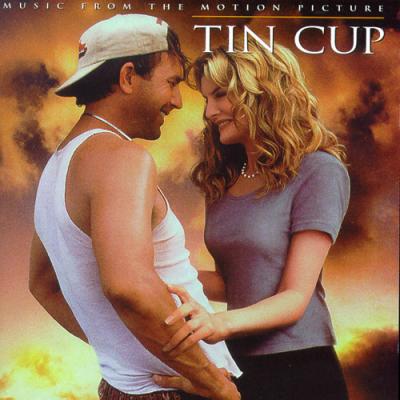
"Tin Cup" Soundtrack Lyrics
Movie • 1996
Track Listing
The Texas Tornados
Jimmie Vaughan
Keb' Mo'
Bruce Hornsby
Bruce Hornsby
Mary Chapin Carpenter
Chris Isaak
Amanda Marshall
Shawn Colvin
George Jones
Patty Loveless
James House
Joe Ely
Mickey Jones
"Tin Cup: Music From The Motion Picture" – Album Guide to Tracks and Key Scenes
Review
Can a golf rom-com swing between honky-tonk, AAA pop, and desert twang — and still feel seamless? Tin Cup does, because the album leans into Texas-border color and late-90s adult-contemporary warmth while William Ross’s light score keeps the fairway smooth.
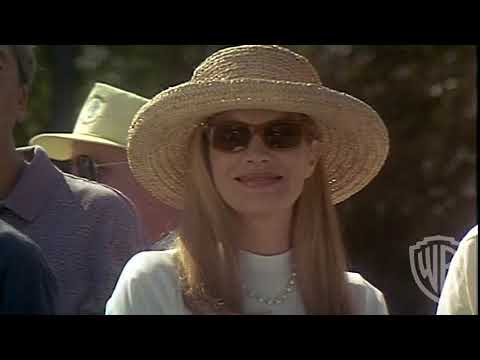
On screen, Roy “Tin Cup” McAvoy (Kevin Costner) chases a U.S. Open miracle and a woman (Rene Russo). On record, the story’s rhythm is set by Texas Tornados’ bilingual earworm, Bruce Hornsby’s crisp guitar-piano grooves, and coffeehouse-lit cuts from Chris Isaak, Mary Chapin Carpenter, Shawn Colvin, and more. It plays like a road mix between Qualifying School stops — bar jukeboxes, diner radios, and post-round porch music stitched into a single, good-natured glide.
In phases: Tex-Mex & roadhouse sell Roy’s ragged charm; AAA/folk-pop covers the romance beats; neo-blues marks his stumbles; score cues quietly lift the tournament grind. It’s unfussy, sun-baked, and catchy — the kind of soundtrack that makes missing the fairway feel like part of the plan.
How It Was Made
The compilation was issued on Epic Soundtrax/Epic in summer 1996, alongside a light, punchy original score by William Ross (a separate promo CD circulates among collectors). Bruce Hornsby contributed two new studio tracks; Joe Ely cut an original for the film; and Mickey Jones (who also appears in the cast) recorded a comic country blues that doubles as an in-world gag. The needle-drops skew Southwestern and radio-ready — a deliberate choice for Ron Shelton’s down-to-earth sports romance.
Tracks & Scenes
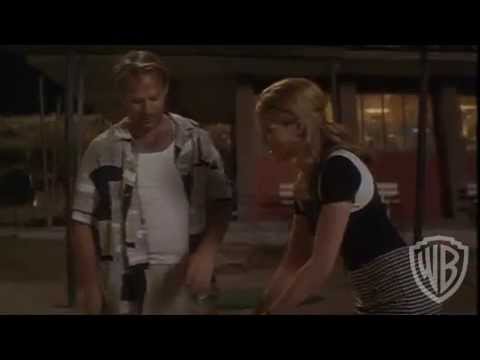
Key placements and how they play on screen. Times are approximate by narrative beat (home releases vary).
“Little Bit Is Better Than Nada” (Texas Tornados)
- Where it plays:
- Opens the film over credits as West Texas life, the ramshackle range, and Roy’s easy swagger are sketched in a sun-bleached montage.
- Why it matters:
- Sets the bilingual, border-boogie vibe; it’s the movie’s musical calling card and later a Grammy-nominated single.
“Big Stick” (Bruce Hornsby)
- Where it plays:
- Practice-range swagger and road-to-qualifying connective scenes — quick cuts of buckets, bets, and Roy talking a bigger game than his bank account.
- Why it matters:
- Hornsby’s tight guitar-piano shuffle mirrors Roy’s cocky rhythm — grinning, grooving, slightly dangerous.
“Nobody There But Me” (Bruce Hornsby)
- Where it plays:
- Quieter transition before a late-night reset; Roy’s bravado dips, and the picture breathes.
- Why it matters:
- A reflective counterweight that lets the romance and self-doubt peek through the jokes.
“Let Me Into Your Heart” (Mary Chapin Carpenter)
- Where it plays:
- Date-night glide — candle-warm interiors and two people deciding whether the chaos is worth it.
- Why it matters:
- A radio-sweet plea that tracks Molly and Roy inching from banter to vulnerability.
“I Wonder” (Chris Isaak)
- Where it plays:
- Post-argument lull and moonlit drive; Isaak’s croon rolls under windshield reflections and second thoughts.
- Why it matters:
- Turns a rom-com beat into ache — a slow dance with doubt.
“This Could Take All Night” (Amanda Marshall)
- Where it plays:
- A montage of incremental wins and near-misses, coffee refills and early alarms as the Open bid takes shape.
- Why it matters:
- Title and tempo nail the film’s grind-but-grin energy.
“Back to Salome” (Shawn Colvin)
- Where it plays:
- Between road stops; a soft-focus breather while the story toggles from barroom hijinks back to the stakes.
- Why it matters:
- Coffeehouse intimacy that humanizes the swaggering lead.
“Just One More” (George Jones)
- Where it plays:
- Bar-room buzz when bravado turns to karaoke-grade confession and the shot-making turns loose.
- Why it matters:
- Classic honky-tonk irony — Roy’s “one more” impulse is the movie’s engine and his flaw.
“Character Flaw” (Joe Ely)
- Where it plays:
- Late-story self-reckoning beats — the lyric winks at Roy’s stubborn streak as he doubles down on the impossible.
- Why it matters:
- Written for the film; the title may as well be Roy’s caddie note.
“Double Bogey Blues” (Mickey Jones)
- Where it plays:
- A comic in-world tune (diegetic) tied to the golf-bum milieu — the crowd laughs because, well, they’ve lived it.
- Why it matters:
- A novelty note that became part of the movie’s folklore beyond the screen.
“Cool Lookin’ Woman” (Jimmie Vaughan) & “Crapped Out Again” (Keb’ Mo’)
- Where it plays:
- Driving-range nights and scruffy morning-after resets; sly guitar lines under Roy’s rebuild.
- Why it matters:
- Grease and grit — blues miniatures that keep the mix from getting too polished.
Finale: U.S. Open water-carry sequence
- Where it plays:
- Score takes over as Roy goes for history the reckless way — ball after ball into the drink until the miracle drop. Crowd noise, broadcast hubs, and a hush before bedlam.
- Why it matters:
- The film’s myth point: the wrong decision, made for the right romantic reasons. The album surrounds it rather than scoring it to a pop needle-drop — wise choice.
Notes & Trivia
- Epic Soundtrax released the commercial album in July 1996; catalog EK 67609.
- The Texas Tornados opener became a Grammy-nominated single tied to the film.
- Bruce Hornsby contributed two cuts; “Big Stick” was written/recorded specifically for Tin Cup.
- Beyond the song album, a short promotional CD of William Ross’s score circulated with cues named after scenes (e.g., “Final Round”).
- Actor/musician Mickey Jones performs the comic “Double Bogey Blues,” now a cult golf-bar staple.
Reception & Quotes
Critics called the movie “breezy” and the music fittingly friendly — a road-playlist that never mugs for attention. Retrospectives still single out the opener and Hornsby’s contributions.
“A likeable sports comedy… Costner’s most appealing work in years.” Variety (film)
“The dialogue is smart and fresh.” Roger Ebert (film)
“Hornsby’s ‘Big Stick’ and the Tex-Mex opener frame the film’s scruffy charm.” album capsule summaries
Interesting Facts
- Border beat: The opener’s Spanglish hook captures the film’s Texas setting in one grin.
- Two lanes of Hornsby: He supplies both swagger (“Big Stick”) and introspection (“Nobody There But Me”).
- Written to order: Joe Ely’s “Character Flaw” was penned and recorded specifically for Tin Cup.
- Diegetic joke: “Double Bogey Blues” plays inside the movie’s world, not just over speakers.
- Score heads: William Ross’s compact tournament cues exist on a promo disc favored by collectors.
Technical Info
- Title: Tin Cup: Music From The Motion Picture
- Year: 1996
- Type: Film soundtrack (various artists) + original score by William Ross
- Label: Epic Soundtrax / Epic (CD release July 30, 1996; cat. EK 67609)
- Key placements (selected): Texas Tornados — “Little Bit Is Better Than Nada” (opening); Bruce Hornsby — “Big Stick,” “Nobody There But Me”; Mary Chapin Carpenter — “Let Me Into Your Heart”; Chris Isaak — “I Wonder”; Joe Ely — “Character Flaw”; Mickey Jones — “Double Bogey Blues”.
- Score highlights: Tournament-titled cues (“The U.S. Open,” “Final Round”) on a 1996 promo CD.
- Availability: Widely available on CD/streaming; select score cues circulate on promotional discs only.
Questions & Answers
- Who composed the score?
- William Ross. The commercial album is songs-driven, but Ross’s compact cues underscore the Open and finale.
- What’s the opening-credits song?
- Texas Tornados’ “Little Bit Is Better Than Nada,” a Tex-Mex anthem tied closely to the film.
- Which tracks did Bruce Hornsby contribute?
- “Big Stick” and “Nobody There But Me” — one swaggering, one reflective.
- Is “Double Bogey Blues” from the movie or just the album?
- Both — it’s a comic country tune performed by Mickey Jones and used in-world.
- Was a full score album released?
- No commercial wide release; a short promotional score CD circulated in 1996 among industry/collectors.
Key Contributors
| Entity | Relation (S–V–O) |
|---|---|
| Ron Shelton | Director — shaped needle-drop placements around character beats. |
| William Ross | Composer — provided original score cues for tournament/finale. |
| Epic Soundtrax (Epic Records) | Label — released the 1996 soundtrack album (EK 67609). |
| Texas Tornados | Artists — performed opening “Little Bit Is Better Than Nada.” |
| Bruce Hornsby | Artist/Songwriter — contributed “Big Stick” and “Nobody There But Me.” |
| Mary Chapin Carpenter | Artist — “Let Me Into Your Heart.” |
| Chris Isaak | Artist — “I Wonder.” |
| Joe Ely | Artist/Songwriter — wrote & recorded “Character Flaw” for the film. |
| Mickey Jones | Artist/Performer — “Double Bogey Blues” (diegetic gag and album closer). |
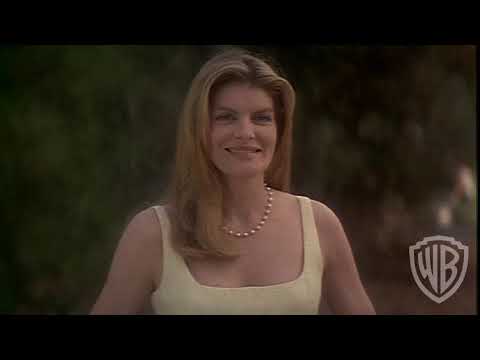
| Kevin Costner / Rene Russo | Leads — on-screen performances whose arcs the music supports. |
Sources: Wikipedia (film & soundtrack); MovieMusic.com (catalog/date/label); SoundtrackINFO (album details + Ross Q&A note); SoundtrackCollector (promo score listing); Texas Tornados / Doug Sahm entries; Bruce Hornsby bio; IMDb Soundtracks; Warner/YouTube trailers.
November, 29th 2025
A-Z Lyrics Universe
Cynthia Erivo Popular
Ariana Grande Horsepower
Post Malone Ain't No Love in Oklahoma
Luke Combs Good Riddance (Time of Your Life)
Green Day Bye Bye Bye
*NSYNC You're the One That I Wan
John Travolta & Olivia Newton-John I Always Wanted a Brother
Braelyn Rankins, Theo Somolu, Kelvin Harrison Jr. and Aaron Pierre The Power of Love
Frankie Goes to Hollywood Beyond
Auli’i Cravalho feat. Rachel House MORE ›