
"Top Gun" Soundtrack Lyrics
Movie • 1999
Track Listing
Kenny Loggins
Cheap Trick
Kenny Loggins
Teena Marie
Berlin
Miami Sound Machine
Loverboy
Larry Greene
Marietta
Otis Redding
Jerry Lee Lewis
The Righteous Brothers
"Top Gun — Original Motion Picture Soundtrack (Special Expanded Edition, 1999)" – Album Guide to Tracks and Key Scenes
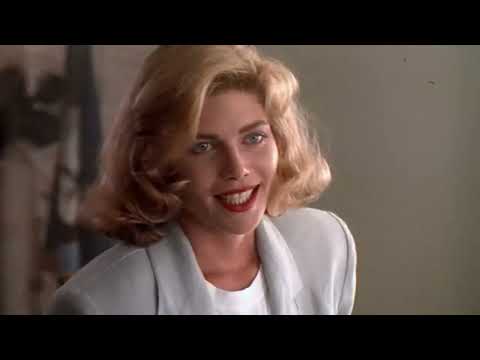
Review
What happens when a soundtrack outruns its movie? “Top Gun” answers with throttle-wide synths, neon romance, and an ear-worm anthem that made jets feel like rock stars. The 1999 Special Expanded Edition reframes the 1986 sensation: it restores jukebox moments, adds fan-favorite cues, and lets the album play like the film itself — from deck plates to dogfights to that late-night bar.
The music’s job is simple and bold: make speed emotional. Giorgio Moroder’s chrome-plated pop and Harold Faltermeyer’s heroic motifs lock into the film’s training-to-triumph arc. “Danger Zone” turns the opening carrier montage into a mission statement; “Top Gun Anthem” is the aviator’s prayer; Berlin’s “Take My Breath Away” melts afterburners into a love theme. On the 1999 disc, barroom standbys and diegetic performances (hello, “Great Balls of Fire”) round out the world-building the original 10-track LP only hinted at.
Genres & themes, in phases: synth-rock and hard rock — adrenaline and bravado; dance-pop — competition and swagger; romantic synth-pop — vulnerability and intimacy; guitar-hero instrumentals — legacy and myth. It’s surface polish meeting inner mess, which is basically Maverick in music form.
How It Was Made
Producer-duo Don Simpson & Jerry Bruckheimer chased hit singles as aggressively as aerial footage, commissioning Moroder/Whitlock to craft radio-first missiles (“Danger Zone,” “Take My Breath Away”). Harold Faltermeyer built a cohesive score around a chiming guitar lead by Steve Stevens for the “Top Gun Anthem.” Music supervision threaded diegetic bar music with needle-drops and score so the sound of Top Gun felt like a place, not just a playlist. The 1999 Special Expanded Edition (Columbia/Legacy) restored key in-film moments and 12" mixes the 1986 LP left off; a later archival expansion finally presented more of Faltermeyer’s score and long-rumored source tracks.

Tracks & Scenes
“Danger Zone” (Kenny Loggins)
- Where it plays:
- Over the opening carrier montage as jets cycle on deck (approx. 00:02). Returns in later action beats and training sequences. Non-diegetic; mixes prominently with jet SFX.
- Why it matters:
- Defines the movie’s pulse — speed, risk, swagger — and sets the stakes before any character speaks.
“Top Gun Anthem” (Harold Faltermeyer & Steve Stevens)
- Where it plays:
- Titles and later turning-point scenes (~00:09; reprises around 01:23 and near the finale). Non-diegetic guitar-led theme that frames Maverick’s inner journey.
- Why it matters:
- Myth-making in 4 minutes — the franchise’s noble core, carried by chiming guitar over synth pads.
“You’ve Lost That Lovin’ Feelin’” (The Righteous Brothers)
- Where it plays:
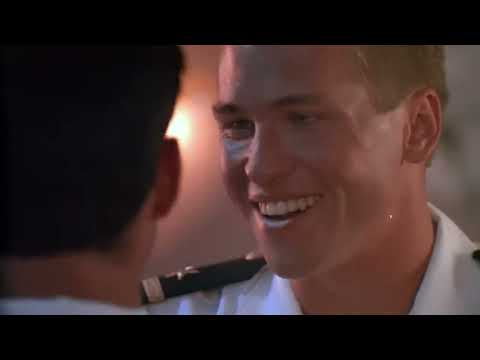
- Bar serenade as Maverick & Goose charm Charlie (~00:22); returns over a late bar scene (~01:43). Diegetic: sung by characters, then played on jukebox.
- Why it matters:
- Humanizes the hotshots; Charlie isn’t impressed by rank — she’s disarmed by sincerity (and the entire bar joining in).
“Playing with the Boys” (Kenny Loggins)
- Where it plays:
- Beach volleyball sequence (~00:41). Diegetic ambience fades; track takes over as montage rhythm while Maverick clocks the time and bails for his date.
- Why it matters:
- Competitive chemistry and budding romance in one scene — sweat, sun, and a pop-rock flex that became an 80s time capsule.
“Take My Breath Away (Love Theme from Top Gun)” (Berlin)
- Where it plays:
- Romantic interludes and the iconic silhouette love scene, with synths swelling as the relationship deepens. Non-diegetic but mixed like a warm front rolling in.
- Why it matters:
- Softens the film’s machismo; gives Maverick a counter-melody to speed — intimacy.
“Great Balls of Fire” (Jerry Lee Lewis)
- Where it plays:
- At the bar piano with Goose performing; Meg Ryan’s Carole and others crowd in, teasing and harmonizing. Fully diegetic; clinking glasses, laughter, a family snapshot before tragedy.
- Why it matters:
- Foreshadows loss by showing what’s at stake — Goose’s joy, Maverick’s found family.
“Mighty Wings” (Cheap Trick)
- Where it plays:
- Instrumental figures surface during training; full vocal version roars over end credits. Non-diegetic, a last adrenaline hit.
- Why it matters:
- Victory lap. Confirms the arc from reckless talent to responsible ace.
“Heaven in Your Eyes” (Loverboy)
- Where it plays:
- Used for reflective romantic beats; a power-ballad breather between sorties. Non-diegetic.
- Why it matters:
- Bridges swagger and sincerity — the film needs both to land the romance.
“Hot Summer Nights” (Miami Sound Machine)
- Where it plays:
- Bar/party ambience around the “Animal Night” sequence (~00:23). Semi-diegetic: blurs source music with score.
- Why it matters:
- Colors the social world outside the classroom and cockpit.
“Lead Me On” (Teena Marie)
- Where it plays:
- Early liberty night (~00:19) as the guys scan a “target-rich environment.” Source cues give the scene bounce without stealing focus.
- Why it matters:
- Introduces the film’s flirty tone and the cadet pack dynamic.
“Through the Fire” (Larry Greene)
- Where it plays:
- Motivational montage texture in training/mission prep. Non-diegetic, cut for momentum.
- Why it matters:
- The unsung glue — keeps tempo between headline moments.
“Destination Unknown” (Marietta)
- Where it plays:
- Needle-drop during character beats between lessons; functions as connective tissue around rivalry escalations. Non-diegetic.
- Why it matters:
- A mood-setter that underlines uncertainty before the climax.
“Radar Radio” (Giorgio Moroder feat. Joe Pizzulo)
- Where it plays:
- Briefly on a bar jukebox in the final scene, just before “Lovin’ Feelin’” returns. Diegetic, a blink-and-you’ll-miss-it source cue.
- Why it matters:
- For years it lived only as a B-side to Berlin’s single; collectors chased it because the movie made it canon for seconds. Later archival releases finally fixed that.
Notes & Trivia
- “Danger Zone” and “Take My Breath Away” weren’t just hits — they were strategy, designed for radio dominance before opening weekend.
- The 1999 Special Expanded Edition added five in-film selections the 1986 LP omitted, plus a 12" mix — a fan win that anticipated later archival sets.
- Steve Stevens’ guitar tone on “Top Gun Anthem” became shorthand for cinematic heroism in late-80s pop culture.
- “Mighty Wings” plays twice conceptually: motivic fragments during training, then the full send over credits.
- “Radar Radio” was long unavailable on album despite being in the film; later comprehensive editions finally collected it alongside the complete score.
Reception & Quotes
In 1986 the album topped charts for weeks and became that year’s best-selling soundtrack. Decades on, outlets still rank it among essential 80s movie albums; its songs resurface in the sequel and in pop culture cycles, proving the music’s half-life is measured in flybys.
“A quintessential artifact of the mid-’80s.” — AllMusic
“It wouldn’t be Top Gun without ‘Danger Zone.’” — Tom Cruise
Reissues and expansions restored what audiences actually heard — the jukebox, the bar piano, the hero’s theme — not just the singles. — album note consensus
Interesting Facts
- Chart muscle: The soundtrack returned to No. 1 multiple times — a slow-burn juggernaut.
- Oscar gold: “Take My Breath Away” won both the Academy Award and Golden Globe for Best Original Song.
- 12" culture: The expanded CD embraced club mixes (“Playing with the Boys” dance mix) that fit the film’s competitive sweat.
- Instrumental identity: “Top Gun Anthem” is as recognizable as any pop single from the film.
- Legacy feedback loop: The sequel deliberately mirrors the original’s opening — including the same needle-drop — to signal continuity.
Technical Info
- type: Film soundtrack album (expanded reissue)
- title: Top Gun — Original Motion Picture Soundtrack (Special Expanded Edition)
- year: 1999 (original film release: 1986)
- composers: Harold Faltermeyer (score); Giorgio Moroder (songs, producer)
- music supervision: Paramount/Columbia era team; singles produced to radio spec (Moroder/Whitlock)
- selected notable placements: “Danger Zone” — opening carrier montage; “Top Gun Anthem” — titles & finale; “Playing with the Boys” — volleyball; “Great Balls of Fire” — Goose at the piano; “You’ve Lost That Lovin’ Feelin’” — bar serenade; “Mighty Wings” — end credits
- release context: 1999 Columbia/Legacy reissue expanded the original 10-track LP; subsequent deluxe/archival sets added complete score and hard-to-find source tracks
- label/album status: Columbia Records / Legacy Recordings (reissue)
- availability/notes: Widely available on CD/streaming; archival 2-CD set limited; “Radar Radio” finally anthologized after decades as a B-side only
Questions & Answers
- Why does this guide say “1999” for a 1986 movie?
- Because it focuses on the Special Expanded Edition album (1999), which restores in-film songs the 1986 LP omitted.
- Which track actually opens the film?
- “Danger Zone” — it blasts over the carrier deck montage within the first minutes, establishing pace and tone.
- What song plays during the volleyball scene?
- “Playing with the Boys.” It’s become shorthand for the entire mid-film kinetic vibe.
- Is “Radar Radio” really in the movie?
- Yes — briefly on a bar jukebox near the finale; it wasn’t on the original LP but later archival releases include it.
- Who performs the heroic guitar on the main theme?
- Steve Stevens, over Harold Faltermeyer’s synth framework — the signature “Top Gun Anthem.”
Key Contributors
| Subject | Relation | Object |
|---|---|---|
| Giorgio Moroder | composed & produced | “Danger Zone”, “Take My Breath Away”, other singles |
| Tom Whitlock | wrote lyrics for | “Danger Zone”, “Take My Breath Away” |
| Harold Faltermeyer | composed | Top Gun score; co-wrote “Top Gun Anthem” |
| Steve Stevens | performed guitar on | “Top Gun Anthem” |
| Kenny Loggins | performed | “Danger Zone”, “Playing with the Boys” |
| Berlin | performed | “Take My Breath Away” |
| Cheap Trick | performed | “Mighty Wings” |
| Loverboy | performed | “Heaven in Your Eyes” |
| Jerry Lee Lewis | source performance | “Great Balls of Fire” (bar piano scene) |
| The Righteous Brothers | source performance | “You’ve Lost That Lovin’ Feelin’” (bar serenade/jukebox) |
| Columbia / Legacy | released | 1999 Special Expanded Edition |
| Paramount Pictures | distributed | Top Gun (1986) feature |
Sources: Wikipedia (film & soundtrack); IMDb (soundtrack credits); ScreenRant (song placements); Vague Visages (scene timings); Discogs & MusicBrainz (1999 expanded edition data); La-La Land Records/JWfan (archival release details); RadioTimes (franchise soundtrack overview); Rotten Tomatoes Classic Trailers (YouTube trailer reference).
November, 29th 2025
A-Z Lyrics Universe
Cynthia Erivo Popular
Ariana Grande Horsepower
Post Malone Ain't No Love in Oklahoma
Luke Combs Good Riddance (Time of Your Life)
Green Day Bye Bye Bye
*NSYNC You're the One That I Wan
John Travolta & Olivia Newton-John I Always Wanted a Brother
Braelyn Rankins, Theo Somolu, Kelvin Harrison Jr. and Aaron Pierre The Power of Love
Frankie Goes to Hollywood Beyond
Auli’i Cravalho feat. Rachel House MORE ›