
"Total Recall" Soundtrack Lyrics
Movie • 2012
Track Listing
Harry Gregson-Williams
Harry Gregson-Williams
Harry Gregson-Williams
Harry Gregson-Williams
Harry Gregson-Williams
Harry Gregson-Williams
Harry Gregson-Williams
Harry Gregson-Williams
Harry Gregson-Williams
Harry Gregson-Williams
Harry Gregson-Williams
Harry Gregson-Williams
Harry Gregson-Williams
Harry Gregson-Williams
Harry Gregson-Williams
Harry Gregson-Williams
Harry Gregson-Williams
Harry Gregson-Williams
Harry Gregson-Williams
Harry Gregson-Williams
"Total Recall (Original Motion Picture Soundtrack) — 2012" – Album Guide to Tracks and Key Scenes
Review
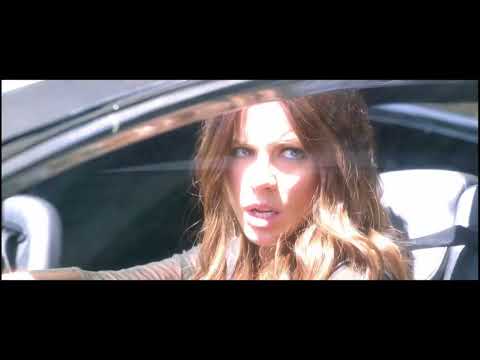
What does memory sound like when the future is all chrome? Harry Gregson-Williams answers with kinetic percussion grids, brooding low brass, and synth currents that keep the ground moving beneath your feet. The 2012 Total Recall score swaps the original film’s Martian mystique for concrete-and-neon velocity — all while carving out a theme for a hero who may not be himself.
The album plays like a corridor chase: doors open, alarms swell, identities glitch. Industrial pulses track factory life; glassy pads and choir shadow Rekall’s seductive promise; hybridized (lowercase “h”) electronics push into vertiginous action for “Rooftop Chase,” “Elevator Chase,” and the late “Up Top Fight.” A few in-film source cues — a dubstep banger and a Beethoven showpiece in the Director’s Cut — puncture the sheen with grit and culture, making this world feel populated, not just rendered.
Genres & themes, in phases: modern action score and electronic design — surveillance, threat, acceleration; string ostinatos — agency regained; choral/synth pads — liminal memory states; club/dubstep source — urban texture; classical piano — a mind trying to remember who played it.
How It Was Made
Director Len Wiseman tapped Harry Gregson-Williams to build a contemporary sonic engine; electronic duo Hybrid contributed additional music and programming, thickening the rhythmic chassis. The official album arrived digitally (Madison Gate Records) near release and collects 20 cues that mirror the film’s set-pieces — from “The Dream” to “The Fall Collapses.” A separate layer of licensed material appears diegetically on-screen (notably a club track and, in the Director’s Cut, Beethoven).

Tracks & Scenes
“The Dream” (Harry Gregson-Williams)
- Where it plays:
- Early in the film as Quaid’s recurring nightmare and identity unease set the tone. Non-diegetic; low synth beds give way to strings that feel half-remembered.
- Why it matters:
- Plants the score’s memory motif — a theme that never quite lands, by design.
“The Fall” (Harry Gregson-Williams)
- Where it plays:
- Sequence introducing the gravity elevator between the Colony and the UFB. Non-diegetic; mechanized rhythms mimic transit cadence.
- Why it matters:
- Defines the film’s geography in music — vertical travel as a pulse.
“Rekall” (Harry Gregson-Williams)
- Where it plays:
- During Quaid’s fateful visit to Rekall. Non-diegetic, with glassy textures and unstable harmonies as seduction flips to alarm.
- Why it matters:
- Sound design as plot twist — when the cue fractures, so does the identity façade.
“Rooftop Chase” (Harry Gregson-Williams)
- Where it plays:
- Parkour-and-police pursuit across stacked housing blocks. Non-diegetic; motoric strings and processed percussion track cuts and leaps.
- Why it matters:
- Signature action writing — the album’s first full adrenaline spike.
“Elevator Chase” (Harry Gregson-Williams)
- Where it plays:
- Mid-film multi-axis pursuit through glass lifts. Non-diegetic; syncopated accents line up with changing gravity vectors.
- Why it matters:
- Translates a visual gimmick into rhythmic tension.
“Up Top Fight” (Harry Gregson-Williams)
- Where it plays:
- Late-act showdown in the UFB. Non-diegetic; theme fragments finally cohere as the hero chooses a self.
- Why it matters:
- Resolution without certainty — fitting for a story about manufactured memories.
“The Fall Collapses” (Harry Gregson-Williams)
- Where it plays:
- Climactic destruction of the transit artery. Non-diegetic; brass hits and churning low end.
- Why it matters:
- Musical catharsis that erases the film’s literal link between worlds.
“Typhoon” (Foreign Beggars feat. Chasing Shadows) — film-only needle-drop
- Where it plays:
- Heard diegetically as aggressive club/urban ambience during Colony nightlife (brief placement). Dubstep texture contrasts with the score’s sleek surfaces.
- Why it matters:
- Gives the world street-level grit and era-specific color; not on the main score album.
“Piano Sonata No. 17 in D minor, Op. 31 No. 2 ‘Tempest’: III” (Ludwig van Beethoven) — Director’s Cut
- Where it plays:
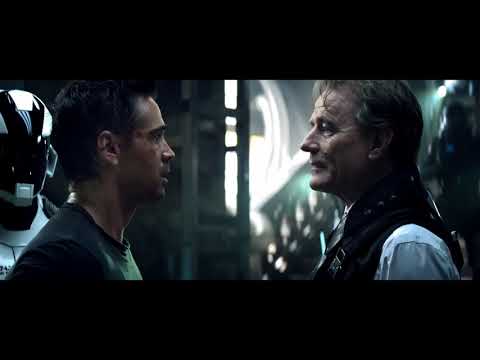
- Diegetic: Hauser/Quaid sits at an apartment piano and plays from memory; the scene uses the third movement of Beethoven’s “Tempest” (often miscalled “Moonlight”).
- Why it matters:
- Character clue in plain sight — the hands remember what the head can’t. Not part of the commercial OST.
Notes & Trivia
- The score is by Harry Gregson-Williams; Welsh duo Hybrid provided additional music/programming.
- The official album dropped digitally via Madison Gate Records in late July 2012, aligning with theatrical release.
- “Typhoon” (Foreign Beggars feat. Chasing Shadows) is credited on the film but absent from the OST — a pure in-film needle-drop.
- The Director’s Cut features Beethoven’s “Tempest” at the piano; fan chatter sometimes mislabels it as “Moonlight.”
- Track titles on the album mirror set-pieces (“Rekall,” “Elevator Chase,” “The Fall Collapses”), making it an easy scene map.
Reception & Quotes
Critics were mixed on the film but noted the muscular, modern score as a fitting engine for Wiseman’s glass-and-steel world. Soundtrack reviewers praised the propulsion and textural polish, even when comparing it to the 1990 classic.
“Gregson-Williams keeps the momentum high and the palette slick.” — Filmtracks
“A contemporary action chassis with a conscience — it broods, then bolts.” — Movie-Wave
“Licensed drops and a classical aside lend lived-in texture.” — Album-note consensus
Interesting Facts
- Digital-first: The OST debuted as a digital release; physical promos/pressings surfaced later for collectors.
- Hybrid touch: Additional music by Hybrid adds club DNA without turning the score into EDM.
- Cue-scene lock: Few albums signpost story beats as clearly via titles — handy for rewatchers.
- Classical cameo: Beethoven in the Director’s Cut provides an “organic memory” counterpoint to Rekall’s synthetic promise.
- Dubstep time-capsule: “Typhoon” dates the Colony’s nightlife to early-2010s bass culture.
Technical Info
- type: Film soundtrack (score; with additional diegetic songs in film)
- title: Total Recall (Original Motion Picture Soundtrack)
- year: 2012 (film release: Aug 3, 2012)
- composers: Harry Gregson-Williams (score); additional music by Hybrid
- music supervision: Studio/label team licensing club and classical source material
- selected notable placements: “The Fall” — transit introduction; “Rekall” — memory-implant turn; “Rooftop Chase” — Colony pursuit; “Elevator Chase” — multi-axis fight; “Up Top Fight” — UFB showdown; “The Fall Collapses” — climax; “Typhoon” — club/source; Beethoven “Tempest” — apartment piano (Director’s Cut)
- label/album status: Madison Gate Records — digital release (20 tracks, ~56 minutes)
- availability/notes: Widely available on major services; some film-used songs (e.g., “Typhoon,” Beethoven) are not on the core OST
Questions & Answers
- Who composed the 2012 Total Recall score?
- Harry Gregson-Williams; Hybrid contributed additional music/programming.
- Is the club track on the official album?
- No. “Typhoon” (Foreign Beggars feat. Chasing Shadows) is in the film but not on the main OST.
- What classical piece does Hauser/Quaid play?
- Beethoven’s Piano Sonata No.17 “Tempest” (3rd movement) — in the Director’s Cut; often mistaken for “Moonlight.”
- When was the soundtrack released?
- Digitally in late July 2012 to coincide with the film’s August 3, 2012 opening.
- Does the album include the big action cues?
- Yes — “Rooftop Chase,” “Elevator Chase,” “Up Top Fight,” and “The Fall Collapses” are all on the OST.
Key Contributors
| Subject | Relation | Object |
|---|---|---|
| Harry Gregson-Williams | composed & produced | Total Recall (2012) — Original Motion Picture Soundtrack |
| Hybrid | performed additional music | Total Recall (2012) score |
| Foreign Beggars feat. Chasing Shadows | performed | “Typhoon” (film-used, not on OST) |
| Ludwig van Beethoven | composed | Piano Sonata No.17, Op.31/2 “Tempest” (Director’s Cut scene) |
| Madison Gate Records | released | Digital OST (20 tracks) |
| Columbia Pictures / Original Film | produced/distributed | Total Recall (2012) feature |
| Len Wiseman | directed | Total Recall (2012) |
Sources: Wikipedia (film & music); Discogs (label/release metadata); SoundtrackCollector (track list/date); Apple Music/Spotify (album availability); IMDb (soundtrack credits); Filmtracks & Movie-Wave (album reviews); YouTube official trailer (video ID); community documentation of the Director’s Cut piano scene.
November, 29th 2025
'Total Recall' (2012): Info on Wikipedia and Internet Movie DatabaseA-Z Lyrics Universe
Cynthia Erivo Popular
Ariana Grande Horsepower
Post Malone Ain't No Love in Oklahoma
Luke Combs Good Riddance (Time of Your Life)
Green Day Bye Bye Bye
*NSYNC You're the One That I Wan
John Travolta & Olivia Newton-John I Always Wanted a Brother
Braelyn Rankins, Theo Somolu, Kelvin Harrison Jr. and Aaron Pierre The Power of Love
Frankie Goes to Hollywood Beyond
Auli’i Cravalho feat. Rachel House MORE ›