
"Trespass" Soundtrack Lyrics
Movie • 1993
Track Listing
Ice Cube and Ice-T
Public Enemy
Ice-T f/ Daddy Nitro
Sir Mix-a-Lot
Penthouse Players Clique
Black Sheep
AMG
Gangstarr
Lord Finesse
Donald D
W.C. and the MAAD Circle
Ry Cooder and Jim Keltner
“Music From the Motion Picture ‘Trespass’ & Trespass (Original Motion Picture Score)” – Album Guide to Tracks and Key Scenes
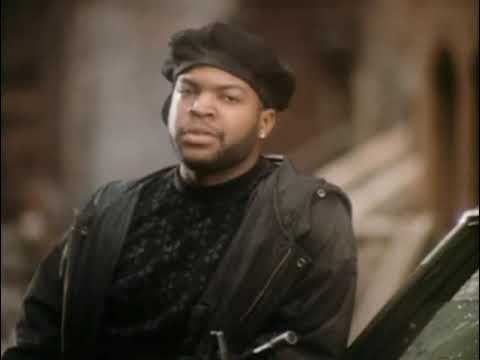
Review
Can a siege thriller be scored two ways at once — hard-edged hip-hop and haunted blues-jazz? Trespass says yes. The compilation album leans into early-’90s rap muscle (Ice-T, Ice Cube, Public Enemy, Gang Starr, Lord Finesse), while Ry Cooder’s score slinks and hisses through the film with junkyard ambience and Jon Hassell’s ghost-trumpet. One is asphalt swagger; the other, heat-shimmer dread.
Walter Hill’s plot (two Arkansas firefighters find a map to stolen church gold; a St. Louis gang closes in) gives both records jobs to do. The rap cuts front the film’s marketing and world-building — voices of the era and the city — and the score keeps the screws turning inside the abandoned factory. Together they make a tight, opposites-attract package: propulsive, grimy, and surprisingly atmospheric.
Genres & themes, in phases: West/East-coast hip-hop — power, territorial ethics, pulp fatalism; experimental blues/ambient jazz — claustrophobia, paranoia, moral corrosion. The songs speak in headlines; the score whispers in rust.
How It Was Made
The soundtrack album — officially “Music From the Motion Picture ‘Trespass’” — dropped via Sire/Warner Bros. in late 1992, sequencing 12 hip-hop tracks topped by the title song from Ice-T & Ice Cube (both co-star in the film). In parallel, the original score album arrived in 1993, produced by Ry Cooder with drummer Jim Keltner and featuring Jon Hassell on trumpet. An unusual footnote: avant-composer John Zorn first wrote a complete score (later issued as part of his Filmworks series); Hill replaced it with Cooder’s more “spooky and weird” approach for the final cut.

Tracks & Scenes
Below: key songs and cues with concise placement/context. Exact timestamps vary by cut; items are verified as appearing in-film or on the official albums.
“Trespass” (Ice-T & Ice Cube)
- Where it plays:
- Used as the film’s flagship single and in marketing; heard in-film in the closing stretch/credits on many releases.
- Why it matters:
- Two co-stars on the mic — an era-defining, mission-statement track for the album and the movie’s campaign.
“Gotta Do What I Gotta Do” (Public Enemy)
- Where it plays:
- Featured on the compilation; used in-film during transitional montage material (radio/source feel) as the standoff escalates.
- Why it matters:
- Chuck D’s refrain mirrors Hill’s morality play — survival vs. conscience when the walls close in.
“Depths of Hell” (Ice-T feat. Daddy Nitro)
- Where it plays:
- Album cut heard in-film; associates with late-stage, high-pressure beats in the factory corridors.
- Why it matters:
- Title-as-thesis. The lyric and menace track the movie’s plunge into brutality.
“Gotta Get Over (Taking Loot)” (Gang Starr)
- Where it plays:
- On the album and used diegetically as street/vehicle source during exterior cutaways around the tenement.
- Why it matters:
- Guru and Premier frame the treasure-hunt’s ugly motive with cool precision.
“You Know What I’m About” (Lord Finesse)
- Where it plays:
- Heard in-film (source); appears on the compilation.
- Why it matters:
- Statement of intent that shadows Savon’s power play against King James.
“I Checks My Bank” (Sir Mix-A-Lot)
- Where it plays:
- Compilation highlight; used as a brief source sting in the film’s early stretch.
- Why it matters:
- Greed motif in plain language — money talk as the fuse.
“On the Wall” (Black Sheep) / “I’m a Playa (B***h)” (Penthouse Players Clique) / “Don’t Be a 304” (AMG)
- Where it plays:
- Album trio heard in-film as ambient/source textures (radios/cars/TV) that bookend the gang’s movements.
- Why it matters:
- Authenticity layer — the city’s sound bleeding into the siege.
“Quick Way Out” (WC & The Maad Circle)
- Where it plays:
- Compilation cut; used over late-film momentum and in some versions’ credit roll.
- Why it matters:
- Title winks at the plot’s darkest choices — there’s always a price.
“Party Lights” (Junior Brown)
- Where it plays:
- Brief diegetic needle-drop in-film, a country curveball amid hip-hop and score.
- Why it matters:
- Hill’s irony: a honky-tonk glimmer inside a grim urban siege.
Score spotlights (Ry Cooder, with Jim Keltner & Jon Hassell)
- “Trespass (Main Title)” / “East St. Louis”
- Rust-and-reverb textures sketch the derelict factory and the map-quest departure; trumpet smears and detuned slides set the mood.
- “Totally Boxed In”
- Pressure-cooker cue for hostage and hallway crossfire — heartbeat percussion, metal rattles, low drones.
- “King of the Streets”
- Stalking motif that shadows Ice-T’s King James; swaggering, but sick with suspicion.
- “Party Lights” (score cue)
- Not to be confused with the Junior Brown song; the Cooder cue rides flicker-and-siren ambience near the finale.

Notes & Trivia
- Two albums: a 12-track rap compilation (Sire/Warner Bros., 1992) and a separate score album (1993) produced by Ry Cooder with Jim Keltner; Jon Hassell guests on trumpet.
- Title track by the stars: Ice-T and Ice Cube perform “Trespass,” aligning cast and soundtrack.
- Chart note: the compilation peaked on the Billboard 200 (Top 100).
- Alternate score history: John Zorn’s original score was replaced; his recording later surfaced in his Filmworks series.
- Ry Cooder brief: Hill wanted something “spooky and weird,” prompting Cooder’s improvised, instrument-experiment approach.
Reception & Quotes
Reviewers split the package: many praised the Ice-T/Ice Cube/Public Enemy axis; others highlighted Cooder’s eerie restraint.
“Despite some excellently menacing beats — especially ‘Depths of Hell’ — the set can feel thematically one-note.” — Q magazine (1993)
“He wanted spooky and weird… I improvised with Keltner and Hassell.” — Ry Cooder on Hill’s score brief
Availability: The rap compilation remains widely streamable; the score album is available on digital services and physical reissues.

Interesting Facts
- From The Looters to Trespass: the film’s title changed before release; the rap-heavy album became part of its new identity.
- Two “Party Lights”: a Junior Brown song appears and Cooder’s score has a cue with the same title.
- Producer bench: DJ Premier, The Bomb Squad, Sir Jinx, Lord Finesse, Battlecat, and more touch the compilation.
- Hassell’s horn: the score’s breathy trumpet lends a noir, nearly sci-fi haze to the factory interiors.
- OST as time capsule: the tracklist is a snapshot of 1992’s coast-to-coast rap ecosystem.
Technical Info
- Title: Music From the Motion Picture “Trespass” (compilation); Trespass (Original Motion Picture Score)
- Year: 1992 (film U.S. release; some territories 1993); score album 1993
- Type: Various-artists hip-hop compilation + original score album
- Composers/Producers (score): Ry Cooder (producer), Jim Keltner (producer), with Jon Hassell (trumpet)
- Labels: Sire / Warner Bros. (compilation & score)
- Selected notable placements: “Trespass” (Ice-T & Ice Cube); “Gotta Do What I Gotta Do” (Public Enemy); “Depths of Hell” (Ice-T); “Gotta Get Over (Taking Loot)” (Gang Starr); “You Know What I’m About” (Lord Finesse); “Quick Way Out” (WC & The Maad Circle); “Party Lights” (Junior Brown); score cues “Totally Boxed In,” “King of the Streets,” “East St. Louis,” “Lucy in the Trunk.”
- Release context: soundtrack album streeted Nov 24, 1992; score album followed in 1993
Questions & Answers
- Is the Trespass soundtrack all hip-hop?
- Almost — the compilation is rap-heavy, but the movie also features a country needle-drop (“Party Lights,” Junior Brown) and a separate ambient/blues-jazz score by Ry Cooder.
- Who composed the final score — and what happened to John Zorn’s music?
- Ry Cooder’s score is in the film/score album. Zorn’s earlier score wasn’t used; he later released it in his Filmworks series.
- Do Ice-T and Ice Cube perform on the album?
- Yes. They team on the title track “Trespass,” recorded for the film’s soundtrack.
- Was the film released in 1992 or 1993?
- U.S. release was 1992; some international/ancillary releases fell in 1993, which is why both years appear in listings.
- Where can I stream the albums?
- The compilation and the score are available on major services; check the Sire/Warner Bros. editions.
Key Contributors
| Entity | Relation | Target |
|---|---|---|
| Walter Hill | directed | Trespass (1992) |
| Ry Cooder | produced & composed | Trespass (Original Motion Picture Score) |
| Jim Keltner | produced/performed on | Trespass score |
| Jon Hassell | performed trumpet on | Trespass score |
| Ice-T & Ice Cube | wrote/performed | “Trespass” (soundtrack single) |
| Public Enemy | performed | “Gotta Do What I Gotta Do” |
| Gang Starr | performed | “Gotta Get Over (Taking Loot)” |
| Lord Finesse | performed | “You Know What I’m About” |
| WC & The Maad Circle | performed | “Quick Way Out” |
| Junior Brown | performed | “Party Lights” |
| Sire / Warner Bros. Records | released | soundtrack & score albums |
Sources: Wikipedia entries for soundtrack, score, and film; Apple Music/Spotify album pages; Discogs releases; AFI Catalog note; SoundtrackCollector; WhoSampled entries; official trailers on YouTube.
November, 29th 2025
A-Z Lyrics Universe
Cynthia Erivo Popular
Ariana Grande Horsepower
Post Malone Ain't No Love in Oklahoma
Luke Combs Good Riddance (Time of Your Life)
Green Day Bye Bye Bye
*NSYNC You're the One That I Wan
John Travolta & Olivia Newton-John I Always Wanted a Brother
Braelyn Rankins, Theo Somolu, Kelvin Harrison Jr. and Aaron Pierre The Power of Love
Frankie Goes to Hollywood Beyond
Auli’i Cravalho feat. Rachel House MORE ›