Soundtracks:  A B C D E F G H I J K L M N O P Q R S T U V W X Y Z #


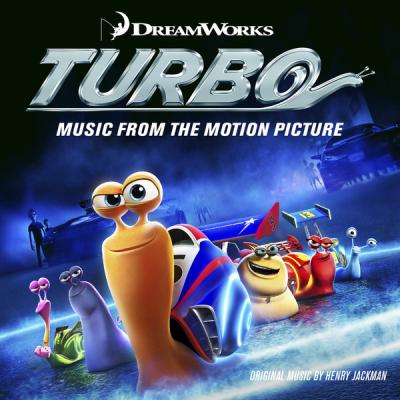
Turbo Album Cover

"Turbo" Soundtrack Lyrics

Cartoon • 2013

Track Listing


“Turbo (Music from the Motion Picture)” – Album Guide to Tracks and Key Scenes

Turbo 2013 official trailer thumbnail with Turbo staring down the racetrack
Turbo — theatrical trailer imagery, 2013

Review

How do you score a snail that thinks like a race car? Turbo answers with a sugar-rush mixtape of old-school hip-hop, jukebox pop, and Henry Jackman’s piston-pumping score — slick, bright, and built to draft behind jokes without losing speed. The album works like a pit crew: songs wave the green flag on attitude, while the score keeps the laps tight and the story on rails.

Plot-wise, Theo/Turbo goes from tomato-plant dreamer to Indy 500 contender after a nitrous accident. The soundtrack mirrors that arc: neighborhood-radio crate-digs give way to arena-scale anthems, then to triumphant orchestral sprints. Drums and synths handle lift-off; brass and strings handle heart. When pop bangers drop in, they sell swagger and community; when Jackman takes the wheel, it’s all precision and forward pressure.

Phases & palettes: old-school hip-hop — confidence and comic strut; retro pop & soul — neighborhood warmth, found family; EDM-tinted hybrid score — velocity and wonder; anthemic rock (in trailers) — myth-making. The blend keeps Turbo light on its feet and big in the pocket.

How It Was Made

DreamWorks Animation tapped composer Henry Jackman for a hybrid orchestral/electronic score, with additional music by Halli Cauthery and Paul Mounsey. Relativity Music Group released two albums: the songs-plus-score compilation Turbo (Music from the Motion Picture) and a stand-alone Turbo (Original Motion Picture Score). Music supervision and clearances wrangled legacy cuts (Run-D.M.C., Tom Jones, Jackson 5, House of Pain) alongside Snoop Dogg’s original end-credits single “Let the Bass Go.”

Production notes point to big-room electronics layered over tight orchestration — racing rhythms, synth ostinati, and brass fanfares recorded with London session players, then mixed with a glossy, radio-friendly sheen to sit next to the licensed tracks.

Turbo trailer frame with the Indy 500 stadium and Turbo on the grid
Hybrid score + legacy cuts — tuned for spectacle.

Tracks & Scenes

Key moments below — focusing on where songs or standout cues hit, and why they matter to the story. (Episode-style timestamps vary by release; scene descriptions reference widely circulated clips and credits notes.)

“It’s Tricky” (Run-D.M.C.)

Where it plays:
Early in the film as Turbo’s everyday world is set up. The cut punctuates his hop-step through the human neighborhood and the snails’ jokey bravado — a radio-in-the-background vibe that turns the block into a playful obstacle course.
Why it matters:
Establishes attitude and tempo — a comic strut that frames Turbo’s big talk before he earns big speed.

“Drop It Like It’s Hot (Clean)” (Snoop Dogg feat. Pharrell Williams)

Where it plays:
Turbo discovers a blaring radio and bounces to the beat; the camera riffs on bass “drops” with cutaway gags and snail-scale swagger.
Why it matters:
It’s a pure tone setter — confidence and cool injected right before the story pivots to danger and transformation.

“What’s New Pussycat?” (Tom Jones)

Where it plays:
A comedic montage interlude — the song’s exaggerated croon sits against snail antics and reaction shots, leaning into the film’s wink-at-the-parents humor.
Why it matters:
Breaks up the action with retro camp; the left-turn needle drop signals that Turbo will happily chase a laugh.

“Jump Around” (House of Pain)

Where it plays:
Hype-up energy at the Dos Bros Tacos hub when the crew rallies around Turbo and the pop-up “racing team” identity solidifies.
Why it matters:
Transforms a small business and a group of misfits into a cheering section — community becomes momentum.

“Goin’ Back to Indiana” (The Jackson 5)

Where it plays:
Road-trip/travel beat as the team heads toward the Indianapolis Motor Speedway; bright Motown bounce over highway inserts and signage.
Why it matters:
Literalizes destination and mood — optimism on the move.

“Krazy (Spanish Version)” (Pitbull feat. Lil Jon)

Where it plays:
Competition/arrival montage cues — fans, color, and pre-race bustle as Turbo’s improbable entry becomes a media gag and then a phenomenon.
Why it matters:
Injects party-energy swagger into the Indy build-up; perfect for quick-cut spectacle.

“Let the Bass Go” (Snoop Dogg) — end credits single

Where it plays:
Over the end credits — a victory-lap music video spirit, tying back to Snoop’s character Smoove Move.
Why it matters:
Gives the film a branded, radio-ready exit; the single fronted the soundtrack campaign.

Score cue: “Another Day at the Plant” (Henry Jackman)

Where it plays:
Opening plant routine with Turbo and Chet — rhythmic percussion and light synth textures sketch the working-world treadmill.
Why it matters:
Sets up contrast for the later nitrous accident — mundane vs. miraculous.

Score cue: “Supersnail” / “Indy 500” / “Arrival at Indianapolis” (Henry Jackman)

Where it plays:
Transformation beat, then the big-arena reveals. Pulsing arps and brassy fanfares announce scale; tempos ramp with the camera as the Speedway fills the frame.
Why it matters:
These are the film’s engine-rev cues — clean, kinetic, and built to goose the laugh-and-cheer rhythm.

Trailer-only songs (not on every album)

Where they play:
Marketing spots stitched together multiple tracks, including CAKE’s “The Distance,” Survivor’s “Eye of the Tiger,” Chromatics’ “Tick of the Clock,” The Heavy’s “How You Like Me Now?,” and more.
Why it matters:
These cues shaped audience expectation — underdog-to-anthem in 2 minutes — even if some aren’t in the final film.
Turbo trailer still of Turbo launching into a high-speed night drive
Trailer beats: from neighborhood radio to stadium roar.

Notes & Trivia

  • Snoop Dogg both voices a snail (Smoove Move) and headlines the end-credits single — neat synergy between cast and soundtrack campaign.
  • Two official releases: a songs + score album and a separate score album, issued two weeks apart.
  • Several beloved trailer songs (e.g., “The Distance,” “Eye of the Tiger”) shaped the marketing yet aren’t all present in the feature’s scenes.
  • Motown and old-school hip-hop choices underline the film’s “found family” and small-business pride, not just speed gags.
  • Jackman’s race cues lean on repeating synth engines that “downshift” into brass for passes and photo-finishes.

Reception & Quotes

Critics called the songs mix “fun and familiar,” and the score “propulsive” with enough heart to land the emotional beats. Fan consensus: the album plays like a joyride — high-gloss but sincere.

“Effortlessly charming — one of the year’s most enjoyable animated scores.” Soundtrack press roundups
“Jackman hits the right keys of aural stimulation, especially in the race sequences.” Trade reviews
“The needle-drops bring swagger; the score brings the win.” Playlist editors

Availability: the compilation album and the dedicated score are both on major streamers; the digital editions standardize track counts across regions.

Turbo trailer frame with finish-line confetti and cheering crowd
End-credits energy — single first, victory lap second.

Interesting Facts

  • Sound of speed: EDM-style arpeggios double as “engine” textures under orchestral brass for passes and photo-finishes.
  • Neighborhood radio: Early needle-drops feel diegetic — as if the entire block is a speaker cabinet.
  • Destination cue: “Goin’ Back to Indiana” cheekily telegraphs the Indy 500 road trip.
  • Spanish-language twist: The soundtrack uses a Spanish version of “Krazy,” matching the film’s SoCal street-market vibe.
  • Cast-to-catalog: Snoop’s presence lets the film borrow a mega-hit (“Drop It Like It’s Hot”) and cap it with a new single.

Technical Info

  • Title: Turbo (Music from the Motion Picture) — plus Turbo (Original Motion Picture Score)
  • Year: 2013
  • Type: Film Soundtrack (compilation + score)
  • Composer: Henry Jackman; additional music by Halli Cauthery, Paul Mounsey
  • Label: Relativity Music Group — songs album released mid-July 2013; score album late July 2013
  • Selected notable placements: “Drop It Like It’s Hot” (radio-dance gag); “What’s New Pussycat?” (comedy montage); “Goin’ Back to Indiana” (road-trip); “Krazy” (arrival/arena montage); “Let the Bass Go” (end credits)
  • Release context: DreamWorks Animation film opening July 2013; trailer campaign used CAKE’s “The Distance” and other anthems
  • Availability/Charts: Streaming on major platforms; soundtrack placed on Billboard Top Soundtracks in 2013
  • Supervision/Credits: Music supervision & clearances credited across DreamWorks/Relativity teams; executive soundtrack production credited to Relativity executives

Questions & Answers

Is the end-credits song on the album?
Yes — Snoop Dogg’s “Let the Bass Go” headlines the songs compilation and closes the film.
What’s the difference between the two releases?
The compilation mixes licensed songs with a handful of score cues; the score album is all Henry Jackman, sequenced as an instrumental ride.
Which trailer songs aren’t necessarily in the movie?
CAKE’s “The Distance,” Survivor’s “Eye of the Tiger,” Chromatics’ “Tick of the Clock,” and The Heavy’s “How You Like Me Now?” are trailer-cut staples rather than core feature cues.
Where do I stream the score?
Search for Turbo (Original Motion Picture Score) by Henry Jackman — it’s on major services worldwide.
Best first cues for newcomers?
“Supersnail,” “Indy 500,” and “Arrival at Indianapolis” for pure Jackman; “Drop It Like It’s Hot” and “Goin’ Back to Indiana” for the film’s vibe.

Key Contributors

EntityRelation (S–V–O)
Henry JackmanComposer → scored Turbo and produced the albums’ core cues.
Relativity Music GroupLabel → released the songs compilation and separate score album.
DreamWorks AnimationStudio → produced the feature; coordinated licensing and soundtrack rollout.
David SorenDirector → shepherded tone/tempo that the score mirrors.
Snoop DoggPerformer → contributed end-credits single “Let the Bass Go” and voiced Smoove Move.
Charlene Ann HuangMusic Supervisor (album credits) → guided song placements and clearances.
Sunny ParkExecutive in Charge of Music (DreamWorks) → oversaw music for the production.
Indianapolis Motor SpeedwayVenue → setting for the film’s climax; iconic motorsports cues echo its pageantry.

Sources: Relativity/Apple Music & Spotify album pages; Wikipedia soundtrack and personnel entries; trade/press soundtrack notes; Filmmusicreporter listing; MediaStinger end-credits note; trailer-song coverage (Diffuser/Ultimate Classic Rock) and official trailers; widely shared scene clips showing on-screen uses.

November, 29th 2025

'Turbo' on Internet Movie Database and Wikipedia
A-Z Lyrics Universe

Lyrics / song texts are property and copyright of their owners and provided for educational purposes only.