
"Tusk" Soundtrack Lyrics
Movie • 2014
Track Listing
Ralph Garman
Adam Lee & the Dead Horse Sound Company
Dave Thomas
Traditional
101 Strings Orchestra
The X-Seaman’s Institute
Herman Beeftink
101 Strings Orchestra
Fleetwood Mac
“Tusk — Music from the Film (Score by Christopher Drake)” – Album Guide to Tracks and Key Scenes
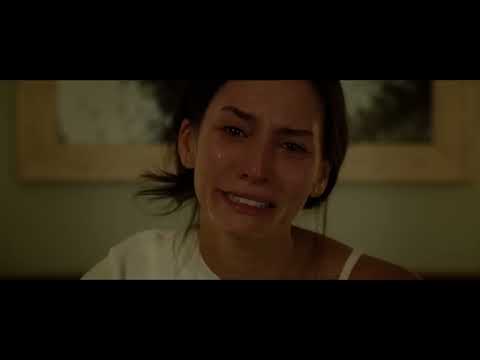
Review
How do you score a transformation that should never happen? Tusk answers with a cold, creeping pulse: Christopher Drake’s electronics and low strings keep time like a surgical clock while diegetic songs cut in like dream-shards. It’s restrained, then suddenly ritualistic — a body-horror sound that rarely screams and mostly tightens.
The music’s job is twofold. First, to trap us in Howard Howe’s myth — nautical tunes, antique records, an old folk hymn — and second, to push Wallace’s fate forward in mechanized increments. When licensed cues surface (Fleetwood Mac’s “Tusk,” the 101 Strings library cuts, the sea shanty), they don’t offer relief; they feel like artifacts from a different world, now repurposed for dread. Drake’s score binds those pieces with anxious ostinati that suggest breath under water.
Palettes & phases: electronic suspense — procedure, sedation, the slow loss of self; library/easy-listening orchestral — uncanny domesticity; folk & shanty — Howard’s invented scripture; arena rock (in a late needle drop) — the world outside intruding on the lair. The friction between them is the point.
How It Was Made
Kevin Smith hired composer Christopher Drake — known for dark, hybrid textures — to create a minimalist, pressure-building score. Music post wrapped just ahead of the film’s Fall 2014 release after a dedicated music mix; the film premiered at TIFF’s Midnight Madness with Drake credited as composer.
Key additions around the score: a closing-credits performance of the traditional folk song “O Waly, Waly” (a.k.a. “The Water Is Wide”) sung and produced by Gerard Way; and a pivotal late-film drop of “Tusk” by Fleetwood Mac. A handful of period/library pieces (101 Strings, Herman Beeftink) and a bawdy ringtone cameo round out the film’s diegetic soundscape.

Tracks & Scenes
Below — the most-cited placements, with concise scene context and function. (Runtime stamps may vary slightly by platform/edition.)
“Beautiful Dreamer” (101 Strings Orchestra)
- Where it plays:
- ~00:57:00. Howard places a record on the turntable. The syrupy parlour arrangement wafts through the room as Wallace awakens and recognizes the full horror of his condition.
- Why it matters:
- Irony as weapon — sentimental wallpaper against unspeakable reality; Howard curates mood the way he curates victims.
“Clair de Lune” (101 Strings Orchestra)
- Where it plays:
- Used as genteel filler in Howard’s home; the familiar Debussy melody, rendered in budget strings, turns sterile in context.
- Why it matters:
- Elevates the “museum of manners” vibe — politeness over pathology.
“La Luna” (Herman Beeftink)
- Where it plays:
- Light instrumental interlude tied to Howard’s domestic routine; a TV/library-music gloss that feels wrong on purpose.
- Why it matters:
- Signals how curated and artificial Howard’s world is — every surface staged.
“Blow the Man Down” (The X-Seamen’s Institute)
- Where it plays:
- Nautical coloration over Howard’s seafaring monologues and backstory beats.
- Why it matters:
- Frames the walrus myth as maritime gospel; turns a tall tale into liturgy.
“More Margaritas” (Ringtone — Ralph Garman)
- Where it plays:
- Comic ringtone gag tied to a supporting character’s phone — a sudden, tacky burst in tense spaces.
- Why it matters:
- Breaks tension with a crass needle jab; underlines the film’s horror-comedy rhythm.
“Tusk” (Fleetwood Mac)
- Where it plays:
- ~01:27:00. As Ally, Teddy, and Guy Lapointe infiltrate the property, the drum-led anthem hammers over intercut action; inside, a brutal confrontation unfolds between Howard and what remains of Wallace.
- Why it matters:
- The outside world finally pounds on the door. The marching groove turns rescue into siege — a cynical, perfect fit.
Score cues (Christopher Drake) — various
- Where it plays:
- Throughout: sedative pulses during drugging; low, pulsing textures in surgery prep; clipped stingers for revelations; bleak pads in the epilogue enclosure.
- Why it matters:
- Provides the film’s “breathing apparatus” — never showy, always pressurizing.
“O Waly, Waly (The Water Is Wide)” (Gerard Way) — end credits
- Where it plays:
- ~01:35:00 into credits. A spare, haunted cover over the aftermath.
- Why it matters:
- Turns the old ballad into a requiem for identity — love as distance you can’t cross.
Trailer music
- Where it plays:
- The official trailers lean on percussive stabs and tone cues cut from the score and trailer-house elements; no retail “trailer single” was issued for the film.
- Why it matters:
- Positions the movie as dread-first; the feature itself saves the big pop needle-drop for late.
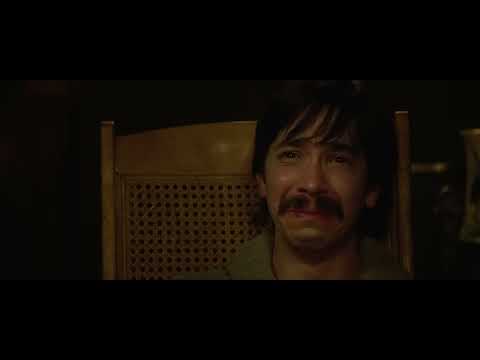
Notes & Trivia
- Drake’s credit is front-and-center in production notes; Smith finished the music mix in late spring 2014 ahead of TIFF.
- Gerard Way’s “O Waly, Waly” was created specifically for the film and has never had an official retail release.
- Yes, the Fleetwood Mac track really is in the movie — late and loud — after fans debated it pre-release.
- Smith has said he wrote the script while looping “Tusk,” making the song both muse and movie moment.
Reception & Quotes
While reviews split on tone, the music choices were widely noted: a deliberately spare score, weaponized easy-listening, and a late, cathartic rock cue.
“Drake keeps the horror intimate — pulses, not pyrotechnics.” Trade coverage
“That Fleetwood Mac drop? Diabolically timed.” Fan chatter
“Gerard Way’s hymn over the credits lingers like a bruise.” Music press
Availability note: there was no commercial soundtrack album for Tusk at release; select songs stream individually online.
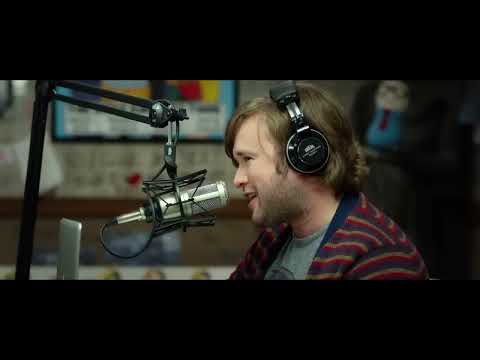
Interesting Facts
- Folk finale: “O Waly, Waly” dates back centuries; the film uses it as a modern lament.
- Library uncanny: Using budget-orchestra recordings (101 Strings) makes the house feel staged, not lived-in.
- Shanty theology: Sea-song textures turn Howard’s story into scripture.
- Drum motive: The “Tusk” groove functions like a rescue siren — relentless, indifferent.
- Script on a loop: Smith publicly connected the act of writing to looping Fleetwood Mac’s “Tusk.”
Technical Info
- Title: Tusk — Music from the Film (Score by Christopher Drake)
- Year: 2014
- Type: Feature film soundtrack overview (score + licensed songs; no official album)
- Composer: Christopher Drake
- Key licensed tracks: Fleetwood Mac — “Tusk”; Gerard Way — “O Waly, Waly” (end credits); 101 Strings — “Beautiful Dreamer,” “Clair de Lune”; Herman Beeftink — “La Luna”; The X-Seamen’s Institute — “Blow the Man Down”; Ralph Garman — “More Margaritas” (ringtone)
- Release context: World premiere at TIFF Midnight Madness (Sept 6, 2014); U.S. release Sept 19, 2014
- Label/Album status: No commercial OST at the time of release; individual tracks available on streaming from rights holders
- Trailer asset: Comic-Con/official trailers on YouTube (Video ID used in figures:
trTTjvPCLJQ)
Questions & Answers
- Is there an official Tusk soundtrack album?
- No. The score and songs were cleared for the film, but no retail OST was issued; key tracks stream individually.
- Who composed the score?
- Christopher Drake composed the original score — a restrained, hybrid electronic/orchestral design.
- Does Fleetwood Mac’s “Tusk” actually play in the movie?
- Yes — it’s a late placement during the search/infiltration and confrontation sequence.
- What song is over the end credits?
- Gerard Way’s spare cover of the traditional folk song “O Waly, Waly” (“The Water Is Wide”).
- What are those “fancy but off” orchestral tracks in the house?
- Library/easy-listening cuts (notably 101 Strings) used diegetically to make Howard’s world feel staged.
Key Contributors
| Entity | Relation (S–V–O) |
|---|---|
| Christopher Drake | Composer → scored Tusk with hybrid electronic/orchestral textures. |
| Kevin Smith | Director/Writer → shaped the film’s song/score strategy and finale hymn usage. |
| Gerard Way | Vocalist/Producer → performed end-credits “O Waly, Waly.” |
| Fleetwood Mac | Artist → “Tusk” licensed for late-film search/confrontation sequence. |
| A24 | Distributor → released the film theatrically in 2014. |
| Demarest Films / SModcast Pictures / XYZ Films | Producers → financed and produced the feature. |
| TIFF Midnight Madness | Venue → hosted world premiere of Tusk (Sept 6, 2014). |
Sources: TIFF/film data summaries; Soundtrack song indexes; composer and production notes; news items on Gerard Way’s credits track; Wikipedia overviews for verification; official trailers.
Strange horror and comedy movie in one bottle. Disgusting and confusing story where everything is quite unclear. The presence of Haley Joel Osment in this shocking film just disappointing – for the Sixth Sense with Bruce Willis this young at that time actor has received a great number prizes and awards, and was nominated for an Oscar. Everyone was speaking about young talent. And now, 12 years later, the 27-year-old actor plays god knows what in the second-rate films. The degradation and decadence. It’s a pity, he could go far if he worked on himself and tried more for self-improvement and acted ever more. As for the movie, it's a low-budget motion picture that is not even paid off, because everything in it is terrible. With investments of USD 3 million, it gathered only 1,8. Many critics say that this film should be assigned 0 out of 10, based on its visual and intellectual disgustingness. We fully agree with them. The plot is worthless, even for a horror film – a schizophrenic and misanthrope person steals man and makes him a walrus by a row of consequential and frightening surgeries. Then he dressed up in the same creature and fights with the already-not-human, forcing the latter to kill him. Simply abomination from which it would be desirable not to go far away from the toilet. And it ends like following: this creation continues to live in some freaky pool. In general, sense of lack of practicality and miserable discouragement from elementary rejection of humanity – only such range of emotions experienced from this film. The music used in the film, mainly is not freely available in the Internet. Beautiful Dreamer and Clair De Lune – they are classic melodies, and Tusk by Fleetwood Mac is a pop. 101 Strings Orchestra created the most pleasant thing in this film – the classics. The rest is somehow primitive.November, 29th 2025
'Tusk' on the Web: IMDb, WikipediaA-Z Lyrics Universe
Cynthia Erivo Popular
Ariana Grande Horsepower
Post Malone Ain't No Love in Oklahoma
Luke Combs Good Riddance (Time of Your Life)
Green Day Bye Bye Bye
*NSYNC You're the One That I Wan
John Travolta & Olivia Newton-John I Always Wanted a Brother
Braelyn Rankins, Theo Somolu, Kelvin Harrison Jr. and Aaron Pierre The Power of Love
Frankie Goes to Hollywood Beyond
Auli’i Cravalho feat. Rachel House MORE ›